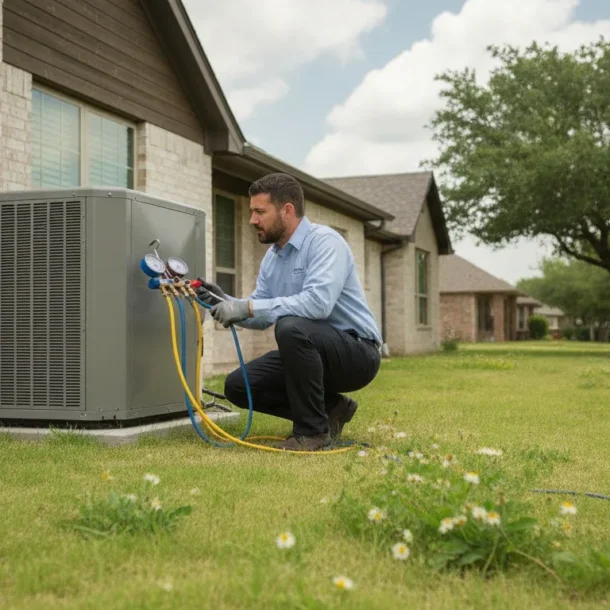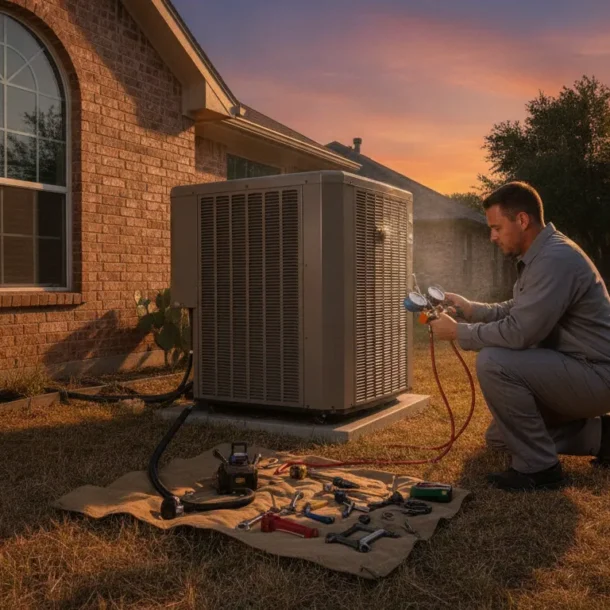

—
In North Texas, a heat pump may cool through a long summer. It then switches to heating during a sudden winter cold snap. Upkeep needs to account for both seasons.
In practical terms, heat pump maintenance is planned care for equipment that serves both heating and cooling needs. The University of Maryland Extension explains that heat pumps transfer heat between a home and outdoor air. They reverse the process to cool the home (heat pump overview). A checkup can help assess the equipment’s condition, but it cannot resolve every issue affecting comfort, such as duct or home insulation problems.
Heat movement and home conditions both affect comfort. A quick look at how a heat pump works can put those maintenance decisions in context.
Routine care supports the heat pump’s ability to move heat between your home and the outdoors in both seasons, while helping identify equipment conditions that may need attention. It does not guarantee trouble-free operation or correct issues with the home’s sizing, ducts, insulation, or air sealing.
A heat pump moves heat rather than making it through combustion. In heating mode, it draws heat from outdoor air and transfers it indoors. In cooling mode, the process reverses and carries heat outside. One system handles both summer cooling and winter heating in North Texas. The University of Maryland Extension’s heat pump guide explains this process and the factors that influence how a system works in a home.
Because the equipment changes operating mode, maintenance is not just a seasonal cleaning task. It is a way to keep attention on the system’s operation and condition as it handles both heating and cooling. A homeowner can think of it as care for the equipment, not a promise that the system will never need repair.
That attention includes basic operating details and equipment condition. ENERGY STAR’s maintenance checklist advises checking thermostat settings and filters. It notes that a plugged condensate drain during cooling can lead to water damage or affect indoor humidity. This guidance helps households keep these issues in view. It does not guarantee that a visit will uncover or prevent a problem.
A heat pump relies on indoor and outdoor equipment, a compressor, and refrigerant lines to transfer heat. A professional can assess system operation and identify equipment concerns that call for further attention. For a plain-language overview of the components and process, see how a heat pump works.
Comfort also depends on conditions beyond the equipment itself. System sizing, duct condition, insulation, and air sealing all affect how a home is heated and cooled. Routine maintenance is not a fix for a poorly matched system, leaky ducts, or gaps in the home’s thermal envelope. Those concerns may need separate evaluation. Maintenance supports the equipment. The home’s design and distribution system shape how well conditioned air reaches each room.
For DFW households, the practical aim is to understand what the equipment is doing and address service needs appropriately. One tune-up cannot resolve every comfort or efficiency concern.
Homeowners can help keep a heat pump’s air path clear and notice changes in how it runs without opening the equipment. Use the manufacturer’s instructions for your system and filter, since designs and filter requirements differ.
Use the system manual or label to locate the filter. Inspect it and clean or replace it as directed. Use the specified type and size instead of choosing a denser filter by guesswork. A filter that does not fit the equipment can interfere with normal airflow.
A quick homeowner check can stay simple:
These observations can help you notice airflow issues without taking apart equipment. Keep your system instructions close by. Filter access and care differ among models.
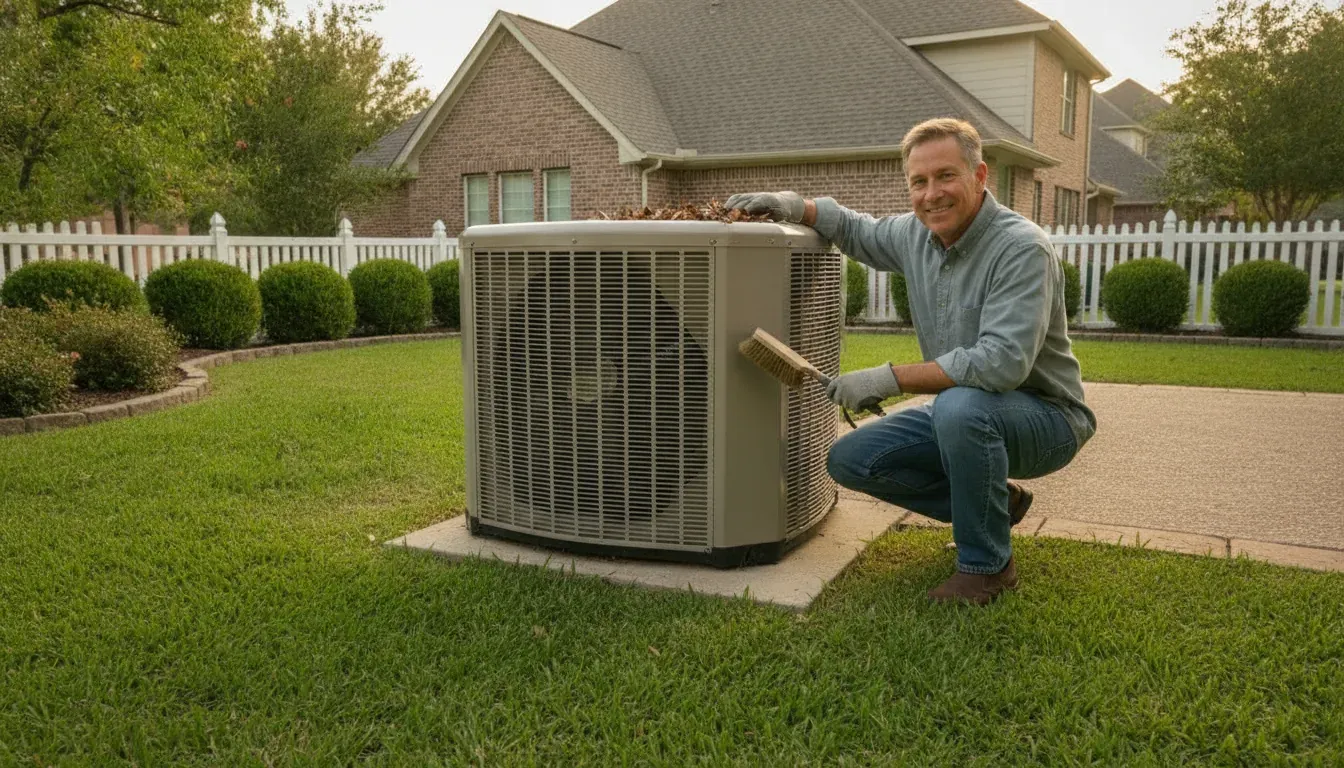
Look around the outdoor cabinet for loose leaves, grass clippings, or other yard debris. Clear loose material from the ground, but do not reach through the grille, touch the fan or fins, remove panels, or spray the coil. North Texas dust, pollen, and yard debris collect around outdoor equipment. Include a visual check in ordinary yard care.
Pay attention to unusual sounds, persistent visible ice, or changes in comfort or operation. Note when the change began and whether the system was heating or cooling. This can help a technician understand what you observed. A single symptom does not identify the cause.
Do not open the indoor or outdoor equipment or attempt electrical work, refrigerant checks, coil cleaning, or repairs. Those jobs involve components that require appropriate training and tools. If something appears damaged or the system behaves differently, stop at observation and arrange qualified service rather than trying to diagnose it yourself.
| Task | Homeowner or technician? | Safe next step |
|---|---|---|
| Filter inspection | Homeowner | Follow the filter and equipment instructions. |
| Clear loose yard debris | Homeowner | Stay outside the cabinet and do not touch components. |
| Electrical checks or repairs | Qualified technician | Do not open panels or handle wiring. |
| Coil or refrigerant service | Qualified technician | Request a professional assessment. |
Ask Garland Heating and Air Conditioning about service for your heat pump. For information about available heat pump repair and maintenance in DFW, review the service page.
A technician can inspect and test components homeowners should not open or adjust. Work depends on the system and its condition. Ask what was checked and what needs attention.
A maintenance visit may begin with thermostat settings and system controls. ENERGY STAR recommends checking that equipment starts, runs, and shuts off properly. The technician can observe its operation, rather than relying only on a homeowner’s description.
The visit may also include airflow assessment and blower and coil inspection. Restricted airflow or dirty coils can affect cooling performance. A technician can determine whether components need attention. Ask what was observed and whether a filter or equipment concern needs monitoring. These are professional checks. Do not reach inside the equipment yourself.
ENERGY STAR also includes electrical connections in a typical check-up. A technician can inspect connections and verify safe operation using appropriate procedures and equipment. Do not attempt to tighten connections or test live components yourself.
See the ENERGY STAR maintenance checklist for examples of routine contractor checks, including controls, electrical connections, coils, and airflow.
During cooling, a heat pump removes moisture from indoor air. A technician can inspect the condensate drain for blockage and check the indoor and outdoor coils for buildup or obstruction. ENERGY STAR notes that a plugged drain can cause water damage and affect indoor humidity. Coil cleaning should be handled with the right method for the equipment, rather than attempted by opening the unit or using household tools.
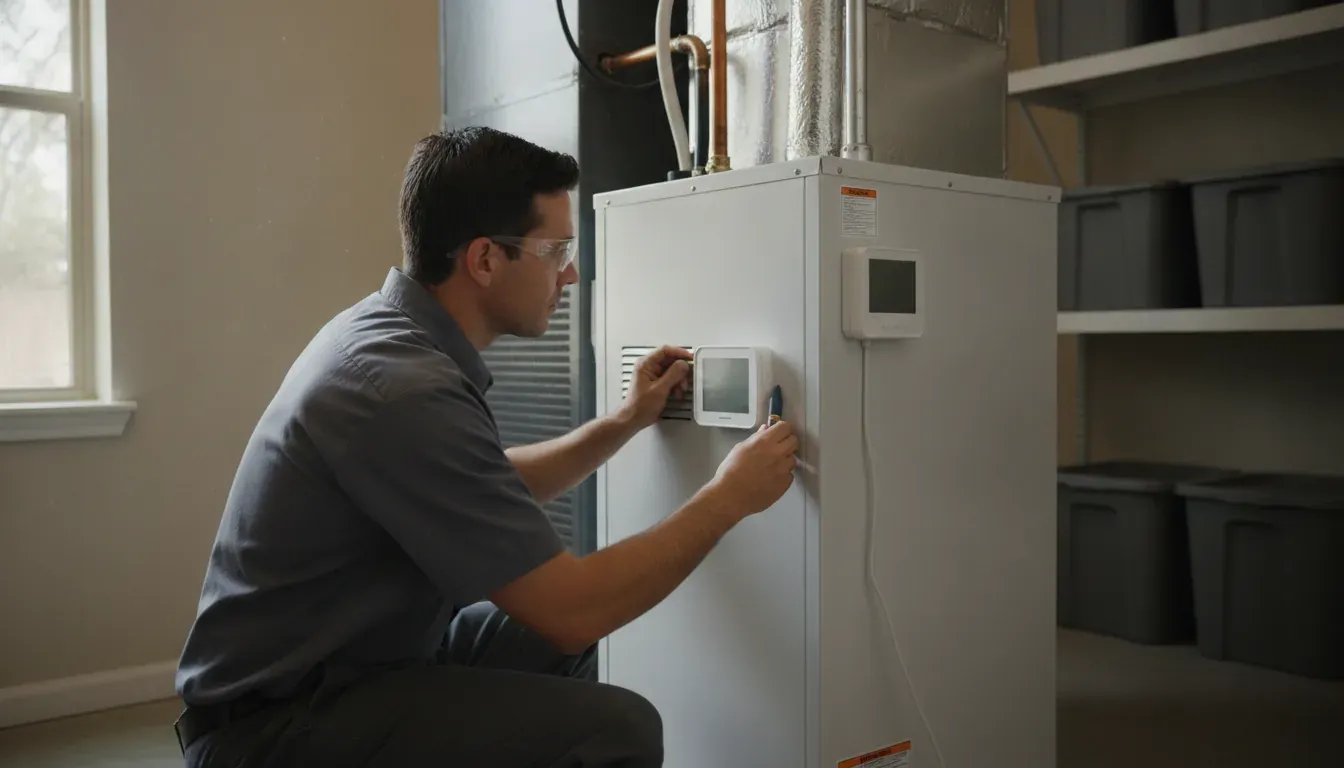
Electrical connections and components need a safety-focused inspection. A contractor can also evaluate refrigerant operation and identify whether further diagnosis is needed. Do not open electrical panels, handle refrigerant, or try to correct a suspected leak. The U.S. Department of Energy describes maintenance as work for trained professionals in its HVAC preventative maintenance guidance. The EPA guidance on purchasing and repairing home heat pumps explains requirements around refrigerant service.
When booking, ask whether the visit includes controls, airflow, coils, condensate drainage, electrical safety, and refrigerant evaluation. Garland Heating and Air Conditioning offers heat pump repair and maintenance, but this list is a practical set of questions, not a promise that every visit follows an identical checklist.
For many Dallas-Fort Worth homeowners, spring and fall are useful times to plan a professional check. Prepare for cooling before summer heat arrives, then prepare for heating before colder weather. Treat these as practical seasonal windows, not a mandatory Garland Heating and Air Conditioning interval. Follow your heat pump manufacturer’s maintenance guidance and consider your system’s condition and use.
North Texas systems can face a long, demanding cooling season. Scheduling in spring, before the first sustained stretch of high temperatures, gives you a chance to ask a professional to assess the equipment before cooling demand peaks. Garland Heating and Air Conditioning identifies March and April as locally useful preparation months, but the right timing can vary with your schedule, equipment, and service availability.
Spring pollen and dust are also part of the DFW seasonal picture. If you notice new airflow or comfort concerns as the weather changes, mention them when arranging a visit. That context can help the technician understand what you have observed. You do not need to diagnose the cause yourself.
ENERGY STAR advises pre-season checkups, with cooling equipment checked in spring and heating equipment in fall. Its guidance notes that contractors can get busy when seasonal demand arrives. Planning ahead may make it easier to find an appointment that works for you. This is general advice. It does not guarantee a checkup will prevent a problem or improve a system’s performance. Read ENERGY STAR’s maintenance checklist.
North Texas winters are often mild, but cold snaps can bring below-freezing weather. A fall appointment, often planned for October or November, is a chance to have the heating side assessed before regular use. You do not need to wait for the first freeze to plan seasonal service. A forecast alone does not determine whether your heat pump needs attention.
Planning before the first cold stretch can give you time to ask questions about your system and its manufacturer’s recommendations, rather than making a decision during a weather change. If your heat pump behaves differently, share when the change began and whether it occurs during heating or cooling.
Heat pumps serve both cooling and heating needs, so plan for each season. Our guide to Texas HVAC service timing covers AC scheduling specifically. It is not a heat pump maintenance schedule. For heat-pump-specific needs, follow the manufacturer’s instructions and ask a qualified professional.
A change in how your heat pump sounds, feels, or runs is useful information to share with a technician, even when the cause is not obvious.
Notice weaker airflow, rooms that do not reach the set temperature, or a change in the system’s normal pattern. A dirty or incorrectly fitted filter can affect airflow. Other issues can cause the same symptoms. Treat a change as a reason to observe and ask for an assessment, not as proof of a specific fault.
Listen for new or persistent rattling, grinding, buzzing, or other unfamiliar sounds. Notice unusual odors that continue while the equipment operates. Note when they occur and whether the system is heating or cooling. Do not open panels or touch wiring, refrigerant lines, or internal parts.
During a North Texas cold snap, keep an eye out for frost or ice that remains on the outdoor unit. Do not assume from appearance alone that the system has failed. Persistent buildup deserves professional assessment. Water collecting near indoor equipment or appearing where it has not before is also worth reporting. A condensate drain issue can contribute to water damage, so do not ignore a recurring leak. Avoid taking apart the unit or attempting a repair.
If the heat pump is blowing cold air when you expect heat, first note the thermostat setting and conditions, then see our guide to safe heat pump troubleshooting checks. That information can help distinguish simple observations from issues that need a technician, but symptoms alone cannot confirm the cause.
Request an evaluation if a change persists, returns, or leaves your home uncomfortable. Garland Heating and Air Conditioning serves Dallas-Fort Worth homeowners. Read about its heat pump repair and maintenance service to learn more.
Request a heat pump service assessment if you have noticed a recurring change or want help deciding what to do next.
Use the system manufacturer’s guidance and its condition to plan service. Spring and fall are useful scheduling windows. ENERGY STAR recommends pre-season checkups for heating and cooling equipment (ENERGY STAR maintenance checklist). If operation changes, arrange an assessment rather than waiting for the next seasonal visit.
Follow the equipment and filter instructions, check and replace or clean the correct filter as directed. Keep supply and return vents open, and clear loose leaves or vegetation near the outdoor cabinet. Do not open the unit or handle coils, electrical parts, or refrigerant. If you are unsure which filter fits, check the manual or ask a qualified technician.
Ask whether the visit includes system controls, airflow, coils, electrical connections, and condensate drainage. These checks can identify conditions that need attention. The work depends on the equipment and findings. Ask the technician to explain any recommended repair before proceeding.
The cost depends on the system and the work it needs, so there is no single price to assume. Garland Heating and Air Conditioning provides quote-based service. For details about your system, use the contact page to request information.
A seasonal service visit can give you a chance to discuss your heat pump’s operation and any changes you have noticed. To schedule heat pump service or request a quote tailored to your needs, contact Garland Heating and Air Conditioning through the contact page.