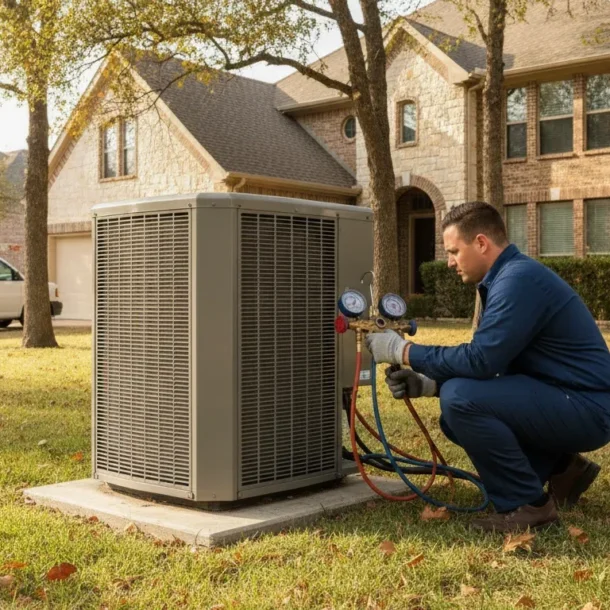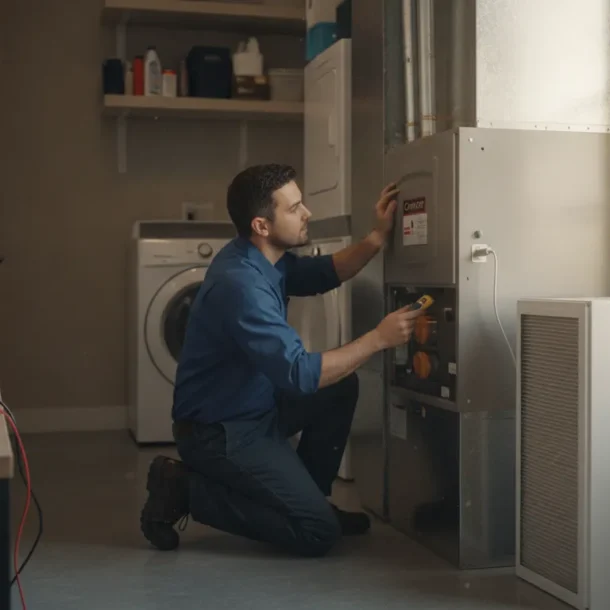
When a Dallas Fort Worth air conditioner stops cooling during a summer heat wave, waiting can quickly turn an uncomfortable room into a safety concern.
DFW sees roughly 40 to 60 days above 100 degrees Fahrenheit. The right next step depends on both the symptoms and the provider you call.
Call Now to request emergency service
Choosing emergency ac repair means looking for a provider with 24/7 emergency availability, same-day capability, qualified technicians, and a service area that covers your DFW community. Garland Heating and Air Conditioning is family-owned, has served the metroplex since 1952, and provides residential and commercial emergency HVAC service across more than 100 DFW cities. Confirm the company can explain the problem clearly, prioritize safe diagnostics, and provide quote-based options without promising an arrival time or repair that has not been evaluated.
Before you authorize urgent work, it helps to separate a genuine emergency from a repair that can safely wait. The symptoms, potential safety risks, and effect on your home or business all matter.
In Dallas Fort Worth, a cooling problem can become urgent quickly. The region may experience roughly 40 to 60 days above 100 degrees Fahrenheit, so a failed air conditioner is more than an inconvenience for some households. Older adults, young children, people with chronic health conditions, and anyone without a safe way to cool down may need help sooner rather than later.
Call for professional evaluation promptly when the system has stopped cooling completely, especially during extreme heat. Also treat these signs as urgent:
A system that is cooling unevenly, running longer than usual, or producing a mild performance change may still need an appointment. But it may not require an after-hours call if there is no heat, smoke, water, electrical concern, or rapidly worsening condition. Do not try to diagnose refrigerant, electrical, or compressor problems remotely. A qualified technician can inspect the equipment and explain the next step.
Use this quick decision checklist:
If you answer yes to any of these questions, contact a professional emergency AC repair provider. Garland Heating and Air Conditioning offers 24/7 emergency service and same-day capability for urgent repairs, without promising a fixed arrival time. The company serves residential and commercial customers across the DFW area and can begin with a safety-focused evaluation.
When the air conditioner fails, the first provider who answers is not always the best provider for the job. In Dallas Fort Worth, look for a company that can respond to urgent needs, explain what it finds, and serve your location with qualified technicians. The goal is not simply to get someone to the door. It is to get a safe diagnosis and a clear path forward.
Start by confirming how the company handles after-hours calls. Garland Heating and Air Conditioning offers 24/7 emergency service through a dedicated emergency line and live call center, including urgent requests outside regular business hours. Same-day service is available for urgent repairs, but a responsible provider should not promise a fixed arrival time before understanding the workload, location, and problem.
Service-area fit matters just as much as availability. A company serving more than 100 DFW cities can be a practical choice for customers in Garland, Dallas, Richardson, Plano, Fort Worth, Irving, Rockwall, Rowlett, and surrounding communities. Before authorizing work, confirm that the provider serves your address and handles your type of system. Residential and commercial needs can involve different equipment, access requirements, and operating demands.
Ask whether the technician is background-checked, certified, and experienced with your equipment. Garland Heating and Air Conditioning services all major HVAC manufacturers and follows refrigerant-handling, electrical, code-compliance, and safety protocols. Those details matter during an emergency because a quick guess can lead to an incomplete repair or create additional risk.
A sound visit should begin with diagnosis, not an automatic recommendation to replace the system. The technician should inspect the equipment, explain the likely cause, identify immediate safety concerns. And distinguish between a repair that can be completed now and one that requires a part or additional work. You can review more evaluation criteria in this guide to choose an AC repair technician.
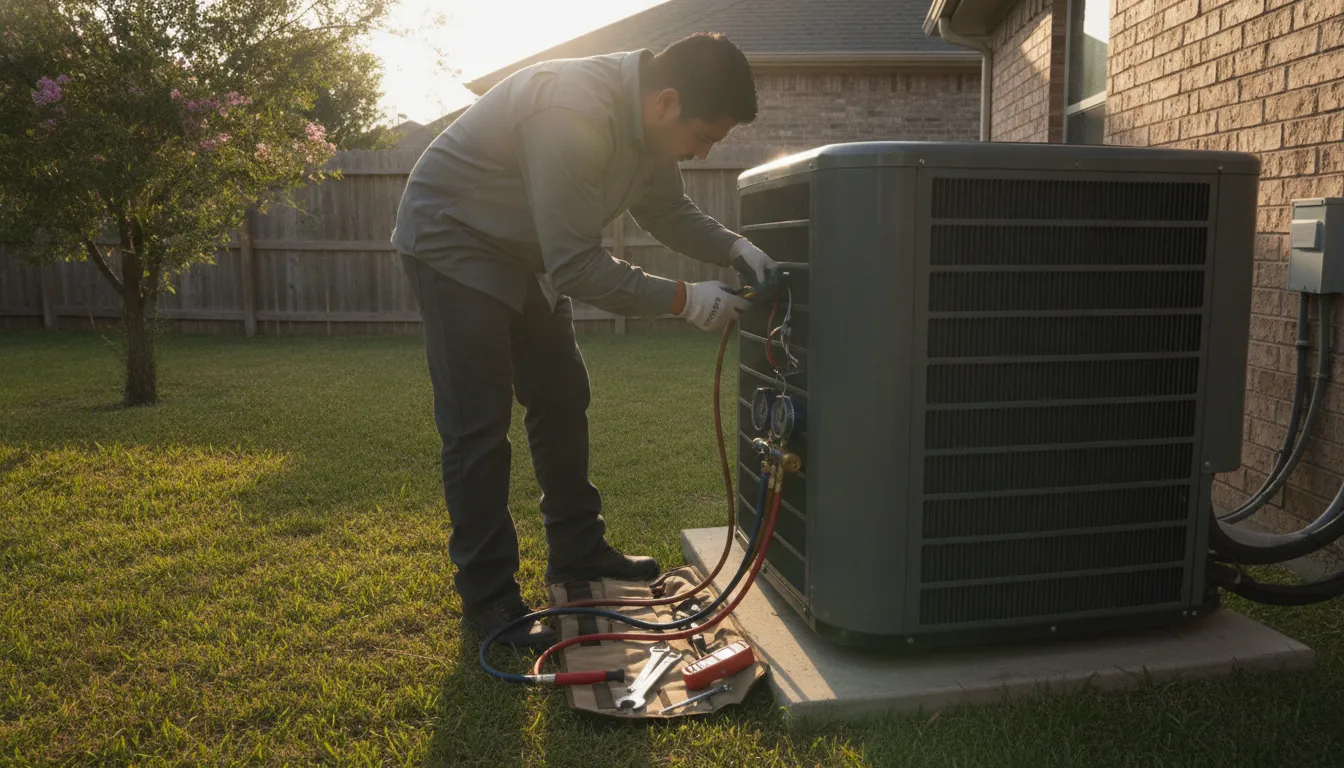
Before work begins, ask what the technician found, what options are available, and what the quote includes. Garland Heating and Air Conditioning uses quote-based pricing, so customers should contact the company for pricing specific to the equipment and repair. Be cautious of unexplained charges or pressure to approve work before the problem and proposed solution are clear.
Look for trust signals that support accountability, including Google Guaranteed status and a history of local service. Garland Heating and Air Conditioning is family-owned and has served the DFW metroplex since 1952. For documented residential emergency AC repair, diagnostics, maintenance, and tune-ups, review the AC repair and maintenance service page before you call.
When the temperature is climbing and your system is not keeping up, a clear conversation helps you make a sound decision. Before authorizing emergency AC repair, ask what the technician can do today, what the diagnosis shows, and which work is actually necessary. You should understand the next step before work begins, especially if the system needs a part or the technician identifies a larger equipment problem.
Start with availability and scope. Ask whether the company handles after-hours calls, whether same-day service is available, and whether your location is within the service area. Same-day capability is not the same as a guaranteed arrival time, so ask what communication you can expect while the request is being coordinated. Garland Heating and Air Conditioning provides 24/7 emergency service through a dedicated emergency line and live call center, and serves more than 100 DFW cities.
| Attribute | Question | Why it matters |
|---|---|---|
| Availability | Do you handle after-hours emergency calls, and when can service be coordinated? | It sets realistic expectations without assuming a fixed arrival time. |
| Diagnosis | What failed, and what tests support that diagnosis? | It separates a confirmed problem from a guess and helps prevent unnecessary work. |
| Scope | Will this work stabilize the system, complete the repair, or only provide a temporary measure? | You can plan for follow-up service if the underlying issue cannot be resolved immediately. |
| Pricing | Can you explain the quote and any possible additional charges before work begins? | Quote-based pricing gives you a chance to approve the documented scope before authorization. |
| Parts | Is the needed part available, or could the repair require ordering a component? | Parts availability affects whether the system can be restored during the current visit. |
| Warranty | Does the equipment or replacement part have applicable warranty coverage? | It identifies documentation you may need and clarifies what is included. |
| Long-term choice | Based on the diagnosis, is repair reasonable, or should replacement be considered? | A professional can explain the options without turning an urgent call into an automatic replacement decision. |
Ask who will perform the work and how the findings will be documented. Garland Heating and Air Conditioning describes its technicians as background-checked and certified, and the company has Google Guaranteed status. The company also services all major HVAC manufacturers and follows electrical, refrigerant-handling, code-compliance, and safety protocols. For more context, review the company’s AC repairs and maintenance service information before you authorize work.
A reliable emergency provider should explain the diagnosis, available repair path, parts expectations, and quote before proceeding. If major component failure or recurring reliability concerns make replacement worth discussing. Ask for that reasoning separately from the immediate steps needed to address the current loss of cooling.
While help is on the way, focus on protecting people, preventing additional damage, and gathering useful information. Avoid troubleshooting that requires opening equipment or handling electrical or refrigerant components. A few safe steps can help you stay comfortable and give the technician a clearer starting point.
Stop all homeowner checks if you smell burning, see smoke, hear loud electrical arcing, encounter exposed wiring, or feel unsafe. Refrigerant handling, electrical diagnosis, coil access, and component replacement belong with a qualified professional. If you are unsure whether the problem needs immediate attention, review when to call an AC technician and describe the symptoms when requesting service. A clear description helps the service team understand the urgency without asking you to take unnecessary risks.
Commercial cooling problems affect more than indoor comfort. A failed system can disrupt employees, customers, tenants, scheduled operations, or temperature-sensitive areas. That is why commercial emergency AC repair starts with understanding the facility, the affected zones, and the operational consequences before deciding what work is needed.
The equipment and building type shape the response. A small retail space may rely on a light commercial system, while a larger facility may use multiple rooftop units or heavier commercial equipment. The provider should identify which units are down, whether other zones are still operating. And whether the issue involves controls, electrical components, airflow, refrigerant, or a major mechanical failure. Garland Heating and Air Conditioning provides commercial AC services for light and heavy commercial needs, with diagnostics and repair decisions based on the system and site conditions.
Refrigeration requires a separate level of attention. Restaurants, grocery operations, and other businesses may need help with equipment that protects stored products and supports daily operations. A request for commercial refrigeration service should identify the affected equipment, current temperatures when available, and whether doors or product areas need to remain accessible during the visit.
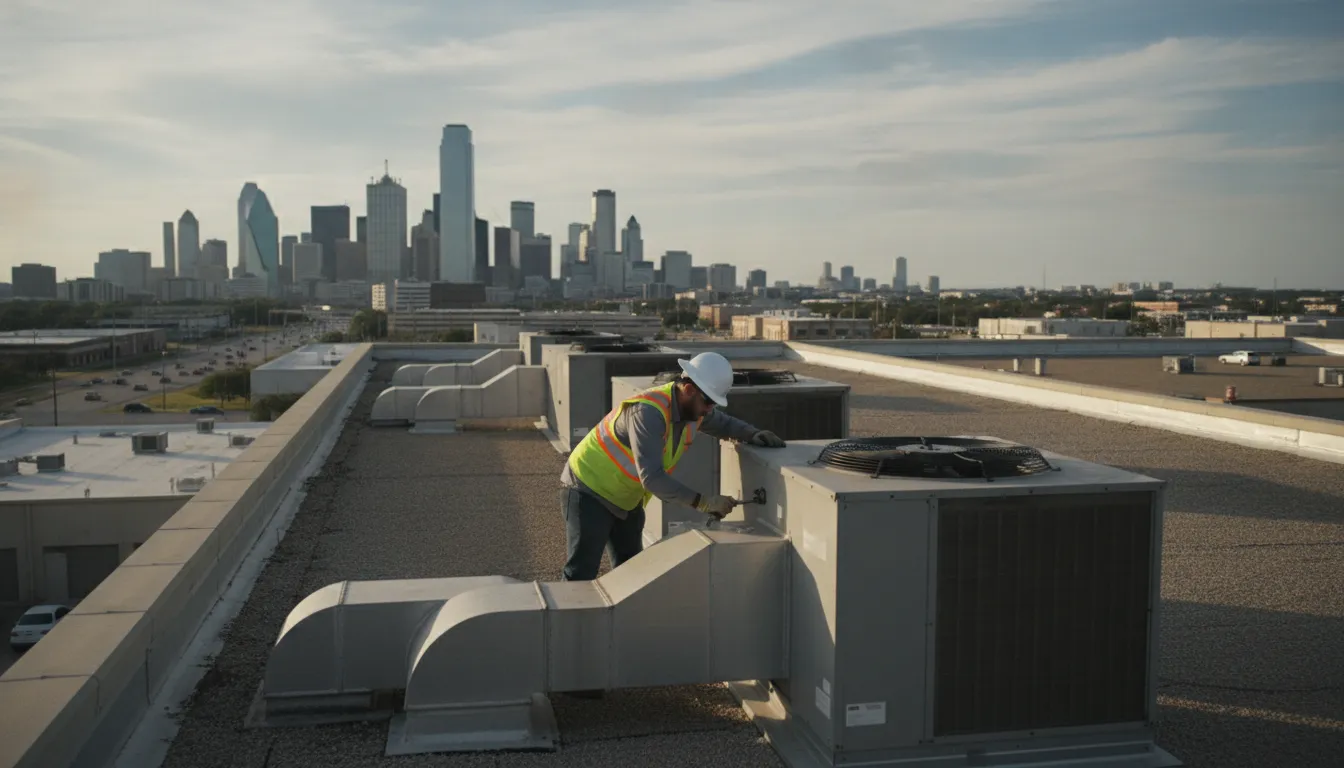
Commercial service often requires coordination with a facility manager, property owner, tenant, security desk, or maintenance team. Share the service address, equipment location, roof or mechanical-room access requirements, parking instructions, and any site safety procedures when calling. This information helps the provider plan the visit without assuming that every part of the property is immediately accessible.
Clear scope communication matters as much as technical skill. The technician should explain what was found, what can be stabilized or repaired. Which options require additional parts or work, and how the recommended action relates to the facility’s operations. Garland Heating and Air Conditioning offers commercial and emergency HVAC service across the DFW area, with quote-based pricing that should be confirmed directly before work proceeds. To discuss an urgent commercial issue, request emergency service and provide the operational details upfront.
An emergency call should begin with safe stabilization and accurate diagnosis, not an automatic recommendation to replace the system. A technician can inspect the equipment, identify the failed component, consider the system’s condition, and explain which options are realistic. A newer unit, a system with remaining manufacturer coverage, or a repair involving one isolated failure may be a reasonable candidate for repair. A repair can also make sense when the rest of the equipment is operating reliably and the underlying issue is clearly understood.
Age matters, but it is not a universal cutoff. The technician should also look at the type and severity of the failure, the history of previous repairs. Refrigerant or electrical concerns, the condition of major components, and how reliably the system has cooled the property. A single failed part does not automatically make replacement the best choice. On the other hand, repeated breakdowns or a major component failure may make a new system worth considering, particularly when continued repairs are unlikely to restore dependable operation.
Ask the technician to distinguish what is confirmed from what is only suspected. If a compressor, control board, coil, or other major component is involved, request an explanation of the repair scope and any parts or follow-up that may be needed. Complex repairs may not be completed immediately if specialty equipment or components must be sourced. That is different from being told to replace the entire system without a documented diagnosis.
Request clear, quote-based options in writing before authorizing non-emergency work. The explanation should identify the diagnosed problem, the proposed repair, relevant warranty information, expected limitations, and the alternative replacement path when appropriate. Ask how each option affects reliability, future service needs, and the remaining life of the equipment. A trustworthy provider should give you room to make an informed decision rather than treating an urgent loss of cooling as a reason to rush.
For background on the decision factors, review this guide to AC repair versus replacement. If repair is the appropriate path, Garland Heating and Air Conditioning provides AC repair and maintenance service for residential systems. Contact the company for a specific diagnosis and quote rather than relying on a general age rule or an unsourced price.
A complete loss of cooling, repeated breaker trips, an electrical burning odor. Water leaking from the air handler, or a compressor that shuts down during extreme heat warrants prompt professional evaluation. If you smell burning or see an electrical hazard, turn the system off and avoid troubleshooting energized equipment.
Some urgent repairs can be completed during the first visit when the needed parts and equipment are available. More complex failures may require a specialty component or additional work, so a technician should diagnose the system before promising a final repair timeline. Garland Heating and Air Conditioning offers same-day capability for urgent repairs without guaranteeing a specific arrival time.
Cost depends on the diagnosis, parts, labor, and timing of the call. Emergency service uses quote-based pricing, so ask what work is recommended and how it will be priced before authorizing repairs. Avoid relying on a generic online dollar amount that may not match your equipment or situation.
Start with an accurate diagnosis rather than making a rushed replacement decision. Repair may make sense when the failure is limited and the system remains reliable. Replacement can be worth discussing when major or repeated failures affect an older system. A trustworthy technician should explain both options and why each fits the equipment’s condition.
Yes. Garland Heating and Air Conditioning provides residential and commercial emergency HVAC service, including commercial AC support. Facility managers should share equipment details, site access requirements, and operational concerns when calling so the technician can prepare for the property and its priorities.
When your air conditioner fails, a clear diagnosis and practical repair options can help you decide what to do next. Call Now to request emergency AC repair in Dallas Fort Worth, or contact Garland Heating and Air Conditioning through the service form. You can also call (972) 278-3500 to reach the team.