When an air conditioner or heating system needs attention, an HVAC warranty comparison can show what is protected, who handles the work, and what costs may remain. The most useful comparison looks past the number of years and examines the equipment, labor, exclusions, claim process, and service expectations.
Coverage may come from the equipment manufacturer, the installing contractor, a maintenance provider, or a third-party home warranty company. These are separate arrangements. A parts warranty may not pay for diagnosis or labor. A workmanship promise may not cover an unrelated component. A maintenance agreement may provide scheduled visits without promising that every failure will be covered. Before choosing a repair, replacement, or service plan, gather your documents and compare each promise line by line.
An HVAC warranty is not one universal product. Its scope depends on the document, the equipment, the installation, and the conditions attached to coverage. Start by identifying which party issued the terms and which system or component they address.
A manufacturer warranty generally addresses qualifying defects in covered equipment or parts, subject to its terms. It may apply differently to a compressor, heat exchanger, coil, furnace, heat pump, control board, thermostat, or other component. Registration may be required, and the coverage period may depend on whether the original purchaser still owns the property.
A covered part does not automatically mean a completely covered repair. Diagnosis, removal, installation of the replacement part, refrigerant, shipping, disposal, permits, access equipment, and after-hours labor may be handled separately. Ask for a written explanation of what the warranty supplies and what the property owner may still pay.
Installer workmanship terms relate to the quality or performance of the installation work under a written agreement. They may address an installation-related issue for a stated period, but they are not the same as a manufacturer warranty. Read the installation agreement to learn what work is included, how a callback is requested, and whether another contractor can affect the process.
A maintenance agreement describes planned service and stated tasks. It may include scheduled inspections, filter recommendations, drain checks, or other listed work, but the scope depends on the agreement. Maintenance helps you manage system care; it does not automatically replace equipment or labor coverage.
A third-party home warranty is a separate contract with its own service fees, authorization rules, limits, exclusions, and contractor assignment process. A Texas-focused comparison can be a starting point for questions, but outside comparisons may change and do not replace the controlling contract. Review an example of a Texas home warranty comparison, then verify every important detail with the provider’s current terms.
Put the choices side by side before you decide. The table below is a planning tool, not a promise of coverage. The agreement, installation paperwork, or quote controls.
| Option | May address | Questions to ask | Cost structure |
|---|---|---|---|
| Manufacturer warranty | Qualifying equipment or parts defects | Is registration needed? Are labor, refrigerant, and diagnosis separate? | May be included with eligible equipment; service costs can remain |
| Installer workmanship | Installation-related issues under written terms | What work and duration are included? Who handles callbacks? | Review the installation agreement |
| Maintenance agreement | Planned service and listed maintenance tasks | How many visits? Which tasks, priorities, and exclusions apply? | Quote-based recurring arrangement |
| Third-party home warranty | Selected systems under a separate contract | What fees, caps, authorization rules, and contractor choices apply? | Contract charge plus possible service fees and uncovered work |
| Pay-as-needed service | Diagnosis, repair, or replacement planning | What is in the quote, and what alternatives exist? | Customized quote for the equipment and work |
For a new system, compare the proposed equipment and installation terms together with new HVAC installation guidance. A longer term is not automatically better if labor, exclusions, or the claim route do not fit the property.
Make an inventory of the condenser, coil, furnace, heat pump, air handler, thermostat, controls, ductwork, and separate zones. For a commercial property, add rooftop units, refrigeration, compressors, controls, and specialized equipment. Record the location, model number, serial number, installation date, and current condition for each asset.
One document may cover an outdoor unit while another covers the indoor coil or labor. Do not assume that a warranty for the system’s main unit includes every connected component. Ask whether accessories, duct modifications, electrical work, and controls are treated as part of the system or as separate items.
Look for exact wording about diagnosis, labor, refrigerant, shipping, disposal, permits, lifts, crane service, and after-hours calls. Ask a concrete question: if a covered component fails next month, which charges could still be billed? A written example is more useful than a general statement that the system is covered.
When comparing a repair with replacement, request an itemized quote. It should identify the observed issue, the proposed work, parts or equipment, labor, and any exclusions or allowances. Pricing is quote-based because equipment, access, property conditions, and scope differ.
Search for per-visit limits, annual caps, service fees, pre-existing-condition rules, corrosion exclusions, maintenance requirements, improper-installation language, and code-upgrade provisions. Check whether the document excludes damage related to unauthorized modifications, water, electrical conditions, pests, or unusual operating conditions.
For commercial customers, review limits tied to rooftop access, refrigeration, temporary cooling, overtime, holiday response, product loss, or interruption of business. A plan that looks broad on paper may have a limit that matters during a high-impact failure.
Confirm whether you choose the technician or an administrator assigns one. Ask whether approval is required before diagnosis or repair, how the provider handles a disputed claim, and who decides between repair and replacement. Check the process for weekends, holidays, extreme heat, and repeat failures.
Response time is only one part of service. A plan may have a fast intake process but still require authorization before work begins. Keep the contract’s claim number and contact instructions with the equipment records so a failure does not turn into a search for paperwork.
Confirm the start date, registration deadline, renewal date, cancellation rules, transfer conditions, and any deadline for reporting a problem. Save the contract, installation paperwork, registration proof, maintenance invoices, repair quotes, photographs, claim numbers, and correspondence together. A digital folder labeled by system can help a homeowner or property manager explain the history quickly.
Some contracts limit older equipment or exclude conditions that began before coverage. If the system already leaks, short-cycles, makes unusual sounds, freezes, or fails to cool, describe that condition accurately and seek a diagnosis. Do not assume that starting a new contract will make an existing fault eligible.
For an older system, compare the cost and likelihood of a covered repair with the system’s condition and the potential scope of replacement. A component may be eligible while the underlying airflow, sizing, ductwork, electrical, or comfort issue remains unresolved.
Contract language may require maintenance records or exclude damage linked to neglect. Keep filter and service records, but do not attempt electrical or refrigerant work yourself. Ask what documentation is accepted and whether the original installation must meet specific requirements.
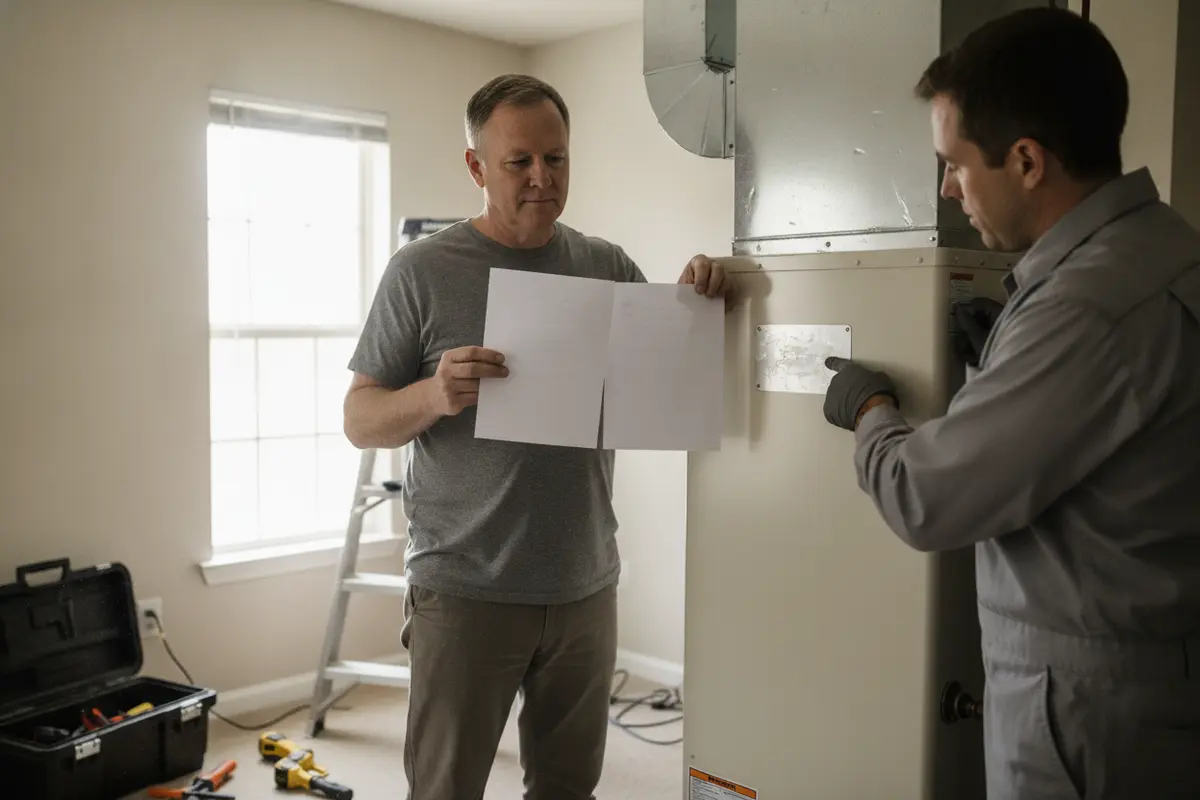
When installation quality is part of the question, collect the original proposal, start-up information, equipment data, permit records if available, and prior recommendations. These records help separate an equipment problem from an installation or property-condition problem.
A replacement can involve permits, electrical changes, drainage, duct modifications, refrigerant handling, access equipment, disposal, code-related work, or alterations needed to fit the new equipment. Ask whether each item is included, excluded, limited, or subject to a separate quote.
For a business, also ask whether temporary cooling, overtime, emergency access, product protection, or interruption losses are outside the plan. Warranty coverage should be reviewed alongside the operational risk of downtime.
Not necessarily. Check the definition of an emergency, hours of service, authorization requirements, and added fees. Ask what to do during a weekend or extreme heat and whether you may contact a local HVAC provider directly.
Garland Heating and Air Conditioning documents 24/7 emergency service availability through its call center. Response depends on the situation, location, equipment, and scheduling. Use the service request route and describe the symptoms, equipment type, and any safety concern clearly.
If there is a burning smell, exposed wiring, smoke, or water near electrical components, prioritize safety. Turn equipment off when appropriate and seek qualified help. A coverage question should not delay a safety decision.
Request the equipment terms, workmanship terms, maintenance recommendations, and a written quote. Confirm who registers the equipment, which documents you receive, and what starts the coverage period. Compare system design and suitability for the property as well as the length of coverage.
Useful questions include: Who handles a defective part? Who pays for labor? What happens if the equipment is replaced? Are thermostat, coil, duct, drain, and electrical changes included? What records should the homeowner keep? The questions to ask before AC replacement can help you prepare for that conversation.
Gather repair history, current symptoms, equipment age, parts availability, comfort complaints, and recent utility or operating concerns. Ask for the recommended work, uncovered portions, and alternatives in writing. A warranty may help with an eligible repair but may not resolve restricted airflow, poor sizing, repeated leaks, or system-wide performance problems.
Use the HVAC replacement planning guide to organize cost factors without treating a general range as a quote. A customized proposal should reflect the equipment and property.
Compare the agreement’s actual tasks and visit schedule with your system and use. Ask whether inspections address coils, drains, airflow, electrical components, safety controls, and operating performance. Also ask how recommendations are documented and whether priority service is stated in the agreement.
Maintenance and warranty coverage are separate decisions. The HVAC maintenance guide can help you create questions about routine care. If indoor dust or debris is part of the concern, review the company’s DFW air duct cleaning service separately; duct cleaning is not the same as repairing a failed HVAC component.
List each asset’s location, type, model, serial number, age, controls, access needs, and operational importance. Note business hours and the consequence of downtime. This helps a property manager see whether a policy covers all equipment or only selected systems and whether response terms fit actual operating needs.
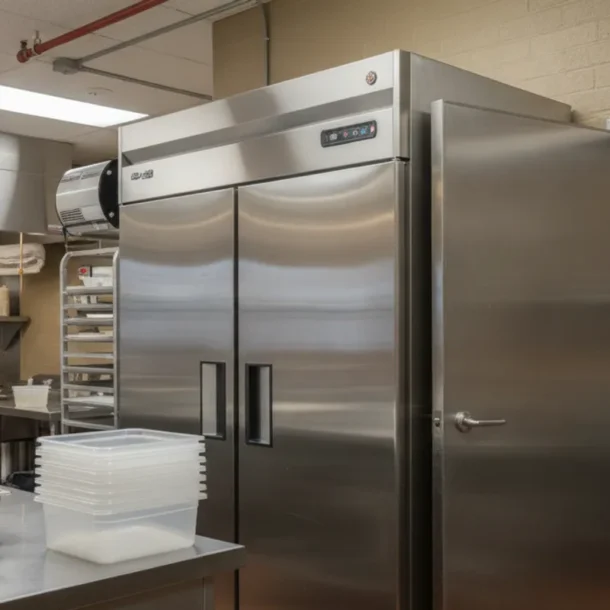
Garland Heating and Air Conditioning serves light and heavy commercial AC needs and commercial refrigeration. Review commercial refrigeration services or the DFW service area information when identifying the right service discussion.
Write down the system type, model and serial numbers, installation date, symptoms, indoor temperature concerns, recent repairs, and the exact date the problem began. Note whether the equipment starts, runs briefly, trips a breaker, leaks water, makes noise, or shows a control message. These details help a service professional understand the call and help you match the problem to the correct document.
For each option, record the likely covered item, uncovered labor, service fee, authorization step, expected timing, and next decision point. For example, a covered control board replacement may still require a diagnostic visit and installation labor. A replacement proposal may cost more at the outset but address an aging system, while a repair may be appropriate when the equipment is otherwise in suitable condition. The purpose is not to predict an outcome from the warranty alone; it is to make the questions visible.
Ask for the applicable coverage section, an itemized scope, the assumptions behind the quote, and a list of work that is not included. If the administrator denies a claim, request the reason and the appeal or review process. Keep notes of names, dates, claim numbers, and promised follow-up. Clear communication is especially important when an owner, tenant, property manager, warranty administrator, and contractor all have different roles.
Prepare model and serial numbers, installation date, registration proof, invoices, current contracts, maintenance records, recent symptoms, error codes, photographs, and claim correspondence. For several systems, bring an asset list. Write down questions about labor, refrigerant, access, permits, authorization, replacement, emergency calls, renewal, and transfer.
Clear records do not guarantee that a claim will be accepted, but they help identify the responsible party and clarify the next step. If you need a repair or replacement discussion, the AC repair and maintenance route can help you describe the system’s condition.
No. Compare covered items, labor, exclusions, claim process, registration, maintenance requirements, and response conditions. The number of years does not show likely out-of-pocket costs by itself.
Not automatically. Labor, diagnosis, refrigerant, shipping, access, disposal, permits, and code-related work may be treated separately. Ask for the applicable terms and a written estimate of non-covered work.
That depends on the agreement. Some arrangements require an authorized provider or prior administrator approval. Check the process before a failure occurs and keep contact instructions with the equipment records.
Compare the service fee, caps, exclusions, pre-existing-condition rules, authorization process, and contractor choice with direct repair, replacement planning, or a maintenance arrangement. The contract and system condition determine whether it suits you.
Check only safe, simple items such as thermostat settings and a visibly restricted filter. Do not open electrical panels or handle refrigerant. Review the relevant warranty instructions, contact a qualified provider, describe the symptoms, and ask about possible charges before work begins.
A sound HVAC warranty comparison covers equipment, labor, workmanship, exclusions, authorization, response, documentation, and uncovered costs—not just years of coverage. Garland Heating and Air Conditioning is a family-owned provider that has served the Dallas Fort Worth area since 1952, with residential, commercial, refrigeration, and related HVAC capabilities. To discuss equipment details or request a customized, quote-based service plan, contact the team through the service page or call (972) 278-3500.
Schedule a warranty and HVAC review
Bring your documents, ask which costs remain outside coverage, and choose the service path that matches your equipment and property needs.