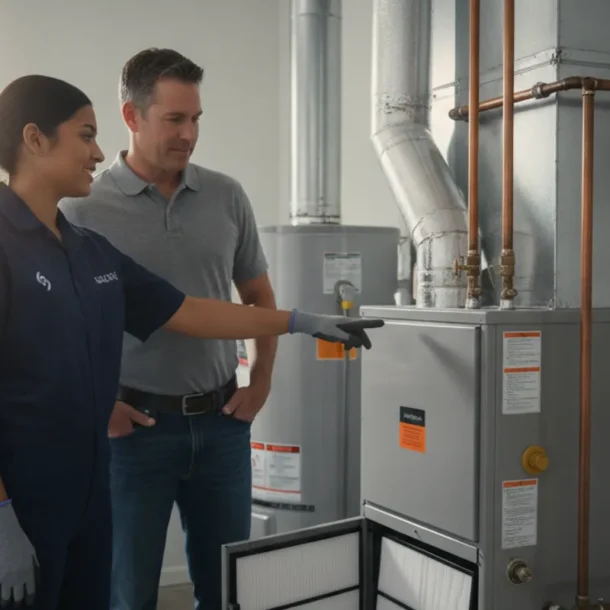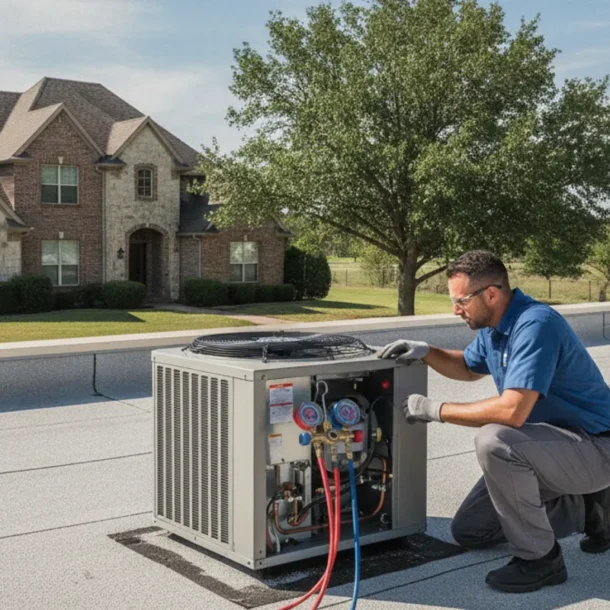

If your air conditioner is struggling to keep up, asking the right questions before an AC unit replacement can help you understand the work and choose a system that fits your home.
Request a customized AC replacement quote
Short answer: Before approving an AC replacement, ask why replacement is recommended, how the new system will be sized, what equipment and installation work the quote covers, and what your options are for repair, efficiency, and payment. Get the answers in writing, compare the same scope across proposals, and make sure the plan accounts for your home’s ductwork and comfort needs—not just the equipment label.
A system that runs constantly, cools unevenly, makes new noises, or needs repeated service may need attention, but a symptom by itself does not prove that replacement is the only answer. Ask the technician to explain what they found, which parts or conditions are causing the problem, and whether a repair could restore reliable operation.
Request a clear comparison of repair and replacement. The answer should consider the condition of the equipment, the nature of the fault, how the system has performed, and the work each option requires. There is no single age or repair-cost rule that fits every home. If the system has a refrigerant leak, for example, ask what has been confirmed and what repair would involve rather than assuming that a leak automatically means a new unit.
For a useful comparison, ask the contractor to separate what is known from what still needs checking. A written note might identify a failed component, describe the test or observation that supports the diagnosis, and list the repair proposed. Then ask what would remain uncertain after repair and what findings would change the recommendation. This helps you compare the actual choices instead of treating “repair” and “replace” as unexplained labels.
Useful information may include the system’s model and condition, the specific cause of poor cooling, airflow observations, thermostat operation, and whether the indoor and outdoor components are compatible. Ask whether the contractor checked the accessible parts of the system and what could not be assessed. If you want to understand common symptoms before the visit, Garland Heating and Air Conditioning’s guide to reasons an AC may not cool can help you organize what you have noticed.
A diagnosis should explain the observed problem, not rely only on a general statement such as “the unit is old.” If you are weighing a repair against a replacement, compare both scopes, including what work is excluded and whether the repair addresses the underlying cause.
Do not choose a replacement solely by matching the size printed on the old equipment. The existing system might not have been selected for the home’s current layout or needs. Ask how the contractor will determine the right capacity and what home details are considered, such as conditioned area, ceiling height, insulation, windows, shading, occupancy, and duct configuration.
Ask whether the proposed size is based on a documented load calculation or another clear assessment rather than a quick visual estimate. The important point is that the recommendation should have a reason you can understand. An AC system that is not matched to the home can contribute to comfort or operating issues; more capacity is not automatically better.
Before the appointment, gather a few details that help explain how the house behaves: which rooms are occupied most, whether doors are usually open or closed, and when the warmest rooms become uncomfortable. If you have recently added a room, changed insulation, replaced windows, or altered the floor plan, mention it. These examples do not determine the correct size by themselves, but they give the contractor relevant context to check during the assessment.
Tell the contractor where the home feels warm, whether some rooms are consistently different from others, and when the problem occurs. Ask how the proposed system and any identified airflow issues are expected to address those concerns. A new condenser alone may not solve a comfort problem caused by duct restrictions, leakage, poor return airflow, or other conditions that need separate attention.
If you are considering a different system type, ask how it fits your home and usage. Garland’s AC sizing guide for Texas homeowners offers a starting point for understanding why capacity should be matched to the house rather than guessed.

Ask for a written, itemized description of the proposed system and installation. A replacement project can involve more than setting a new outdoor unit in place. The quote should make clear which indoor and outdoor components are included, what connection or refrigerant-line work is proposed, and whether changes to the thermostat, electrical connections, drain arrangement, or ductwork are part of the scope when needed.
Ask what preparation, removal, installation, and startup steps are included, and which conditions could change the work. Clarify how the contractor handles existing equipment and whether permits or other project requirements apply to your specific job. Do not assume that two proposals cover the same work just because they list equipment with similar descriptions.
When reviewing proposals, mark each line as included, optional, excluded, or dependent on a condition discovered during installation. For instance, if one quote lists a thermostat but another does not, ask whether the existing control is compatible and what the price difference covers. If duct changes are mentioned only as a possibility, ask how you will approve that work and receive a revised scope before it proceeds.
| Question | What to look for in the answer | Why it helps |
|---|---|---|
| What equipment is included? | Model or equipment details for the indoor and outdoor components, and how the components work together | Lets you compare the actual systems proposed |
| How was the size selected? | A clear explanation of the home’s needs and the basis for the capacity recommendation | Connects equipment selection to your house, not just the old unit |
| What installation work is included? | Removal, installation, connections, startup, and any specified duct or accessory work | Helps reveal differences between project scopes |
| What is excluded or conditional? | Items not included and conditions that may require added work or a revised quote | Reduces ambiguity before work begins |
| What are the quote and payment terms? | Customized project price, payment details, and any available financing information | Gives you a basis to plan without relying on generic price estimates |
AC replacement pricing is quote-based. The right price depends on the equipment and the work proposed for your home, so request a customized quote rather than relying on a generic online range. Garland’s guide to AC installation cost factors in DFW explains common factors that can affect a project, while a contractor can clarify the scope for your property.
Ask for the efficiency rating of each proposed option and whether the equipment combination is compatible. Have the contractor explain the practical differences between options in plain language. A higher rating is one part of the decision; the total project scope, system sizing, home conditions, and how the equipment will be used also matter.
Ask which features are standard and which are optional. For example, clarify whether a proposed thermostat or other accessory is required for the system to operate as described, or is an add-on. If you are comparing single-stage and variable-capacity equipment, ask what the difference could mean for comfort and operation in your specific home rather than relying on a label alone.
It can help to compare options using the same questions rather than comparing one feature in isolation. Ask what changes between the proposed systems, which comfort or control features you gain, and whether the installation scope also changes. If an option costs more, ask the contractor to explain the added equipment or work so you can decide whether it addresses a priority you actually have.
A new AC needs a suitable path to move air through the home. Ask whether existing supply and return ductwork appears appropriate for the proposed system, and whether any airflow or duct concerns were observed. Clarify whether duct repairs, sealing, or modifications are included, recommended separately, or not indicated. Do not assume duct work is covered just because the equipment is being replaced.
Ask how routine care fits into the decision, too. The company’s AC repair guide can help you understand the repair route, and its duct cleaning service page describes professional cleaning of accessible residential supply and return ductwork. Duct cleaning is a distinct service, not a substitute for correcting a sizing, airflow, or equipment problem identified during an installation assessment.
Before scheduling, ask how long the work is expected to take, which parts of the home and yard the crew will need to access, and whether you should move belongings or keep pets away from the work area. Ask how the old equipment will be removed and whether there are steps you need to take before the appointment. Specific timing can vary with the equipment and the conditions found at the home, so ask about your project rather than assuming a standard schedule.
Discuss any special considerations, such as limited access, a gate, a narrow attic opening, or household schedules. If you have concerns about cooling the home during the work, ask what to expect and how the work plan accounts for the system being unavailable during installation.
A simple preparation list can prevent last-minute questions: clear the agreed path to indoor equipment, secure pets, note any access instructions, and confirm who will be home to discuss decisions. Do not move or disconnect equipment yourself. If the crew finds an unexpected condition, ask for an explanation and a written description of any proposed change before approving additional work.
Ask what the contractor does to start up and check the replacement system, and whether the technician will explain the thermostat and basic operation before leaving. Find out what paperwork you will receive, including equipment information and any applicable manufacturer documentation. Ask whom to contact if you have a question after installation.
For a broader overview of the sequence, see Garland’s AC installation timeline guide. It can help you prepare questions, while the installer should confirm timing and details for your home.
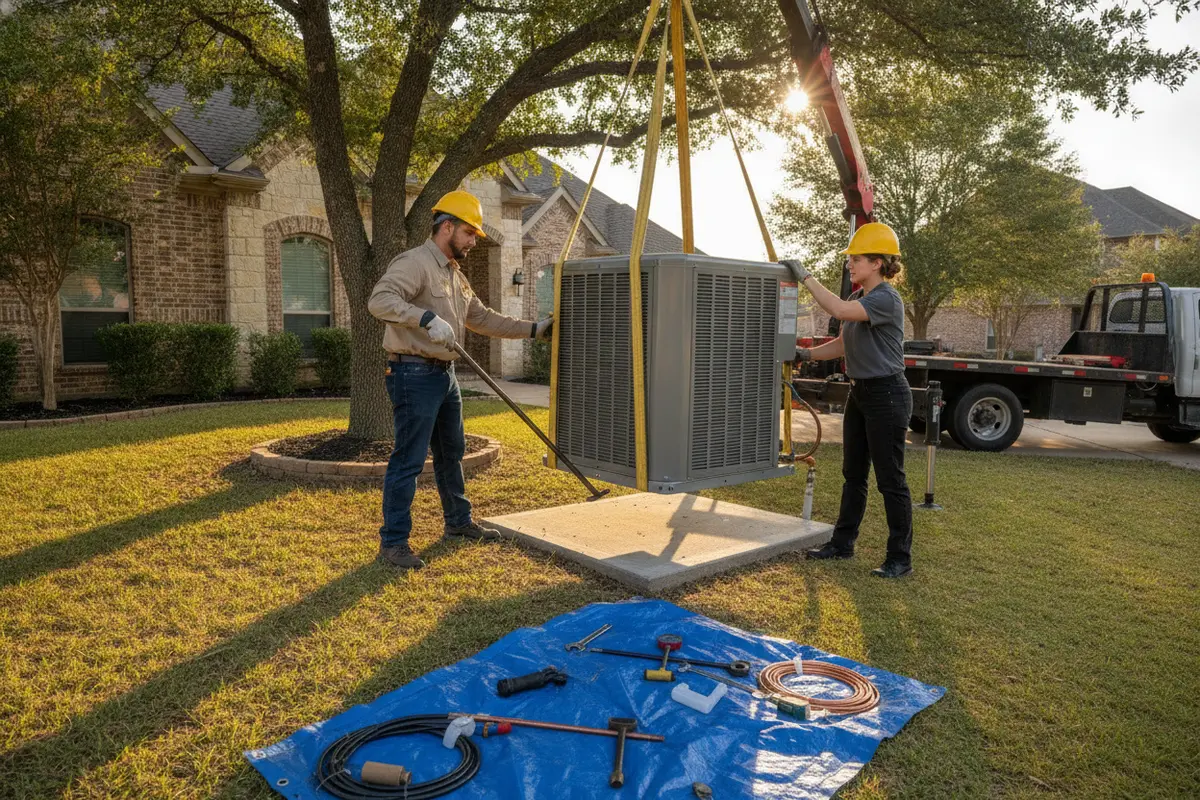
Ask which warranty terms apply to the equipment and what, if anything, covers the installation work. Confirm any conditions, required maintenance, registration steps, exclusions, and how to request service. Warranty coverage varies by product and terms, so do not assume that a particular duration or benefit applies until it is shown in your proposal or documentation.
Ask about the company’s process for service after installation and how to reach it if the system needs attention. Garland Heating and Air Conditioning is family-owned and has served the Dallas-Fort Worth area since 1952. The company provides residential and commercial HVAC services across the area; you can review its DFW service area and contact details to confirm the appropriate route for your address.
Request the complete project quote and ask which payment options may be available. Financing options are available for qualified customers; ask the company directly for current details and applicable terms. Do not base your decision on an assumed rate, approval, monthly payment, discount, or promotion unless the details have been provided for your specific project.
A Texas Department of Housing and Community Affairs weatherization best-practice document lists complete furnace, AC, or HVAC replacement among possible energy-efficiency measures when using the LIHEAP Priority List. That describes a program context, not a promise that a particular homeowner or AC replacement qualifies. See the TDHCA unit replacement best-practice document for the source language, and verify any assistance program’s current rules with the program administrator.
If available, note the system’s model information, approximate installation date, recent repairs, and any recurring issues. You do not need to diagnose the equipment yourself. A short timeline of symptoms can help the technician understand whether a problem occurs all day, during the hottest part of the day, in only certain rooms, or after a thermostat setting change.
Make a list of rooms that feel too warm or too cool, changes to your household or home layout, and any concerns about noise or controls. Mention whether you plan to stay in the home long term or have other relevant plans; that context can help frame a discussion of options without turning the decision into a one-size-fits-all recommendation. If you have received other quotes, compare their written scope and ask questions about differences.
Garland Heating and Air Conditioning has served Dallas-Fort Worth since 1952 and provides AC installation and replacement for local customers. Its air conditioner selection guide is a useful place to review equipment considerations. The company also serves many communities around DFW; if you are in Garland, Richardson, Plano, or elsewhere in the area, confirm service for your specific address.
Not necessarily. A running system may still have a fault, perform poorly, or need repair, but its operation alone does not decide whether replacement is appropriate. Ask for a diagnosis and a comparison of repair and replacement options based on the condition of your equipment and your home’s needs.
Ask the contractor to check compatibility with the existing indoor components and explain what the complete system requires. The right scope depends on the equipment combination and the condition of the system. Get the proposed components and any compatibility considerations documented before agreeing to work.
Compare the equipment, sizing rationale, installation tasks, duct or accessory work, exclusions, quote terms, and applicable warranty information. Ask each contractor to clarify differences in writing. A lower figure may reflect a different scope, so compare what each proposal actually covers.
It may not, especially if airflow, ductwork, insulation, sun exposure, or another condition contributes to the room-to-room difference. Describe the issue during the assessment and ask whether the proposed work addresses its likely cause. Have separate duct or home-envelope work identified clearly in the scope.
Before choosing a system, get clear answers about the diagnosis, sizing, installation scope, equipment options, and payment terms. Garland Heating and Air Conditioning can discuss a customized replacement quote for your property; contact the company to review your needs and next steps.
Discuss your AC replacement options
Taking time to compare the details helps you make an informed replacement decision for your home and comfort priorities.