If you are researching duct cleaning cost in Dallas-Fort Worth, the most useful answer is not a made-up flat rate. The price depends on the size and layout of the accessible ductwork, the number of supply and return runs, the condition of the system, and the scope a technician can document.
Request a duct cleaning quote and ask about the current $300 coupon. Garland Heating and Air Conditioning can review your DFW home or business and explain the recommended scope before service begins.
Duct cleaning cost in Dallas-Fort Worth is quote-based because homes do not have identical duct systems. A useful quote should identify the accessible supply and return ductwork, equipment areas, number of systems, access conditions, and any optional work. Garland Heating and Air Conditioning also has a customer-provided $300 duct cleaning coupon promotion. Confirm current eligibility and the final quote before booking.
For broader budgeting context, see the HVAC Cost Guide for Dallas-Fort Worth homeowners. This article focuses only on duct cleaning, so you can compare a cleaning quote without confusing it with HVAC repair, replacement, or ductwork construction.
There is no responsible one-number answer for every DFW property. A professional quote should reflect home size, duct count, the number of HVAC systems, contamination, accessibility, and the exact components included. Garland Heating and Air Conditioning uses quote-based pricing instead of asking homeowners to approve a vague online estimate.
A low online number may describe only a few visible registers, while a complete service may involve accessible supply and return ductwork, trunk lines, registers, and related HVAC components. Another company may price by the vent, by the system, or by the job. Those approaches are not comparable unless the scope is written down.
DFW homes also vary widely. A single-story Garland home with easy attic access is not the same project as a two-story Plano home with multiple systems and long, difficult-to-reach runs. A quote that accounts for those differences is more useful than a national average that does not describe your property.
Garland Heating and Air Conditioning serves residential and commercial customers across Dallas, Garland, Richardson, Plano, and surrounding DFW communities. The team can explain what the quote covers rather than asking you to compare a bare number with a full-service proposal. For the broader budgeting framework behind this cluster, return to the Dallas-Fort Worth HVAC cost guide.
The main price factors are the amount of ductwork, the number of supply and return openings, the number of HVAC systems, contamination, and access. Dryer vent work or other add-ons can also change the total when requested. A clear estimate connects each charge to a specific condition or service.
A larger home usually has more registers, longer branch runs, and more surface area to inspect. The number of supply and return openings matters, but vent count alone does not describe the whole system. Ask whether the proposal covers the connected ductwork or only the grilles visible from the rooms.
Ducts in an open attic may be easier to reach than runs behind finished ceilings or in crowded mechanical spaces. Multiple air handlers add equipment and ductwork to the inspection. Flexible ductwork, tight access points, and unusual layouts may require different tools and more setup time.
Professional duct cleaning may address accumulated dust, pet hair, dander, allergens, and debris in accessible residential supply and return ductwork. Renovation dust, pest residue, visible mold-like growth, or moisture damage can require a separate conversation. Do not authorize a vague remediation charge without seeing the condition and understanding which provider is qualified to correct it.
| Quote factor | What to ask | Why it matters |
|---|---|---|
| Home size and duct count | How many supply and return runs are included? | More accessible ductwork generally means more inspection and cleaning work. |
| Number of HVAC systems | Does the scope cover each air handler and connected duct system? | Each system can require separate access, setup, and cleanup. |
| Accessibility | Are attic, crawlspace, and finished-wall access conditions included? | Hard-to-reach areas can change the time and equipment required. |
| Contamination | What was observed, and can the technician show it? | Dust, pet debris, renovation residue, and suspected mold should not be treated as identical. |
| Add-ons | Are dryer vent cleaning or other services optional? | Separate scopes make it easier to compare quotes and avoid surprises. |
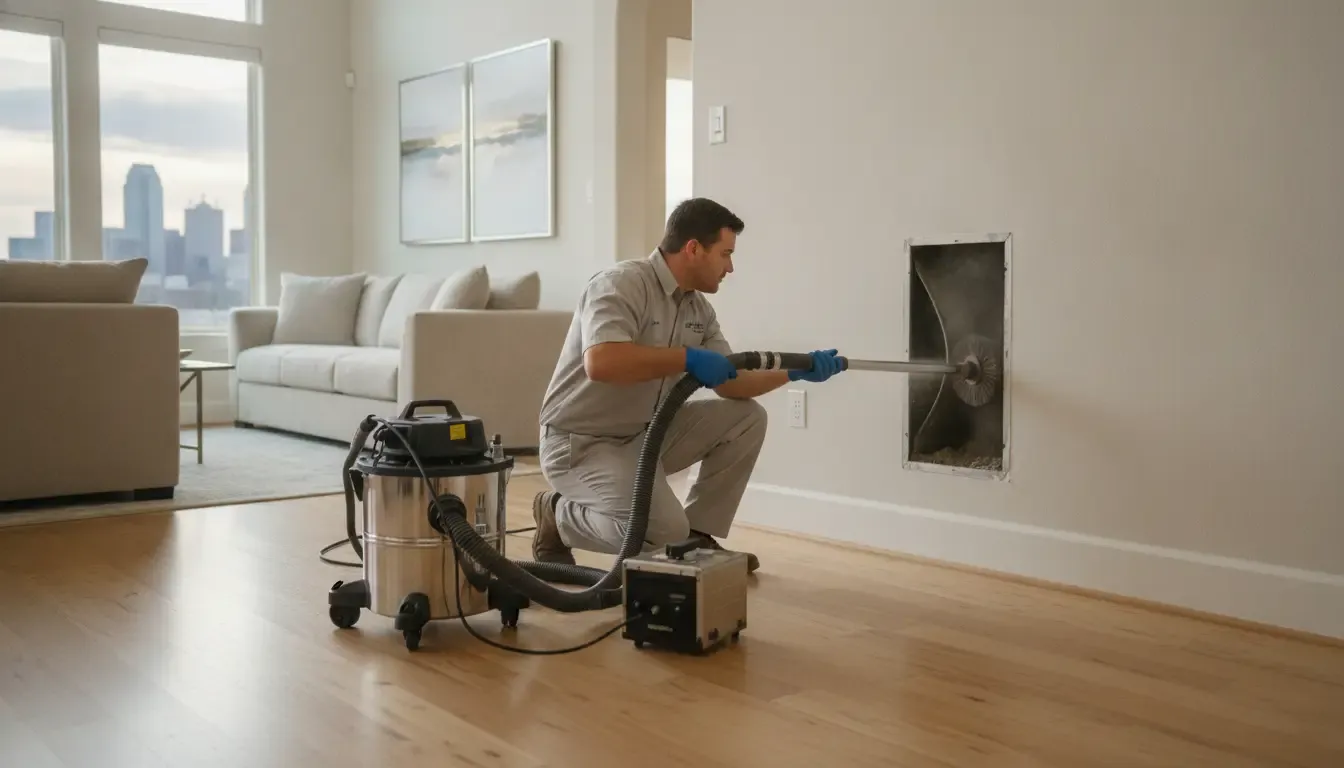
A thorough service starts with an inspection and a written scope. It may include cleaning accessible supply and return ductwork, registers, grilles, and appropriate HVAC components using agitation and collection equipment. The provider should explain access, protection, cleanup, and any work that is outside the cleaning scope.
The technician should discuss odors, visible dust, pet hair, renovation history, pest concerns, and airflow complaints before recommending work. The U.S. Environmental Protection Agency does not recommend routine duct cleaning for every home. Its guidance says homeowners should consider cleaning when there is substantial visible mold growth in hard-surface ducts or HVAC components, vermin infestation, excessive dust and debris, or particles released from supply registers. Read the EPA guidance on air duct cleaning.
The National Air Duct Cleaners Association describes two important parts of HVAC cleaning: loosening contaminants and collecting them. Brushes, air whips, or contact vacuuming can loosen material, while negative pressure helps move the loosened debris toward collection equipment. NADCA’s proper cleaning methods guide explains why cleaning only a few registers may leave the rest of the system untouched.
Garland Heating and Air Conditioning’s documented duct-cleaning service uses professional equipment to clean accessible residential supply and return ductwork. Approved benefits of the promotion include reducing dust circulation, removing pet hair, dander, allergens, and debris, supporting airflow, and helping the home feel fresher and cleaner. Results depend on the system’s actual condition, so the company should not promise a universal health or energy outcome.
Ask whether the quote includes registers, grilles, trunk lines, and accessible equipment areas. If a technician recommends sealing, repairs, mold remediation, pest control, or replacement, request a separate explanation and written scope.
Be cautious when a provider advertises a teaser price without defining the home size, number of systems, ductwork, equipment, or add-ons covered. A responsible contractor should inspect the property, show the condition being discussed, and explain the full scope before requesting approval.
A low quote is not automatically wrong, but it deserves a scope comparison. Ask the provider to list the same items for every bid. You can also compare the provider’s experience, background-checked technicians, service area, scheduling, and customer support rather than comparing price alone.
For a deeper discussion of when cleaning is appropriate, read Garland Heating and Air Conditioning’s guide to whether duct cleaning is worth it in DFW. For the service sequence itself, see how professional duct cleaning works.
The customer-provided promotion offers a $300 coupon for applicable duct cleaning service. Ask Garland Heating and Air Conditioning to confirm that the promotion is active, which service scope qualifies, whether there are eligibility limits, and how the coupon appears on the written quote. Do not assume it applies to unrelated HVAC work.

This process keeps the promotion useful without turning it into a promise that every home has the same needs. Garland Heating and Air Conditioning has served the Dallas-Fort Worth area since 1952 and can provide a quote based on the property, not a generic online assumption.
Choose the quote that clearly explains the system condition, cleaning scope, access plan, containment method, exclusions, and promotion terms. If the proposal is unclear, ask questions before work starts. A short conversation with a local HVAC professional can prevent a limited service from being confused with complete duct cleaning.
Garland Heating and Air Conditioning serves residential and commercial customers throughout the DFW metroplex, including Garland, Richardson, Plano, Dallas, and surrounding communities. The company offers quote-based HVAC service, certified and background-checked technicians, same-day availability, and 24/7 emergency service for urgent HVAC needs.
Contact Garland Heating and Air Conditioning to review your duct cleaning scope and confirm the $300 coupon. Call (972) 278-3500 as plain text or use the contact form to request the next step.
Request your written duct cleaning quote and confirm the $300 coupon before booking. Garland Heating and Air Conditioning can explain the scope for your home or business.
No. The EPA does not recommend routine cleaning for every home. An inspection is more useful when there is substantial visible mold in hard-surface ducts or components, vermin contamination, excessive dust and debris, or particles coming from supply registers.
Home size, duct count, system count, access, contamination, and the exact components included usually matter most. Dryer vent work or other add-ons can change the quote. Ask for each scope to be listed separately.
No. It is a customer-provided promotion for applicable duct cleaning service. Garland Heating and Air Conditioning should confirm current eligibility and provide the final quote based on the property and requested scope.
No. Duct cleaning addresses accumulated material in accessible ductwork and related components. Filters, moisture control, housekeeping, ventilation, and regular HVAC maintenance also affect indoor air quality.
Compare the written scope, number of systems, accessible ductwork, registers and equipment included, access assumptions, containment method, exclusions, add-ons, technician qualifications, and promotion terms. A lower number is not necessarily a lower total cost if important work is omitted.