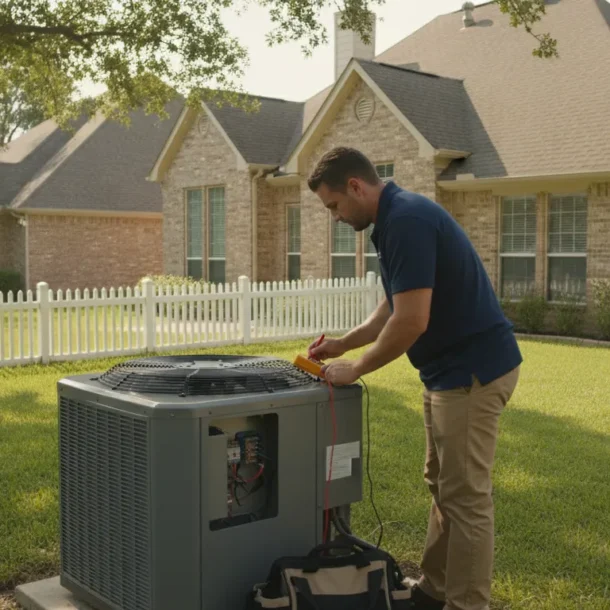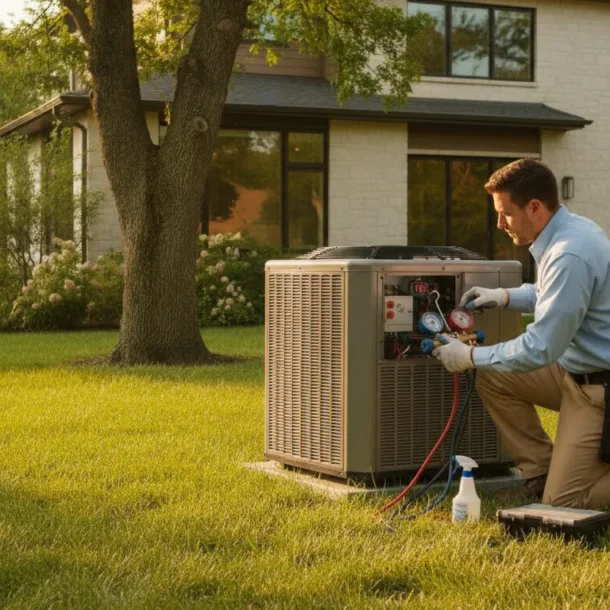
When dust, pet hair, or a musty odor keeps returning, the visible vent is only one small part of the HVAC system. Contact us for professional duct cleaning and discuss your options with Garland Heating and Air Conditioning and discuss the right next step for your DFW home or business.
So, how does duct cleaning work? A professional service starts with an inspection, protects your floors and furniture, and turns off the HVAC system. Technicians then connect a powerful vacuum to create negative pressure, use tools such as rotating brushes and air whips to loosen buildup, and clean accessible vents and registers. Done properly, the work addresses the duct system rather than simply vacuuming the vent covers. The exact scope depends on the system’s condition and what the inspection reveals.
Knowing the process helps you compare a thorough service with a quick vent-only visit. The first step is understanding the equipment technicians bring and how each tool helps contain and remove debris. For a broader overview of HVAC system care in the Dallas-Fort Worth area, read our guide on AC Repair and Emergency HVAC Service in Dallas-Fort Worth: What to Know.
Professional duct cleaning uses more than a household vacuum and a brush attachment. Technicians combine high-powered extraction equipment with agitation tools that loosen debris from duct surfaces, then remove it from the HVAC system. The equipment listed below is commonly used in a detailed cleaning process. Though the exact setup depends on the duct layout and access points in the home or business.
A truck-mounted HEPA vacuum system provides the high-volume extraction needed for professional work. The technician connects the vacuum to the ductwork and creates negative pressure throughout the system. This airflow helps pull loosened dust and debris toward the collection unit instead of allowing it to spread through the building. High-powered vacuums are one of the core tool categories used alongside rotating brushes and air whips.
Before connecting equipment, the technician turns off the HVAC system. This is an important safety step because the blower should not operate while access panels are open or cleaning tools are inside the ductwork.
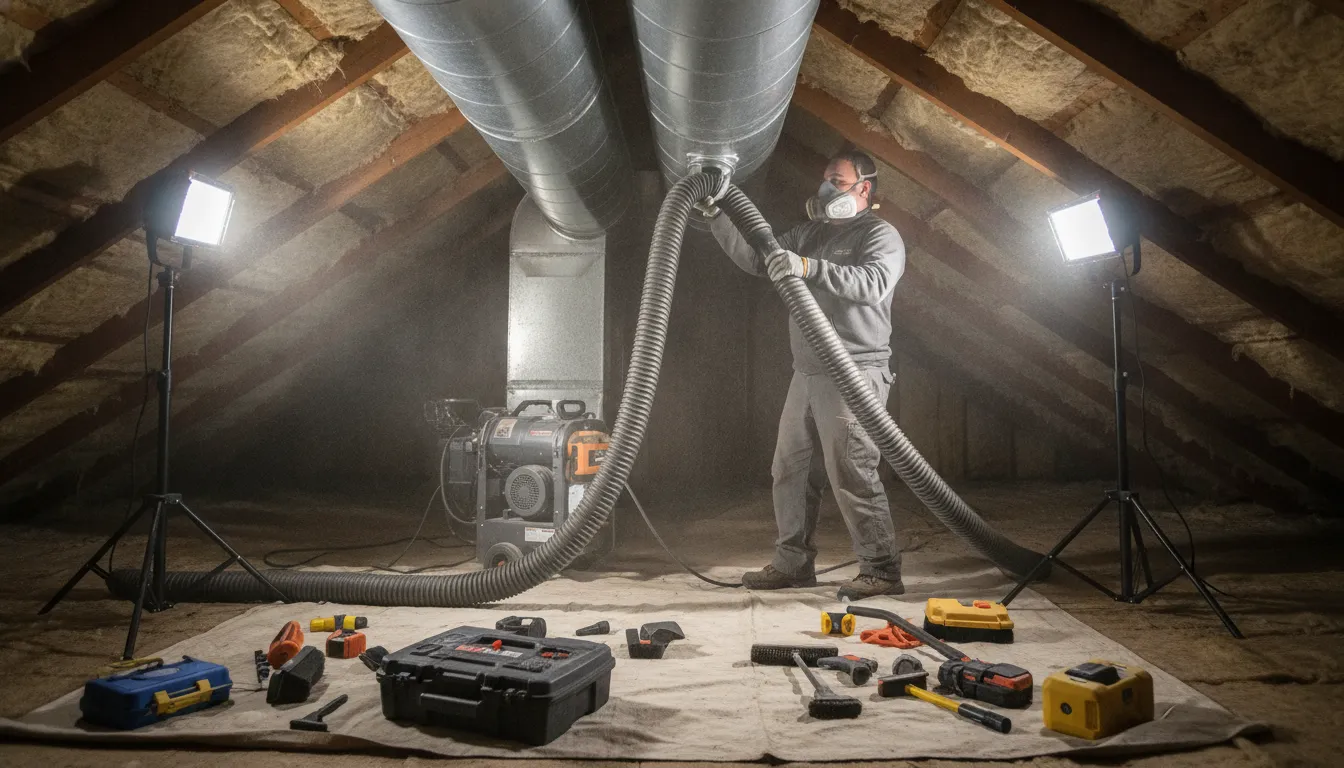
Vacuum pressure removes material that has been loosened, but some debris may cling to the interior walls of the ducts. Rotating brushes scrub those surfaces mechanically, while air whips and air sweeps use controlled bursts of compressed air to agitate dust and debris. These tools help reach bends, branch lines, and other areas that a straight vacuum hose cannot clean effectively.
Professional equipment is selected to match the duct material and the condition of the system. Careful agitation matters because aggressive handling can damage fragile or deteriorated components.
Inspection cameras help technicians view sections of ductwork that are not easily visible from a register or access opening. A camera can help identify buildup, obstructions, damaged areas, or conditions that deserve further discussion before cleaning continues. It also gives the technician a clearer picture of which tools and access points are appropriate for the system.
Preparation protects the home as well as the equipment. Technicians should cover floors and protect furniture before work begins, keeping hoses, tools, and loosened debris from damaging finished surfaces. These preparation steps, combined with the right vacuum and agitation equipment, make the process more controlled and thorough.
Before any equipment is connected, the technician evaluates the system and explains what the visit will involve. This assessment determines the appropriate level of cleaning instead of treating every home or business the same way.
The visit begins with a walk-through with the homeowner or property manager. The technician discusses concerns such as uneven airflow, unusual odors, recent remodeling, visible dust, or pest activity. This is also a useful time to review what to expect during an HVAC service call.
Next, the technician visually checks accessible supply and return vents, registers, grilles, and ductwork. They look for accumulated debris, restricted airflow, blockages, signs of rodents or insects, and conditions that could affect the cleaning plan. If mold is suspected, the EPA recommends considering duct cleaning when there is substantial visible mold growth inside hard-surface ducts or on HVAC components. A technician should show you the evidence they are referencing before proceeding.
Some sections of a duct system cannot be evaluated through a vent opening. When hidden areas require a closer look, a camera inspection can help identify buildup, damaged interiors, blockages, or vermin activity that is not visible from the room. The findings help the technician decide where access is needed and whether the proposed cleaning addresses the actual condition of the system.
Once the assessment is complete, the technician explains the access points and prepares the work area. The HVAC system is turned off before cleaning begins to support safe work around moving equipment and electrical components. Floors, nearby furniture, and other vulnerable surfaces are protected with drop cloths or similar coverings.
The technician then establishes appropriate access points at the ductwork and equipment. Good preparation keeps the work controlled, protects the home, and creates a path for the vacuum and agitation tools used in later steps. It also gives the homeowner a clear opportunity to ask questions before cleaning starts.
Sources: U.S. Environmental Protection Agency guidance and professional duct-cleaning process guidance.
Negative pressure vacuuming is the containment stage that makes the rest of the cleaning process safe for your home. A technician connects a powerful truck-mounted or portable HEPA vacuum unit to the main duct system, then seals the access point before cleaning begins. The vacuum pulls air and loosened contaminants toward the collection equipment instead of allowing them to drift into occupied rooms.
Once the vacuum is operating, the pressure inside the ductwork is lower than the pressure in the surrounding rooms. That pressure difference creates a controlled direction of airflow: air moves into the duct system and toward the vacuum rather than pushing dust outward through open registers or access points.
This setup is important because agitation tools will loosen material from the interior duct surfaces later in the process. Without containment, that dust could escape into the home or business while technicians brush and dislodge debris. A properly connected vacuum system creates negative pressure throughout the system so contaminants can be pulled out efficiently and kept from spreading.
Negative pressure controls the direction of airflow, while filtration helps capture the material removed from the ductwork. A HEPA-equipped vacuum is designed to retain fine airborne particles in its collection system rather than exhausting them back into the surrounding space. The vacuum and filtration system therefore work together as a barrier between the cleaning process and the living area.
This is why vacuum connection should come before brushing, air whips, or other agitation. The containment system is not an optional finishing step. It is the foundation that allows technicians to loosen and extract accumulated dust without simply relocating it from the ducts to your indoor environment.
After the duct system is placed under controlled vacuum pressure, technicians loosen material that has adhered to the interior surfaces. Agitation breaks dust and debris free so the vacuum can capture it instead of allowing it to settle elsewhere in the HVAC system. Professional equipment commonly includes rotating brushes, air whips, and high-powered vacuums, each serving a different part of the cleaning process.
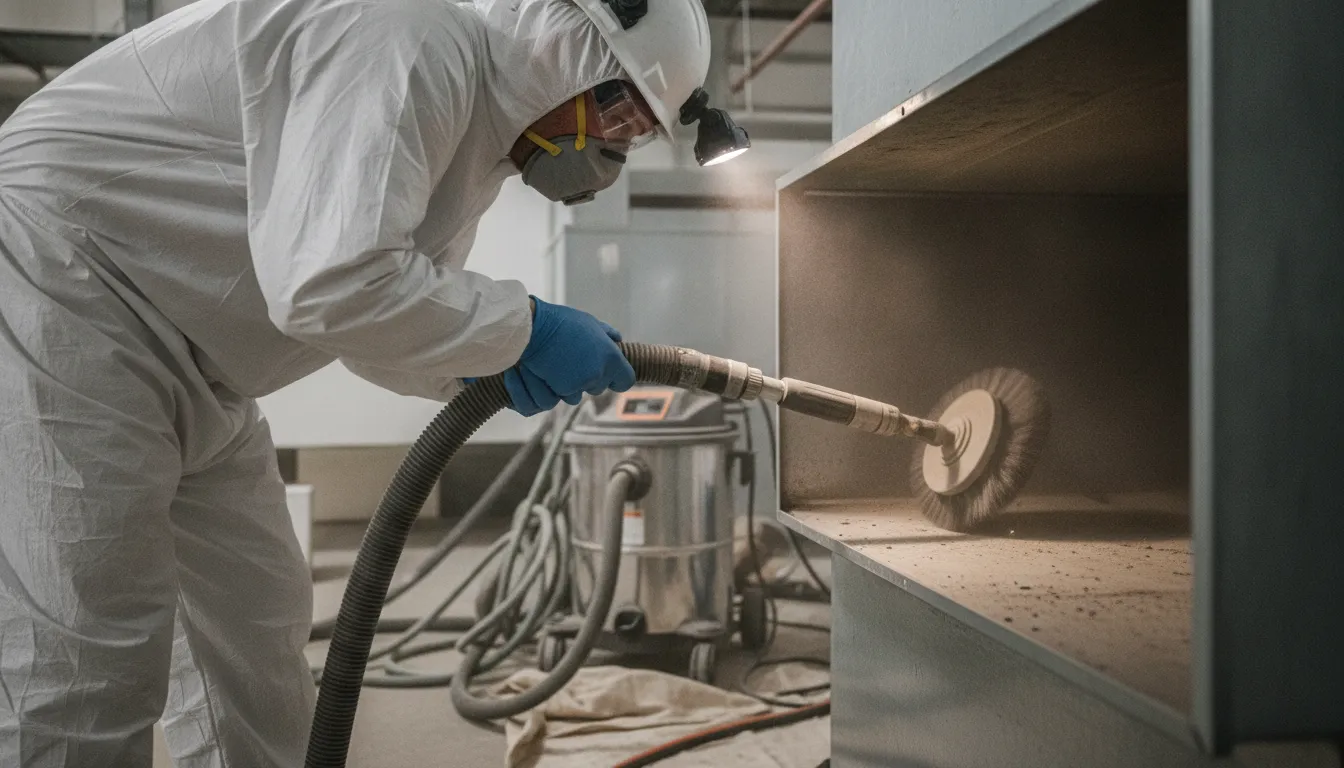
Rotating brush systems use motorized bristles to scrub the inside walls of accessible duct sections. Technicians select brush heads based on the duct’s diameter and shape. A brush that fits the opening can contact more of the surface without damaging the ductwork or becoming lodged inside it.
As the brush moves through a trunk line or branch, its rotation dislodges accumulated dust and other loose material. The vacuum remains connected during this work, pulling loosened debris toward the collection system. This combination matters: brushing without extraction can simply redistribute contaminants within the system or into the room.
Air whips and sweep tools use compressed air to reach areas where a rotating brush may not be practical. Short, flexible air lines can agitate debris around bends, joints, and branch connections. The technician works methodically from the access point toward individual runs, using controlled bursts while the vacuum continues removing the material.
The goal is not to blast debris randomly through the ductwork. It is to loosen deposits while maintaining airflow toward the collection equipment. That controlled sequence helps keep the cleaning process contained and allows the technician to work through the system section by section.
Quality duct cleaning is more than vacuuming visible vents. A complete service addresses the connected system, including trunk lines, supply and return vents, registers, the blower motor, and evaporator coils. Vents and registers are cleaned, and surfaces may be sanitized when appropriate. This whole-system scope is what separates professional cleaning from a vent-only service.
For a more complete picture of how duct cleaning fits into your overall HVAC maintenance plan, revisit the AC Repair and Emergency HVAC Service in Dallas-Fort Worth: What to Know guide. It provides additional context on system care.
For an average home, professional duct cleaning typically takes about two to four hours. The work is detailed rather than limited to vacuuming visible registers. So the technician needs time to inspect the system, prepare the space, remove buildup, and confirm the job is complete.
Several practical factors can change the length of the appointment:
These variables are why a precise time estimate should follow an on-site assessment instead of a one-size-fits-all promise. Keeping up with regular HVAC maintenance can also help identify concerns before they become more involved service needs.
Homeowners can generally remain in the house while the work is underway. The technician will usually begin with arrival, a walkthrough, and preparation, including protecting nearby floors and furnishings. Setup may take roughly 30 minutes. The cleaning itself commonly takes one to three hours, depending on the home’s layout and condition. A final walkthrough may take another 15 minutes so the technician can review the work and answer questions.
If the inspection identifies an airflow or equipment concern that needs separate attention, ask how it relates to your system before authorizing additional work. Garland Heating and Air Conditioning brings more than 70 years of local DFW experience. And the team can explain whether duct cleaning or a separate HVAC service is the right call for your situation.
A thorough service should make the work easy to understand before anyone starts. Look for a written scope of work, quote-based pricing, clear explanations of what will be cleaned, and reviews that describe dependable workmanship. These details help you recognize quality work and avoid low-quality or incomplete services.
Ask whether the company holds current NADCA certification and whether the technicians assigned to your home are trained for HVAC system cleaning. You should also confirm that technicians are background-checked, arrive in identifiable vehicles, and can explain how they will protect your floors and furnishings. A professional provider should describe the equipment, access points, containment plan, and cleanup process.
| Feature | DIY Vent Cleaning | Professional Duct Cleaning |
|---|---|---|
| Equipment | Household vacuum, hand brush | Truck-mounted HEPA vacuum, rotating brushes, air whips |
| Negative pressure | Not used | Creates containment to prevent dust from spreading |
| Scope | Vent covers and grilles only | Trunk lines, supply/return vents, blower, coils |
| Inspection | Visual at vent surface | Walk-through plus camera inspection of hidden ducts |
| Best for | Surface dust on visible vents | Heavy buildup, blockages, mold suspicion, pest contamination |
Be cautious of a quote that covers registers but says nothing about the rest of the system. A complete service should clearly define its scope and explain which components are included. Pricing should be transparent and customized to the property, not built around an unexplained teaser price. If you are comparing options, our guide to is duct cleaning worth it can help you evaluate the service more carefully.
Extremely low “$99 special” offers may leave out important work, add unexpected charges, or cover only a few accessible vents. Another warning sign is a contractor who claims to see mold but cannot show you evidence. The EPA recommends considering duct cleaning when there is substantial visible mold growth inside hard-surface ducts or on HVAC components. And advises homeowners to ask providers to show suspected mold before proceeding.
Duct cleaning is one part of indoor air quality management, alongside moisture control, surface cleaning, and other household measures. Garland Heating and Air Conditioning brings certified, background-checked technicians, 24/7 emergency service, and more than 70 years serving the DFW area. The team provides quote-based pricing and can explain the recommended scope before work begins. Homeowners can also explore the local HVAC service in Dallas Fort Worth and ask about the available $300 duct cleaning coupon.
A technician should begin with an inspection, explain the areas that need attention, and prepare the work area by protecting floors and furniture. The HVAC system is turned off before cleaning. The process then uses a vacuum connected to the ductwork, agitation tools to loosen debris, and cleaning of accessible vents and registers. Ask whether the service covers the complete system rather than only the visible vent covers.
It can make a practical difference when the system contains substantial debris, a blockage, or an identified contamination problem. A thorough service removes loosened material from the ductwork and related components instead of simply wiping vent covers. However, the U.S. Environmental Protection Agency notes that duct cleaning has not been conclusively shown to prevent health problems or significantly reduce household dust in every home. See the EPA guidance on air duct cleaning for context.
The main concerns are unnecessary cleaning, incomplete vent-only work, or damage caused by careless access and equipment use. A trustworthy provider should inspect first, explain the scope, and avoid promising that cleaning will solve every indoor-air-quality concern. If mold is suspected, ask to see the evidence before authorizing work. Wet or moldy insulation may need replacement because it cannot be effectively cleaned, according to the EPA.
In many cases, yes, but expect equipment noise, temporary access to registers, and technicians moving through the home. Keep children and pets away from the active work area, and ask the provider whether anyone with particular respiratory sensitivities should leave temporarily. Your technician can explain the expected schedule before work begins.
Professional cleaning generally follows a controlled sequence: inspect the system, shut off the HVAC equipment, protect the home. Establish negative pressure, agitate debris with brushes or air whips, and collect contaminants with a high-powered vacuum. A complete service may address trunk lines, supply and return vents, the blower, and coils, not just the registers.
Knowing how the process works makes it easier to choose a provider you can trust. A professional duct cleaning can help you take a more informed approach to your home’s indoor air quality and HVAC care. Garland Heating and Air Conditioning is ready to discuss your needs and the available $300 duct cleaning coupon. Contact Garland Heating and Air to schedule your duct cleaning service in DFW and ask about the 00 coupon.