Replacing a furnace in the Dallas-Fort Worth area raises a practical question: what should a contractor’s quote include?
Request an individualized furnace installation quote from Garland Heating and Air Conditioning, or call (972) 278-3500 to discuss your project.
The new furnace cost for a DFW home should be based on a professional assessment, not square footage alone. Ask the contractor to explain the selected system, efficiency, sizing, labor, old-furnace removal, duct transitions, permits, and startup before comparing quotes.
This guide helps you separate equipment choices from project-scope costs, then gather the details a contractor needs to build a useful quote for your home.
Commercial customers should request a facility-specific scope before comparing quotes. Building size, equipment type, access, ductwork, controls, and applicable code requirements can differ from a residential replacement; contact Garland Heating and Air Conditioning to discuss a commercial HVAC project.
Answer: A responsible new furnace cost quote in DFW should explain more than the equipment itself. It should account for the furnace model, heating capacity, efficiency, sizing assessment, installation labor, removal of the old unit, any duct transitions, required permits or inspections, and startup testing.
Equipment size and efficiency are two early cost drivers, but they should be selected after a technician evaluates the home and existing system. A professional assessment helps determine the appropriate furnace size and type instead of relying only on the home’s square footage. Efficiency, installation, labor, location, and climate can all affect the project scope and final quote. See the furnace replacement cost factors for related planning questions, while keeping this guide focused on what the quote should include.
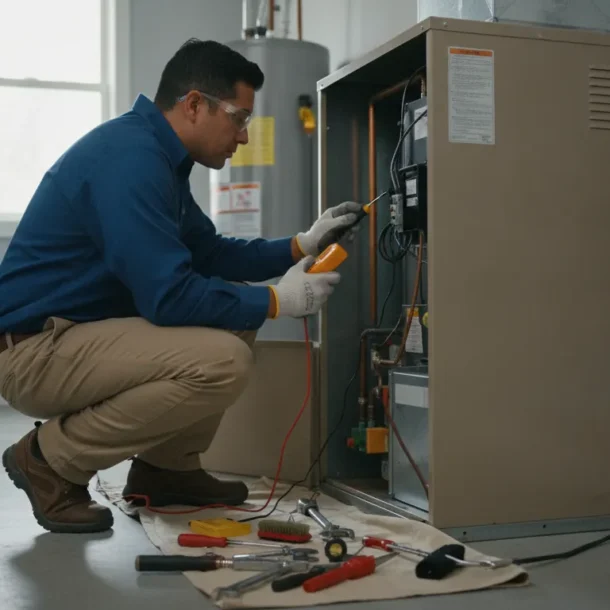
Labor also covers the work required to disconnect and safely remove the old furnace. The replacement may need duct transitions or other connections so the new equipment fits the existing setup correctly. A quote should identify those items rather than leaving them as vague allowances.
Ask whether the proposal includes applicable permits, inspections, and code-related work. Local requirements can vary, and a final inspection may be needed to verify safety and code compliance. The contractor should also explain startup and testing, including how the system will be checked after installation and what information you will receive about operation.
Garland Heating and Air Conditioning uses quote-based pricing because homes and replacement scopes differ. Before comparing proposals, confirm that each one describes the same equipment, labor, removal, transitions, permitting, and startup. That makes the new furnace cost easier to understand without relying on a generic price or range.
Once a technician understands the home’s heating needs, the equipment choices can change the scope of a new furnace quote. Capacity is one of the first variables. A furnace that is too small may struggle to maintain comfort, while an oversized system can affect cycling and comfort. The right selection depends on the home and installation conditions, not square footage alone.
AFUE is the furnace’s annual fuel utilization efficiency rating. A higher rating can affect the equipment selection and the way long-term operating costs are evaluated. The U.S. Department of Energy explains that furnace guidance distinguishes a southern region, including the South and Southwest, from a northern region because climate influences furnace use. It also frames an efficient product as cost-effective when lifetime energy savings exceed any upfront premium compared with a less efficient option. Read the DOE residential furnace guidance when comparing efficiency claims.
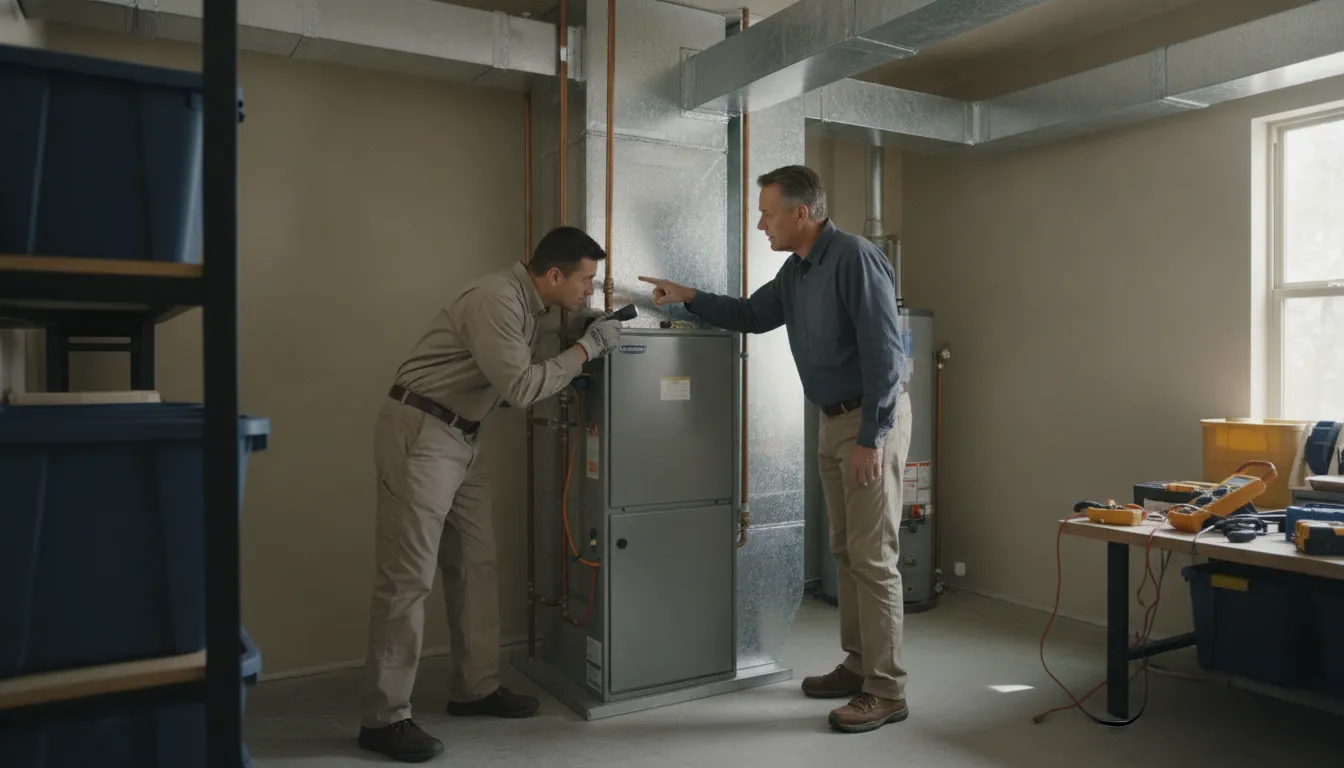
Operation is another comparison point. Single-stage furnaces generally use one heating output, while two-stage and modulating equipment can offer more incremental operation. Brand, controls, smart thermostat compatibility, and other features may also change the equipment specification. Ask which features address a real comfort or control need rather than selecting options by name alone.
Fuel choice affects the equipment category and connection requirements. DOE guidance covers residential furnaces using natural gas, propane, and oil below 225,000 Btu/h, but the appropriate choice depends on the home’s existing setup and available utilities. If you are comparing a gas furnace with an electric system, review this guide to gas furnace versus heat pump options.
Duct transitions, return-air needs, venting, electrical connections, and access can add work to the installation scope. A clear quote should identify those conditions separately so you can compare complete project plans, not just equipment labels.
Answer: A 1,500-square-foot home and a 2,000-square-foot home do not automatically need a particular furnace size. Square footage is only one starting point. A responsible selection considers how the home holds and distributes heat, then matches the equipment to those conditions.
Two homes with the same floor area can have very different heating needs. A professional assessment should account for insulation, ceiling height, floor plan, additions, and how rooms connect. Window size, glass type, shading, air leakage, and the home’s exposure also affect heat loss.
Ductwork matters as well. Undersized, damaged, poorly sealed, or difficult-to-access ducts can limit comfort even when the furnace itself is properly selected. The existing system provides useful context, including its model information, past comfort problems, thermostat behavior, and any changes made to the home since installation.
Climate is another part of the assessment. DFW homes need equipment suited to local heating conditions, but that does not justify applying a universal square-foot rule. A technician should evaluate the home and explain the sizing approach before recommending replacement equipment.
Before the visit, gather the furnace model and serial numbers, note rooms that stay cold or warm, and identify insulation or window upgrades. Also mention additions, converted spaces, unusual duct runs, and recurring airflow concerns. For a broader view of the process, see the DFW furnace installation guide.
Answer: Gather the information that helps a contractor understand your existing furnace, the comfort problem, and the conditions of the installation. A clear starting point makes it easier to discuss scope and request an individualized quote without assuming that one furnace fits every DFW home.
A 30-year-old furnace deserves a careful assessment, but its age alone does not make replacement the only sensible choice. If the system is safe, dependable, and heating the home evenly, a repair may still be appropriate. The better decision considers the furnace’s condition, repair history, comfort, and the scope of any replacement work.
Repeated repairs can change the calculation, especially when the same equipment keeps developing new problems. Unsafe operation is a more urgent concern. A technician should investigate combustion, electrical, venting, and other safety issues rather than asking a homeowner to keep operating a questionable system. Uneven heat, frequent cycling, poor temperature control, and difficulty finding compatible parts can also make continued repairs less practical.
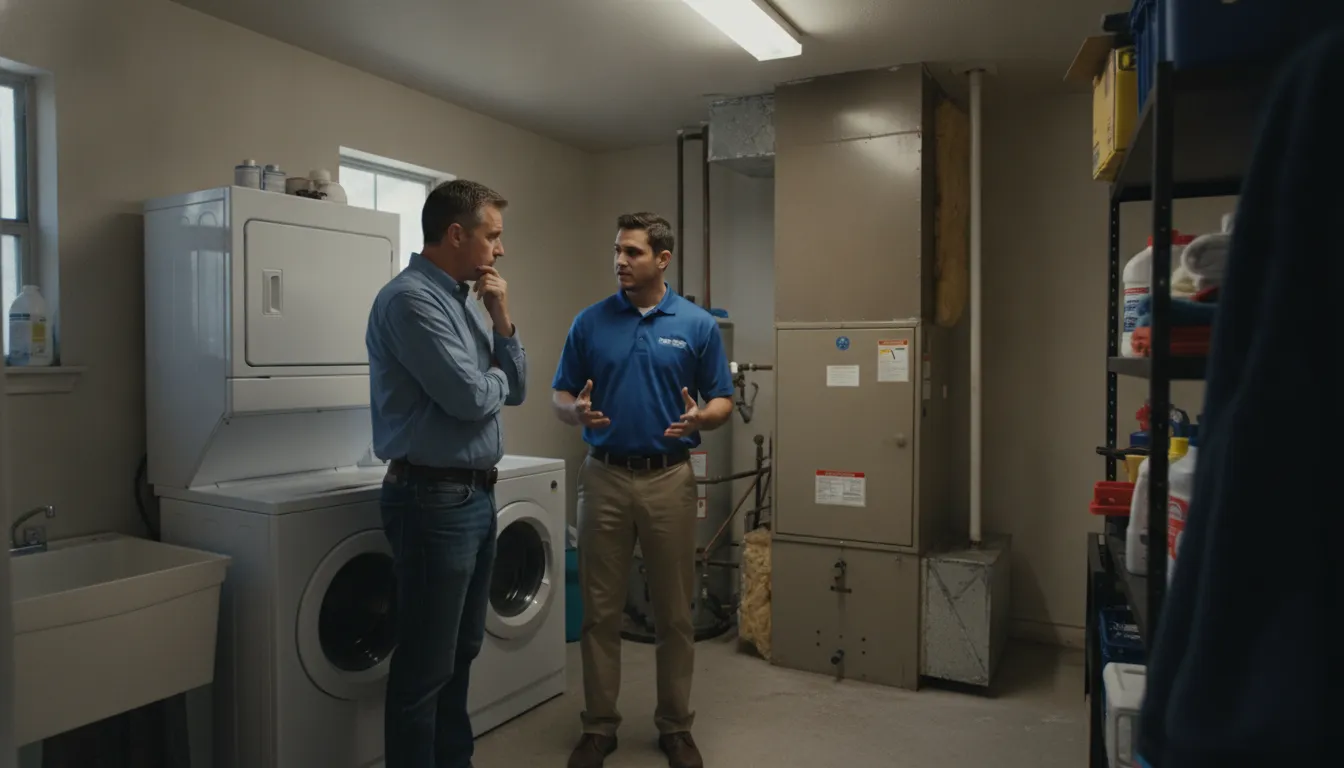
Parts availability matters because an older furnace may require longer searches or substitutions when a component fails. Comfort matters too. A system that runs but leaves some rooms cold may have sizing, ductwork, airflow, or control issues that a simple repair will not solve. Start with the heater repair or replacement decision guide for additional questions to raise with a professional.
Replacement is a broader project than setting a new cabinet in the old location. The assessment may need to cover equipment selection, connections, duct transitions, removal of the existing furnace, venting, controls, and startup. The total scope should be explained in writing, without assuming that a new furnace cost can be determined from age or square footage alone.
For a second planning resource, review the furnace replacement cost factors guide. Then ask a qualified HVAC professional to compare a safe repair with a replacement plan based on the home’s actual needs.
Answer: A furnace quote in DFW should account for the home’s heating needs, the selected AFUE rating and fuel type, the cost of operating the equipment over its life, safe removal of the existing unit, and any permit or inspection requirements that apply locally.
North Texas weather does not create the same heating profile as a colder northern market, so regional efficiency guidance is relevant when comparing equipment. The U.S. Department of Energy explains that ENERGY STAR furnace efficiency levels distinguish a southern region that includes the South and Southwest from a northern region. That guidance reflects how climate influences furnace use: DOE guidance on purchasing energy-efficient residential furnaces.
AFUE, or annual fuel utilization efficiency, helps describe how much of the fuel a furnace converts into usable heat. A higher rating can affect the equipment choice and the way the project is evaluated, but the best comparison is not simply the highest rating. As DOE explains, an efficient product is cost effective when lifetime energy savings exceed any upfront cost premium compared with a less efficient option. Ask the contractor to explain both the equipment specification and the expected operating-cost tradeoff without relying on an unsupported savings promise.
Replacement scope includes safely disconnecting and removing the old furnace, along with checking whether flue, gas, electrical, condensate, or duct connections need attention. Those details can change the labor and materials required even when the replacement unit appears similar to the existing one.
Local requirements may also include a final inspection to verify code and safety compliance. Ask who obtains the permit, which inspections are included, and what happens if the inspector requests a correction. Garland’s Texas HVAC replacement permits guide provides additional DFW context. A clear quote should identify permit handling rather than leaving that responsibility ambiguous.
Short answer: Ask the contractor to identify every part of the installation scope, not just the furnace model. A clear quote should explain how the equipment was selected, what work is included, and what follow-up you can expect.
Because heating installation and replacement pricing is quote-based, compare the details behind each proposal rather than looking for a universal number for new furnace cost. These questions can help a DFW homeowner spot missing work before approving the project.
| Quote item | Question to ask | Why it matters |
|---|---|---|
| Equipment | What model, fuel type, capacity, and features are included? | The equipment should match the home’s needs and the planned system configuration. |
| Sizing | How did you determine the furnace size for my home? | Square footage alone does not explain the full sizing decision. |
| Efficiency | What AFUE rating is proposed, and why is it appropriate for this home? | It lets you compare efficiency choices and their long-term operating implications. |
| Duct transitions | Will the existing connections fit, or are transitions or duct changes needed? | Unstated adaptation work can change the installation scope. |
| Old-unit removal | Does the quote include safe disconnection, removal, and site cleanup? | Removal should be addressed instead of left as an assumption. |
| Permits | Which permits or inspections apply, and who handles them? | Local requirements and code questions should be clear before work begins. |
| Startup | What testing and startup checks are performed after installation? | Testing confirms the new system is operating as intended. |
| Follow-up terms | What service, documentation, and follow-up terms are included? | You should know what happens after the installation is complete. |
If payment options matter, review HVAC financing options in Texas, then confirm current terms and rates directly with the company.
Request an individualized quote from Garland Heating and Air Conditioning, or call (972) 278-3500.
Square footage alone cannot produce a responsible price or furnace selection. A contractor should also assess insulation, windows, layout, ductwork, the existing system, fuel, and the home’s comfort needs. Ask for an individualized quote that clearly separates equipment, labor, removal, transitions, permits, startup, and any recommended upgrades. Heating installation and replacement pricing is quote-based, so avoid relying on a universal online figure.
The answer depends on the home’s actual heating load, not simply its floor area. Two homes with the same square footage can need different equipment because of construction, air leakage, sun exposure, windows, insulation, and duct performance. Share your current furnace information and comfort concerns, then ask the contractor to explain the sizing assessment and why the proposed capacity fits the home.
Age is an important warning sign, but it should not be the only deciding factor. Ask a qualified technician to evaluate safety, operating condition, repair frequency, parts availability, comfort consistency, and the total scope of keeping the system running. Replacement may be worth considering when problems repeat or performance is unreliable, but a professional assessment is better than an automatic age-based decision.
Ask what equipment and efficiency rating are included, how sizing was determined, and whether duct transitions, old-equipment removal, permits, startup, thermostat work, and follow-up are covered. Request all assumptions in writing and ask which warranty terms apply to the proposed equipment and labor. If financing is discussed, confirm the current terms and rates directly with the contractor.
A clear, individualized quote can help you compare equipment, sizing, installation scope, and the project details that affect your decision. Request an individualized furnace installation or replacement quote from Garland Heating and Air Conditioning, or call (972) 278-3500 to talk with the team about your home and next steps.