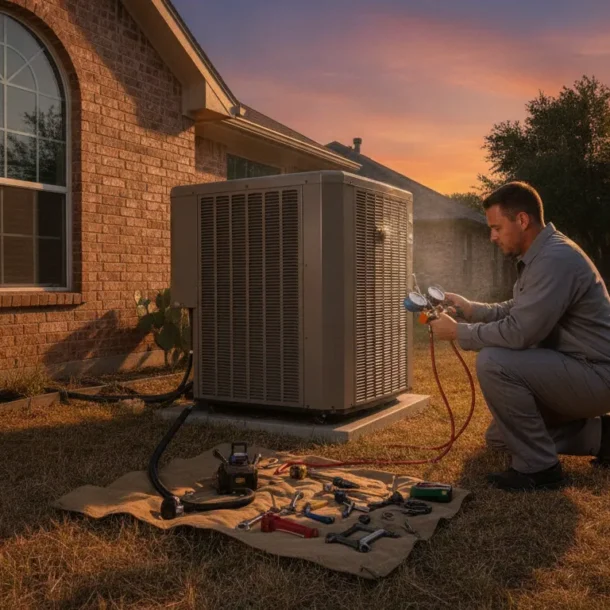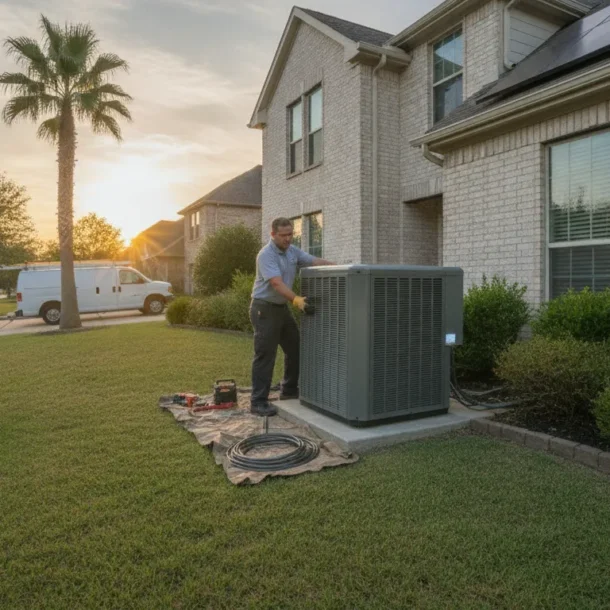
When a DFW cold snap arrives, a heater that stops running can turn a small comfort problem into an urgent safety concern.
Schedule service with Garland Heating and Air Conditioning for a professional evaluation, or call (972) 278-3500 for urgent no-heat or safety concerns.
Some basic checks may be reasonable, but heater repair is not a do-it-yourself project when gas, electrical components, combustion, carbon monoxide, or refrigerant-related work is involved. Homeowners can start with simple thermostat and filter checks, then rely on a qualified technician for diagnosis and repair. Garland Heating and Air Conditioning has provided heating services across Dallas-Fort Worth since 1952.
The safest next step is to separate low-risk observations from work that could expose your household to electrical shock, gas hazards, or carbon monoxide. A few practical checks can help you describe the problem clearly before service is scheduled.
Before you assume the heater needs a major repair, check the settings and airflow basics that are safe to inspect without opening the equipment. Start with these thermostat checks for heating, then use the HVAC repair service guide to understand what a professional diagnosis usually covers. These steps can identify a simple operating issue, but they cannot replace service when the system has a safety concern or still will not heat.
Confirm that the thermostat is set to Heat, the desired temperature is above the current room temperature, and the fan setting is appropriate for normal operation. If the display is blank, check whether the thermostat needs fresh batteries, if it uses them. You can also look at the heater’s nearby service switch and the electrical panel for an obviously tripped breaker. Reset a breaker only once. If it trips again, leave it off and schedule service rather than repeatedly restoring power.
Do not remove furnace panels, handle wiring, test electrical components, or attempt to adjust gas controls. Electrical and gas work can create shock, fire, or combustion hazards. Garland Heating and Air Conditioning guidance allows basic thermostat and filter checks, while reserving gas, electrical, combustion, carbon monoxide, and refrigerant-related work for a qualified technician.
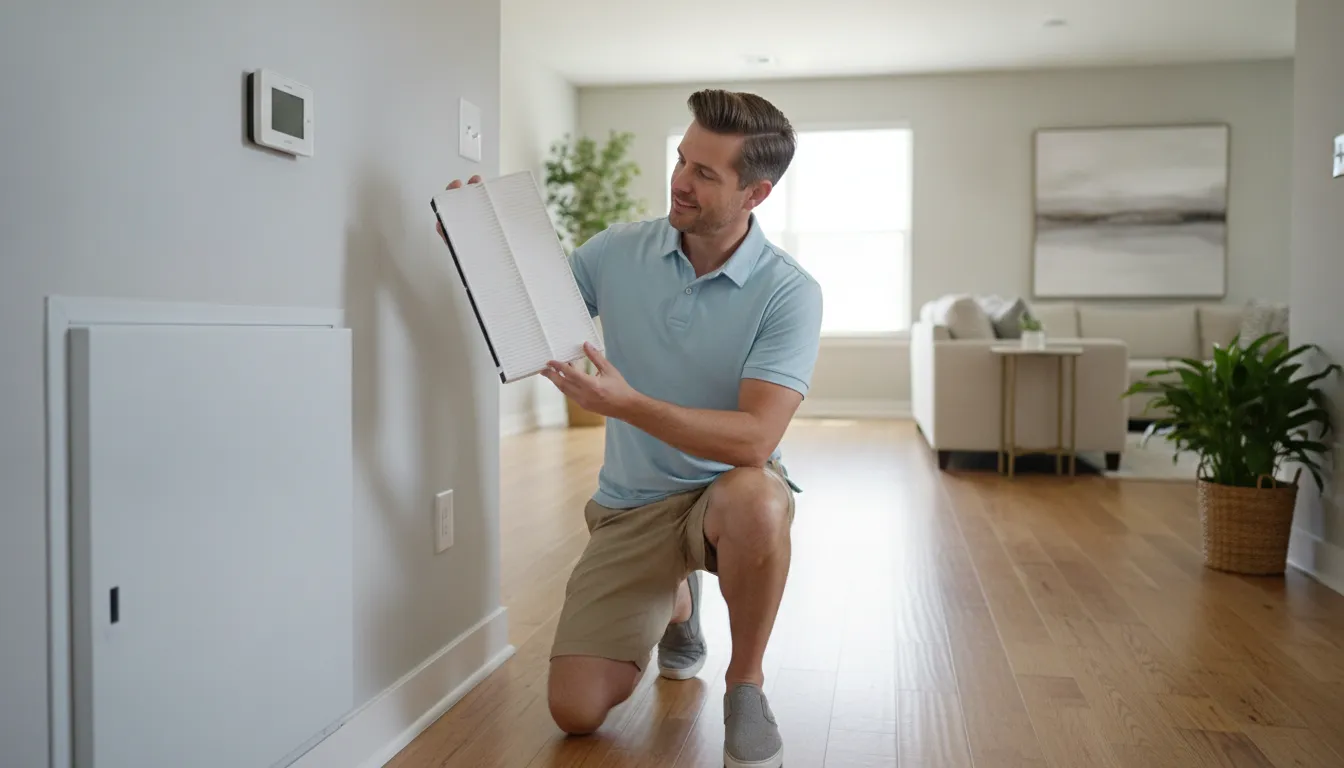
Turn the system off before checking the air filter. If it looks heavily loaded with dust, replace it with the correct size and type shown on the filter or equipment instructions. Central HVAC filters are designed to filter air throughout the home, and filtration can support indoor-air-quality efforts. It is not a complete solution, however. Filters cannot remove every pollutant, and a new filter will not fix a failed motor, heat exchanger, ignition component, or control board.
Walk through the home and make sure supply registers and return grilles are open and not covered by furniture, rugs, curtains, or storage. Look around the outdoor unit only if the heating system is a heat pump, and clear away loose leaves or other visible obstructions without opening the cabinet. Do not use tools or water around electrical equipment.
Stop checking and request professional help if there is no heat after these basic steps. Unusual operation continues, a breaker trips again, or you smell gas or suspect a combustion problem. A carbon monoxide alarm is an emergency: leave the home and contact emergency services. For a no-heat or urgent situation, use Call Now. For a planned evaluation, choose Schedule Service. Heating service pricing is quote-based, so a technician should evaluate the system and explain the repair options for your equipment.
| Situation | Safe next step | Why it matters |
|---|---|---|
| Thermostat or filter issue. | Check settings or replace a dirty filter. | These are limited homeowner checks. |
| No heat after basic checks. | Schedule professional diagnosis. | The underlying cause may be electrical or mechanical. |
| Gas, combustion, or wiring concern. | Stop and call a qualified technician. | These systems can create serious safety risks. |
| Carbon monoxide alarm. | Leave the home and contact emergency services. | Do not remain inside to troubleshoot. |
Some heater problems are not appropriate for trial-and-error repair. If the issue involves fuel, electricity, combustion, refrigerant, or a component that protects indoor air quality, stop at the basic checks and arrange qualified service. Garland Heating and Air Conditioning documents heating system repairs and troubleshooting, along with furnace installation and replacement, as part of its DFW heating services. You can review the company’s heating installation and replacement options before scheduling an evaluation.
Gas connections, burners, ignition systems, wiring, controls, and venting all affect whether a heater operates safely. Combustion work also requires knowledge of fuel-gas codes, appliance categories, flue gases, and backdrafting. A qualified technician can test the system rather than relying on smell, sound, or whether the unit starts.
Gas- and oil-burning furnaces produce carbon monoxide, an invisible and odorless poison gas. The CDC’s furnace safety guidance explains why combustion equipment deserves careful attention. A homeowner should not open gas components, alter venting, bypass safety controls, or attempt electrical repairs. Refrigerant-related work on a heat pump or other heating system also belongs with a qualified technician. Garland’s customer guidance specifically reserves gas, electrical, combustion, carbon monoxide, and refrigerant work for professional diagnosis.
Take a carbon monoxide alarm seriously. Leave the building and move to fresh air, then contact emergency services for guidance. Do not stay inside to search for the source, reset the heater repeatedly, or try to complete a repair before the situation is assessed. If significant carbon monoxide is detected in indoor air or in an appliance’s flue gas, combustion safety procedures call for a defined response, not continued operation.
Once emergency responders say it is safe to proceed, arrange a professional inspection before using the equipment again. The goal is to identify the source, check combustion and venting, and correct the underlying hazard. A carbon monoxide alarm is not a substitute for maintenance, but it is an important reason to stop and get help immediately.
Call now for no heat, suspected gas or carbon monoxide exposure, burning odors, damaged wiring, repeated safety shutoffs, or a heater that operates unpredictably. For a planned evaluation, use Garland Heating and Air Conditioning’s contact page to request service. Keep (972) 278-3500 available as a plain-text contact option, and do not attempt a repair simply because the system appears familiar.
A heater does not always fail without warning. Changes in comfort, airflow, sound, or operating patterns can indicate that the system needs attention. The earlier you recognize those changes, the easier it is to decide whether a simple homeowner check is appropriate or whether you need professional heater repair.
No heat is the clearest warning sign. If the thermostat is calling for heat but the system does not start. Or the air coming from the vents stays cool for an unusual amount of time, do not keep resetting the equipment repeatedly. Confirm the thermostat mode and temperature, then check whether the filter is heavily loaded. If those basic checks do not explain the problem, schedule service.
Uneven heating can also deserve attention. Rooms that remain cold, weak airflow from several vents, or a system that runs much longer than usual may point to an airflow, control, or equipment problem. A heat pump can have its own heating behavior, so a homeowner should not assume that every instance of cool air means the same thing. Persistent or worsening performance is a reason to request a diagnosis rather than guess at a repair.
Repeated starts and stops, sometimes called short cycling, are another reason to have the system evaluated. Unusual rattling, scraping, buzzing, or burning odors should not be treated as normal background noise, especially when they begin suddenly or occur with reduced comfort. Turn the system off if operation appears unsafe, and seek qualified help for gas, electrical, combustion, or carbon monoxide concerns.
A sudden, unexplained increase in the heating bill can also signal that the system is working harder than it should. Weather, thermostat settings, and utility rates can affect a bill, so the increase alone does not prove a failed component. It does justify comparing recent operation and comfort with prior periods and arranging an inspection if the change persists.
A dirty filter can restrict airflow and place additional strain on the heating system. The EPA explains that central furnace and HVAC filters are designed to filter air throughout a home, but filters cannot remove every pollutant. Check the filter on the schedule recommended for your equipment and replace it with the correct type. If the filter becomes dirty unusually quickly, or replacing it does not improve airflow, the underlying issue may require professional testing.
A technician may need to inspect components such as the heat exchanger or blower when symptoms continue. These are not do-it-yourself repair areas. For a separate explanation of what can shape a customized quote, see the heater repair cost factors. Garland Heating and Air Conditioning provides heating repairs and troubleshooting across the DFW area, including Garland, Richardson, and Plano.
For urgent no-heat conditions, use the contact page to reach Garland Heating and Air Conditioning. If a carbon monoxide detector activates, leave the building and contact emergency services before arranging HVAC service. Filter guidance: EPA information about home air cleaners and filters.
A professional heater repair visit should begin with diagnosis, not a guess about which part to replace. The technician reviews the symptoms, examines the system, and explains what the findings mean before recommending a repair. For gas or combustion equipment, that careful process also helps identify safety concerns that are not appropriate for do-it-yourself work.
The visit typically starts with questions about when the problem began, whether the system produces heat, and whether you have noticed unusual sounds, odors, or cycling. The technician then evaluates the equipment and its operation. Garland Heating and Air Conditioning documents system diagnostics and efficiency assessments as part of its HVAC service approach. Its heating services also include repairs, troubleshooting, winter preparation, and safety inspections.
That evaluation matters because the visible symptom may not identify the underlying fault. A thermostat setting or filter may be worth checking before service, but gas, electrical, combustion, carbon monoxide, and refrigerant-related work should be left to a qualified technician. If a carbon monoxide alarm activates, leave the building and contact emergency services rather than waiting for a routine repair visit.
Once the diagnosis is complete, the technician should explain the problem in plain language, outline the available service options, and distinguish necessary safety work from optional efficiency improvements. Ask what the repair addresses, whether the system can be operated safely, and what follow-up maintenance may help prevent a repeat failure. Garland Heating and Air Conditioning uses quote-based pricing. So the scope and cost should be customized to the equipment and the findings rather than taken from a generic price list.
Garland Heating and Air Conditioning describes its technicians as background-checked and certified HVAC professionals. The company serves residential and commercial customers throughout the Dallas-Fort Worth area, with 24/7 availability for emergency breakdown service and same-day service offered for urgent repairs. For no heat or another immediate concern, contact Garland Heating and Air Conditioning and use Call Now. For a planned evaluation, use Schedule Service and review the company’s heating repair and replacement services.
Repair is often the right next step when the problem is isolated, the system remains safe to operate, and a qualified technician can restore dependable performance. Replacement deserves closer consideration when failures keep returning, the equipment’s overall condition is declining, or safety and efficiency concerns are becoming part of the decision. The goal is not to choose based on a single symptom. It is to evaluate the system, the home, and your expected heating needs together.
Start with the system’s age and condition, but do not treat age alone as an automatic replacement trigger. A technician can inspect the equipment, identify the failed component, and look for related wear or safety concerns. Repeated breakdowns matter because several separate repairs may indicate that the system is becoming less dependable. Frequent service calls, inconsistent heat, unusual operation, or a unit that struggles to keep the home comfortable can all support a broader evaluation.
Safety comes first. Gas, electrical, combustion, and carbon monoxide concerns should not be handled as do-it-yourself repairs. If a technician identifies a safety issue, ask what work is required, whether the system should remain off, and what options are available. A repair recommendation should explain the diagnosis and the expected result, not simply list a part to replace.
Replacement may make sense when the existing heater has recurring failures, substantial condition concerns, or efficiency limitations that no longer fit the home. A replacement evaluation should consider equipment sizing, ductwork, comfort goals, operating needs, and the home’s available fuel and electrical setup. Garland Heating and Air Conditioning provides heating installation and replacement services, including furnace installation and replacement and heat pump installation and service.
Homeowners replacing a furnace can review the DFW furnace installation guide to understand the planning questions involved. A heat pump may also be worth discussing, especially when a homeowner wants to compare heating and cooling pathways. The heat pump versus furnace guide explains considerations for North Texas homes, including comfort, cooling, backup heat, and occasional DFW freezes.
There is no responsible one-size-fits-all answer or generic price list for this decision. Garland Heating and Air Conditioning can assess the system and provide a customized, quote-based recommendation. If the heater is unsafe or not producing heat, Call Now. For a planned evaluation, schedule service before the next DFW cold snap.
Preventing another heating failure starts before the next cold snap, not after the system stops producing heat. North Texas winters are often mild, but below-freezing weather can arrive quickly and increase demand on furnaces and heat pumps. A practical maintenance routine helps identify worn or unsafe components before they become an emergency.
Schedule a seasonal inspection before the first sustained stretch of cold weather. A professional can evaluate the heating system, check safety-related components, and identify conditions that deserve attention. Garland Heating and Air Conditioning includes winter preparation and safety inspections among its heating services. That preparation is especially useful when a system has a history of no-heat calls, unusual operation, or recurring component failures.
Keep registers and return-air grilles open and unobstructed. Furniture, rugs, and stored items can restrict airflow and make comfort problems harder to diagnose. Also note changes in sound, cycling, or temperature distribution. Sharing those details during a service visit can help a technician trace an intermittent problem instead of treating only the latest symptom.
Check the air filter on a regular schedule and replace it when it is dirty or according to the filter manufacturer’s instructions. Central HVAC filters are designed to filter air throughout the home, and filtration can support indoor-air-quality efforts. However, filters do not remove every pollutant, and a filter is not a substitute for professional heating maintenance. A severely restricted filter can also create airflow conditions that contribute to poor performance.
Keep thermostat settings consistent and confirm that the system is set to heat when troubleshooting a comfort complaint. If you recently changed thermostats, confirm that the equipment and wiring are compatible rather than repeatedly resetting the system. For practical guidance, review these thermostat checks for heating before requesting service.
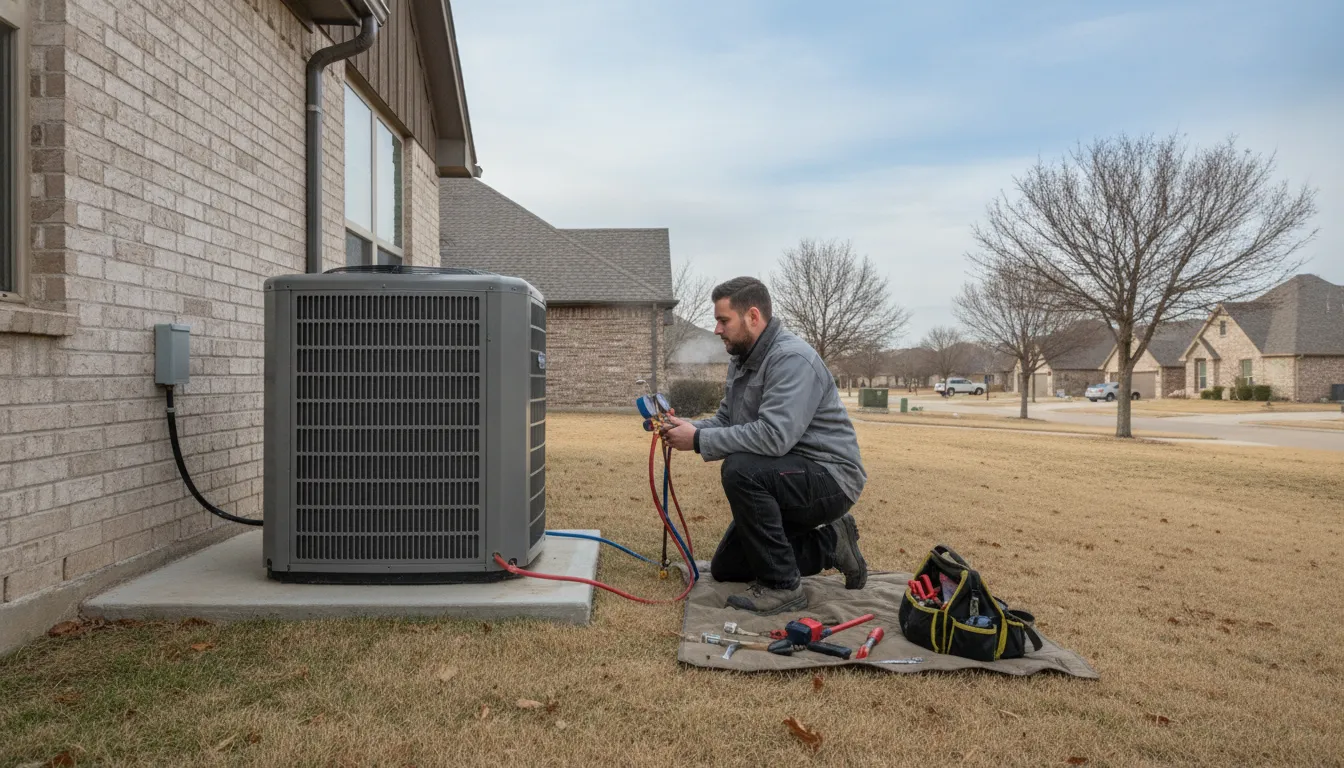
Heat pumps need more than a quick furnace-style check because they provide heating and cooling through a different operating cycle. Preventive maintenance and tune-ups can help uncover performance issues, while diagnostics are appropriate when the system is not heating as expected. Garland Heating and Air Conditioning provides both services. Use this guide to review heat pump repair and maintenance needs, including when a problem requires professional attention.
For planned upkeep, compare the DFW HVAC maintenance options and request a customized, quote-based evaluation. If the system develops a gas, electrical, combustion, carbon monoxide, or refrigerant-related concern, stop DIY troubleshooting and arrange qualified service. Preventive checks cannot eliminate every repair, but they can make recurring problems easier to identify and address safely.
Start with homeowner-safe checks: confirm the thermostat is set to heat and the desired temperature. Then inspect the air filter and replace it if it is dirty or clogged. If the system still does not produce heat, schedule professional diagnosis rather than opening the furnace or working on gas, electrical, combustion, or refrigerant components.
A qualified HVAC technician handles heater diagnosis and repair. That includes evaluating furnaces, heat pumps, controls, airflow, electrical components, and combustion-related concerns. Garland Heating and Air Conditioning provides heating system repairs and troubleshooting for residential and commercial customers across the Dallas-Fort Worth area.
There is no reliable one-size-fits-all price because the cost depends on the system, diagnosis, parts, labor, and repair scope. Garland Heating and Air Conditioning uses quote-based pricing, so customers can request a customized quote instead of relying on a generic price list.
Call for professional help when the heater will not produce heat after basic checks, cycles abnormally, makes unusual sounds, or raises a safety concern. If a carbon monoxide alarm activates, leave the home immediately and contact emergency services. For urgent no-heat situations, use the Call Now option; use Schedule Service for planned maintenance or evaluation.
If a heater problem continues after basic checks, a professional evaluation can help identify the right next step for your home. Schedule heater repair or contact Garland Heating and Air Conditioning through the contact page. You can also reach the team at (972) 278-3500.