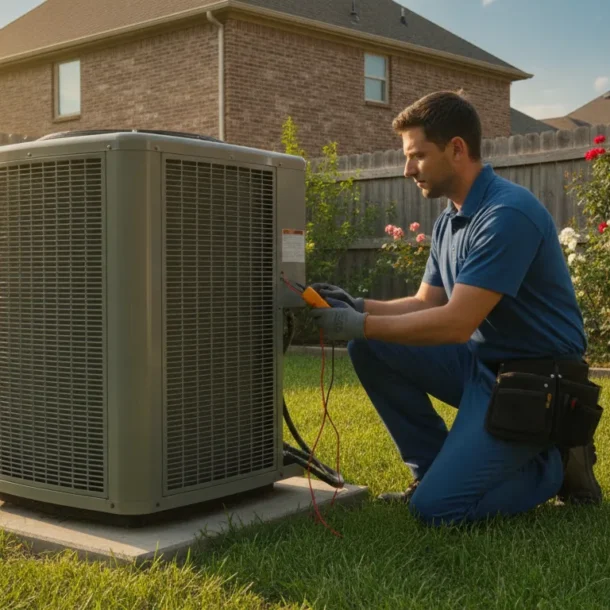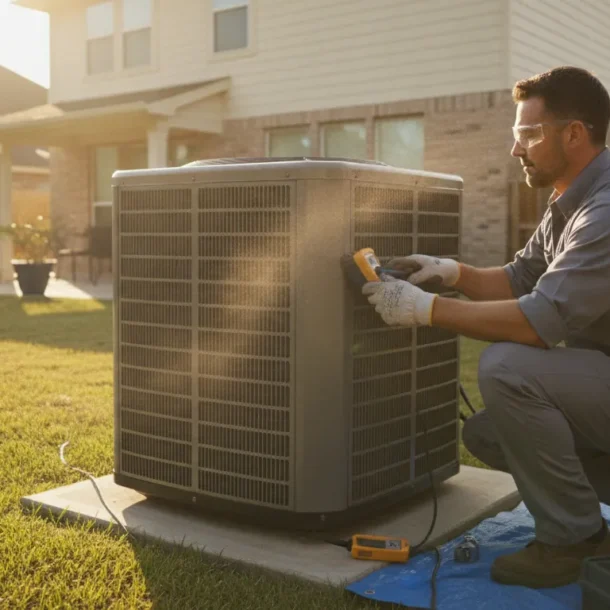

When a Dallas-Fort Worth air conditioner runs but the room still feels warm. The problem may be as simple as restricted airflow or as serious as a refrigerant or compressor issue. Texas heat can make that difference uncomfortable quickly, especially during the 40 to 60 days each year when DFW temperatures rise above 100 degrees Fahrenheit.
If you are experiencing ac not blowing cold air in your DFW home, first check the thermostat setting and air filter, then inspect the outdoor unit for blocked airflow. If those steps do not restore cooling, turn the system off and schedule professional service because frozen coils, refrigerant leaks, and electrical failures require qualified diagnosis.
Start with the safest, simplest check: the filter. A clogged filter can reduce airflow enough to limit comfort and place extra strain on the system. Reviewing these common AC cooling issues can help you troubleshoot thoughtfully, while Garland Heating and Air Conditioning can provide same-day help when a DIY check does not solve the problem.
A clogged filter can restrict the steady airflow your air conditioner needs to move cooled air through your home. The system may run longer, deliver weak airflow, or blow air that feels warm. Regular filter maintenance supports efficient operation and helps keep dust and debris from circulating indoors. If you are sorting through other common AC cooling issues, this is a practical first check.
Check your filter every 1 to 3 months, and replace it sooner when it becomes visibly loaded with dust. Homes with pets, renovation dust, or frequent cooling use may need more frequent checks. A new filter will not solve every cause of an AC that is not blowing cold air. If the system still struggles after replacement, a technician can check the coils, blower, refrigerant, and other components. For urgent problems, review our guide to emergency AC repair service and arrange professional help before the issue worsens.
When the thermostat fan is set to ON, the blower continues running even after the compressor stops. During those cycles, the air in the ducts and room-temperature air around the equipment can feel warm at the vents. The result may look like an AC not blowing cold air problem, even though the cooling system is operating normally.
Stand at the thermostat and confirm the system mode is set to COOL, not OFF, HEAT, or FAN. Next, check the fan setting. Change ON to AUTO so the blower runs only when the system is actively cooling. Give the unit a few minutes, then check the air from a supply vent again.
The ON setting can be useful when you want continuous air circulation, but it also keeps moving air when cooling is not taking place. That air may not feel cold. The AUTO setting is usually the better choice when troubleshooting weak cooling because it lets you judge the air produced during an active cooling cycle.
If the thermostat is correctly configured and the air remains warm after a complete cycle. The cause may be elsewhere, such as restricted airflow, a frozen coil, or a refrigerant problem. Avoid repeatedly lowering the setpoint. If the system still cannot cool the home, schedule professional AC service.
Refrigerant is the chemical that absorbs heat from the air inside your home and carries that heat outdoors. When the level is low, your system may continue running while delivering air that feels barely cool or warm. A refrigerant shortage usually points to a leak or another service problem, not something a homeowner should correct by adding refrigerant.
Several clues can suggest low refrigerant when your AC is not blowing cold air:
These symptoms can overlap with a dirty filter, frozen evaporator coil, or airflow restriction, so they do not confirm a refrigerant leak by themselves. A trained technician needs to test the system and locate the underlying cause.
Refrigerant is not consumed during normal operation. Simply “topping off” the charge can leave the leak in place, allowing the same problem to return and potentially increasing operating costs. The EPA recommends locating and repairing refrigerant leaks instead of topping off leaking systems. Proper service includes recovering refrigerant when required, checking for leaks, repairing the fault, and charging the system according to the manufacturer’s specifications.
Because refrigerant handling requires specialized tools and certification, do not open the system or attempt a DIY recharge. Turn the AC off if ice is building up and arrange a professional diagnostic to protect the equipment and restore dependable cooling.
Your outdoor condenser must release heat from inside your home. When leaves, grass clippings, overgrown shrubs, or stored items crowd the cabinet, airflow can drop and the system may struggle to cool effectively. A clear area around the unit is a simple maintenance check when your AC is not blowing cold air.
Keep the space clear throughout the cooling season, especially after mowing or storms. A blocked unit can be one contributing cause, but persistent cooling problems may also involve the filter, coil, refrigerant, or another component that requires a technician’s diagnosis.
A frozen evaporator coil is a common reason an air conditioner stops delivering cool air. Under normal conditions, warm indoor air moves across the cold coil, and moisture on the coil drains away. When airflow is restricted or the system does not have enough refrigerant, the coil can become colder than intended. That moisture freezes into a layer of ice.
A dirty air filter is one possible cause because it limits the air reaching the coil. Closed or blocked vents, a dirty indoor coil, and blower problems can create the same airflow restriction. Low refrigerant can also lead to freezing, often because of a leak that needs professional attention. Adding refrigerant without finding the leak is not a lasting repair.
As ice builds, it acts as an insulator. The coil can no longer absorb heat effectively, so the AC may run while blowing warm or barely cool air. You may see ice on the copper refrigerant lines or around the indoor unit. When the ice melts, water can pool near the furnace or air handler.
Turn the cooling system off and set the thermostat to “off.” Let the coil thaw completely before trying to restart the AC. Do not chip at the ice with a tool, and do not use a heat source, since either approach can damage the coil or nearby components. Replace a visibly dirty filter, but do not keep running the system if ice returns.
If the problem continues, schedule a technician to check airflow, the blower, the indoor coil, and refrigerant charge. Garland Heating and Air Conditioning can diagnose the underlying cause for DFW homeowners. For a deeper explanation of this issue, read our guide to a frozen AC coil.
The compressor is the heart of the cooling cycle. It pumps refrigerant through the air conditioner’s indoor and outdoor components, allowing the system to absorb heat inside your home and release it outdoors. When the compressor cannot operate correctly, the system may run without producing meaningful cooling.
Compressor trouble can look similar to other electrical or refrigerant problems, so a professional diagnosis matters. Warning signs may include:
Before assuming the compressor has failed, have the technician check related components. A weak capacitor, for example, can prevent the compressor from starting and may be mistaken for compressor damage. Review these AC capacitor symptoms so you know why the distinction matters.
Compressor replacement is often one of the most expensive AC repairs because the component is central to the sealed cooling system and the work is labor-intensive. The right choice depends on the unit’s age, condition, refrigerant type, repair history, and the replacement estimate.
| Factor | Repair the Compressor | Replace the Entire AC System |
|---|---|---|
| Upfront cost | Lower, but still significant | Higher, but includes new equipment warranty |
| System age under 8 years | Often the better choice | May not be necessary yet |
| System age over 12 years | Fixes one part in an aging system | Provides 20-year lifespan, higher efficiency, new warranty |
| Energy efficiency | Stays at existing SEER rating | Can improve to current SEER2 standards, saving 20-40% on cooling costs |
| Refrigerant type | R-22 systems face rising costs for phased-out refrigerant | Modern system uses R-410A or newer, avoiding future supply issues |
A central AC system lasts about 20 years on average, according to Mississippi State University Extension. If an older system needs a compressor, comparing the repair with full AC replacement may provide better long-term value.
Do not keep resetting a breaker or repeatedly forcing the system to start. Turn the equipment off and arrange service, particularly if you smell burning, hear persistent electrical noise, or the system cannot cool the home.
DFW homeowners cannot afford to wait through a cooling failure. The region can experience 40 to 60 days above 100 degrees Fahrenheit each year. So an air conditioner that stops delivering comfort can become a serious household concern quickly. If basic checks do not restore cooling, call Garland Heating and Air Conditioning for prompt help.
Schedule professional service when your system still has AC repair in Dallas Fort Worth needs after you have checked the thermostat, confirmed the breaker is on, and replaced a visibly dirty filter. Call sooner if you notice any of these warning signs:
These symptoms can involve electrical components, airflow restrictions, coils, refrigerant, or other parts that require trained diagnosis. For additional warning signs, review this guide to emergency AC repair DFW. You can also learn what to expect from our emergency AC repair service.
Garland Heating and Air Conditioning provides 24/7 emergency service and same-day service responses across a territory covering more than 100 DFW cities. Background-checked, certified technicians can evaluate the cause of the failure and explain the appropriate repair or replacement path. As a Google Guaranteed provider with more than 70 years of local experience, the family-owned company brings accountable service to homeowners throughout the metroplex.
When your home is heating up or your system shows a safety warning, call (972) 278-3500 rather than continuing uncertain DIY troubleshooting.
Start with the thermostat, air filter, and outdoor condenser. Confirm the thermostat is set to Cool and the fan is set to Auto. Then replace a visibly dirty filter and check that leaves or grass are not blocking the outdoor unit. If airflow remains weak, the system may have a frozen coil, refrigerant problem, electrical fault, or failing compressor that requires professional diagnosis.
You can safely check the thermostat settings, replace the filter, clear loose debris several feet away from the outdoor unit, and verify that the indoor vents are open. Do not remove electrical panels, handle refrigerant, or attempt to repair wiring. If the system still blows warm air after these checks, turn it off and schedule service to prevent further damage.
Turn the cooling system off and set the thermostat fan to On so room-temperature air can help thaw the ice. Do not chip at the ice or keep running the compressor. A dirty filter, restricted airflow, low refrigerant, or another mechanical issue may be responsible. After the ice melts, persistent icing means the system needs professional attention.
Call for same-day help when the system cannot cool your home during extreme heat, stops working completely, repeatedly freezes, makes unusual electrical noises, or produces a burning smell. DFW summers can bring 40 to 60 days above 100 degrees, so prolonged loss of cooling can become a serious comfort and safety concern. Garland Heating and Air Conditioning offers 24/7 emergency service at (972) 278-3500.
When your AC stops blowing cold air, you need a professional you can trust. Garland Heating and Air Conditioning has been serving Dallas-Fort Worth homeowners since 1952 with 24/7 emergency service, same-day availability, and certified, background-checked technicians.
Our team diagnoses the root cause and gets your cooling back fast, so you and your family stay safe and comfortable during the Texas summer.
Schedule Your AC Repair Online Today
Available 24/7 for emergency AC repairs across Garland, Richardson, Plano, Dallas, and the entire DFW metroplex. Call (972) 278-3500 for immediate assistance.