
Before North Texas heat settles in, a spring AC tune-up gives your system a chance to prove it is ready. With temperatures above 100°F for 40 to 60 days in a typical DFW year, small problems can become uncomfortable breakdowns when your air conditioner is working hardest.
So, what does ac tune up include? A professional visit typically covers the thermostat, air filter, electrical connections, indoor and outdoor coils, refrigerant level, condensate drain, blower operation, and airflow. Technicians may also use digital manifold gauges or thermal imaging to identify performance issues that are not obvious from the thermostat.
The goal is not simply to check a box. It is to find conditions that can reduce efficiency or lead to a repair before summer demand peaks. Here is what a technician checks, why each item matters, and when a routine tune-up should become a repair conversation.
A spring tune-up is a systematic review of the indoor and outdoor equipment before Dallas-Fort Worth heat puts the system under sustained demand. A technician checks controls, airflow, coils, refrigerant, electrical components, drainage, and safety conditions, then documents anything that needs repair. Garland Heating and Air Conditioning uses seasonal diagnostics to verify cooling performance, not just to look for obvious damage. You can review the full scope of professional AC tune-up services before scheduling.
The technician checks the filter, supply and return airflow, blower motor, fan blades, and, where appropriate, temperature split. A clogged filter restricts airflow and can allow dirt to collect on the evaporator coil. Because adequate airflow is fundamental to smooth operation, the technician may recommend filter replacement or further duct and blower evaluation when readings are outside the expected range. Fan blades and motors are inspected for dust, debris, vibration, and smooth operation. Source: U.S. Department of Energy air conditioner maintenance guidance.
The outdoor condenser coil is inspected and cleaned of dirt, grass, and foliage that can interfere with heat rejection. Bent fins may be straightened with a fin comb. Indoors, the evaporator coil is checked for dirt and restricted heat absorption, even when the filter looks clean. The technician also examines the cabinet, drain pan, refrigerant lines, and overall condition of both units.
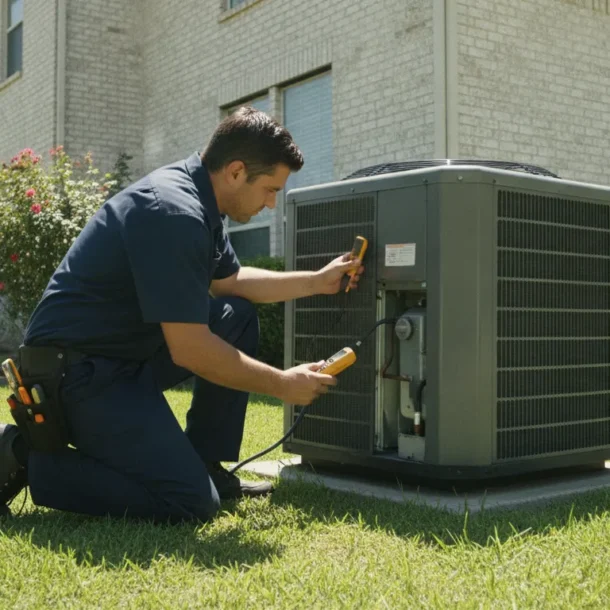
Controls, wiring, disconnects, capacitors, contactors, and other starting components are inspected and tested. Loose connections can create unreliable operation, while a weak capacitor or worn contactor can cause startup trouble. The technician checks operating readings, motor condition, and safety controls, using tools such as digital manifold gauges or thermal imaging when diagnostics call for them. These checks help identify small problems before they become a breakdown.
The condensate drain and pan are checked for buildup, blockage, and signs of overflow. A clogged drain can reduce the system’s ability to remove humidity, which matters during muggy North Texas weather. The thermostat is calibrated so the equipment responds accurately to the selected temperature. Refrigerant level and evidence of leakage are also measured as part of the cooling-system review, since improper charge can reduce efficiency or damage equipment.
| Checklist example | Published scope | What it illustrates |
|---|---|---|
| Constellation Home | 21-point tune-up | A structured review can cover controls, airflow, coils, refrigerant, electrical components, and drainage. |
| Service Champions | 26-point check-up, typically 60-90 minutes | A longer checklist may divide the same major systems into more individual inspection and cleaning steps. |
The point count is less important than whether the technician evaluates the complete system and explains the findings. Regular maintenance supports efficiency, helps prevent breakdowns, and can extend equipment life.
Electrical testing is a central part of a professional AC tune-up, especially before a Dallas-Fort Worth summer. With 100°F or higher temperatures occurring for roughly 40 to 60 days each year. Repeated starts and long run times can place extra stress on capacitors, contactors, and wiring. A technician checks these components for wear before a small weakness becomes a no-cooling call.
Capacitors store and release electrical energy to help the motors start and run. The start capacitor gives the compressor its initial jolt, while the run capacitor helps the compressor and fan motor maintain steady operation after startup. During the inspection, the technician looks for a bulging case, leaking oil, damaged terminals, or readings outside the manufacturer’s expected range. A weak capacitor may cause hard starts, humming, delayed startup, or intermittent cooling.
Testing matters because a capacitor can look normal while its electrical performance has declined. Measuring its capacitance helps identify a component that is struggling under load, rather than waiting for the compressor or fan motor to stop operating.
The contactor is a relay that sends power to the outdoor equipment when the thermostat calls for cooling. Each time the system starts, the contactor opens and closes under electrical load. A technician checks for pitted or burned contacts, insect damage, corrosion, and signs of overheating. Severely worn contacts can restrict the flow of power or prevent the outdoor unit from starting.
The inspection also includes the wiring and terminals. Loose wires, damaged insulation, discoloration, or overheated connections can create resistance and unsafe hot spots. The technician tightens connections where appropriate and confirms that components are securely connected. These checks complement the broader inspection you can expect during an AC tune-up.
At the outdoor unit, the technician verifies that the service disconnect is accessible and operating correctly. This switch allows power to be shut off during service and is an important part of safe equipment maintenance. The technician then measures amp draw while the compressor and fan operate. Comparing the readings with the equipment’s specifications can reveal motors working harder than they should, restricted airflow, electrical resistance, or developing mechanical trouble.
These measurements give the tune-up a practical safety and performance baseline. If the results point to a failing component, Garland Heating and Air Conditioning can explain the finding and recommend the appropriate next step before peak demand arrives.
Refrigerant is the medium that carries heat out of your home. If the charge is not within the system manufacturer’s specifications, the air conditioner can run longer, cool unevenly, and use more electricity. In the Dallas-Fort Worth area, where temperatures exceed 100 degrees for 40 to 60 days each year, that added strain can become a serious summer problem. The U.S. Department of Energy advises checking refrigerant levels because both undercharged and overcharged systems can operate inefficiently and may be damaged.
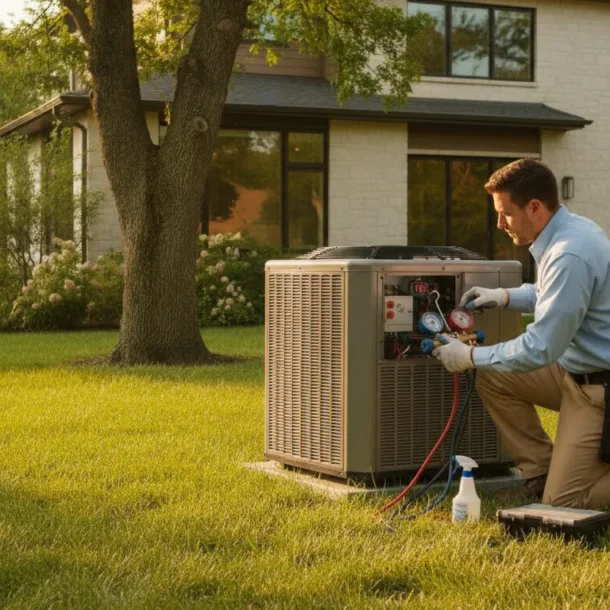
A qualified technician does not judge refrigerant charge by a quick glance or by whether the outdoor unit turns on. The technician connects digital manifold gauges to the system and compares operating pressures with the equipment requirements. Measurements such as superheat and subcooling help show whether refrigerant is evaporating and condensing as it should. The readings must be interpreted alongside indoor and outdoor conditions, airflow, and the system’s design.
Garland Heating and Air Conditioning technicians also use thermal imaging as part of modern HVAC diagnostics. This can help reveal unusual temperature patterns and hidden cooling losses that pressure readings alone may not explain. Together, digital gauges and thermal imaging provide a more complete view of system performance. The goal is not simply to add refrigerant, but to identify why the charge is outside the expected range.
Low refrigerant commonly points to a leak or another problem that has allowed charge to escape. It is not consumed during normal operation, so adding refrigerant without investigating the cause may provide only temporary relief. A qualified technician checks for signs of leaks because an undercharged system may fail to cool effectively and can face permanent damage.
An overcharged system is also a concern. Excess refrigerant can raise operating pressures and force the compressor to work under conditions it was not designed to handle. Symptoms may overlap with other faults, such as poor airflow or a dirty coil, which is why a proper diagnosis matters. Correcting the charge protects efficiency and helps reduce compressor strain. Refrigerant level verification is therefore an essential part of answering what does ac tune up include, especially before another demanding DFW cooling season.
The U.S. Department of Energy’s AC maintenance guidance also recommends professional attention to refrigerant lines and related components.
Coil cleaning is a practical part of a spring tune-up because both coils affect how efficiently your air conditioner moves heat. In the Dallas-Fort Worth area, spring pollen, construction dust. And cottonwood debris can place an unusually heavy load on outdoor equipment before the first long stretch of summer heat.
The outdoor condenser coil releases heat from your home. When grass clippings, dirt, foliage, or other debris collect on its surface, airflow and heat rejection can suffer. The indoor evaporator coil absorbs heat from indoor air, and it can become dirty even when the air filter appears clean. The U.S. Department of Energy recommends that qualified HVAC contractors inspect the evaporator coil and clean it as needed. Learn more about air conditioner coil maintenance from the Department of Energy.
During the inspection, a technician looks for dirt accumulation on the evaporator coil and checks whether cleaning is appropriate for the system and its condition. Cleaning both sides of the system supports the airflow and heat transfer needed for reliable cooling, rather than treating only the visible outdoor unit.
A technician begins by removing leaves, grass, dirt, and other debris from around the condenser. The coil is then cleaned using methods appropriate for the equipment, with care taken not to damage the delicate aluminum fins. Bent fins can block airflow, so a qualified technician may use a fin comb to straighten them. The Department of Energy identifies fin straightening as an important step for maintaining airflow and system efficiency.
Clearance matters after cleaning, too. Technicians check that at least two feet of open space surrounds the condenser, trimming back nearby foliage or identifying obstructions that could hinder heat rejection. This combination of debris removal, fin care, and adequate clearance helps the system work under the demanding DFW summer climate.
A professional AC tune-up typically takes about 60 to 90 minutes, depending on the equipment and the condition of the system. During that visit, a technician can check the thermostat, electrical components, coils, refrigerant, condensate drain, airflow, and other operating details. The goal is to identify developing problems while they are still manageable, rather than waiting for a breakdown during the hottest part of summer.
Pricing is quote-based because every home and system is different. Garland Heating and Air Conditioning can provide a customized quote after evaluating the equipment. System age is one factor, since older units may need more careful testing. Accessibility also matters. An attic unit, crowded closet, or difficult-to-reach outdoor condenser can require more time than an easily accessible system. If the inspection finds a worn component, restricted airflow, a refrigerant issue, or another repair need, that additional work is discussed separately before it proceeds.
If a tune-up reveals a problem that cannot wait, the AC Repair and Emergency HVAC Service guide can help you understand what to expect from the next step. Homeowners comparing payment approaches can also review available financing options.
Annual tune-ups are preventive care. They can reduce the chance of an emergency breakdown, help the equipment operate efficiently, and support a longer service life. With consistent maintenance, some systems may last an additional three to five years, although actual results depend on installation quality, usage, repairs, and equipment age. A clean, properly adjusted system may also use less energy than one working through dirty coils, weak airflow, or failing electrical components.
That preparation is especially valuable in DFW, where temperatures exceed 100 degrees for roughly 40 to 60 days annually. A spring appointment gives you time to address findings before demand peaks and a small issue becomes an inconvenient loss of cooling.
Do not wait for the first 100-degree afternoon in DFW to find out your air conditioner is struggling. A spring tune-up gives a technician time to identify developing problems before extreme heat puts the system under constant demand. Texas temperatures exceed 100 degrees for 40 to 60 days annually, so proactive maintenance can reduce the likelihood of an emergency service call. A regular AC tune-up schedule is especially valuable for older systems or equipment that runs heavily.
Squealing may point to friction or a worn belt, while grinding can indicate a motor or bearing problem. Rattling may come from loose hardware, debris, or a component that needs attention. These sounds are not normal changes in operating volume. A professional can inspect fan blades, motors, and electrical starting components before a small issue becomes a shutdown.
Weak airflow can result from a clogged filter, restricted ductwork, dirty coils, or a blower problem. Warm air may indicate refrigerant trouble, an airflow restriction, thermostat issue, or another fault that needs testing. If rooms no longer cool evenly, schedule service rather than repeatedly lowering the thermostat.
An unexplained increase in cooling costs can signal declining efficiency. Short cycling, when the system turns on and off more frequently than usual, can also indicate an airflow, thermostat, refrigerant, or equipment problem. Neglected maintenance can increase energy use and the operating cost of cooling. Professional maintenance helps address issues proactively, before they create a stressful breakdown.
Between professional visits, homeowners should check and replace the air filter monthly during the cooling season. A dirty filter restricts airflow and reduces efficiency. If a filter change does not resolve the symptom, learn when a tune-up isnt enough and repair may be the more appropriate next step.
Most homeowners schedule professional AC maintenance once a year, ideally in spring before sustained summer demand begins. Annual service is preventative rather than reactive and gives a technician an opportunity to identify developing issues before they become a cooling failure. In the Dallas-Fort Worth area, preparing before extreme heat can help your system perform reliably when it is working hardest.
Yes. The technician should inspect the filter, confirm that air can move through the system, and recommend replacement when it is dirty or clogged. The U.S. Department of Energy explains that clogged filters reduce airflow and system efficiency, while accumulated dirt can eventually affect the evaporator coil. Learn more from the Department of Energy.
A tune-up includes checking refrigerant levels and looking for signs of a leak or an improper charge. Low refrigerant can reduce cooling performance, while an overcharged system can also operate inefficiently. If the measurements or system behavior point to a leak, the technician should explain the diagnostic findings and recommend the appropriate repair rather than simply adding refrigerant.
The technician can inspect the condensate drain and clear an accessible buildup when that service is needed. A blocked drain can contribute to water problems and reduce the system’s ability to remove humidity. The U.S. Department of Energy identifies drain-channel maintenance as part of keeping an air conditioner operating properly. See the maintenance guidance.
Turn the system off if it is short-cycling, leaking water, making unusual electrical noises, or failing to cool, then request a diagnostic service visit. A tune-up can identify maintenance needs, but it does not replace a repair when a component has failed. Give the technician details about the symptoms, when they began, and whether airflow changed, so the next inspection can be more focused.
A seasonal tune-up can give you a clearer picture of your system’s condition before heavier cooling demand arrives. For a thorough review of the components discussed in this guide, Schedule Service with Garland Heating and Air Conditioning.