Texas heat turns weak airflow into more than an inconvenience, especially when a Garland, Richardson, Plano, or other DFW home cannot keep up.
Schedule an evaluation before a suspected blower problem causes additional strain or leaves your family without cooling.
There is no single online answer for ac blower motor replacement cost. The quote depends on the motor’s horsepower and design, the condition of related components, access to the air handler, diagnostic work, labor, and any applicable coverage. A technician must also confirm that the motor is actually at fault, rather than a capacitor, control, wiring, filter, or blower wheel. A customized evaluation is the reliable way to compare repair with replacement.
Garland Heating and Air Conditioning has served the Dallas-Fort Worth area since 1952, providing residential diagnostics, repairs, maintenance, and replacement guidance. For broader planning, our DFW HVAC cost guide covers related repair and replacement budgeting. The first step is understanding what the blower motor does and which symptoms point to a genuine failure, so the next section starts there.
The blower motor powers the indoor fan that moves conditioned air through your home’s return and supply ducts. When it runs correctly, you should feel consistent airflow from the registers while the system is cooling. A problem with the motor can interrupt that circulation, but similar symptoms can come from other parts of the air handler. So a symptom alone does not confirm that you need a blower motor replacement.
Weak airflow from several registers is one of the most noticeable warning signs. You may also have no airflow even though the thermostat is calling for cooling, or the indoor fan may fail to start. Uneven airflow can make some rooms uncomfortable while the system runs longer than usual. An unexplained increase in summer energy use can also accompany a system that is struggling to move air efficiently.
Listen for new grinding, rattling, or buzzing sounds near the indoor unit. A worn motor, a problem with the blower wheel, or a loose component can create unusual noise. If the fan starts and stops, takes longer to begin moving air, or only works intermittently, record when it happens. Those details can help a technician narrow the diagnosis.
A clogged filter can restrict airflow and place additional strain on the air handler. A failing capacitor may prevent the motor from starting, while a damaged or obstructed blower wheel can reduce airflow even when the motor itself is operating. Thermostat or control issues can also keep the indoor fan from receiving the right signal. In some cases, homeowners mistake a condenser fan problem outside for an indoor blower problem because both affect cooling performance.
Check that the thermostat is set to cooling and that the temperature setting is below the current room temperature. You can also look at the filter and replace it if it is visibly loaded with dust, using the correct size and type for your system. Observe the registers and note whether airflow is weak everywhere or only in one area. Do not remove electrical panels, handle wiring, or attempt to test a capacitor or motor. HVAC equipment can retain dangerous electrical energy even after it stops running.
A qualified technician should inspect the filter, controls, capacitor, motor, blower wheel, and related equipment before explaining the repair. Garland Heating and Air Conditioning provides residential diagnostics and repair throughout the DFW area, including Garland, Dallas, Richardson, Plano, Rockwall, and Rowlett. For a broader look at symptoms and service decisions, see this guide to Dallas Fort Worth AC repair.
There is no single price that fits every Garland, Richardson, Plano, or other DFW home. An accurate quote starts with diagnosis, because weak airflow or a humming air handler can come from the motor, capacitor, blower wheel, wiring, controls, or a restricted filter. Replacing the wrong component can leave the original problem unresolved.
The motor itself is one part of the total. A standard PSC motor is generally simpler than an ECM or variable-speed motor, which may require a compatible control setup and a precise match to the system. Horsepower, voltage, rotation, mounting pattern, and programmed operating requirements all matter. A technician should confirm the equipment data before recommending a replacement, rather than selecting a motor by appearance alone.
| Quote factor | Why it matters |
|---|---|
| Motor type and horsepower | PSC, ECM, and variable-speed designs have different parts, controls, and installation requirements. Larger or specialized motors may cost more than basic replacements. |
| Air-handler access | An accessible closet unit may require less labor than equipment in a tight attic, crawlspace, or difficult service location. |
| Diagnosis and labor scope | The visit may include electrical testing, removal of panels, motor and capacitor checks, installation, airflow testing, and safe system startup. |
| Warranty status | A parts warranty may cover an eligible motor while leaving diagnosis or installation labor outside the coverage. The technician should explain the terms before work begins. |
| Additional failed parts | A damaged capacitor, blower wheel, control board, belt, or wiring can expand the repair beyond the motor alone. |
Yes. The U.S. Department of Energy explains that a dirty or clogged filter can dramatically reduce airflow, increase motor wear, and raise energy consumption. Filters installed on the return side also protect the air-handler motor. See the DOE guidance on proper HVAC filter installation and its Home Cooling 101 guide.
A filter problem does not prove the motor is failing, but it is important context for diagnosis. The technician may need to evaluate airflow, duct conditions, electrical components, and the blower assembly together. That is why an online estimate can be misleading. For additional context about related repairs, compare this guide with AC component replacement costs.
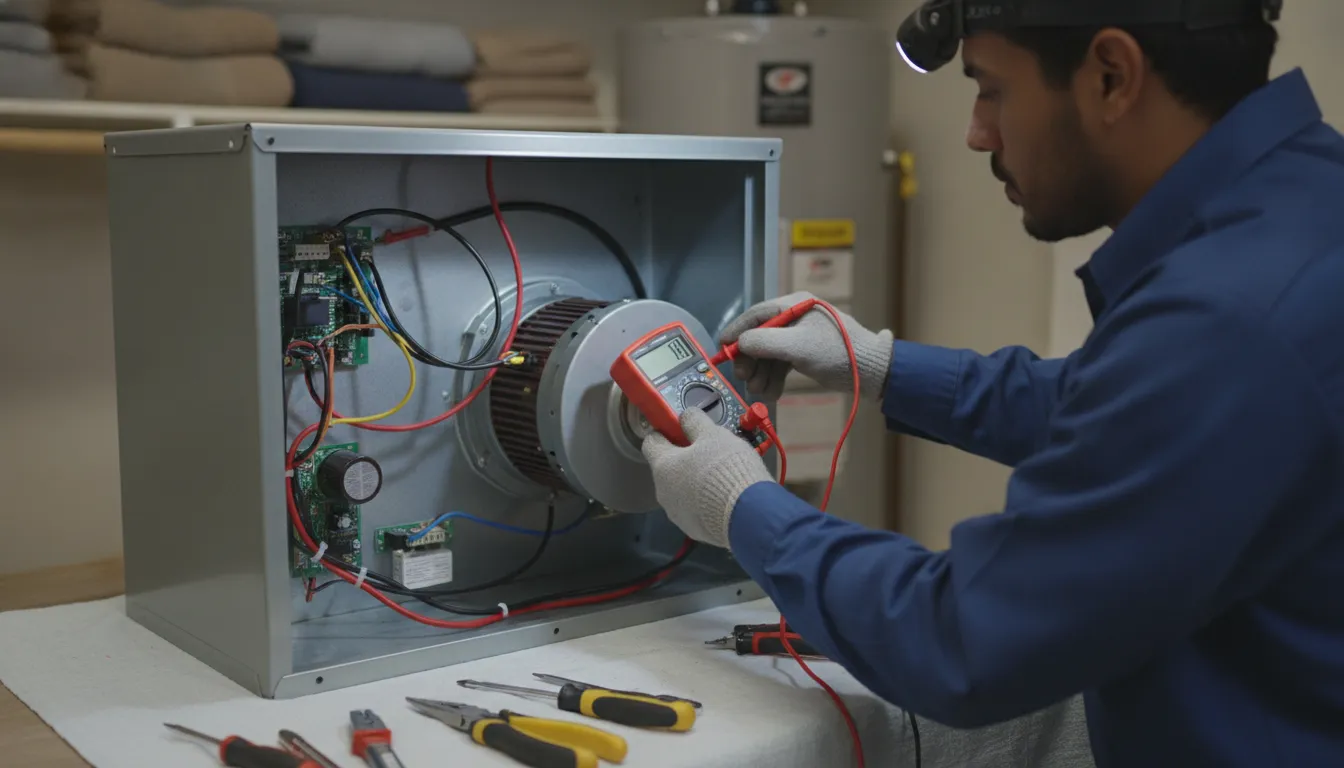
Garland Heating and Air Conditioning uses quote-based pricing that reflects the actual system and site conditions. A clear evaluation should separate the motor, labor, access, warranty, and any additional parts so a homeowner can make an informed repair decision.
When a technician evaluates your ac blower motor replacement cost, the motor type is one of the first details that matters. A PSC motor is generally a single-speed design. It runs at one set speed when the system calls for airflow. An ECM, often used in variable-speed equipment, can adjust its operation across multiple speeds. That allows the system to manage airflow more precisely, but the motor and its controls are more complex.
Neither design is automatically the right choice for every home. The replacement must match the air handler, control board, wiring, blower wheel, horsepower, and the system’s intended airflow. Installing a motor simply because it is available can create comfort, noise, or reliability problems. The technician should confirm the equipment data before recommending a part.
| Feature | PSC motor | ECM or variable-speed motor |
|---|---|---|
| Speed control | Usually operates at one selected speed. | Can operate at multiple speeds based on system demand and controls. |
| System complexity | Typically has a simpler motor and control arrangement. | Uses more electronic controls and requires an exact equipment match. |
| Quote considerations | Part availability, horsepower, access, labor, and related failed components affect the quote. | Motor type, module or controls, equipment compatibility, access, labor, and related components affect the quote. |
| Best replacement approach | Match the original specifications and required airflow. | Match the manufacturer’s specifications and the system’s programmed controls. |
Ask whether the diagnosis identifies the motor itself as the failed part. A capacitor, control board, wiring connection, blower wheel, restricted filter, or another airflow problem can produce similar symptoms. The U.S. Department of Energy notes that a clogged filter can restrict airflow, increase motor wear, and raise energy use. Filters also help protect the air-handler motor when installed correctly on the return side. You can review the Department of Energy’s guidance on proper HVAC filters before the appointment.
It is also useful to ask whether the proposed replacement preserves the equipment’s original speed settings and airflow requirements. A simpler motor is not necessarily a suitable substitute for an ECM system, and an ECM is not automatically a practical upgrade for a PSC system. The quote should explain the recommended part, diagnosis, access conditions, labor scope, and any additional component that needs attention.
Routine maintenance may help identify airflow restrictions and electrical concerns before they become a motor failure. Use this AC tune-up checklist to understand what a preventive visit can cover.
Replacing a failed blower motor can restore airflow without replacing an entire air conditioner, but the motor should not be evaluated in isolation. On an older system, the better choice depends on the condition of the compressor, coil. Controls, ductwork, and other major components, along with the repair scope and the system’s expected efficiency.
System age is a useful starting point, not an automatic cutoff. A relatively newer AC with one confirmed motor failure and otherwise healthy components may be a sensible repair candidate. An older system can still merit a motor replacement if it has been reliable, cools the home properly, and has no signs of broader deterioration.
Ask the technician to inspect more than the motor. The evaluation should consider compressor performance, refrigerant-related symptoms, electrical controls, the indoor coil, blower wheel, wiring, and airflow through the ducts. Repeated failures matter, too. If the system has needed several significant repairs recently, another component replacement may only postpone a larger decision.
The most useful comparison is not simply the replacement part against a new system. It is the complete repair scope versus the condition and performance of the existing AC. A failed capacitor, damaged blower wheel, control-board problem, or wiring issue may change the work required. Motor type also matters. A single-speed PSC motor and an ECM or variable-speed motor have different designs and replacement considerations.
Warranty status can affect the quote, so gather the system model and serial number before the visit if they are available. Also ask what the proposed repair covers, whether additional failed parts were found, and how the technician verified safe operation after the work. Garland Heating and Air Conditioning uses a customized, quote-based evaluation rather than applying one online price to every home.
A motor repair may make practical sense when the rest of the system remains sound. Replacement deserves closer consideration when the AC is inefficient, struggles to maintain comfort, has recurring breakdowns, or needs several major components. The right answer depends on the home’s cooling needs and the condition of the equipment, not on a fixed age rule.
For a broader framework, review this AC repair versus replacement guide. You can also use the DFW HVAC cost guide to organize questions about repair, replacement, and budgeting. Garland Heating and Air Conditioning has served DFW since 1952 and can evaluate the equipment before recommending a repair or replacement path.
A blower motor replacement visit should begin with diagnosis, not with an automatic parts swap. Weak or absent airflow can come from the motor. But a technician also needs to distinguish it from a failed capacitor, damaged blower wheel, restricted filter, control problem, or wiring issue. That evaluation helps prevent paying for the wrong repair and gives you a clearer explanation of your ac blower motor replacement cost.
The appointment may be completed in one visit when the correct part is available and the air handler is accessible. However, the timing can change when equipment is in a tight attic, the motor is an uncommon model, or another failed component is discovered. A straightforward replacement is sometimes described as taking two to four hours, but that is not a guarantee for every DFW home. Your technician should explain the expected scope before work begins.
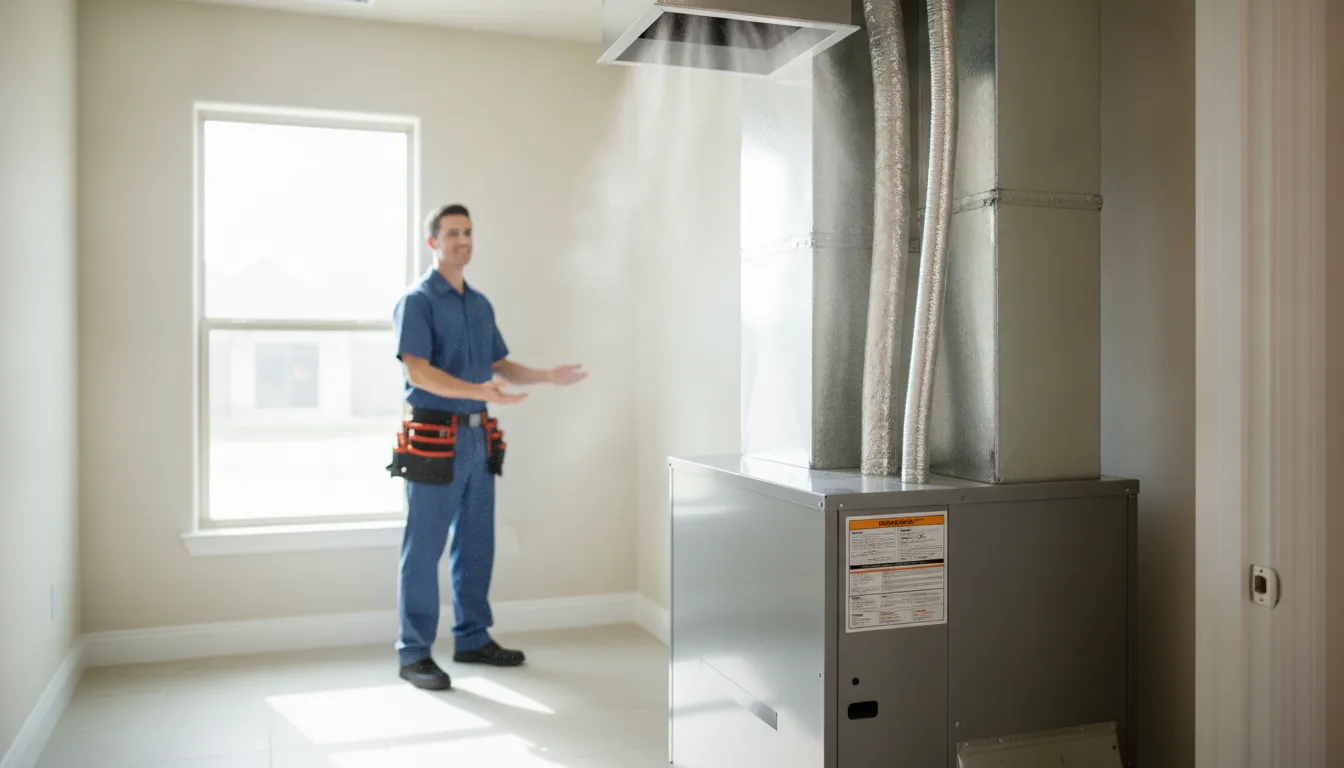
Note when the airflow or noise problem began, whether it affects every room, and whether the AC cycles normally. Keep the air-handler area accessible if possible, but do not remove panels or test live electrical components yourself. For broader budgeting context, review this DFW HVAC cost guide. Garland Heating and Air Conditioning also provides AC repair and maintenance service across the DFW area.
For a customized evaluation, Schedule Service with Garland Heating and Air Conditioning. If your home has lost cooling during dangerous heat, call now at (972) 278-3500 to discuss urgent service availability.
There is no reliable one-size-fits-all price for DFW homes. The quote depends on the motor type and horsepower, air-handler access, diagnosis, labor, warranty coverage, and whether the capacitor, wiring, controls, or blower wheel also need attention. Ask for a written, itemized evaluation.
PSC motors are generally simpler, single-speed components. ECM motors use electronic controls and can operate at multiple speeds, so the replacement part and compatibility requirements may be more involved. The correct choice depends on the equipment design, not just the lowest initial quote.
Weak or absent airflow, buzzing, rattling, or an AC that will not start can involve the motor, capacitor, controls, filter, or blower wheel. A technician should test the electrical components and inspect the air handler before recommending a motor replacement.
Consider the system’s age, repair history, efficiency, compressor condition, and the scope of the current repair. A motor-only failure on an otherwise sound system may justify repair, while recurring failures or multiple major problems may support comparing replacement options.
A straightforward replacement is often completed during one service visit, but attic access, part availability, electrical issues, or additional failed components can extend the appointment. The technician should diagnose the fault, install a correctly matched part, test airflow, and explain the result.
A proper evaluation can help distinguish a failed blower motor from an airflow restriction, capacitor issue, or another component problem before you commit to a repair. Schedule an AC blower motor evaluation with Garland Heating and Air Conditioning. For urgent loss of cooling, call now at (972) 278-3500.