Commercial refrigeration repair cost in DFW is not a single menu price. The final quote depends on the equipment, failed component, access, parts, refrigerant work, and urgency. For the residential side of the cost conversation, review these HVAC financing options for Texas homeowners; this guide focuses on the commercial refrigeration decisions that affect a business.
Schedule commercial refrigeration service with Garland Heating and Air Conditioning, or call (972) 278-3500 to discuss the equipment and request a customized quote.
There is no responsible flat rate for commercial refrigeration repair in DFW without inspecting the unit. A small control, gasket, fan, or drain problem is a different job from a compressor failure, refrigerant leak, or walk-in system repair. A useful quote should identify the diagnosis, labor, parts, access, urgency, and recommended next step.
Commercial refrigeration repair cost in DFW is quote-based because businesses use different equipment, brands, configurations, and operating schedules. The quote should explain what failed, what must be repaired, which parts are needed, and whether the equipment can be returned to reliable service. Garland Heating and Air Conditioning can assess the system before recommending a repair or replacement path.
Online price ranges can be misleading. A reach-in refrigerator, display case, ice machine, walk-in cooler, and remote condensing system do not have the same parts or service requirements. Even two walk-in coolers can differ because of compressor size, controls, access, refrigerant, age, and the condition of the surrounding electrical and mechanical components.
A temperature complaint describes the result, not necessarily the cause. Warm product may come from a failed fan, dirty condenser, control problem, door-seal issue, airflow restriction, refrigerant issue, or compressor problem. A technician needs to test the system instead of replacing the first part that looks suspicious. That diagnostic work is what turns an uncertain breakdown into an itemized recommendation.
| Quote factor | What it can change | Question to ask |
|---|---|---|
| Equipment type | Parts, access, system complexity, and test time | Which unit or circuit is being repaired? |
| Failed component | Repair scope and replacement-part cost | What test confirmed the failure? |
| Site access | Labor time and coordination requirements | Will the technician need roof, ceiling, or after-hours access? |
| Urgency | Scheduling options and emergency service conditions | What response options are available today? |
Commercial refrigeration systems often support larger loads, longer operating hours, tighter temperature requirements, and more complex equipment than residential units. A repair may also require access coordination around customers, staff, food inventory, or a building schedule. Those commercial conditions can affect labor and the time needed to test the system correctly.
A home refrigerator is a self-contained appliance. A commercial system may include a walk-in box, evaporator, condenser, controls, piping, multiple fans, defrost components, and a remote condensing unit. Larger equipment and longer refrigerant lines can make diagnosis more involved.
A restaurant, grocery store, convenience store, school, medical facility, or food-production space may need service without interrupting normal operations. The technician may need a clear path to the equipment, coordination with a manager, roof access, a lift, or a plan for protecting inventory. If the problem occurs outside a normal service window, availability and access should be discussed before work begins.
Refrigerant work is not the same as changing a door gasket. The technician may need to find and repair a leak, recover or charge refrigerant, test for proper operation, and document the work. The EPA Section 608 resource explains federal refrigerant-management requirements. A quote should make clear whether refrigerant handling and leak-related work are part of the proposed scope.
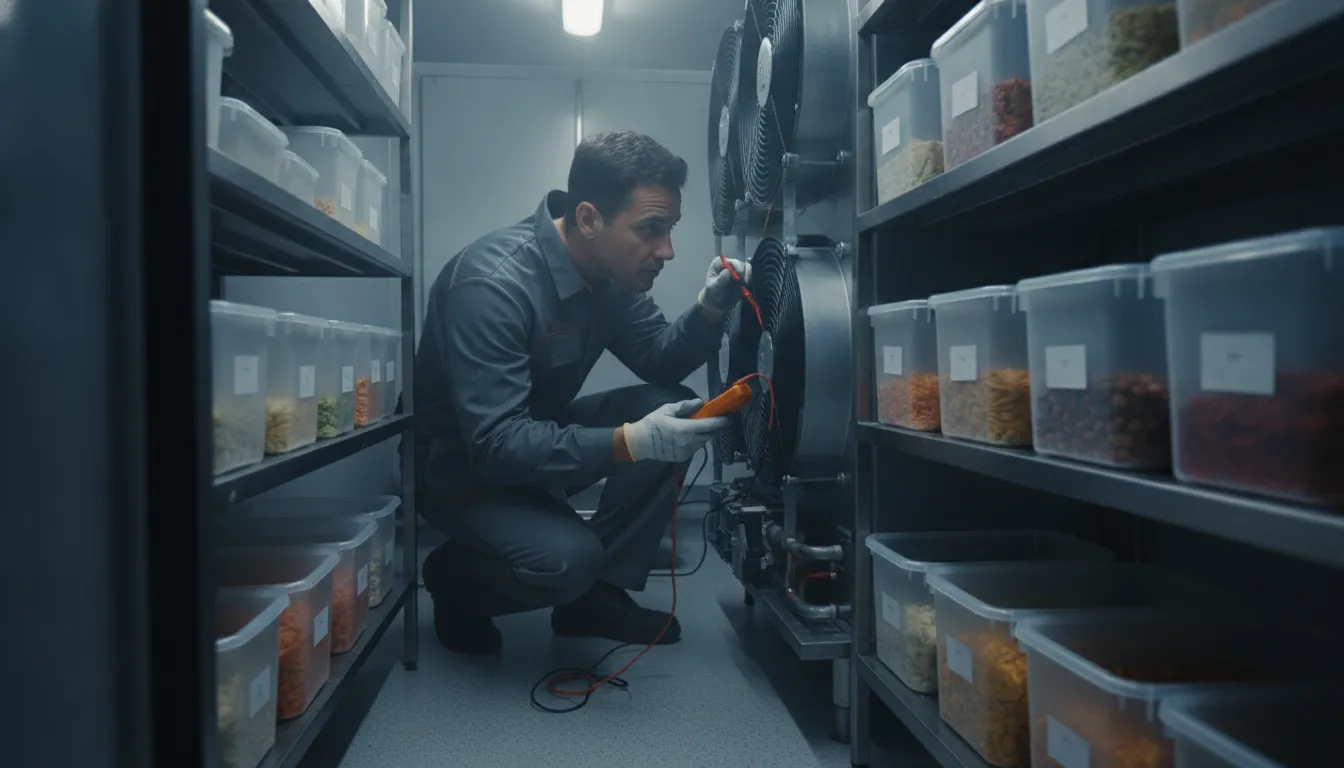
Walk-in cooler repair cost depends heavily on whether the fault is a relatively contained component problem or a system-level failure. Door hardware, gaskets, fan motors, thermostats, and drains may have a narrower scope. Compressors, evaporators, controls, electrical faults, and refrigerant leaks can require more testing, parts, labor, and follow-up.
| Component or condition | What a technician may check | Repair decision |
|---|---|---|
| Door gasket or hardware | Seal, alignment, frost, and air infiltration | Often evaluated as a focused repair, but the door and frame condition still matter. |
| Evaporator fan or coil | Motor operation, airflow, ice, drain, and coil condition | Restore airflow and confirm the box reaches its required temperature. |
| Thermostat or control | Setpoint, sensor readings, wiring, and control response | Confirm the control is the cause before replacing it. |
| Compressor or condenser | Electrical readings, pressures, temperatures, and condenser condition | Compare repair scope, equipment age, and replacement options. |
| Refrigerant leak | Leak location, charge, pressure, and system operation | Repair the source where possible, then test the system before returning it to service. |
Move product only when your food-safety procedures allow it, keep doors closed, record temperatures, and follow your written inventory and food-handling plan. Do not bypass electrical or refrigeration safeties. The FDA Food Code is a useful reference for food-safety requirements, but the person responsible for your operation should follow the rules and procedures that apply to your facility.
An emergency refrigeration call can involve more than the failed part. The quote may also depend on time of day, access, travel, equipment type, parts availability, and the steps needed to protect inventory. Ask what can be stabilized immediately, what must be repaired, and what the expected next step will be before authorizing work.
Call promptly when temperatures are rising, a compressor is repeatedly tripping, the box is icing over, a fan has stopped, water is leaking, a door will not seal, or an alarm indicates a refrigeration failure. Delaying a diagnosis can allow a contained fault to affect other components or put product at risk. A technician can help separate an urgent repair from a problem that can be scheduled.
Request a commercial refrigeration repair assessment from Garland Heating and Air Conditioning, or call (972) 278-3500 with the equipment details ready.
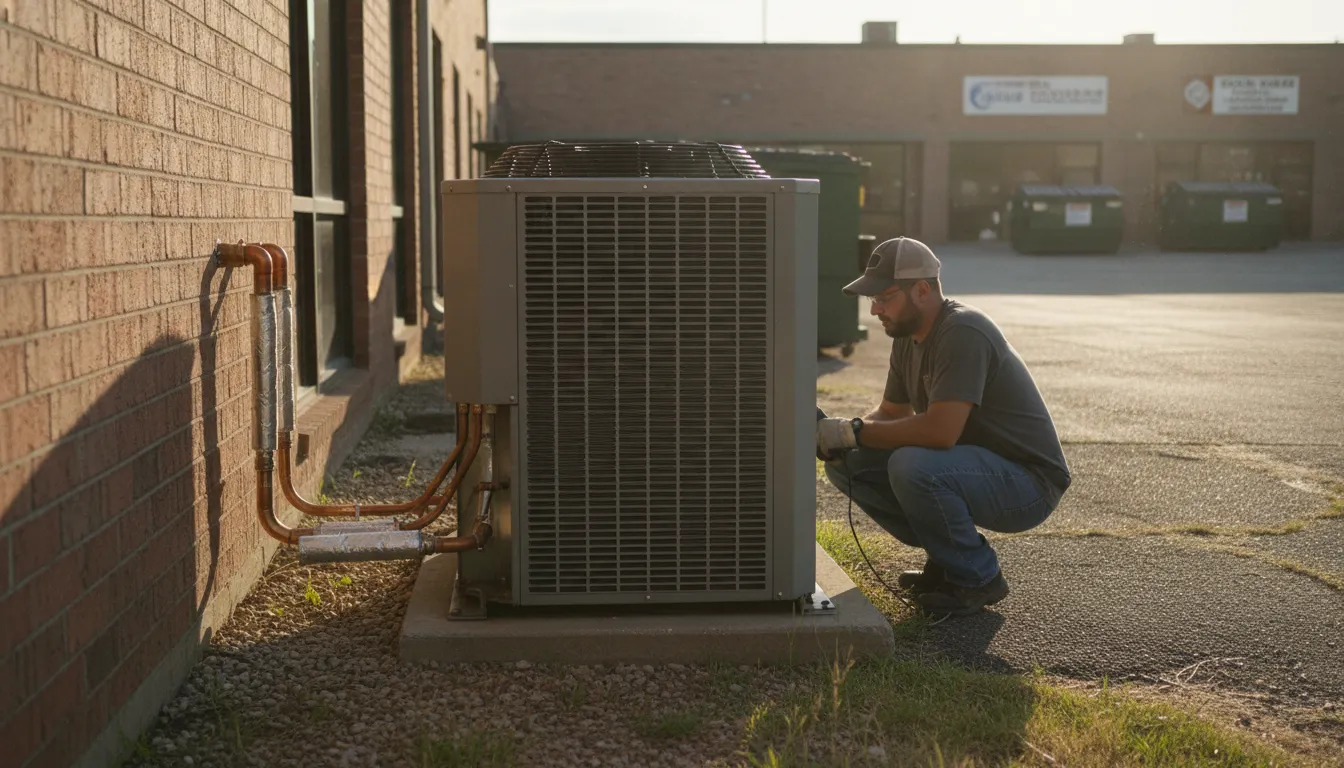
Repair is usually worth evaluating when the fault is defined, the equipment is otherwise sound, and the repair restores reliable operation. Replacement deserves a closer look when failures repeat, the system is near the end of its useful service life, parts are difficult to source, or the repair scope approaches the value of dependable replacement equipment.
A repair may be the sensible path when the problem is isolated, the box and surrounding components are in good condition, and the equipment can meet the business’s operating requirements after testing. Ask whether the proposed fix addresses the cause or only resets a symptom. Also ask what follow-up testing will confirm that the unit is holding temperature.
Replacement planning can be reasonable when the equipment has repeated failures, major corrosion, obsolete controls, severe cabinet damage, or a repair scope that does not restore confidence in the system. Use the DFW HVAC financing guide for the broader residential budgeting framework, then ask for a commercial-specific assessment. Commercial equipment sizing, layout, utility requirements, and installation conditions must be evaluated for the actual site.
The best quote is not automatically the lowest first number. Compare the diagnosis, repair scope, parts, testing, expected operating result, timing, and replacement alternatives. A clear quote lets a business owner understand what is being fixed and what remains a risk instead of comparing disconnected line items.
Garland Heating and Air Conditioning serves DFW commercial customers with commercial HVAC capabilities that include refrigeration. Review the commercial refrigeration service page and light and heavy commercial AC services page for the company’s broader commercial scope. For prevention planning, see the commercial refrigeration maintenance checklist. These resources complement this cost guide without replacing an equipment-specific diagnosis.
Gather the equipment details, temperature readings, alarm information, and access instructions, then request a commercial refrigeration assessment. A qualified technician can identify the failed component, explain the repair scope, and help you compare a focused repair with replacement planning when that is appropriate.
Garland Heating and Air Conditioning has served the Dallas-Fort Worth area since 1952 and supports residential and commercial HVAC needs. For commercial refrigeration repair, the right next step is an equipment-specific conversation, not a guessed online price. Share the business location, equipment type, symptoms, and urgency so the team can direct the request appropriately.
Schedule a commercial refrigeration service assessment or call (972) 278-3500 to request a customized quote from Garland Heating and Air Conditioning.
No. Commercial refrigeration repair cost varies by equipment, failed component, access, parts, refrigerant work, and urgency. A technician should inspect the system and provide a quote tied to the actual diagnosis.
It can be, but equipment size alone does not determine the quote. Access, controls, compressor arrangement, refrigerant circuit, failed component, and site conditions all affect the repair scope.
System-level problems such as compressor failure, major refrigerant leaks, condenser or evaporator damage, and complex controls can require more parts and labor than a gasket, fan, drain, or isolated control repair. The technician should confirm the failure before recommending a major replacement.
Compare the equipment’s age and condition, repair history, parts availability, expected reliability after repair, and the scope of replacement. A commercial HVAC-R technician can help you compare the two paths for the actual site.
Record the temperature, keep doors closed, follow your facility’s food-safety procedures, and request service promptly. Do not bypass safety controls or continue operating equipment that may be unsafe for your product.
Garland Heating and Air Conditioning lists commercial refrigeration among its commercial HVAC capabilities in the Dallas-Fort Worth area. Contact the company with your equipment type, business location, symptoms, and timing so the service request can be evaluated.