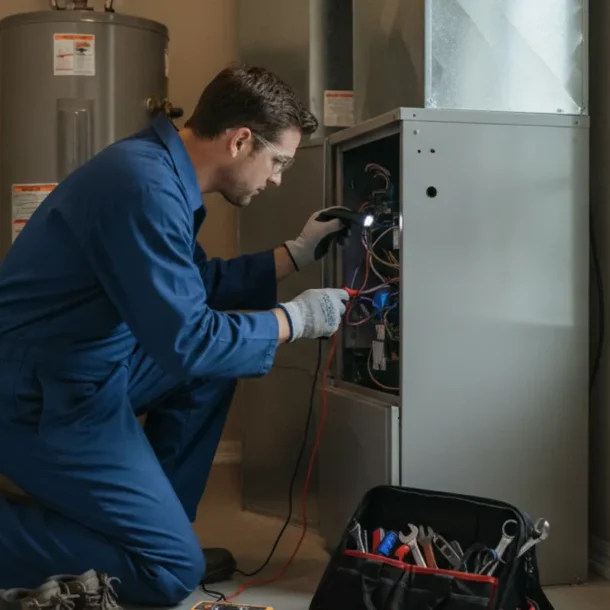

Commercial HVAC filter replacement cost is not a single price you can pull from a chart. A Garland restaurant with one rooftop unit and a Plano office with six units can ask the same question and get two quotes. The media, the roof access, and the visit window are not the same job.
Schedule a commercial filter quote with Garland Heating and Air Conditioning. Call (972) 278-3500 and a technician can price the filters and the visit for your building.
The useful answer is a short list of cost drivers, not a made-up total. Filter type, unit count, access, and the visit window all move the quote. Garland Heating and Air Conditioning has served Dallas-Fort Worth buildings since 1952. Every filter job is quoted to the building in front of the tech, not to a national average.
Four things decide most of the quote. Those are the filter itself, how many the building uses, how a technician reaches them, and when the visit is scheduled. Materials and labor are separate lines. A thicker filter costs more than a thin pleated pad. A locked roof at night costs more than an open mechanical room in the morning.
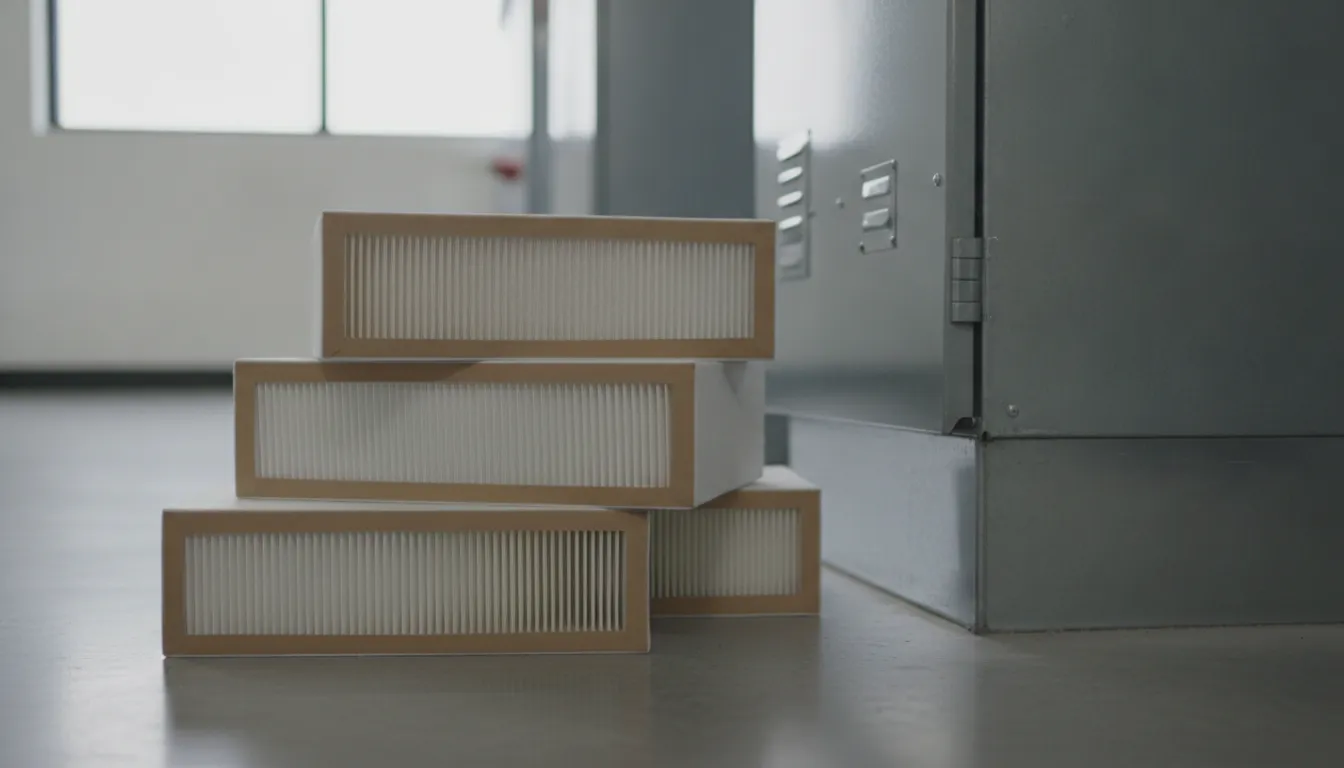
Commercial units commonly use flat pads, pleated filters, bag or cartridge filters, and sometimes high-efficiency filters. A higher-efficiency filter uses denser media. The part costs more, and it can load faster in a dusty kitchen, warehouse, or suite next to construction. ASHRAE’s filtration and disinfection guidance points readers to ASHRAE Standard 52.2 for MERV testing of general ventilation filters. MERV is a test result, not a price. If a quote jumps from a basic pleat to a much tighter filter, ask whether the unit was designed for that resistance.
A single storefront rooftop unit may need one or two filters. A mid-size office, clinic, or retail strip can need a mix of sizes across several units. Custom sizes, odd thicknesses, and filters staged on a high roof all add time. If the tech needs a lift, a roof hatch key, a security escort, or a badge, that time belongs on the quote. It should not show up later as a surprise.
Daytime access on an open roof is the simplest visit. After-hours work, weekend work, and emergency calls cost more. The building is paying for a separate trip window, not just a box of filters. Bundling every unit on one visit is usually cheaper per filter than three return trips. Garland Heating and Air Conditioning quotes the visit you actually need. We do not publish a flat commercial filter price. The building decides the scope.
The filter name on an invoice should match the slot in the unit. A thicker or tighter filter can raise pressure drop if the rack was not built for it. Airflow drops, and the blower works harder. That is a comfort problem, not a savings.
| Filter type | Where you usually see it | What moves the quote |
|---|---|---|
| Flat pad or low-efficiency pleat | Smaller rooftop units and basic commercial splits | Lowest material cost. Loads fast in kitchens, shops, and dusty suites. |
| Standard pleated filter | Offices, retail, and light commercial air handlers | Size, thickness, and count. A common middle step for many DFW buildings. |
| Higher-MERV pleat, bag, or cartridge | Buildings that need tighter particle capture | Higher part cost and a real check that the unit can handle the resistance. |
| HEPA or other specialty media | Only where the system was built for it | Much higher part cost, sealing, and handling. Not a drop-in upgrade. |
If you want the rating scale itself, our guide on what a MERV rating means when you choose a filter covers selection. This page stays on the quote: what you are buying, how often it is replaced, and what the visit includes. For the rest of a maintenance plan, use the commercial HVAC maintenance cost calculator. Filters are not the whole budget.
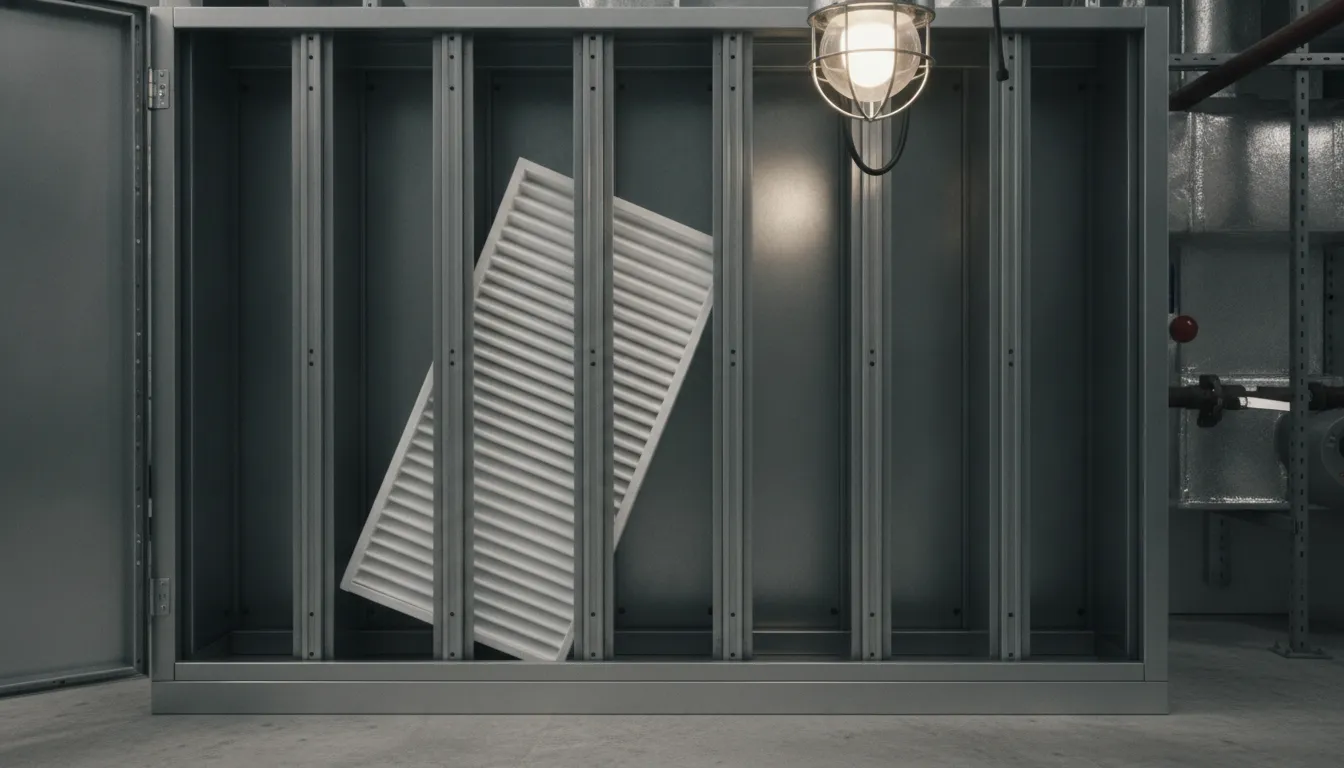
EPA’s office-building indoor air guidance treats ventilation design, operation, and maintenance as part of indoor air quality. Source control and moisture matter too. A filter only helps if air goes through it. ASHRAE’s filtration guidance says filters should be sealed so air does not leak around the frame. A bent rack, a missing clip, or the wrong size wastes the upgrade.
A Garland restaurant and a Richardson office can share a rooftop unit brand and still need different timing. Grease, paper dust, pet hair, and drywall dust load media faster than a quiet office. Tell the tech what the space actually does. That detail changes both the filter and the interval.
There is no honest one-size interval. Manufacturers and building engineers set a change point from pressure drop, visible loading, and the unit design. A national calendar does not do that job. A gray filter is not always due. A filter that still looks white can already be choking a dusty kitchen unit.
Start with the equipment manual or the filter schedule on the maintenance log. If the building has none, a technician can record the size, the condition, and a practical interval after the first visit. Busy restaurants, salons, clinics, and warehouses in Dallas, Plano, Mesquite, and Garland often need shorter gaps than a quiet office. Nearby construction is a reason to shorten the gap for a season, then put it back.
A loaded filter makes the blower push harder. Rooms get uneven temperatures, and coils stay dirty longer. A small airflow complaint can become a service call that is not about the thermostat. Filter replacement does not include coil cleaning, belt checks, or a full maintenance visit. Those are separate scopes. For a wider tune-up budget, use the DFW HVAC maintenance cost guide.
Two quotes are only comparable when they buy the same work. A low number for one unit is not competing with a higher number for six units plus after-hours labor. Ask each company to show the same lines.
Look for the unit count, the filter size and efficiency, labor, roof or lift access, disposal, and the hours on site. The quote should say whether the visit is filters only or part of a maintenance plan. Garland Heating and Air Conditioning can fold filter changes into light and heavy commercial AC service. We can also price a one-time visit when you only need the media replaced.
Pause if the quote skips sizes or promises one price for any building. Also pause if it upgrades every filter without looking at the equipment. Disposal, after-hours time, and a lift should be listed when the roof needs them. Financing is for larger equipment decisions, not a box of filters. When the real issue is an aging unit, read the HVAC financing page. The rooftop unit explainer helps if you are not sure what is on the roof.
The fastest way to lower the labor line is to make the first visit simple. A technician who can find the roof hatch, the filter sizes, and a staging spot spends the time on the equipment.
Have a unit list, roof or mechanical-room access, and someone who can answer questions about hours. If tenants cannot lose cooling during the day, say so before the appointment. Restaurants and clinics in Fort Worth, Richardson, and Rowlett often want the work before open or after close. That is a fair request. Put it on the quote.
You should leave with the old filters, or a note that they were hauled off, plus the size and rating of what went in. A short condition note beats a vague “filters changed” line next quarter. A damaged rack, a heavy coil, or an airflow problem beyond the filter is a repair conversation. Our guide to a DFW HVAC service call explains how that visit differs from a planned filter stop. For dust already in the ducts, duct cleaning is a separate service.
Need a number for your building? Request a commercial filter quote from Garland Heating and Air Conditioning, or call (972) 278-3500. We price the filters, the access, and the visit window. We do not invent a one-price total.
A property manager in Dallas or Plano is usually approving a visit, not shopping for a single part number. The questions below keep the commercial HVAC filter replacement cost tied to the building instead of a catalog price.
Ask the tech to walk the unit count with you. A retail strip, a small clinic, and a two-story office do not share a filter list. Each rooftop unit or air handler should show a size, a thickness, and a count. If one unit is behind a locked screen or needs a lift, that unit should be its own line.
Spent filters are bulky, and some sites do not want them left on the roof. Confirm haul-off in the quote. Also confirm the next suggested visit, based on this inspection, so the interval is a note you can check later. Garland Heating and Air Conditioning can schedule that follow-up with the same commercial team that did the first stop.
Filter replacement should not be used to paper over a noisy blower, a frozen coil, or a unit that cannot hold setpoint. If the inspection finds that, ask for a separate repair scope. Commercial repair in Plano and across Dallas-Fort Worth is a different visit from a planned filter change, and the commercial AC repair page is the right place for that work.
No. Garland Heating and Air Conditioning quotes from the filter type, the unit count, roof or mechanical-room access, and the time of the visit. A published national range would not describe your building, so we do not use one.
Sometimes, on a single easy unit. On a multi-unit roof, labor, correct size, and a sealed fit protect the equipment. A filter that leaks around the frame does not do the job you paid for.
Only if the unit can handle the extra resistance and the filter is sealed in the rack. ASHRAE’s filter guidance is about air going through the media. EPA ties good office air to ventilation maintenance, not to a filter upgrade by itself.
More often than a quiet office, because grease and cooking particles load media faster. The right interval comes from the unit and the first inspection, not from a fixed month count.
Not unless the quote says so. Filter replacement is the media, the labor, and the disposal you agreed to. Coil cleaning, belts, and a maintenance plan are separate lines.