Does your furnace start, run briefly, shut off, then start again while the house stays cool? Furnace short cycling describes repeated, unusually brief heating runs that can point to an airflow, thermostat, control, or equipment-sizing concern.
Quick answer: A furnace normally cycles on and off to maintain the thermostat setting, so one short run is not enough to identify a problem. If it repeatedly stops soon after starting and comfort is poor, check only simple, accessible items such as the thermostat setting, filter, and blocked vents. If the pattern persists, avoid repeated resets and arrange professional evaluation.
Short cycling is not defined by one exact run time that applies to every furnace. Equipment, weather, thermostat location, and the home’s heat demand all affect operation. Instead, notice whether the furnace repeatedly starts, stops before the home warms, and starts again sooner than seems normal for your equipment. The recurring pattern matters more than one isolated event.
Observe from a safe distance. Note approximately when a heating run begins and ends, how long the blower runs, and how soon the next start occurs. Notice whether the thermostat reaches its set temperature, whether the whole home is affected, and whether any room is consistently colder. Do not remove a panel or touch hot equipment to gather these details.
A furnace that switches off after reaching the setpoint may be operating as expected. A pattern is more concerning when the home stays below the selected temperature, indoor comfort fluctuates, the furnace makes frequent starts, or the behavior returns repeatedly. A technician can interpret these observations alongside the equipment and installation. The symptom alone does not prove that a part has failed.
Frequent starts can interrupt comfort and may indicate that the system is not transferring heat or responding to the thermostat as intended. Some shutdowns are triggered by protective controls. Repeatedly restarting equipment without understanding why it stops can hide a recurring condition rather than resolve it.
A Minnesota Department of Commerce report on residential heating and air-conditioning controls discusses short cycling in relation to air distribution. Its findings are a useful reminder that cycling can involve system operation, but they do not diagnose an individual home. Read the report on advanced residential HVAC controls for that broader context.
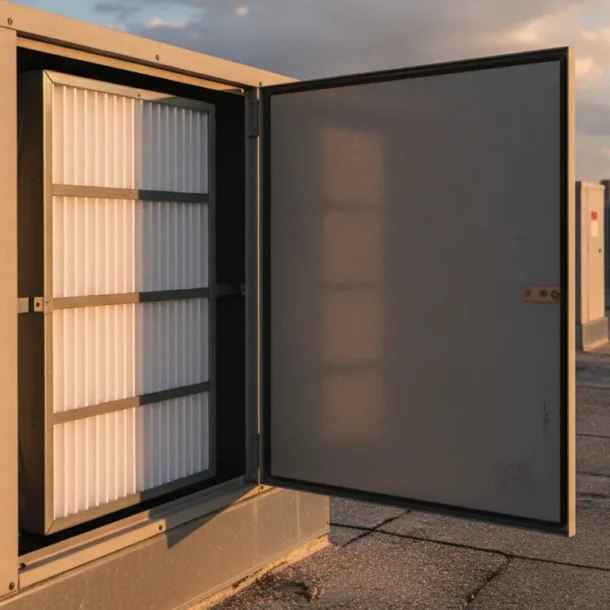
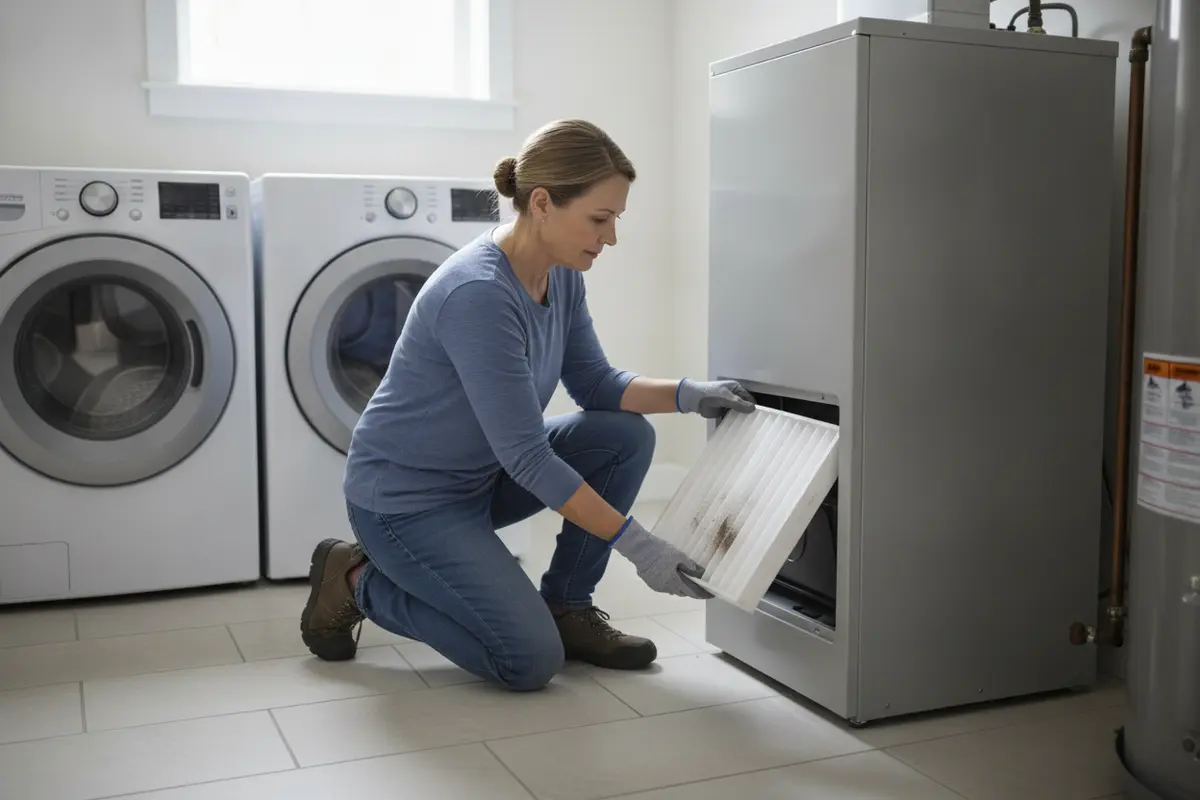
A dirty filter or blocked return grille can reduce airflow. Furniture, curtains, rugs, or stored items may also obstruct supply registers or returns. In some systems, inadequate airflow can contribute to overheating and a safety shutdown. The filter is a reasonable first check if it is accessible without opening furnace panels.
Look for the correct filter size and direction indicated by the equipment or filter instructions. If it is visibly loaded, replace it with the specified type. Do not operate the furnace without a filter when the manufacturer requires one, and do not assume a new filter will solve every repeated shutdown. Clear ordinary obstructions from vents without closing registers to try to control the system.
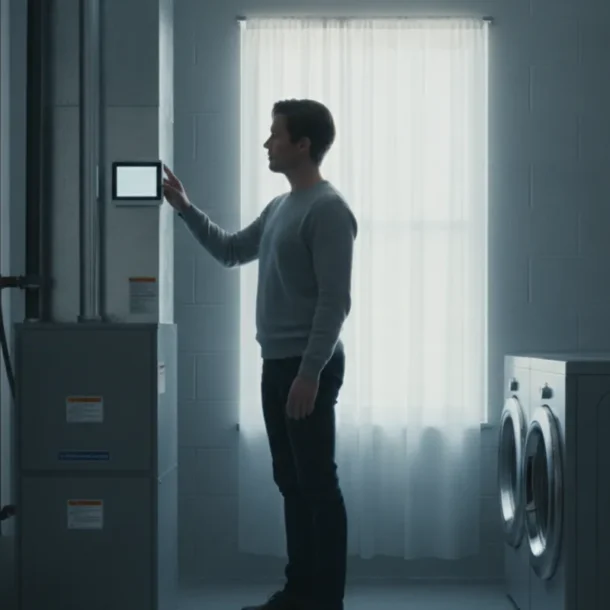
Check that the thermostat is set to heat and that the setpoint is above the room temperature. A thermostat beside a sunny window, lamp, cooking area, or supply register may sense conditions that differ from the rest of the home. A weak battery or control problem may also affect operation, depending on the thermostat.
Make only ordinary user adjustments described in the thermostat instructions, such as replacing a battery if appropriate. Do not move wiring, open equipment, or change installer-level settings. If the thermostat reads a comfortable temperature while other rooms remain cold, note that contrast for the service visit rather than assuming the thermostat is the sole cause.
Ignition or flame-sensing trouble, venting concerns, and safety-control operation can all be associated with shutdowns. These are not do-it-yourself repair tasks. Do not bypass a limit switch, handle gas components, or repeatedly reset a furnace that keeps stopping. If an error code is displayed on an ordinary user-facing screen, write it down; do not remove panels to find one.
If you smell gas, leave the building and contact the gas utility or emergency services from a safe location. If there is smoke or a suspected carbon monoxide exposure, get outside and seek emergency help. Do not re-enter until the appropriate responders say it is safe.
An oversized furnace may heat the thermostat area quickly and shut off before heat is distributed evenly through the home. A Texas Department of Housing and Community Affairs Manual J quality-control document discusses oversized HVAC equipment and short cycling. That makes sizing a possible line of investigation, not a conclusion based on cycling alone.
Rooms that warm at different rates can also reflect distribution or thermostat location. A technician should consider the equipment, home, and symptoms before recommending changes. Short cycling does not automatically mean the furnace needs replacement; the cause may be a repairable condition, and any replacement discussion should follow an evaluation.
After a simple correction, observe whether the behavior changes during normal operation. If the furnace continues to stop and restart, contact a professional rather than cycling the power repeatedly. If the system appears unsafe or you notice a hazardous odor, prioritize leaving the area and contacting emergency help over troubleshooting.
Electrical diagnosis, gas connections, burner work, venting inspection inside equipment, safety-control testing, and adjustments to combustion or installer settings require appropriate expertise. A homeowner should not defeat a safety device to keep heat running. The aim of a safe check is to identify obvious user-level issues and describe the symptom, not to repair internal components.
This comparison is a way to organize what you see, not a diagnosis. Several different conditions can produce similar symptoms. If the furnace continues to short cycle, a qualified assessment is the next step even when the table suggests a simple issue.
| What you observe | Possible area to investigate | Reasonable next step |
|---|---|---|
| Filter is visibly dirty; cycling continues | Airflow restriction may be a factor | Install the specified filter and observe; arrange service if the pattern remains |
| Registers or return grille are covered | Obstructed air distribution | Move ordinary obstructions and note whether comfort changes |
| Thermostat area warms but distant rooms remain cool | Thermostat location or heat distribution | Record affected rooms and discuss them during an evaluation |
| Furnace stops repeatedly after basic checks | Control, ignition, venting, or another equipment condition | Stop resetting the unit and request professional service |
| System heats quickly, but temperature varies between rooms | Distribution or possible sizing concern | Ask for an assessment; do not assume replacement is the only solution |
| Gas odor, smoke, or suspected carbon monoxide exposure | Potential immediate hazard | Leave the building and contact emergency services or the utility from safety |
Record the time of day, approximate length of a heating run, time before the next start, and whether the blower continues after the heat stops. Include the thermostat setting and displayed room temperature. You do not need perfect measurements: a consistent note such as “started around 7:10, stopped after a few minutes, restarted shortly afterward” is more useful than relying on memory.
Also note whether this happens continuously or only at certain times, whether the home reaches the setpoint, and which rooms feel different. Mention a recent filter change, a thermostat adjustment, or an obstruction you cleared. If a visible error code appears, copy it exactly. Do not remove equipment covers or touch wiring to gather more details.
Tell the service provider if you hear a new sound, such as repeated clicking, or notice an unusual smell. Do not put your face near equipment or try to identify an odor by handling components. A gas smell or signs of smoke are not routine appointment notes: leave and contact the appropriate emergency service from outside.
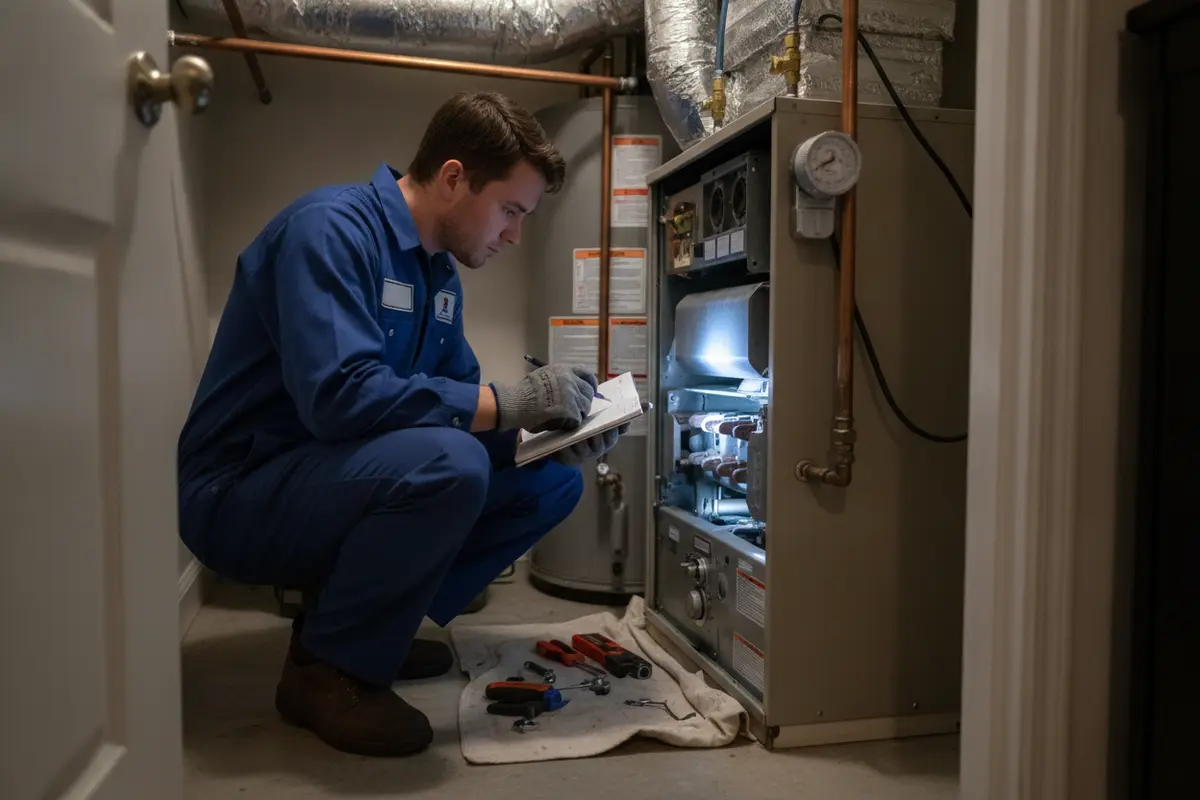
Arrange service when frequent brief runs continue after the simple checks, the home will not maintain a comfortable temperature, or you see a recurring error message. Prompt professional evaluation is also sensible if the system repeatedly shuts down or the behavior is new and worsening. Do not wait for a complete loss of heat if repeated shutdowns are already affecting comfort.
For a suspected immediate hazard, leave first and contact emergency responders or the utility from a safe location. For a persistent cycling pattern without an immediate hazard, Garland Heating and Air Conditioning offers heating installation and replacement service in the Dallas Fort Worth area and 24/7 emergency service availability. The heating service page describes the relevant service route. Planned requests can be made through the contact page; for urgent help, call (972) 278-3500.
Start with the sequence: how often it starts, how long it runs, and whether it reaches the thermostat setting. Share any visible code, recent filter change, room-by-room comfort difference, unusual sound, or odor. If you can read the equipment make and model from an accessible exterior label without removing a panel, include it. You do not need to identify the failed component before requesting help.
Garland Heating and Air Conditioning has served the Dallas Fort Worth area since 1952. Homeowners can also review the company’s HVAC system guide to understand common equipment types, and its HVAC maintenance guide for general care context. These references cannot replace a diagnostic visit, but can help you prepare questions.
Keep your notes in one place and describe the events in order. If the pattern appears only during a particular schedule or when other equipment is in use, mention that. Explain whether it began after a filter change, thermostat change, renovation, or change in room use. These details are clues, not proof of cause.
Before the visit, make the area around the furnace reasonably accessible without moving heavy equipment or opening panels. Keep pets and children away from the work area. Do not leave the furnace running if you have identified an immediate danger, and do not attempt a repair simply to demonstrate the issue.
Ask what was observed, which checks support the diagnosis, and whether the recommended work addresses the immediate shutdown, the underlying cause, or both. If a component is proposed for replacement, ask how its condition connects to the short-cycle symptom. If the recommendation involves equipment sizing or replacement, ask what information about the home and system supports that conclusion.
Service and replacement work are different decisions. An inspection may identify a service need without establishing that a new furnace is necessary. If work is recommended, request a customized explanation and quote; pricing is based on the specific job, and no price can be inferred from the symptom alone. The company’s DFW service-area information can help customers confirm the local service route.
No. Heating systems cycle to maintain the selected temperature. Repeated brief runs paired with poor comfort or frequent restarts warrant attention, but there is no single run time that diagnoses every furnace.
A normal thermostat adjustment is different from repeatedly resetting equipment that shuts itself down. Repeated resets can mask a recurring fault or safety response. If the behavior returns, stop resetting it and arrange service.
Not necessarily. Airflow, thermostat, controls, ignition, venting, distribution, or sizing may need evaluation. A professional should identify the cause before you decide whether repair or replacement is appropriate.
A dirty filter can contribute to restricted airflow, but it is only one possibility. If a correctly installed replacement filter and clear vents do not change the recurring behavior, do not keep troubleshooting internal components; request an evaluation.
Leave the building and contact the gas utility or emergency services from a safe location. Do not try to relight the furnace, operate switches, or investigate the equipment while inside.
Furnace short cycling is a pattern to document, not a diagnosis to guess. Check only accessible user-level items, keep a clear record of what happens, and arrange professional help if frequent shutdowns continue or comfort suffers.
If the furnace keeps stopping before the home warms, sharing the timing and safe checks you have already made can help start a more useful service conversation.