When a heat pump is not working, a few safe checks can help you tell whether the problem is a setting, airflow issue, or a reason to call for service.
Quick answer: Confirm the thermostat is set to the mode you need, check the temperature setting and batteries if applicable, make sure the system has power, and inspect the air filter and supply vents. If a breaker trips again, you smell something burning, hear a harsh mechanical noise, or the system still cannot heat or cool, stop troubleshooting and arrange professional service. Do not open electrical panels or work inside the equipment.
A heat pump can appear to fail in several different ways. It may not start at all, run without changing the room temperature, deliver weak airflow, or behave differently than expected outdoors. The symptom is useful, but it does not identify a single cause by itself. A thermostat setting, restricted airflow, electrical issue, control problem, or equipment fault can produce overlapping signs.
First decide what the system is failing to do. Is it not responding to a call for heating or cooling? Is it running but not comfortable? Did the issue begin after a power interruption or a change to the thermostat? Note the time and what you observe rather than repeatedly changing settings. These details help you explain the problem during a service call.
Notice whether the issue affects the whole home or only one room. If several rooms have weak airflow, check the filter and accessible return and supply openings first. If one room is uncomfortable while others seem normal, note which room, whether its register is open, and whether furniture or curtains block the opening. Do not try to rebalance ductwork or adjust internal dampers unless your equipment instructions identify a safe homeowner control. A room-by-room pattern gives a technician useful context without requiring you to diagnose the duct system.
Also distinguish a system that is running continuously from one that will not start. Record whether the indoor fan is moving air, whether the outdoor unit appears to operate, and whether the thermostat shows a call for heat or cooling. Watch only from a safe distance and do not reach through a grille or remove a cover. A brief observation is enough; repeated cycling of the thermostat will not make the underlying cause clearer.
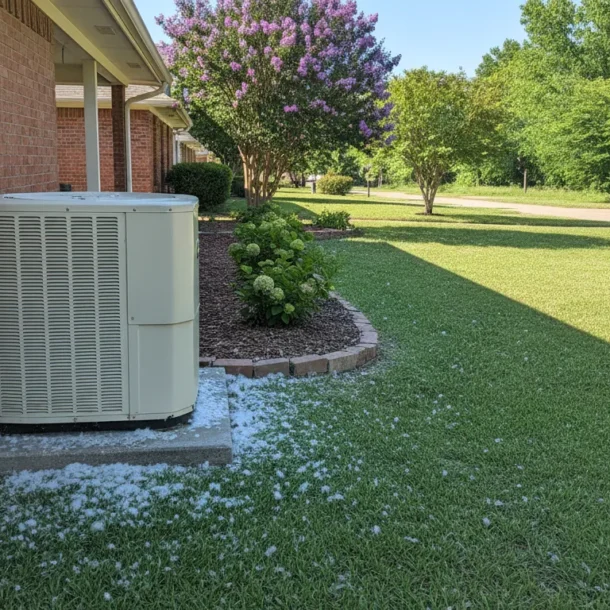
In heating mode, air from a heat-pump supply vent may feel less hot than air from a furnace. A heat pump moves heat rather than producing it through a combustion process, so judging operation by the feel of one quick hand test can be misleading. Likewise, outdoor-unit behavior can vary with operating conditions. A brief pause or a change in sound does not always mean the system has failed.
That does not mean persistent discomfort should be ignored. If the indoor temperature keeps moving away from the thermostat setting, the unit runs for a long time without improvement, or the same abnormal behavior returns, record what happens and seek a diagnosis. See the company’s heat pump homeowner guide for background on how these systems work.
Keep checks simple and limited to controls and accessible household items. Do not remove equipment panels, touch wiring, bypass a safety control, or try to force the system to run. If a check reveals a hazard or you are unsure what you are seeing, stop and contact an HVAC professional.
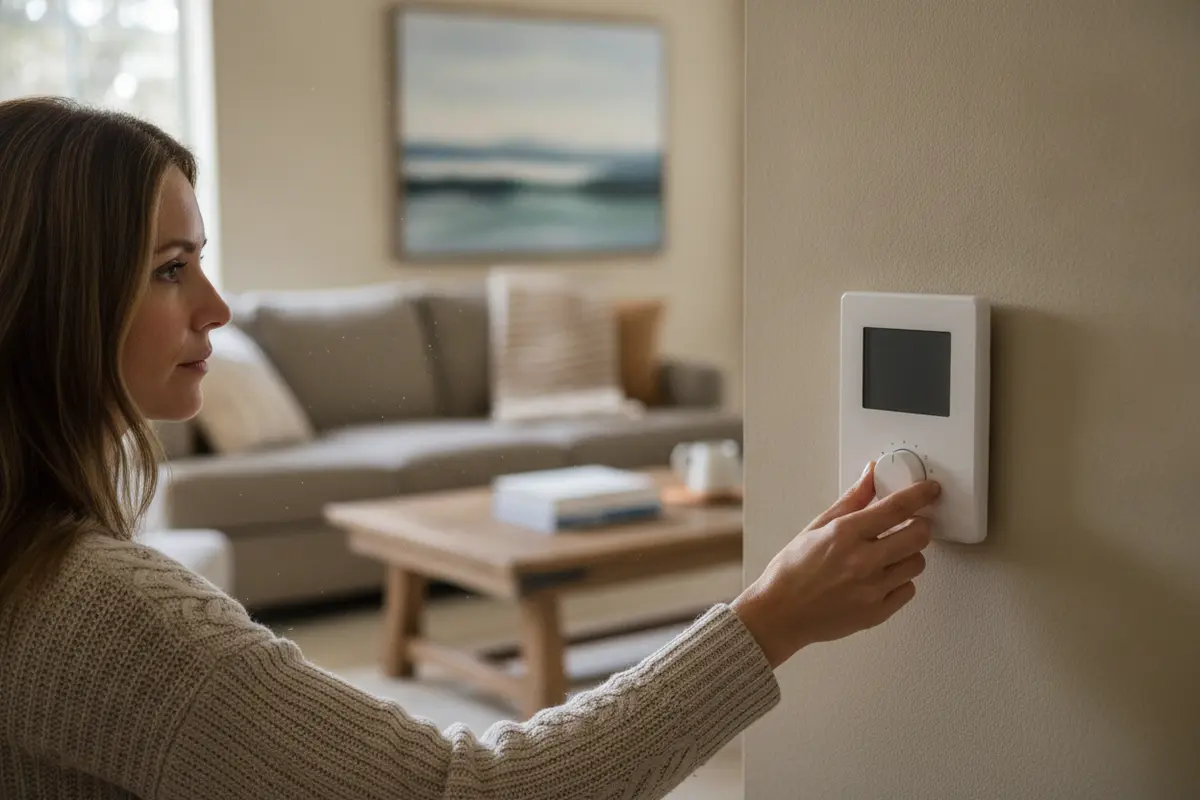
Smart thermostats may also show a delay or equipment status. Read the display and the manufacturer’s directions instead of assuming a delay is a fault. If the thermostat is blank after you have checked its batteries and visible settings, note that for the technician; do not remove wiring to investigate.
After confirming the mode and setpoint, allow the equipment time to respond rather than switching from heating to cooling or repeatedly raising and lowering the setting. If the display changes but the system does not respond, write down the message or status exactly as shown. If a household member recently changed a schedule or setting, mention that too. This helps distinguish a control question from a persistent equipment symptom during the service conversation.
Check whether other nearby electrical devices have power and whether the thermostat display is active. If you know how to identify the HVAC breaker safely, you may look at its position once. A tripped breaker should not be reset repeatedly. If it trips again, leave it off and arrange service because repeated trips can indicate an electrical or equipment problem.
For airflow, check that room supply registers are open and not blocked by furniture, rugs, or curtains. Check the return-air grille for obstruction. If the filter is visibly loaded with dust, replace it with the correct size and type according to the equipment or filter instructions. A filter that does not fit properly can allow air to bypass it. Do not run the system without a filter just to see whether that changes the symptom.
Make the airflow check methodical. Look at more than one supply register and the return grille, then note whether airflow seems weak everywhere or only in a particular area. Compare what you observe with the system’s usual operation, not with an assumed amount of air. If replacing an accessible filter does not change the issue, do not keep swapping filters or try to reach deeper into the air handler. Persistent weak airflow needs a professional assessment.
For a broader upkeep checklist, review HVAC maintenance guidance and the focused heat pump maintenance tips. These routine steps do not replace diagnosis of a system that has stopped working.
Use the observations below to decide what information to gather, not to diagnose or repair internal components yourself. Several faults can look alike, and a technician may need to inspect the system to determine the cause.
| What you notice | Safe check | Next step |
|---|---|---|
| No response at the thermostat | Check mode, setpoint, schedule, display, and thermostat batteries if used. | If controls appear correct and the system remains inactive, request service. |
| System runs, but rooms stay uncomfortable | Check the filter, open registers, and return-air grille; record the indoor temperature trend. | Arrange diagnosis if comfort does not improve or the issue persists. |
| Weak airflow from multiple vents | Look for a dirty filter or blocked return and supply openings. | Ask for service if airflow remains weak after accessible obstructions are addressed. |
| Outdoor unit appears abnormal, makes a harsh noise, or is visibly damaged | Observe from a safe distance; do not reach into or open the unit. | Turn the system off if there is an immediate hazard and contact an HVAC professional. |
| Breaker trips again after resetting | Do not reset it repeatedly or open the electrical panel. | Leave it off and arrange professional service. |
| Burning odor, smoke, or sparking | Do not continue operating or inspect internal parts. | Prioritize safety; shut the system off only if safe, and seek appropriate urgent help. |
A single vent reading or brief impression does not show the full condition of the system. Room temperature, thermostat settings, airflow, operating mode, and outdoor conditions all affect what you experience. Published research on residential heat-pump performance testing has discussed uncertainty in reported coefficient-of-performance measurements; that is a reminder that a quick observation is not a complete performance test. Read the journal article on heat-pump performance measurement uncertainty.
For the same reason, avoid concluding that the equipment needs replacement—or that it is fine—based only on a short run or one number. A professional assessment should take the reported symptoms and operating conditions into account.
Pay attention to whether the home holds its temperature, how long the uncomfortable condition lasts, and whether the behavior repeats. Do not assume a unit is broken solely because supply air does not feel furnace-hot, but do not dismiss a falling indoor temperature as normal either. Check the thermostat, filter, and unobstructed registers once. If the system cannot maintain comfort, runs without improvement, or displays a warning, record those facts and arrange service rather than making repeated setting changes.
Call for professional help when simple control and airflow checks do not resolve the problem, when the system repeatedly stops, or when you see signs that could involve electrical or mechanical components. Stop using the equipment and seek prompt help for smoke, sparking, a burning smell, or a breaker that trips again. Do not attempt to open or repair the heat pump yourself.
Start with the thermostat mode and setpoint, then note how long the behavior lasts and whether the indoor temperature is actually falling. Air from a heat pump may not feel as hot as furnace air, and system operation can change over a heating cycle. But persistent cold air, declining indoor comfort, or a system that will not meet the setpoint deserves professional attention. Garland Heating and Air Conditioning also has a guide to safe checks when a heat pump blows cold air.
After power returns, check the thermostat display and settings, then allow the system a short period to respond instead of repeatedly cycling its controls. If the breaker trips, the display remains blank, or the heat pump does not resume normal operation, do not keep resetting equipment. A NYSERDA case study reports that a heat pump in one project operated after a brief power outage once power was restored; that single case is not a guarantee about every system or an explanation for a failure in your home. See the NYSERDA heat-pump case study.
Use the warning signs, not guesswork about a failed component, to set the priority. A burning odor, smoke, sparking, visible damage, harsh mechanical noise, or a breaker that trips again means you should stop operating the system and seek prompt help. If the system is running but comfort is gradually poor and there is no immediate hazard, gather the observations below and request a service assessment. In either case, avoid repeatedly restarting equipment to see whether the issue goes away.
When contacting a provider, state the impact clearly: no heat or cooling, a room that is not comfortable, unusual noise, or a system that stopped after an outage. Explain whether the condition is getting worse and whether anyone in the home needs a particular temperature for health or comfort. This practical description helps the service team understand the situation without you needing to name a cause.
A short, specific description can make the first service conversation more useful. Before you contact a provider, write down:
Keep the notes factual and in order. For example: “The thermostat was set to Heat at 70, the indoor fan ran, and the room temperature fell from 68 to 66 over the evening.” That is more helpful than guessing that a particular part failed. If a warning appeared, copy its exact wording rather than interpreting it. If you cannot safely observe the outdoor equipment, say so; you do not need to approach it to make a useful service request.
Do not guess at a failed part. Describe what you observed and let the technician evaluate the system. Garland Heating and Air Conditioning serves residential customers across the Dallas Fort Worth area; use the DFW service-area information to check coverage, or visit the contact page to request the next step.
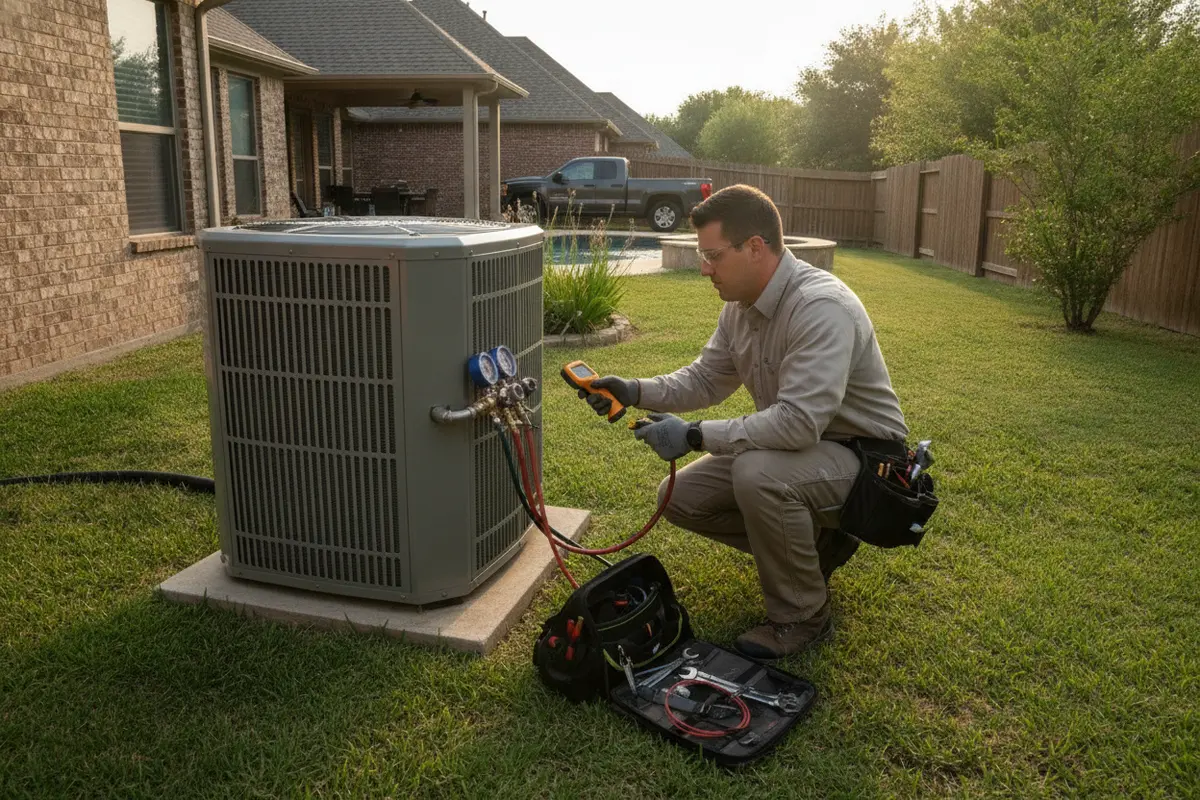
A heat pump that is not working does not automatically need replacement. The right decision depends on what inspection finds, the system’s condition, whether the issue can be corrected, and your comfort and planning priorities. Ask the service provider to explain the diagnosis in plain language and identify what the proposed work addresses.
A useful comparison is not simply “repair or replace?” Ask the provider to explain the proposed repair, what part of the reported problem it addresses, and whether other findings affect the decision. If a replacement is suggested, ask which inspection findings support that recommendation and what system options fit the home. Request a written, quote-based explanation of the work so you can compare scope rather than focusing on a single number without context.
Quotes are specific to the equipment and work proposed. For context on system choices and installation planning, Garland Heating and Air Conditioning offers information about heat pump installation in DFW and heat pumps versus furnaces in North Texas. These guides can help you prepare questions, but they cannot determine what is wrong with an existing unit.
If your heat pump remains unreliable after basic checks, read about heat-pump care and contact Garland Heating and Air Conditioning to discuss service. The company has served the Dallas Fort Worth area since 1952, and service recommendations should be based on the condition of your equipment. For a customized quote or to schedule a visit, use the online contact form.
Request heat pump service in DFW
If there is no immediate hazard, note the symptoms and use only the basic checks above. Stop operation and seek help if you notice smoke, sparking, a burning smell, repeated breaker trips, or harsh mechanical noise. Persistent poor comfort also warrants a service assessment.
You may check whether the breaker is tripped, but do not reset it repeatedly. If it trips again, leave it off and arrange professional service. Never open electrical equipment or touch wiring.
Use the filter size and type specified for your equipment or existing filter arrangement. The filter should fit correctly. If you are unsure which one is appropriate, check the system documentation or ask an HVAC professional rather than forcing a different filter into place.
No. In heating mode, heat-pump air can feel less hot than furnace air, and a quick touch is not a diagnosis. If the home does not reach the set temperature or the cold-air condition persists, document it and request an inspection.
Turn it off if you can do so safely, stay clear of damaged equipment, and contact an HVAC professional. For smoke, fire, or immediate danger, follow local emergency procedures.
Safe checks can narrow down what you observe, but persistent problems and warning signs call for a professional diagnosis. Write down the symptoms and contact Garland Heating and Air Conditioning to discuss service for your North Texas home.