When a central air conditioner is not cooling, the first clue is often what changed: weak airflow, warm air from every vent, a system that will not start, or an indoor unit that runs without lowering the temperature. In a Dallas-Fort Worth home, that difference helps you choose a safe next step without guessing at a repair.
Start with checks that do not require opening equipment or touching wiring. Give the system a few minutes after changing the thermostat; many systems have a short delay before the outdoor unit starts. Note whether the indoor blower and outdoor unit appear to run, and whether air from the vents feels weak or simply warmer than expected.
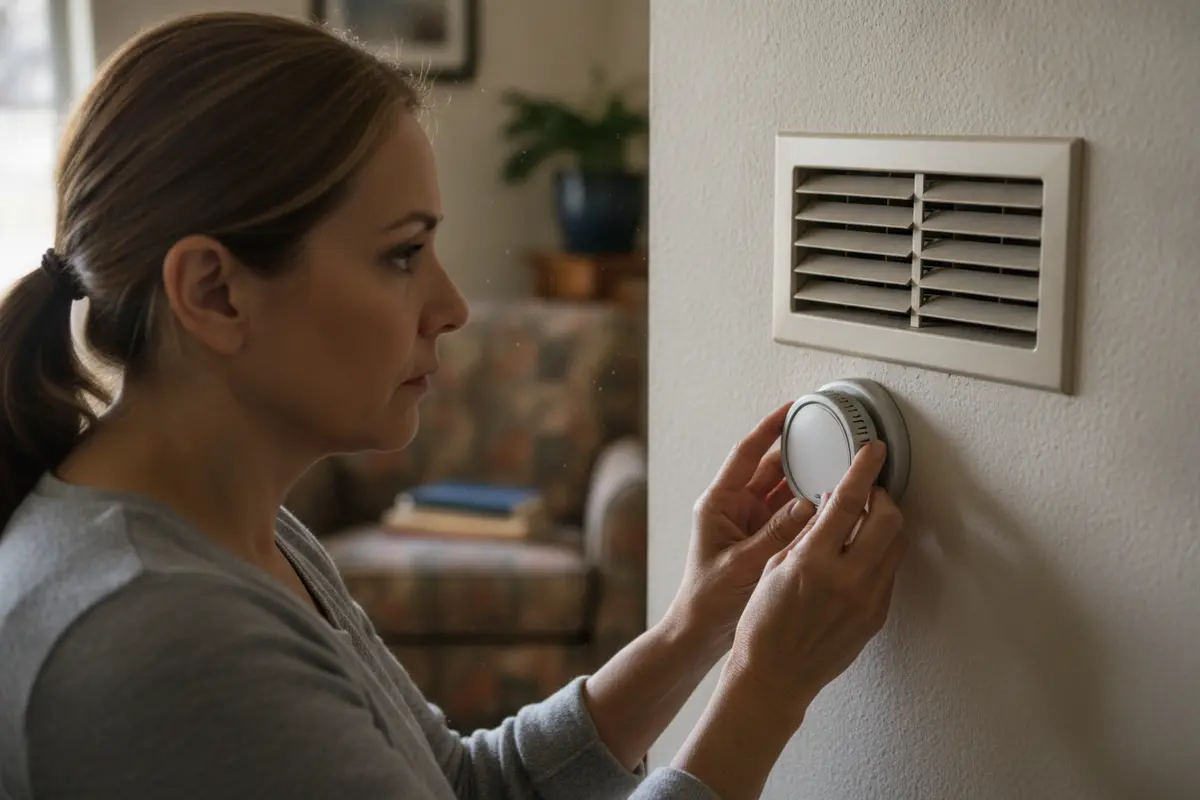
Thermostat settings can be easy to overlook after a schedule change, a power interruption, or a manual adjustment. Check whether the thermostat is in a temporary hold, whether a schedule will change the setpoint soon, and whether the fan is set to auto or on. With the fan set to on, air may continue moving between cooling cycles and can feel less cool than air produced while the system is actively cooling. Setting the target much lower than you want does not diagnose or repair a fault; use a reasonable setting and watch whether the system responds. If the display is blank or the controls do not respond after a basic battery check, include that detail when requesting service rather than removing the thermostat from the wall.
The U.S. Department of Energy’s Home Cooling 101 guide discusses thermostat settings and fans as ways to manage home cooling. Those simple controls are worth checking, but they cannot correct a mechanical fault or restore restricted airflow on their own.
A symptom is a clue, not a diagnosis. Several different faults can look alike from the thermostat or a vent. Use the table to decide what information to collect and whether a simple check is reasonable; do not use it to identify a part to replace.
| What you notice | Possible area to investigate | Safe next step |
|---|---|---|
| System does not start | Thermostat setting, power interruption, or a control or electrical problem | Confirm settings and check the breaker once; stop if it trips again |
| Airflow is weak at several vents | Dirty filter, blocked return, blower, or duct airflow issue | Check filter and clear vents; request service if airflow stays weak |
| Air is blowing but feels warm | Outdoor unit, refrigerant circuit, thermostat, or other cooling-system issue | Verify the thermostat; note whether the outdoor unit runs and arrange diagnosis if cooling does not return |
| Ice or frost appears | Airflow restriction or a refrigeration-system problem | Turn cooling off; do not chip ice or keep restarting the system |
| Water appears near indoor equipment | Condensate drainage or another equipment issue | Protect belongings, avoid opening the cabinet, and request help if water continues |
| Breaker trips repeatedly or there is a burning smell | Electrical fault or another unsafe operating condition | Leave the system off and contact an HVAC professional |
Water deserves attention even if the air conditioner is still running. If you see a small amount near the indoor unit, do not assume the source is a clogged drain; moisture can come from more than one issue. Keep water away from electrical equipment, protect nearby belongings, and do not remove an access panel or pour chemicals into a drain line. If the leak continues, reaches wiring, or is spreading into a ceiling or wall, switch the system off if you can do so safely and arrange service. Take a photo from a safe distance if it helps you explain where the water appeared.
Yes. A filter that is clogged with dust can limit the air moving through the indoor unit. That can make rooms feel stuffy, reduce airflow at multiple registers, and contribute to coil icing. A closed or blocked return grille can also interfere with circulation. These are practical things to inspect, but a clean filter does not rule out a system problem.
Before changing a filter, check the size printed on the old one and follow the equipment or filter instructions for airflow direction. If the replacement does not fit, do not force it into place. Use a filter type that is compatible with the equipment; a product that does not fit or is not suitable for the system can create another airflow issue. Follow the manufacturer’s guidance for checking and replacing it, since the right interval depends on the filter, system, and home conditions. If the filter becomes dirty again unusually quickly, or airflow remains weak after replacement, note that for the technician instead of repeatedly changing parts.
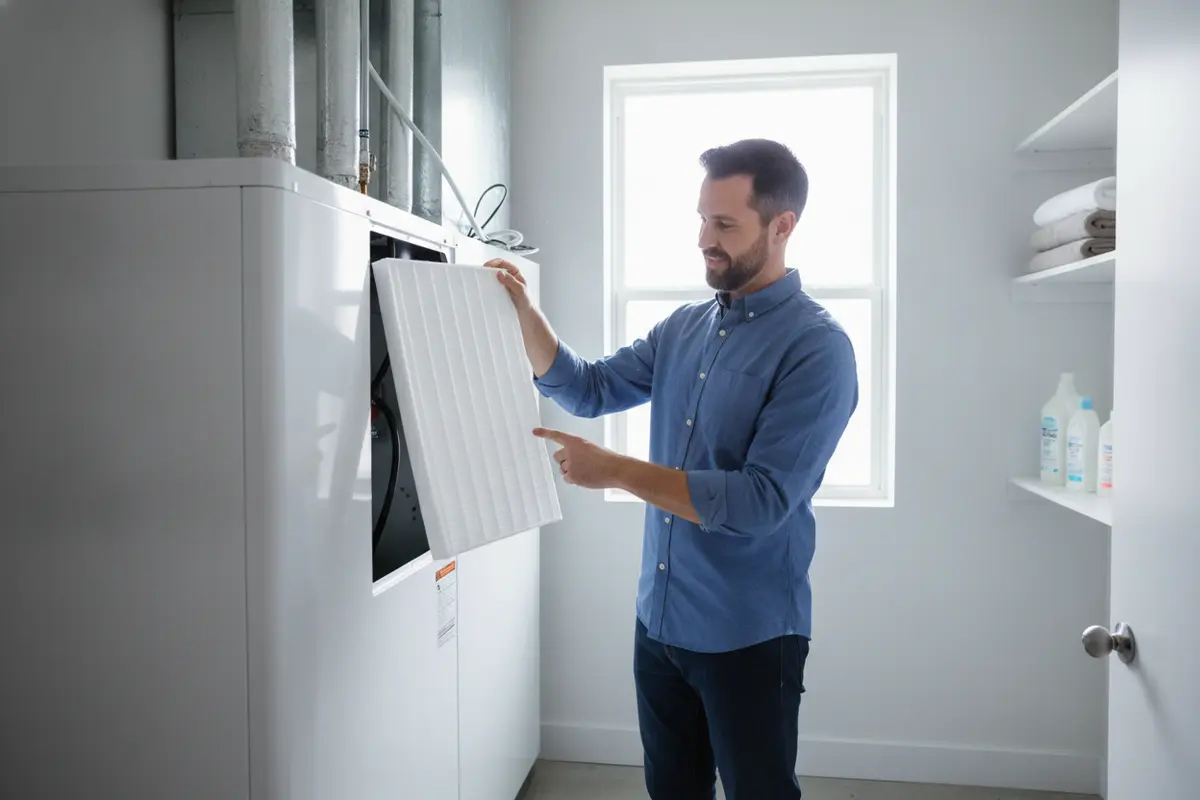
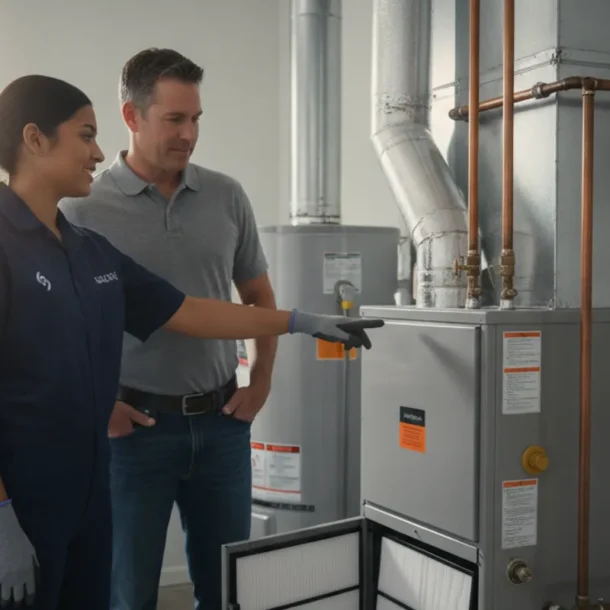
If air is still weak across the home, a technician may need to inspect the blower, indoor coil, or duct system. Garland Heating and Air’s AC repair and maintenance service is a relevant route when basic airflow checks have not resolved the issue.
First compare conditions across the home. If every room is warm, the issue may involve the central system or its controls. If just one room is uncomfortable while others cool normally, a closed register, blocked return, duct problem, or sun exposure could be part of the picture. Avoid assuming a larger system or a refrigerant recharge is the answer without an inspection.
Compare rooms at roughly the same time and check whether the difference follows a pattern. A room with direct afternoon sun may feel warmer than a shaded room, while a door kept shut or a covered return can affect circulation. Confirm that the room’s supply register is open and unobstructed, then look for a clear return-air path. Do not close many other registers in an effort to force more air into one room; that changes airflow through the system and may not address the cause. If the same room remains uncomfortable after simple obstructions are cleared, describe where it is and when the problem is most noticeable. That detail can help focus a professional assessment of airflow and comfort across the home.
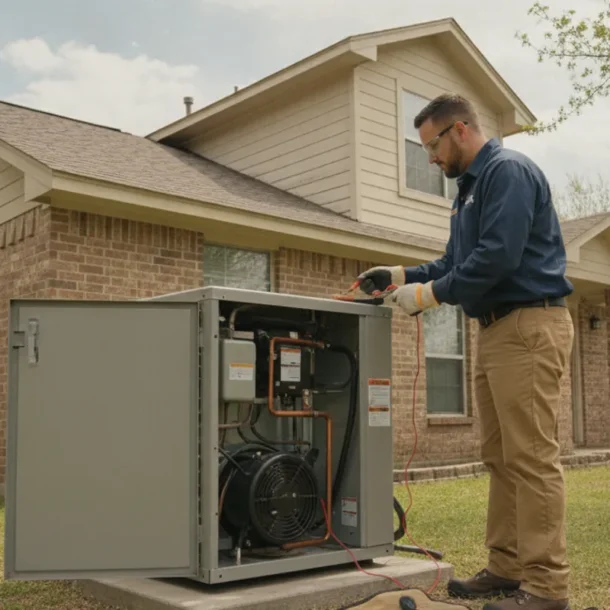
Observe whether the outdoor unit is operating while the indoor blower runs, but do not remove panels or reach into either unit. If the outdoor equipment is silent, making an unusual sound, or turning on and off repeatedly, include that observation when you ask for service. If the outdoor unit is running but the air stays warm, that still does not identify a single cause; a professional diagnosis may be needed.
For a clearer overview of what a service visit can involve, see this HVAC repair service guide. If the system has stopped cooling altogether, Garland also explains how to recognize when an air conditioner needs repair.
Pay attention to the pattern, not just one moment at the thermostat. Does cooling stop after the system has run for a while, or does it fail to start at all? Does the system restart on its own, or does the outdoor unit seem to switch on and off repeatedly? Note how long the pattern lasts and whether the thermostat display changes. These observations can help a technician distinguish an intermittent symptom from a system that never starts.
Also consider what changed shortly before the problem began. A new thermostat schedule, a filter replacement, recent work in the home, or a sudden change in airflow may be useful context. A coincidence does not prove a cause, so avoid undoing wiring, opening equipment, or changing multiple settings to test theories. If you adjust a thermostat setting, make one change and record what happened. That keeps the description clear and avoids making the original symptom harder to reproduce.
If cooling returns for a while and then fails again, keep that history rather than treating the temporary improvement as proof the issue is solved. Note how long it operated normally, whether you changed any settings, and what you noticed when cooling stopped. Avoid repeatedly switching power at the breaker or cycling the equipment to see whether it will start; use the thermostat for normal controls and stop if a safety warning appears. Intermittent behavior can be difficult to describe from memory, so a short written timeline is often more useful than trying to assign a part failure.
Turn the cooling mode off if you see ice on the accessible refrigerant line or indoor equipment. You can set the thermostat fan to on only if the equipment instructions allow it, but do not continue cooling in an attempt to force the ice away. Never scrape or chip ice, and do not open an equipment cabinet to reach a coil.
Ice can be associated with restricted airflow, but it can also indicate a refrigeration-system fault. Allowing the system to keep running may worsen the condition. If the ice returns, the system still does not cool after it thaws, or you are unsure how to shut it down safely, arrange professional service. The guide to a frozen AC coil offers more detail on warning signs and next steps.
While waiting for service during a hot North Texas day, focus on simple comfort and safety measures rather than trying to repair the equipment. Close blinds or curtains on sunny windows, keep exterior doors and windows closed if outdoor air is hotter, and avoid adding unnecessary heat indoors. Use fans only in occupied rooms and follow their instructions. If indoor conditions become unsafe or someone in the home is feeling unwell, move to a cooler location and seek appropriate assistance. A portable fan can move air, but it does not fix the central system or make an overheated space safe by itself.
Stop and request help if a breaker trips again after one reset, you smell something burning, hear a sharp electrical buzz or grinding sound, see smoke, or notice water near electrical components. Leave the system off if it seems unsafe. Do not open electrical panels, handle refrigerant lines, bypass a safety switch, or attempt to replace a capacitor. These tasks can expose you to electrical or equipment hazards.
Service is also sensible when simple thermostat, filter, and vent checks do not restore cooling; when ice forms; when the outdoor unit does not run; or when the system starts and stops repeatedly. A capacitor issue is one possibility when an outdoor unit struggles to start, but symptoms alone cannot confirm it. Read about common AC capacitor symptoms without trying to test or replace the component yourself.
For customers in the area, Garland Heating and Air serves residential and commercial customers across the Dallas-Fort Worth region. Check the DFW service area or use the contact page to ask about service. If the system is older or has repeated problems, a technician can help explain whether repair or replacement is the more suitable path. If installation is recommended, see the AC installation timeline guide to understand what the process may involve.
One episode of warm air does not, by itself, mean a central AC system must be replaced. Ask what the inspection found, which issue explains the symptom, what repair options are available, and whether any additional work is recommended. If replacement is raised, ask what evidence supports that recommendation and what the proposed equipment and installation include. The system’s condition, performance, repair history, and home requirements all matter; an online symptom list cannot settle that decision. Compare the explanation and scope of options before committing, and do not infer a guaranteed repair or a particular cost from the symptoms alone.
A few details can help make the initial conversation more useful. You do not need to diagnose the system or identify a failed part. Write down what you observed and when it began.
During a service visit, the technician can use those symptoms to guide an inspection of the controls, airflow, indoor and outdoor equipment, and drainage as appropriate. The exact checks depend on what the system is doing. For example, weak airflow points to a different set of questions than an outdoor unit that does not start, while visible ice or water may change what should be examined first. A professional diagnosis matters because several different faults can create the same warm-air symptom.
You can make the visit easier by keeping the path to the thermostat and equipment clear, if it is safe to do so. Let the technician know where the indoor unit and thermostat are, whether there are rooms that feel different, and if you have noticed a recurring time or condition. If the equipment is in a locked closet, attic, or other restricted area, mention access requirements when arranging service. Do not climb into an attic or move heavy objects to inspect equipment yourself.
Do not delay urgent safety steps while collecting this information. If there is smoke, a burning odor, or repeated breaker trouble, leave the equipment off and focus on safety first. If the question is about a possible replacement rather than an immediate repair, you can review AC installation cost factors for DFW homeowners to understand what details may affect planning; the specific system and home need to be evaluated.
Contact Garland Heating and Air about service
If basic thermostat checks do not help, avoid running the system for hours without cooling. Turn cooling off if you see ice, hear an unusual sound, or notice a safety concern. If there are no warning signs, arrange diagnosis when the system continues to run without cooling the home.
No. Spraying or pouring water on equipment is not a repair and can create an electrical or equipment hazard. Keep the area around the outdoor unit clear and leave internal inspection to a qualified technician.
No. Warm air can have several causes, including settings, airflow, electrical controls, or a refrigeration-system problem. Refrigerant work requires appropriate equipment and training, so do not try to add refrigerant based on a symptom alone.
You may reset it once if there are no signs of damage, moisture, burning, or other danger. If it trips again, leave it off and request professional service rather than repeatedly resetting it.
Check the thermostat, filter, vents, and breaker only when it is safe to do so. Use the symptoms to describe the problem, not to guess which part has failed. Turn the system off for ice, repeated breaker trips, burning odors, or other warning signs, then arrange an inspection if cooling does not return.
A clear description of what the system is doing can help you take the next step toward restoring comfort safely.