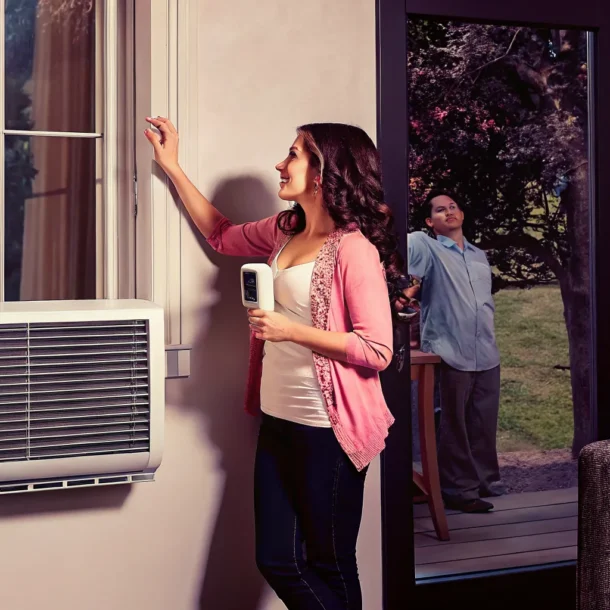

Do you find yourself constantly adjusting the vents, trying to solve hot and cold spots throughout your house? It’s a common frustration, but the problem might not be your HVAC unit. More often than not, the issue lies with your thermostat. A single thermostat in a central hallway can’t possibly get an accurate reading for your entire home, especially in multi-story houses or rooms that get a lot of sun. This guide will walk you through how the right thermostat, especially one with features like remote sensors, can finally deliver consistent, even temperatures to every room, making your home a more comfortable place to be.
Think of your thermostat as the command center for your home’s heating and cooling. It’s a smart device that constantly senses the room’s temperature and works to keep it at your preferred setting. Essentially, it operates on a simple feedback loop: it measures the current temperature, compares it to your target, and then tells your HVAC system what to do. This small but mighty device is the primary way you interact with your entire system, playing a huge part in both your comfort and your home’s energy efficiency.
Most thermostats are straightforward controllers. They don’t gradually adjust the temperature; instead, they turn your heating or cooling system either completely on or completely off. When the room temperature drifts from your set point, the thermostat signals your HVAC unit to start working. Once the desired temperature is reached, it sends another signal to shut the system off. If this communication fails, you might notice your AC running constantly or not turning on at all, which could point to a problem that requires professional AC repairs and maintenance to diagnose.
Beyond just turning your system on and off, your thermostat is key to creating a consistently comfortable living space. Modern thermostats, especially programmable models, let you customize your home’s climate to fit your daily life. You can set different temperatures for when you’re home, away, or asleep. This means you can wake up to a warm house or come home to a cool one after a hot Texas day without running your system nonstop. By setting a schedule, you can save money on energy bills without sacrificing comfort, a benefit highlighted by the U.S. Department of Energy for users of programmable thermostats.
Where you install your thermostat has a huge impact on its performance. For it to get an accurate temperature reading, it needs to be in a spot that represents your home’s overall climate. The best location is on an interior wall, away from anything that could give it a false reading. This includes direct sunlight, drafts from windows, and heat from kitchen appliances. You should also avoid placing it near air vents, as the direct blast of air will cause it to shut off the system prematurely. Proper placement ensures your entire heating and cooling system runs efficiently and keeps your home comfortable.
Before you can think about upgrading or even just programming your thermostat correctly, you need to know what you’re working with. Thermostats have come a long way from the simple dials of the past. Identifying your current model is the first step toward managing your home’s climate more effectively and potentially lowering your energy bills. Let’s walk through the four main types you might find on your wall, from the most basic to the most advanced. Each has its own way of controlling your HVAC system, and understanding yours is key to making sure your home stays comfortable year-round.
If you have a round dial or a small lever you slide to set the temperature, you likely have a mechanical thermostat. These are the classic, old-school models that have been around for decades. They work using a simple but clever mechanical system, often with a bimetallic strip that expands or contracts with temperature changes to trigger your HVAC system. While they are reliable in their simplicity, they are not very precise and lack any programming features. You have to adjust them manually every time you want to change the temperature, which is not ideal for energy efficiency.
A step up from mechanical models, digital non-programmable thermostats offer a clear digital display and simple push-button controls. They provide a more accurate temperature reading than their analog counterparts, which helps your HVAC system run more effectively. However, they are still a “set it and forget it” device in the simplest sense. You set the temperature, and the system works to maintain it until you manually change it again. They do not offer scheduling, so you will need to remember to adjust them when you leave the house or go to sleep if you want to save energy.
Programmable thermostats are where energy savings really start to come into play. These devices allow you to create a schedule for your heating and cooling based on your daily routine. You can set different temperatures for when you’re home, away, or asleep. According to the Department of Energy, using a programmable thermostat correctly can lead to significant savings on your energy bills. The key is consistency. You have to take the time to set a schedule that works for your family and remember to update it with any major changes to your routine.
Smart thermostats are the latest in home climate control. These devices connect to your home’s WiFi, allowing you to adjust the temperature from anywhere using an app on your smartphone. As this thermostat buying guide explains, many feature sleek touchscreens and can even learn your habits over time, automatically creating a schedule that optimizes comfort and energy savings. Some models use geofencing to know when you’re home or away, adjusting the temperature accordingly. If you’re considering a new AC installation and replacement, pairing it with a smart thermostat is a great way to maximize your new system’s efficiency.
Think of your thermostat as the brain of your HVAC system. It’s the command center that tells your air conditioner and heater when to turn on, how long to run, and when to stop. If that command center is old or inaccurate, it can misread the room’s temperature and force your system to work harder than it needs to, which directly translates to higher energy bills. Many older mechanical thermostats can be off by several degrees, causing your system to cycle on and off unnecessarily.
Upgrading to a newer model, especially a programmable or smart thermostat, is a game-changer. It puts precise control over your home’s climate right at your fingertips and can lead to significant savings. By managing your heating and cooling more effectively, a new thermostat helps you use less energy without sacrificing comfort, which is a win-win for your wallet and the environment. It’s one of the simplest and most affordable ways to make your home more energy-efficient, and it ensures your HVAC system operates at its best.
One of the easiest ways to cut down on energy costs is to stop heating or cooling your home at full blast when you don’t need to. A programmable thermostat lets you do just that by creating a schedule based on your routine. You can set it to automatically adjust the temperature when you’re asleep or away at work. According to the U.S. Department of Energy, using programmable thermostats to create these schedules can make a real difference. For example, you can program the AC to run a few degrees warmer while you’re out of the house during the day and have it cool back down just before you get home. It’s a simple “set it and forget it” strategy that ensures you’re not wasting money cooling an empty house.
Smart thermostats take energy savings a step further with advanced features that connect to your home’s WiFi. Many models offer geofencing, which uses your phone’s location to automatically switch your HVAC system into an energy-saving “away” mode when you leave and back to your preferred temperature as you return. Another great feature is the detailed energy reports you can get through a smartphone app. These reports show you exactly when and how you’re using the most energy, helping you identify patterns and find more opportunities to save. This level of control and insight, all accessible from your phone, makes managing your home’s energy use easier than ever.
So, what does this all mean for your bank account? The numbers are pretty encouraging. The Department of Energy estimates you can save as much as 10% a year on heating and cooling costs just by turning your thermostat back 7 to 10 degrees for eight hours a day. A smart thermostat can help you achieve these savings automatically. Some studies suggest an average savings of about 8%, or around $50 a year. While the exact amount depends on your lifestyle, climate, and home, the potential is clear. To get the most out of your new thermostat, make sure your HVAC system is in top shape with regular AC repairs and maintenance service.
Picking a new thermostat isn’t just about finding one that looks good on your wall. The right model can make your home more comfortable, simplify your routine, and even lower your energy bills. But with so many options out there, how do you choose? It comes down to finding the perfect match for your HVAC system, your lifestyle, and your budget. Let’s walk through the key features to consider so you can feel confident in your decision.
Before you get excited about fancy features, the very first thing you need to do is confirm that a thermostat will actually work with your heating and cooling system. Not all thermostats are created equal. If you have a traditional ducted system, you have a wide range of choices, including most programmable and smart thermostats. However, if you have ductless units like mini-splits, you’ll need a specific controller designed for them. Always double-check the product specifications to ensure compatibility. If you’re unsure, a quick look at your current wiring or a call to a professional for an AC repairs and maintenance service check can give you the answers you need.
One of the biggest perks of a smart thermostat is the convenience it offers. These devices connect to your home’s Wi-Fi, allowing you to adjust the temperature from anywhere using an app on your phone. Did you forget to turn the AC up before leaving for vacation? No problem. Many smart thermostats also have learning capabilities. Over time, they begin to recognize your daily habits and temperature preferences, automatically creating a schedule that maximizes both comfort and efficiency. This is a fantastic feature if you’re considering a new AC installation and replacement, as it pairs modern efficiency with intelligent control from day one.
If you already use smart devices in your home, you’ll want a thermostat that fits right in. Many models integrate seamlessly with smart home platforms like Amazon Alexa, Google Assistant, or Apple HomeKit. This allows you to change the temperature with a simple voice command, like “Hey Google, set the temperature to 72 degrees.” It might seem like a small thing, but it adds a layer of hands-free convenience that you’ll quickly come to appreciate. When you’re cozy on the couch, you won’t have to get up to make an adjustment. This feature is a great addition to any modern heating installation and replacement project.
Do you have a room that’s always colder or hotter than the rest of the house? Remote sensors are the solution. Instead of only reading the temperature in the hallway where the thermostat is located, these small, wireless sensors can be placed in different rooms. The thermostat then averages the readings or prioritizes a specific room to ensure a more consistent temperature throughout your entire home. This is especially useful for larger houses, multi-story homes, or rooms that get a lot of direct sun. It’s an effective way to solve those annoying hot and cold spots, ensuring your expert heat pump repair and maintenance keeps every room comfortable.
Smart thermostats typically cost more upfront than basic models, but it’s helpful to think of them as an investment. By optimizing your heating and cooling schedules, these devices can lead to significant energy savings over time. Some studies suggest an average homeowner can save around $50 a year, and some manufacturers claim those savings could be even higher. When you factor in the reduced energy consumption and lower utility bills, a smart thermostat can eventually pay for itself. It’s a smart financial move that also improves your home’s comfort, a core principle we at Garland Heating and Air Conditioning have stood by for decades.
Once you have the right thermostat, the next step is telling it what to do. Programming might sound technical, but it’s really just about creating a schedule that matches your life. Taking a few minutes to set it up correctly ensures your home stays comfortable without wasting energy, which is a win-win for your comfort and your wallet. Let’s walk through how to get it right.
Finding your home’s ideal temperature is a personal preference, but there are some great starting points. For chilly Texas winters, the U.S. Department of Energy suggests setting your thermostat to around 68°F while you’re home and awake. During our hot summers, you can save a lot by setting it to 78°F. The real magic happens when you adjust these settings for times you’re asleep or away. Lowering the heat or raising the AC temperature by 7 to 10 degrees for eight hours a day can make a noticeable dent in your energy bills. Experiment a little to find what feels best for your family.
Your programmable thermostat is designed to follow your routine. Grab a piece of paper and map out your typical week. Note when everyone wakes up, when the house is empty for work or school, and when you go to bed. Use this to create a schedule. For example, you can program the AC to ease up about 30 minutes before you leave for work and kick back on just before you get home. If your schedule is unpredictable, the “away” or “vacation” mode is your best friend. A properly programmed thermostat works best when your system is in top shape, so regular AC repairs and maintenance service will ensure your unit responds efficiently.
Don’t let a simple error get in the way of your comfort. One common mistake is forgetting to switch the thermostat from “cool” to “heat” when the seasons change. Another is overlooking dead batteries, which can make the thermostat seem broken. If your system isn’t turning on, check these simple things first. If the problem persists, it could point to a clogged filter or a wiring issue between the thermostat and your HVAC unit. When you suspect a deeper problem, it’s always best to get a professional opinion to avoid causing more damage to your heating or cooling system.
We all want to be comfortable in our homes without seeing a huge spike in our energy bills. Over the years, certain “rules” about thermostat use have become common knowledge, but many of them are actually myths. Believing these misconceptions can lead to wasted energy and unnecessary strain on your HVAC system. Let’s clear the air and debunk a few of the most common thermostat myths that might be costing you money.
It’s a scorching Texas afternoon, and you’ve just walked in the door. It’s tempting to set the thermostat to 65 degrees, thinking it will cool your home down in record time. Unfortunately, it doesn’t work that way. Your air conditioner or furnace delivers warm or cool air at a constant rate, regardless of how high or low you set the thermostat. Setting it to an extreme temperature just makes the system run longer to reach that target. The U.S. Department of Energy confirms that this won’t cool your home faster and will only waste energy. Instead, set your thermostat to your desired temperature and let it work efficiently. If it feels like it’s taking forever, it might be a sign your system needs a check-up.
Some people worry that letting the temperature drop in the winter (or rise in the summer) while they’re away or asleep is counterproductive. The thinking is that the furnace or AC will have to work extra hard to get back to a comfortable temperature, canceling out any savings. This is another myth. Your home loses or gains heat more slowly when the temperature difference between inside and outside is smaller. By setting your thermostat back a few degrees for several hours, you reduce your total energy consumption. The energy required to return to your preferred temperature is less than the energy you saved during the setback period. Using a programmable thermostat makes it easy to schedule these adjustments and save money without even thinking about it.
Smart thermostats are fantastic tools, but they aren’t a one-size-fits-all solution. Many homeowners assume they can pick any model off the shelf and connect it to their existing HVAC system. However, compatibility is a major factor. As Consumer Reports notes in its thermostat buying guide, not all smart thermostats are designed to work with every type of heating and cooling system, especially older units, multi-stage systems, or heat pumps. Installing an incompatible thermostat can lead to system malfunctions or even damage. Before you buy, check the thermostat’s compatibility requirements against your current system. If you’re unsure, it’s always best to consult with a professional to ensure you choose the right model and have it installed correctly.
Your thermostat is the brain of your entire HVAC system, but just like any other piece of technology, it doesn’t last forever. When your home comfort starts to feel off, it’s easy to assume the problem lies with your air conditioner or furnace. But often, the real culprit is the small control box on your wall. A faulty thermostat can cause everything from surprisingly high energy bills to a system that won’t turn on at all, leaving you sweating in the summer or shivering in the winter.
Recognizing the signs of a failing thermostat can save you a lot of headaches and prevent unnecessary wear on your HVAC equipment. If you’re dealing with inconsistent temperatures, strange system behavior, or a thermostat that just won’t cooperate, it might be time for an upgrade. A new thermostat can not only restore your peace of mind but also improve your system’s efficiency. If you suspect a problem, a professional can help diagnose whether the issue is your thermostat or if a more involved AC repair is needed. Let’s look at a few clear indicators that your thermostat is on its way out.
Does your home feel like a sauna even though the thermostat is set to a cool 72 degrees? Or maybe you’re shivering under a blanket while the display claims it’s a cozy 75? When the temperature in the room doesn’t match the reading on your thermostat, it’s a classic sign of a failing sensor. The thermostat is supposed to tell your HVAC system when to turn on and off, but it can’t do its job if it doesn’t know the correct room temperature. This miscommunication can lead to your system running constantly or not kicking on when it should, leaving you uncomfortable and wasting energy.
Short cycling is when your furnace or air conditioner turns on and off in rapid, frequent bursts. Instead of completing a full heating or cooling cycle, it runs for just a few minutes before shutting down, only to start up again shortly after. This is often caused by a faulty thermostat that’s sending incorrect signals to your HVAC unit. Not only is short cycling incredibly inefficient, but it also puts major stress on your system’s components, leading to premature wear and tear. If you notice your system is short cycling, it’s important to have a professional diagnose the problem before it causes more extensive damage.
One of the most obvious signs of a bad thermostat is a blank or unresponsive screen. Before you panic, check for the simple fix: dead batteries. Many digital thermostats run on battery power, and a quick swap might be all you need. However, if the screen is still blank or frozen after replacing the batteries, the unit itself has likely failed. Similarly, if the display shows that your heat or AC is on but no air is coming out, it means the thermostat isn’t communicating with your HVAC system. This could point to wiring issues or an internal failure that requires a professional to perform an expert heat pump repair.
When your thermostat acts up, it can throw your whole home’s comfort out of whack. One minute you’re comfortable, and the next you’re wondering why the AC isn’t kicking on during a sweltering Dallas afternoon. The good news is that many common thermostat problems have surprisingly simple fixes you can handle yourself. Before you assume the worst, a few quick checks can often get your system back on track.
From a blank screen to a room that just won’t cool down, these troubleshooting steps will help you diagnose the issue. We’ll walk through the most frequent culprits, like power supply interruptions and incorrect temperature readings, so you can identify what’s going on and when it’s time to call in a professional.
If your thermostat screen is blank or the buttons are unresponsive, don’t panic. First, check its location. Is it sitting in a patch of direct sunlight or right next to a drafty window? Extreme temperatures can confuse its internal sensors and cause it to behave erratically. Next, head to your home’s circuit breaker panel and make sure the switch connected to your HVAC system hasn’t been tripped. If it has, flip it back on. If these simple steps don’t bring your thermostat back to life, the problem might be more complex, like a wiring issue or a tripped safety switch on the unit itself. In that case, it’s best to schedule a professional AC repair service.
A loss of power is one of the most common reasons a thermostat stops working. If your thermostat is battery-powered, the solution is often as simple as swapping in a fresh set. Many hardwired models also have backup batteries, so be sure to check for those, too. If new batteries don’t solve the problem, the issue may lie with the power source itself. Check your circuit breaker to ensure the HVAC system is receiving electricity. If the breaker is fine and the screen is still dark, there could be a problem with the low-voltage wiring connecting the thermostat to your furnace or air handler. Faulty wiring is a job for an expert, so it’s wise to call for a professional diagnosis.
Is your thermostat reading 72 degrees while you’re sweating through your t-shirt? An incorrect temperature reading is a clear sign something is off. Before you do anything else, give your thermostat a gentle cleaning. Dust and debris can build up inside the cover and interfere with the sensors. You can usually remove the faceplate and use a soft brush or a can of compressed air to clear it out. Also, confirm the thermostat isn’t located near a heat source, like a lamp or television, which can trick it into thinking the room is warmer than it is. If it’s still inaccurate after cleaning and checking its placement, the sensor may need to be recalibrated or replaced. A technician can quickly diagnose the issue during an HVAC check-up.
Your thermostat is the command center for your home’s comfort, but it doesn’t require a lot of fuss to keep it working correctly. A few simple maintenance tasks can prevent many common issues, ensuring your HVAC system runs smoothly and efficiently. Taking just a few minutes every so often to care for your thermostat can make a big difference in how your system performs, saving you from the headache of unexpected breakdowns and uncomfortable temperatures. Think of it as a small investment that pays off in reliable, year-round comfort.
Over time, dust and debris can settle inside your thermostat, interfering with its sensors and causing inaccurate temperature readings. To clean it, gently remove the faceplate and use a soft brush or a can of compressed air to clear away any buildup. Be careful not to touch the delicate internal components directly. It’s also a good idea to check its location. Is it in direct sunlight or near a drafty window? Environmental factors like these can trick the thermostat into thinking the room is warmer or cooler than it actually is, causing your system to run unnecessarily. A simple cleaning and a quick location check can solve many performance problems.
If you have a digital thermostat, there’s a good chance it uses batteries to function. When those batteries get low, your thermostat can’t send a signal to your HVAC system, which might leave you stuck in the heat or cold. To avoid this, make it a habit to replace the batteries once a year, or as soon as you see a low-battery warning on the display. Some thermostats may also need occasional calibration to ensure their temperature readings are accurate. You can check this by placing another thermometer next to it and comparing the readings. If they are off, your thermostat manual may have instructions on how to calibrate it.
While you can handle basic cleaning and battery changes, your thermostat is just one part of a complex system. During a routine tune-up, a technician can inspect the wiring, test the sensor accuracy, and confirm it’s communicating properly with your furnace and air conditioner. This is the best way to catch underlying problems that simple maintenance can’t fix. Scheduling regular AC repairs and maintenance service ensures every component of your HVAC system, including its control center, is in top shape. A professional can spot and resolve minor issues before they turn into major, costly repairs, keeping your home comfortable all year long.
Tackling a home improvement project yourself can be incredibly satisfying. And with so many tutorials available online, swapping out a thermostat might seem like a quick weekend win. While a simple replacement can sometimes be straightforward, your thermostat is the brain of your entire HVAC system. Getting the installation wrong can lead to bigger headaches, from an uncomfortable home to expensive repair bills. So, how do you know when to roll up your sleeves and when to call in a professional?
It’s smart to pause the DIY project if you run into anything more complex than a simple battery change. If your new thermostat is incompatible with your furnace or air conditioner, it’s best to stop right there. You should also call a professional if you see any signs of complicated or frayed wiring. A lack of response between the thermostat and your HVAC equipment could point to several problems, including a wiring issue or a control board failure. These aren’t simple fixes and are best left to an expert. If your system is acting up and you suspect the thermostat is the culprit, having a technician take a look is the safest bet. Our team can handle any AC repairs and maintenance to get your system running correctly.
Hiring a professional is about more than just getting the job done; it’s about getting it done right. A trained technician can confirm that the thermostat is actually the source of the problem. Sometimes, what seems like a bad thermostat is really a sign of another issue, like a clogged filter or even equipment failure. A professional ensures your new thermostat is perfectly compatible with your system and configured for optimal performance and energy savings. With our extensive experience serving the Dallas Fort Worth area, we make sure your new AC installation and thermostat setup are flawless, giving you peace of mind and reliable comfort for years to come.
My house feels much warmer than the temperature shown on my thermostat. What should I check first? When your home’s temperature doesn’t match the thermostat’s reading, start with a few simple checks. First, make sure the thermostat isn’t in direct sunlight or near a heat-producing appliance like a lamp or TV, as this can give it a false reading. Next, try gently cleaning it by removing the cover and using a soft brush to clear away any dust that might be interfering with the sensor. If it’s a battery-powered model, a fresh set of batteries can sometimes solve the problem. If none of these steps help, the thermostat’s sensor may be failing, and it’s a good idea to have a professional take a look.
Is upgrading to a smart thermostat actually worth the cost? While smart thermostats do have a higher upfront price, it’s helpful to think of them as an investment in your home’s efficiency. They can lead to real savings on your energy bills over time by using features like smart scheduling, geofencing, and detailed energy reports. These tools help you use less energy without sacrificing comfort, often by automatically adjusting the temperature when you’re away. For many homeowners, the convenience and the reduction in monthly utility costs make the initial expense well worth it, and the device can eventually pay for itself.
What’s the main difference between a programmable and a smart thermostat? The key difference is connectivity and intelligence. A programmable thermostat lets you set a fixed heating and cooling schedule based on your typical routine, for example, adjusting the temperature for when you’re at work or asleep. A smart thermostat does that and much more. It connects to your home’s WiFi, allowing you to control it from anywhere with your phone. Many smart models also learn your habits over time, create schedules for you, and can even use your phone’s location to know when you’re home or away, offering a more hands-off and optimized approach to comfort.
My HVAC system keeps turning on and off every few minutes. Is my thermostat broken? This is called short cycling, and while a faulty thermostat can be the cause, it’s often a symptom of a different issue. Short cycling is very inefficient and puts a lot of strain on your HVAC equipment, which can lead to premature failure. It could be caused by a wiring problem between the thermostat and the system, or it might indicate a more serious problem with your air conditioner or furnace itself. Because this can cause expensive damage, it’s best to have a professional technician diagnose the root cause instead of assuming it’s just the thermostat.
Can I install a new thermostat myself, or should I hire a professional? If you’re replacing an old thermostat with a similar basic model, it can often be a straightforward DIY project, as long as you are comfortable turning off the power and handling some simple wiring. However, you should call a professional if you’re upgrading to a smart thermostat, if your system’s wiring looks old or complicated, or if you’re unsure about compatibility. A professional installation ensures everything is connected correctly and configured for optimal performance, giving you peace of mind that your investment is working as efficiently as possible.