
How long does a heat pump last in the Dallas-Fort Worth area? Most heat pumps serve homeowners for about 10 to 15 years, but maintenance, installation quality, operating conditions, and timely repairs can change the result.
The short answer: Plan for a heat pump to provide roughly 10 to 15 years of service. A well-maintained system may last longer, while a unit that is poorly sized, neglected, or repeatedly exposed to difficult operating conditions may need major repairs or replacement sooner. A professional evaluation is the best way to understand what your system can reasonably deliver next.
A heat pump works throughout much of the year. In cooling mode, it moves heat out of the home. In heating mode, it reverses the process and moves heat indoors. Because one system can handle both jobs, its components may operate during more seasons than a heating-only or cooling-only appliance.
Environment America’s common heat pump questions and answers notes that heat pumps usually last 10 to 15 years, while well-maintained systems can last 20 to 25 years. That range is a planning guide, not a promise for every home or business. The age and condition of the specific equipment matter more than a date on the calendar.
| Heat pump situation | What it may mean | Practical next step |
|---|---|---|
| Newer system with regular maintenance | Often has useful service life remaining | Keep filter care and professional maintenance on schedule |
| About 10 to 15 years old | Wear and efficiency concerns deserve attention | Compare repair needs with replacement planning |
| Older system with frequent breakdowns | Repair costs and interruptions may be increasing | Request a condition review and customized replacement quote |
| Uneven comfort or poor airflow | Could involve equipment, ductwork, thermostat, or sizing | Schedule diagnosis rather than assuming age is the only cause |
The table is useful for starting a conversation, but it cannot identify a failing compressor, refrigerant problem, airflow restriction, electrical fault, or duct issue. Those conditions require inspection and testing.
A heat pump that is properly matched to the property can operate more steadily. A system that is too large may cycle on and off more often than it should. A system that is too small may run for long periods while struggling to reach the thermostat setting. Both situations can add stress and create comfort complaints.
Installation quality also includes electrical connections, refrigerant setup, airflow, ductwork, drainage, thermostat configuration, and the outdoor unit’s placement. If you are considering a new system, review Garland Heating and Air Conditioning’s guide to installing a new HVAC system and ask for a quote based on the home rather than choosing equipment by nameplate size alone.
DFW homes can need substantial cooling during hot weather, followed by heating during colder periods. A heat pump may switch between modes as conditions change. Dust, cottonwood, grass, pet hair, and other debris can collect around outdoor equipment or affect airflow if filters and surrounding areas are neglected.
Operating conditions vary by property. A tightly sealed home with clear airflow may place different demands on its system than an older home with duct leakage, poor insulation, or rooms that are difficult to keep comfortable. That is why two heat pumps of the same age can be in very different condition.
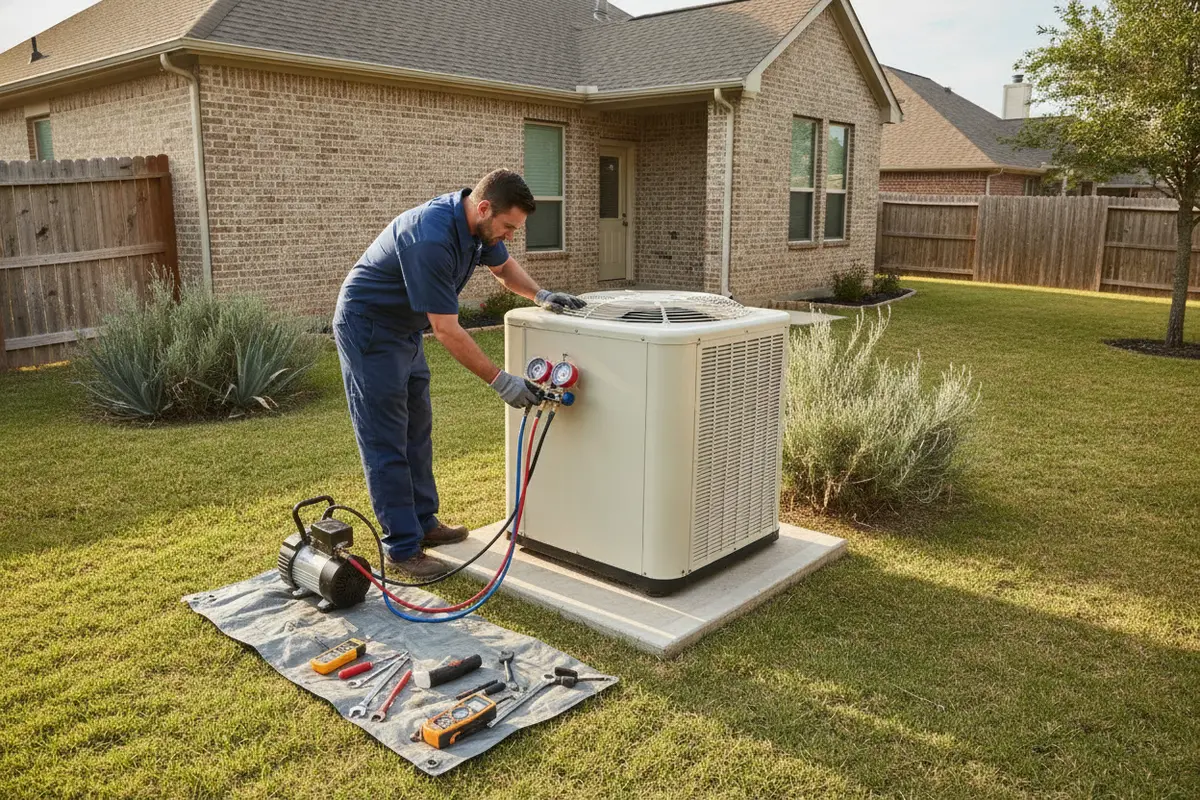
Maintenance does not make a heat pump immune to wear, but it can help identify problems before they become larger failures. A maintenance visit may include checking operation, airflow, electrical components, controls, coils, and other system conditions appropriate to the equipment.
Homeowners can support the system by replacing or cleaning the filter as directed, keeping leaves and debris away from the outdoor unit, and watching for changes in comfort or sound. For a broader checklist, see this heat pump maintenance tips guide. Do not remove panels or work on electrical or refrigerant components yourself.
One repair does not automatically mean replacement is necessary. A relatively new system with an isolated, repairable issue may be a sensible candidate for service. The decision becomes more complicated when breakdowns occur repeatedly, the same component fails again, or the system cannot deliver dependable comfort.
Keep a simple record of service dates, symptoms, and repair recommendations. This gives you a clearer view of patterns. When the system is older, ask the technician to explain both the immediate repair and the condition of the major components that may affect future reliability.
Rising utility costs can have many causes, including weather, thermostat settings, insulation, ductwork, and household use. They can also signal that equipment is losing performance. Likewise, warm or cool rooms may result from airflow or duct problems rather than an aging heat pump alone.
Signs worth documenting include long run times, repeated thermostat adjustments, reduced airflow, unusual cycling, frost that does not clear normally, and rooms that no longer reach the desired temperature. A technician can separate a heat pump problem from a home performance issue.
Refrigerant and replacement-part considerations can affect repair planning. The correct response depends on the equipment, the problem, and what parts or service are appropriate for that system. Do not add refrigerant or open the system without qualified service.
When an older unit needs a major repair, compare the expected repair with the equipment’s age, remaining condition, and future service needs. Garland Heating and Air Conditioning can help DFW homeowners review repair and replacement paths without assuming that every older system must be replaced immediately.
Write down when the problem began, whether it occurs in heating mode, cooling mode, or both, and what the thermostat displays. Note any change in sound, airflow, odor, cycling, or outdoor-unit appearance. A short description such as “the upstairs stays warm while the system runs” is more useful than simply saying the unit is old.
Also record recent filter changes, prior repairs, and whether a breaker has tripped. Do not repeatedly reset a breaker or keep operating equipment that has a burning smell, exposed wiring, substantial water, or another apparent safety concern. Share those details with the service provider so the visit can begin with a clearer problem history.
A proper evaluation should connect the reported symptom to the condition of the equipment and the property. The technician may review thermostat operation, airflow, electrical components, outdoor and indoor coils, controls, refrigerant-related conditions, drainage, and visible duct or installation concerns. The exact checks depend on the system and the reported issue.
Ask for the cause of the problem, the recommended immediate action, and any conditions that could create another failure. If replacement is discussed, ask why the current system is no longer a good fit and what assumptions are included in the proposed equipment selection. This approach gives you information for a decision rather than a recommendation based only on age.
There is no single age at which every heat pump should be replaced. A useful decision considers several questions:
Repair may make sense when the system is in generally good condition and the issue is clearly defined. Replacement may deserve consideration when a heat pump is older, unreliable, difficult to repair, or unable to meet comfort needs. A quote should be customized to the property and equipment. Garland Heating and Air Conditioning describes replacement pricing as quote-based rather than a one-size-fits-all number.
For help comparing the options, review these questions to ask before replacing an HVAC unit. Although the article discusses AC replacement, many planning questions also help when evaluating a heat pump.
If your heat pump is approaching the 10-year mark, start gathering its model information, service records, and recent utility or comfort observations. This does not mean replacement is required. It means you have time to compare repair and replacement choices before a hot or cold day creates pressure.
Planning also lets you consider practical installation questions. A replacement may involve equipment selection, electrical work, thermostat compatibility, drainage, duct connections, access, and removal of the existing unit. Asking about these details early can make a quote easier to understand and can reveal property conditions that need attention.
Start with simple observations and routine care:
These checks are not a substitute for professional diagnosis. Turn off the system and request service if you notice burning smells, exposed wiring, significant water, repeated tripping, or other safety concerns.
Professional maintenance gives a technician an opportunity to assess operation before a peak-use period and identify developing issues. The right schedule depends on the system, its age, usage, manufacturer guidance, and property conditions. If the heat pump has not been checked recently or shows new symptoms, contact a qualified HVAC provider rather than waiting for a complete failure.
Garland Heating and Air Conditioning provides HVAC maintenance guidance for homeowners planning routine care. The company serves residential and commercial customers throughout the DFW metroplex, including Garland, Richardson, Plano, Dallas, Rockwall, and nearby communities.
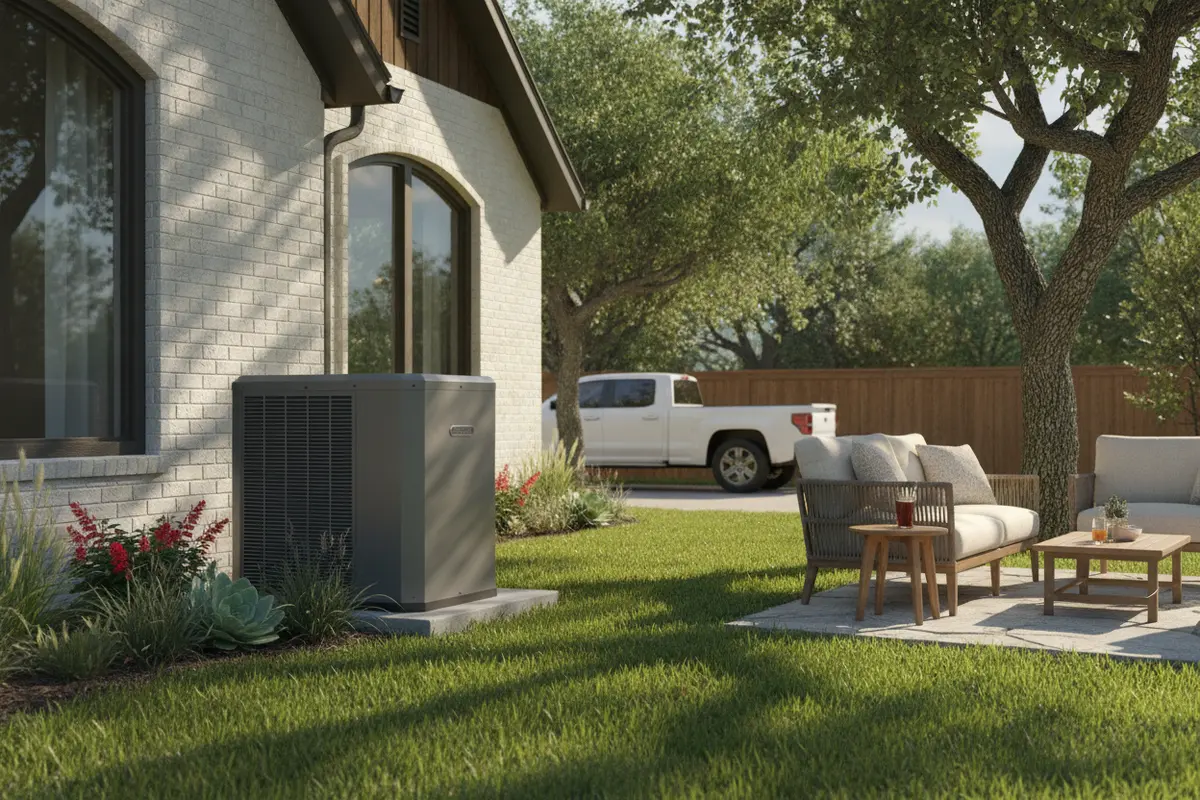
Before heavy cooling use, check the filter, clear the outdoor area, and pay attention to whether the system reaches the thermostat setting without unusual cycling. Before the heating season, repeat those observations and note whether the changeover between modes is normal. A maintenance visit can be especially useful when the system is older, has had a recent repair, or will be relied on for a busy season.
Keep vents and returns accessible year-round. If a room is uncomfortable, do not assume that closing other vents will solve the problem; it may change airflow without addressing the underlying issue. Document the room, time of day, weather, and thermostat setting so a technician can evaluate the pattern.
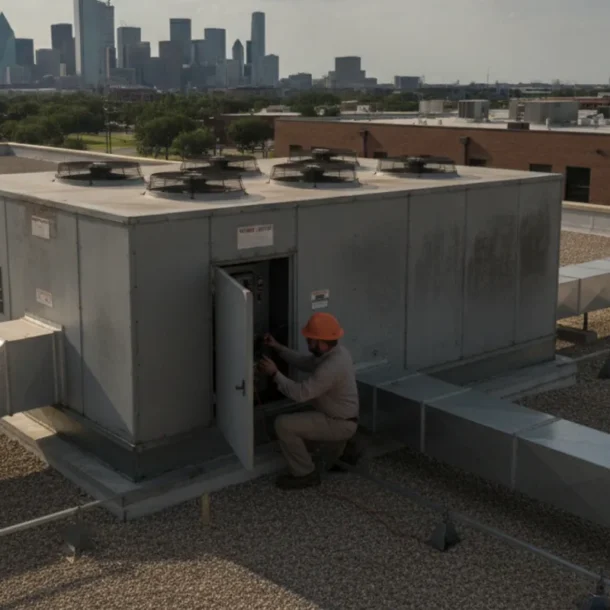
The same basic lifespan questions apply to both homes and businesses, but commercial equipment may have different run schedules, controls, loads, access requirements, and business consequences when comfort is interrupted. A commercial property may also have multiple zones or systems that need to be considered together.
Residential customers may focus on bedroom comfort, noise, utility use, and planning a replacement. Commercial customers may prioritize operating continuity, tenant or employee comfort, equipment access, and coordination with other building systems. In either case, a site-specific assessment is more useful than relying only on a general age range.
Garland Heating and Air Conditioning has documented capabilities for residential service as well as light and heavy commercial HVAC services. If your property has specialized cooling or refrigeration needs, the company also lists commercial refrigeration service among its offerings.
Business owners and property managers should consider the effect of an interruption, access to equipment, operating hours, tenant needs, and whether multiple systems show related symptoms. Keep service records by unit and identify which areas lose comfort first. This information can help separate a single equipment issue from a broader control, duct, or building-load concern.
When replacement is under consideration, ask whether the proposed solution addresses the whole property or only one unit. A quote should explain the equipment included, installation conditions, controls, and any work that is not included. Pricing remains quote-based because commercial properties differ substantially in size, access, and system configuration.
A clear conversation can help you make a better repair or replacement decision. Ask the technician:
Ask for explanations in plain language and keep the written recommendation. Pricing is quote-based because equipment, access, ductwork, electrical requirements, and installation conditions vary. Garland Heating and Air Conditioning can discuss service needs and available HVAC financing options with qualified customers without promising terms in advance.
For additional preparation, homeowners can review the heat pump homeowner guide and gather the equipment’s age, model information, and repair history before contacting a provider.
Request a customized heat pump quote
It can, particularly when it has been well maintained and operates under suitable conditions, but 20 years is not a guarantee. The system’s condition, repair history, installation, and operating demands should guide the decision.
A heat pump is designed to provide both heating and cooling. More operating hours can contribute to wear, but reliable service depends on the whole system, including sizing, airflow, maintenance, controls, and installation quality.
No. Age can affect performance, but comfort problems or higher energy use may also come from ductwork, filters, thermostat settings, insulation, or a developing mechanical fault. Testing helps identify the actual cause.
Call when the system stops heating or cooling, runs unusually long, makes a new sound, has airflow or icing concerns, cycles repeatedly, or cannot maintain the thermostat setting. For urgent problems, use the company’s service contact route and explain the symptoms.
A heat pump commonly lasts about 10 to 15 years, and careful maintenance may extend useful service in some cases. The best time to plan is before a complete failure: track the system’s age and repair history, keep airflow clear, schedule professional maintenance, and request a property-specific evaluation when comfort or reliability changes.
Garland Heating and Air Conditioning has served the Dallas-Fort Worth metroplex since 1952 and can help residential and commercial customers consider heat pump repair, maintenance, or replacement based on the actual condition of the system.