A central air conditioner can often be repaired, but the right choice depends on what failed, how the system is performing, and whether the same problem keeps returning. In a Dallas-Fort Worth summer, a quick diagnosis can help separate a manageable repair from a larger system decision.
Schedule service or request a customized quote from Garland Heating and Air Conditioning.
Yes, central air conditioner repair is usually possible when the issue involves a serviceable component, airflow problem, electrical control, or refrigerant-related fault. A qualified technician should diagnose the cause before you decide whether repair or replacement makes more sense.
Before making that decision, it helps to understand which symptoms point toward a sensible repair and which ones suggest a deeper equipment or comfort problem. The first step is knowing when professional repair is the practical choice.
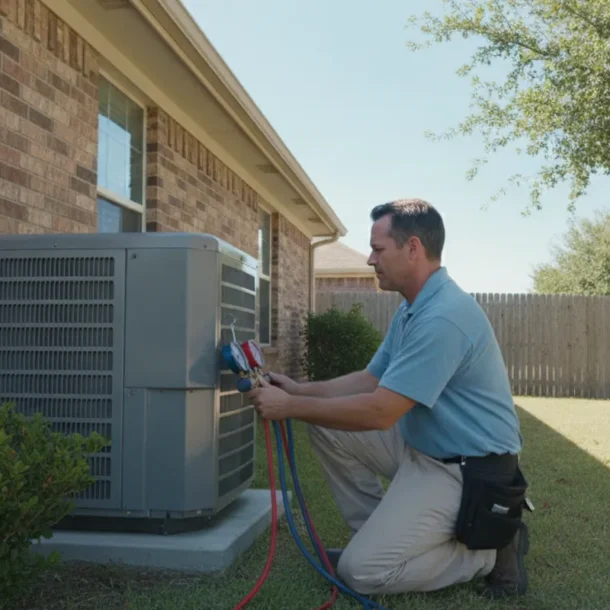
Central air conditioner repair usually makes sense when the system has a specific, diagnosable problem and the rest of the equipment remains capable of cooling your home. A unit that runs but does not cool well, cycles unusually often, makes new noises. Leaks water, or produces weak airflow may need professional attention rather than immediate replacement.
Many cooling failures involve an individual component, an airflow restriction, a control issue, or a maintenance condition. A trained technician can determine whether the problem is limited to a part or whether it points to broader system deterioration. Refrigerant concerns, electrical faults, fan or compressor controls, and drainage problems should not be diagnosed or repaired by guessing. They require the right tools and a safe evaluation.
Before requesting service, you can note what changed: whether the system runs continuously, whether every room feels affected, and whether the issue began suddenly or developed over time. That information helps a technician focus the visit. If the system is not cooling at all or the indoor temperature is rising quickly during a DFW heat wave. Treat the situation as urgent and arrange service rather than continuing to operate a malfunctioning unit.
Replacement deserves consideration when a system has recurring failures, cannot provide consistent comfort after appropriate repairs. Or has a condition that makes continued repair a poor fit for the home. The decision should be based on the equipment’s overall condition, the scope of the recommended work. Comfort performance, and expected reliability, not on a generic rule or an assumed price. Ask the technician to explain what failed, what the repair would address, and what limitations would remain afterward.
Garland Heating and Air Conditioning provides residential installation, repair, and maintenance throughout the Dallas-Fort Worth metroplex. The family-owned company has served the area since 1952 and can explain whether AC repair and maintenance service fits your system’s condition. Service recommendations are quote-based, so request the details needed to make an informed repair or replacement decision.
A few low-risk observations can help you describe the problem accurately and may resolve a simple issue. Keep the system covers closed, avoid exposed wiring, and stop if you smell burning, see smoke, or notice water near electrical equipment. The U.S. Department of Energy recommends professional help when an air conditioner needs more than basic maintenance.
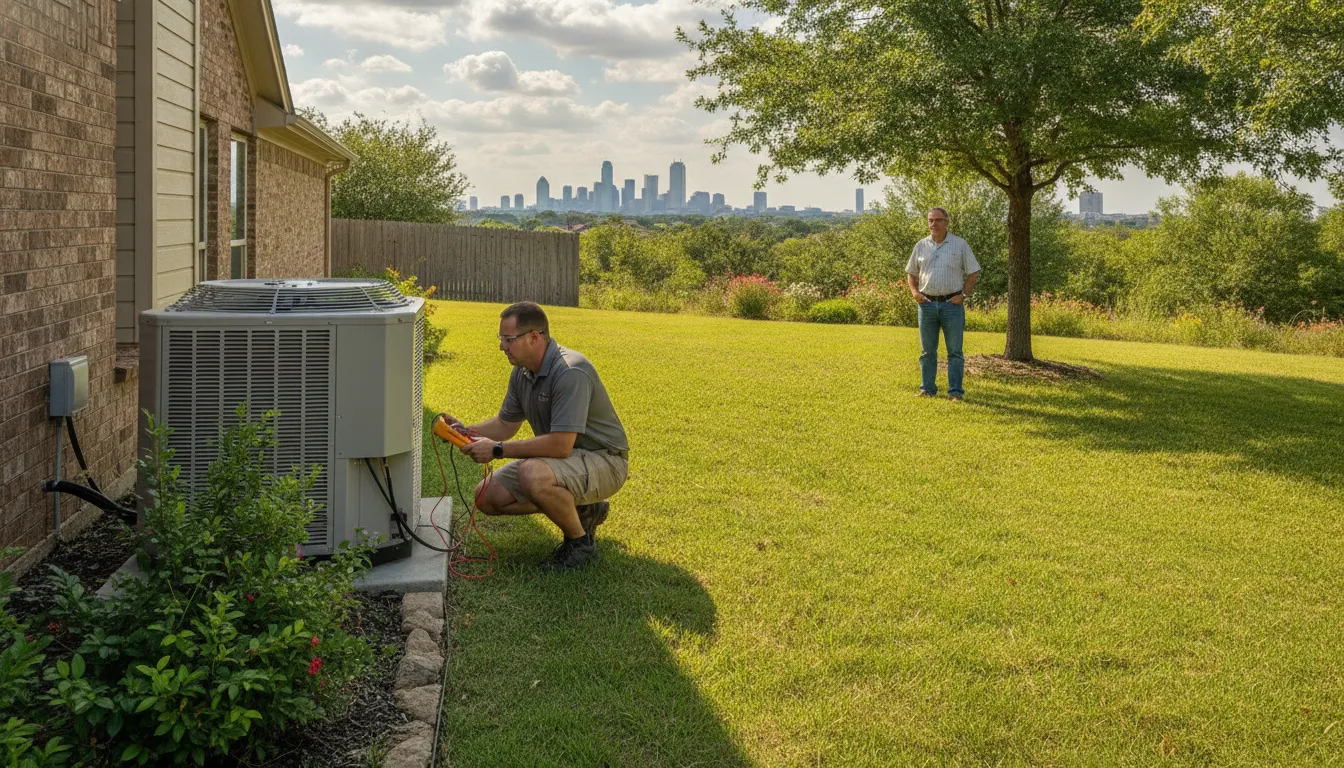
These checks can narrow the symptoms, but they cannot replace a full diagnosis. A qualified technician should handle any work beyond basic homeowner maintenance.
Source: U.S. Department of Energy home cooling guidance.
Some central air conditioner repair issues require more than a thermostat adjustment or a filter change. A trained technician can test the system, identify the underlying fault, and explain which repair is appropriate without guessing from one symptom.
If the refrigerant charge is low, or the system has a leak, adding refrigerant alone may not address the cause. The U.S. Department of Energy identifies low or leaking refrigerant as a problem for a trained technician, who can repair the leak and recharge the system. Refrigerant diagnostics and handling should remain professional work. DOE cooling guidance explains why this symptom needs qualified help.
Frequent starts and stops can wear compressor or fan controls. The DOE also advises contacting a professional to check the unit’s electrical connections when these controls may be worn. A homeowner can note how often the system cycles, but should not open electrical compartments, test live components, or attempt to replace controls. These details help the technician begin with a more useful symptom history.
A system that repeatedly cycles, struggles to maintain the thermostat setting, or produces weak airflow may have a problem that is not visible at the thermostat. Ducts can leak, clog, or become constricted, affecting how air moves through the home. The DOE recommends working with a professional to clean and air-seal problem ducts. Persistent airflow concerns may call for testing beyond a basic homeowner check.
Call an AC technician when the symptoms point to specialized diagnosis, especially when basic checks have not solved the problem. Garland Heating and Air Conditioning also provides AC repair and maintenance service for DFW homeowners. The DOE diagnostic guide notes that comprehensive diagnosis uses qualified technicians and proper tools, including tests for system performance, airflow, and duct-related conditions. Those measurements can distinguish a control, refrigerant, coil, or duct issue instead of treating every cooling failure the same way.
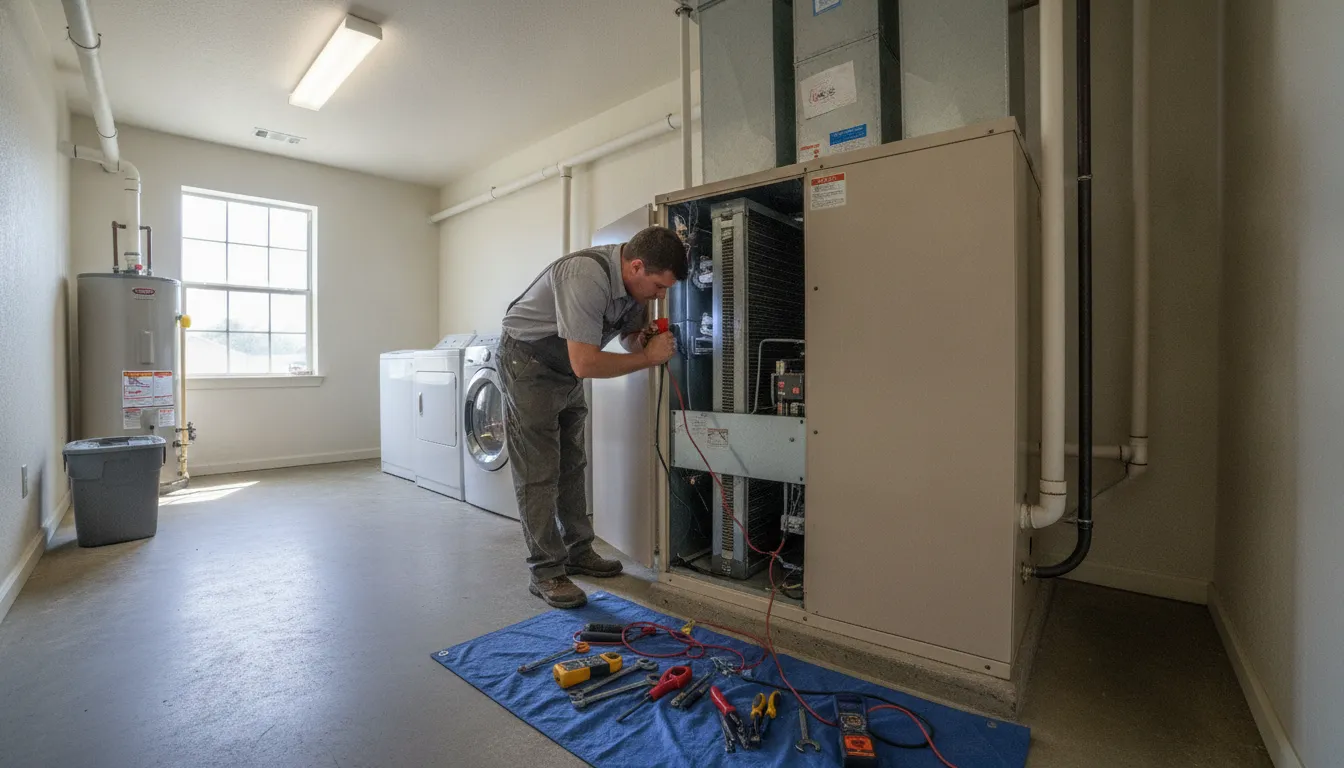
A careful diagnosis begins with measurements, not guesswork. A qualified technician evaluates the complete central air conditioner, confirms the symptoms. And uses appropriate diagnostic tools to separate an airflow problem from a capacity, electrical, or component issue.
The U.S. Department of Energy’s diagnostic guidance describes a comprehensive process for qualified HVAC technicians to identify system defects accurately. The goal is to find the cause of poor cooling rather than replace a part simply because it is easy to access.
One early check compares the temperature of air returning to the system with the temperature of air supplied to the home. The DOE guide identifies this supply-return temperature difference, sometimes called temperature split, as an initial way to evaluate overall performance and look for airflow or capacity concerns. It is one measurement in a larger process, not a universal pass-or-fail number.
If the initial results suggest low airflow, the technician may perform additional airflow testing to isolate the cause. The inspection can include the filter, indoor coil, blower operation, registers, and return path. The DOE guide also notes that duct leakage affects airflow and pressure. So a system can have a sound air conditioner but still deliver weak cooling when ducts leak, are obstructed, or are poorly balanced.
Filter condition matters during testing. A heavily fouled filter can restrict airflow and distort the technician’s findings. The technician may also inspect the outdoor condenser coil for fouling, since dirt or blockage there can affect heat transfer. These checks help connect the measured symptoms to a specific repair recommendation.
The technician explains what was found, which repairs are appropriate, and whether further testing is needed. Ask what evidence supports the recommendation and what the work is expected to address. If you need to plan around the appointment, review what affects AC repair time. For homeowners in Dallas-Fort Worth, this methodical approach makes central air conditioner repair more understandable and helps avoid treating the wrong problem.
Source: U.S. Department of Energy air-conditioning diagnostic guide.
There is no universal age, cost, or percentage rule that decides whether a central air conditioner should be repaired. The better choice depends on the system’s condition, the pattern of failures, the comfort it delivers, and the scope of the work a technician finds. A clear diagnosis gives you a practical basis for comparing repair with a replacement plan.
Repair is often the appropriate path when the problem is specific. The rest of the system is performing reliably, and the work addresses the cause rather than only the symptom. A qualified technician can explain what failed, what the repair involves, and whether other conditions could affect performance. That information matters more than guessing from a single symptom, such as warm air or short cycling.
Recurring failures deserve closer attention. If the same issue returns, ask whether the underlying airflow, electrical, refrigerant, duct, or control problem has been identified. You can review Garland Heating and Air Conditioning’s HVAC repair service guide for broader context, then request a quote-based recommendation based on your actual equipment.
Replacement becomes worth discussing when the system has persistent performance problems, repeated breakdowns, uneven comfort, or a repair scope that affects several major components. It may also be a reasonable planning conversation when a diagnosis shows that restoring dependable operation would require extensive work. That does not mean replacement is automatically the answer. It means you should compare the system’s present condition with the expected result of the proposed repair.
| What you find | Practical next step |
|---|---|
| One identifiable fault and otherwise steady comfort | Ask for a repair diagnosis and the expected operating result. |
| Repeated failures or recurring symptoms | Ask what is causing the pattern and compare repair with longer-term options. |
| Uneven comfort or ongoing efficiency concerns | Have airflow, ductwork, controls, and equipment condition evaluated together. |
| Extensive work involving major system components | Request both a repair recommendation and a customized replacement quote. |
Ask the technician to describe the condition of the system, the repair scope, and the likely comfort outcome in plain language. Garland Heating and Air Conditioning provides residential air-conditioning repair, maintenance, installation, and replacement throughout the Dallas-Fort Worth area. If replacement is the better fit, review the company’s AC installation and replacement information before choosing a system. The goal is a documented decision that fits the equipment and the home, not a decision based on an arbitrary rule.
Preventive care is easier to manage when it follows the DFW cooling season instead of waiting for a breakdown. A consistent maintenance routine helps identify airflow, drainage, and control problems before they become a repeat service call.
Arrange a professional check-up in spring, before the hottest weather arrives. ENERGY STAR recommends annual preseason check-ups to help prevent future problems and unwanted costs, and specifically advises checking cooling systems in spring because contractors become busier during summer. The U.S. Department of Energy also says annual maintenance can improve comfort and air-conditioner efficiency while helping prolong the unit’s life. Read the ENERGY STAR maintenance checklist for the seasonal timing guidance.
A technician can review the system as a whole rather than treating only the symptom that prompted an earlier repair. Garland Heating and Air Conditioning provides an AC repair and maintenance service for DFW homeowners who need routine care or a closer evaluation.
Check the filter routinely and clean or replace it as appropriate for the equipment and household conditions. The DOE says a clogged filter restricts airflow and reduces cooling effectiveness. It also reports that routinely cleaning or replacing filters can lower air-conditioning energy consumption by 5% to 15%. Use the thermostat’s correct settings and confirm that its temperature reading makes sense; ENERGY STAR includes thermostat settings in a typical maintenance check-up.
The evaporator coil deserves annual attention as well. The DOE recommends checking it every year and cleaning it when necessary. Coil cleaning and other work beyond basic maintenance should be handled by a qualified professional rather than attempted around energized equipment or refrigerant lines.
Leaking, clogged, or constricted ducts can undermine comfort even when the outdoor unit runs. Have problem ductwork professionally cleaned and air-sealed when inspection shows those conditions. If rooms remain unevenly cooled after a filter change or thermostat check, mention the pattern during scheduling. Early details help the technician investigate airflow instead of repeatedly replacing unrelated parts.
For DFW homeowners, spring scheduling, routine filter care, annual coil review, and prompt attention to duct and thermostat concerns create a practical defense against repeat central AC repairs.
Look at the system’s condition, comfort performance, and repair history together. Recurring failures, poor cooling after a proper diagnosis, or a repair that does not make practical sense may support replacement. Ask the technician to explain the confirmed fault, repair scope, and replacement option so you can compare the choices without relying on a guess.
Confirm that the thermostat is set correctly and reading the room temperature, then check the filter, breaker, airflow at the registers, and accessible condensate drain. A clogged filter can restrict airflow and reduce cooling effectiveness, according to the U.S. Department of Energy. Stop before opening electrical components or handling refrigerant, and call a trained professional when basic maintenance does not resolve the problem.
Call a technician for suspected refrigerant leaks, repeated short cycling, weak cooling that continues after basic checks, electrical concerns, or a system that stops operating. Refrigerant diagnosis and repair require trained service, and frequent cycling can wear compressor or fan controls. A qualified technician can test the system rather than replacing parts based only on symptoms.
Replace or clean filters routinely, keep outdoor airflow clear, and arrange professional maintenance before the cooling season. ENERGY STAR recommends annual preseason check-ups to help prevent future problems and unwanted costs, with cooling-system checks scheduled in spring when possible. Ask the technician to review the coil, thermostat, airflow, and duct condition as part of the maintenance visit.
A professional evaluation can help clarify whether your central air conditioner needs a focused repair, routine service, or a larger replacement conversation. Garland Heating and Air Conditioning can review your situation and help you choose a practical next step for your DFW property. Contact us to schedule central air conditioner repair or request a customized quote through the online form.