Commercial refrigeration problems can affect a property long before the equipment stops working completely. A homeowner, landlord, or property decision-maker may first notice changing temperatures, frost, leaks, unusual noise, or a door that no longer seals properly.
Contact Garland Heating and Air Conditioning for the next step, or call (972) 278-3500.
Commercial refrigeration repair helps identify and address problems with business or property equipment, including walk-in coolers and related refrigeration systems. A professional evaluation can clarify what the equipment is doing, what information to document, and whether repair or another service option fits the situation.
Before requesting service, record the symptoms without guessing at the cause. The equipment type, temperature readings, visible frost or water, recent changes, and maintenance history can help a technician begin with a clearer picture. Understanding what falls within the service scope is the first practical step.
Short answer: Commercial refrigeration repair applies when a property includes equipment designed for business, rental, mixed-use, or other property needs, rather than a standard household refrigerator. The scope may include evaluating the system, identifying the source of a performance problem, and discussing an appropriate repair or maintenance plan.
You might encounter commercial refrigeration equipment through a home-based food business, a rental property, a shared residential-commercial building, or a property with dedicated storage needs. A walk-in cooler is one example. Other equipment may be part of a larger refrigeration setup serving a commercial space attached to or located on residential property.
Start by identifying the equipment type and its location. Note whether the issue affects a walk-in cooler, another commercial refrigeration unit, or a connected system. Useful observations include temperature changes, frost, unusual sounds, water, damaged door seals, or airflow concerns. These details help a technician understand what has changed without requiring you to diagnose the cause yourself.
Commercial refrigeration equipment can have different controls, capacities, installation requirements, and operating conditions than a residential refrigerator. For that reason, a homeowner should not assume that a household appliance repair provider is the right match for a commercial unit. Garland Heating and Air Conditioning documents commercial refrigeration installation, repair, maintenance, walk-in cooler services, and refrigeration system diagnostics for Dallas-Fort Worth customers.
Garland’s commercial refrigeration repair and service work is intended for commercial equipment and property-related needs. It is not a claim that the company repairs every residential kitchen appliance. If you are unsure whether your equipment falls within this scope, record the model information, describe how the equipment is used, and contact the company for guidance. A professional evaluation can help clarify whether repair or maintenance is appropriate for the specific system.
If you encounter commercial refrigeration equipment at a home business, rental, or mixed-use property, record what you can observe before requesting service. A clear symptom history helps a technician evaluate the equipment without asking you to diagnose it or open sealed components.
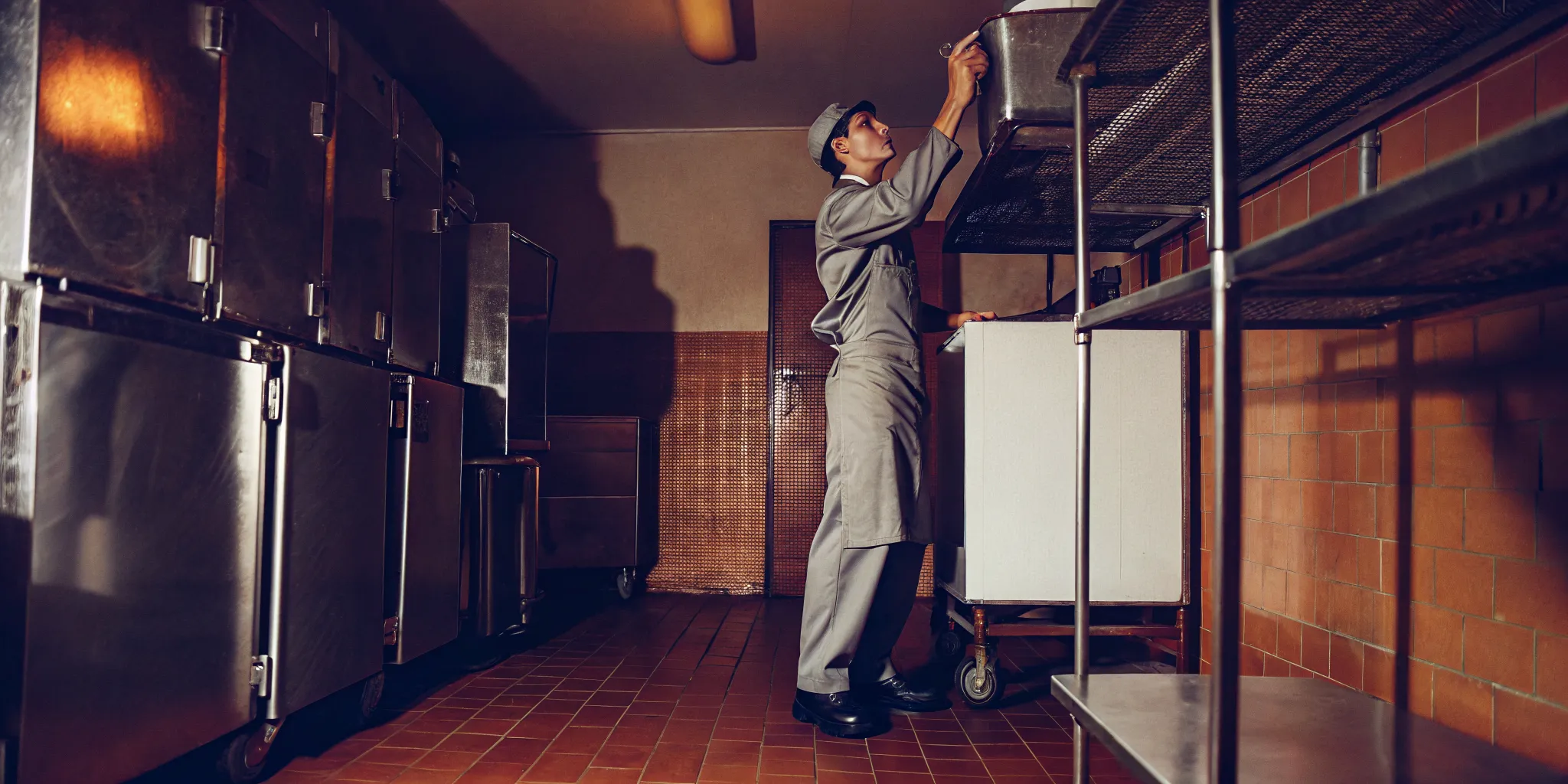
Include the equipment type, location, recent temperature readings, visible symptoms, and any service history you have. This record helps Garland Heating and Air Conditioning focus on documented commercial refrigeration repair and system diagnostics while keeping the conversation grounded in observable facts.
If a refrigerator, freezer, or walk-in cooler at a home business, rental, or mixed-use property seems warm, treat the situation as a documentation and food-safety problem first. Do not rely on appearance alone, and do not assume the equipment is safe because it is still running.
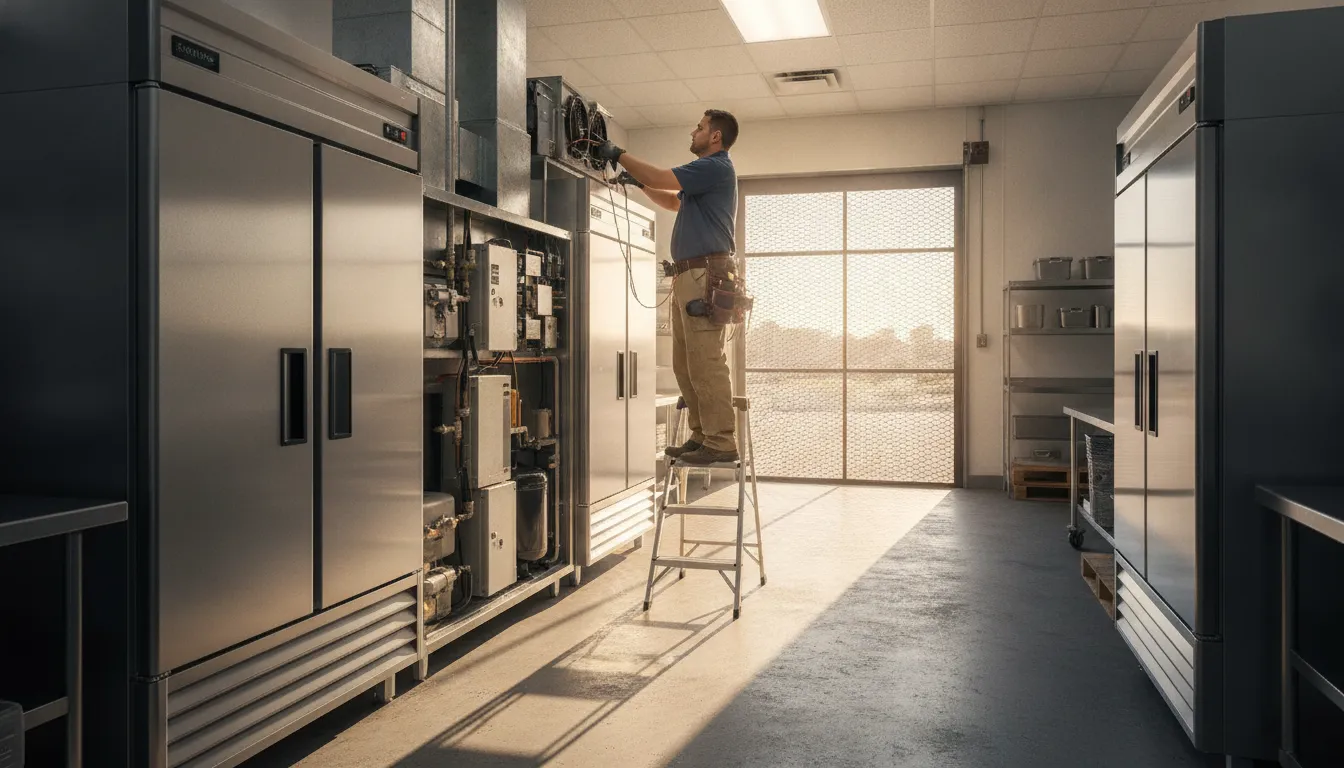
Record what you can verify. Use the unit’s display if it has one, then confirm the reading with an appliance thermometer when possible. The FDA recommends keeping refrigerators at or below 40 F and notes that many controls do not show the actual internal temperature. See the FDA refrigerator thermometer guidance for the measurement basics.
Write down the time, temperature, equipment type, and any visible symptoms. Note whether the reading changes, whether frost or water is present, and whether the door seal appears to close fully. A short record can help a technician evaluate the problem without turning a suspected equipment issue into repeated door-opening and temperature loss.
Keep the door closed. USDA guidance recommends keeping refrigerator and freezer doors tightly closed, opening them only when necessary, and closing them promptly. Avoid rearranging the contents repeatedly while you are trying to determine whether the unit is recovering. Also check that stored items are not blocking the cold-air path, since cold air needs room to circulate around refrigerated food. Read the USDA refrigeration safety guidance for additional handling direction.
Separate equipment troubleshooting from food disposition. Follow the applicable household, rental-property, business, or local food-safety procedures for deciding what can be kept, moved, discarded, or inspected. FDA guidance states that perishable food left out for two hours or more, or one hour when the surrounding temperature is above 90 F, can become unsafe. USDA also warns that color, smell, and texture may not reveal harmful bacteria, so do not taste food to test it.
If food or inventory may have remained above the required temperature, document the exposure window and contact the responsible health or food-safety authority when your plan requires it. At the same time, arrange commercial refrigeration repair when the equipment serves a business, rental, or mixed-use property. Garland Heating and Air Conditioning documents refrigeration system diagnostics, repair, maintenance, and walk-in cooler services for Dallas Fort Worth property owners. Avoid attempting electrical or refrigeration-system repairs yourself.
A well-prepared service visit gives the technician a clearer starting point and helps you explain what changed. This is useful whether you are a homeowner overseeing a mixed-use property, a landlord, or a decision-maker responsible for equipment serving a small business on the property. Focus on safe observations and access. Do not remove panels, handle refrigerant, or attempt an electrical or mechanical repair.
For a broader record of routine monitoring and warning signs, review this commercial refrigeration maintenance checklist. Bring your notes to the appointment so Garland Heating and Air Conditioning can compare the reported symptoms with the equipment’s condition and documented service needs.
When a commercial refrigerator or walk-in cooler serves a home business, rental property, or mixed-use building, the right choice is not always obvious. A visible symptom can reflect a localized issue, normal wear, or a broader equipment problem. Rather than choosing based on age or urgency alone, treat repair versus replacement as a quote-based evaluation.
Start with condition. Ask the technician to evaluate the equipment’s observable symptoms and overall operating condition. A system that is still serving its intended cooling needs may be a candidate for repair. If the equipment cannot reliably support the property’s needs, replacement may deserve consideration. Garland Heating and Air Conditioning documents commercial refrigeration installation, repair, maintenance, walk-in cooler services, and refrigeration system diagnostics.
| Repair may fit when… | Replacement may fit when… |
|---|---|
| The problem appears limited, and diagnostics identify a practical correction. | The equipment’s condition raises concerns beyond one isolated symptom. |
| Previous service has been occasional, with a clear record of what was addressed. | Repeated service issues make reliability difficult to assess or maintain. |
| The unit still provides the capacity and temperature performance the property requires. | The equipment no longer supports the property’s operating needs. |
| A repair can be planned without creating an unacceptable interruption. | Continued interruptions could affect a home business, tenants, or stored products. |
Gather recent service records, notes about recurring symptoms, and any temperature observations before requesting an evaluation. A pattern matters more than a single frustrating event. It can help a technician distinguish a new concern from a problem that has returned after earlier service.
Explain how the equipment is used, when the problem began, and whether the property has changed since installation. A home-based business, rental space, or mixed-use property may have different cooling demands than the original setup. The evaluation should account for those operating needs and the interruption risk of either choice. Garland Heating and Air Conditioning provides quote-based refrigeration service in the Dallas-Fort Worth area, so contact the company for a recommendation tailored to the equipment and property.
A refrigeration problem deserves professional attention when temperatures remain unstable, the equipment will not operate normally, or repeated adjustments do not solve the issue. That is especially true when the system supports a home-based business, rental property, mixed-use building, or another property responsibility.
Record what you observed, including temperature readings, unusual noise, frost, leaks, door-seal concerns, or equipment that cycles incorrectly. Avoid guessing at the cause or attempting repairs that could create a larger problem. A clear record helps a technician understand what changed and what the equipment is doing now.
Garland Heating and Air Conditioning provides documented commercial refrigeration installation, repair, maintenance, walk-in cooler services, and refrigeration system diagnostics. If you need commercial refrigeration repair and service, explain whether the equipment serves a property, home business, or other commercial use. This helps keep the conversation focused on the right type of system rather than treating it like ordinary residential appliance repair.
Garland Heating and Air Conditioning is family-owned and has served the Dallas-Fort Worth area since 1952. Its documented refrigeration service area includes DFW communities such as Garland, Dallas, Richardson, Plano, and Rockwall. The company can evaluate the reported symptoms and discuss an appropriate repair, maintenance, or installation path based on the equipment’s condition and needs.
Refrigeration service pricing is quote-based, so the right next step is an evaluation rather than relying on an assumed cost. Have the equipment type, recent temperature readings, service history, and property location ready when you reach out. For urgent concerns, use your established food-safety procedures while arranging professional help.
Contact Garland Heating and Air Conditioning to schedule a quote-based refrigeration evaluation. Call (972) 278-3500.
A refrigeration technician evaluates the equipment, documents symptoms, and diagnoses the refrigeration system. Depending on the issue, that may include checking temperature control, airflow, frost, leaks, operating sounds, and other system conditions. Garland Heating and Air Conditioning provides commercial refrigeration installation, repair, maintenance, walk-in cooler services, and refrigeration system diagnostics for commercial property owners and related decision-makers.
There is no reliable answer without evaluating the equipment. The decision depends on the system’s condition, repair history, capacity, recurring symptoms, and the disruption caused by continued problems. A technician can explain whether a repair addresses the cause or only a short-term symptom. Garland provides quote-based refrigeration service, so contact the company for an assessment rather than relying on an assumed price.
The costliest repair varies by equipment type, failure, access, and the condition of the rest of the system. Avoid choosing a repair based on one suspected part before diagnosis. Record the symptoms, temperature readings, unusual sounds, frost, leaks, and recent service history so the technician can evaluate the system more accurately.
There is no single useful lifespan for every commercial refrigerator. Equipment type, workload, maintenance, installation conditions, operating environment, and repair history all affect how long it remains practical to operate. A service evaluation can compare the equipment’s current condition with its performance needs and help a property owner make an informed repair or replacement decision.
A clear service conversation can help you organize the equipment details, symptoms, and records that matter for a quote-based evaluation. Contact Garland Heating and Air Conditioning to discuss commercial refrigeration repair in the Dallas Fort Worth area and request the appropriate next step. You can also reach the team at (972) 278-3500. Share what you have observed, including temperature changes, frost, leaks, or unusual sounds, so the discussion starts with useful context.