Furnace installation is a major home comfort decision in Dallas-Fort Worth, especially when an aging system struggles during a North Texas cold snap.
Schedule a furnace installation consultation with Garland Heating and Air Conditioning, or call (972) 278-3500 to discuss your home, current system, and next steps.
Quick answer: A successful furnace installation starts with an evaluation of the home, a properly sized system, and a plan for ductwork, venting, electrical or gas connections, controls, permits, and final testing. The right equipment depends on the home’s layout, insulation, existing utilities, comfort goals, and whether a furnace is being installed as part of a larger heating and cooling replacement. A professional assessment is more useful than choosing equipment by square footage alone.
Why does furnace installation matter so much in DFW?
North Texas weather still puts heating systems to the test
Dallas-Fort Worth is known for intense summers, but winter weather can change quickly. Mild days can be followed by freezing temperatures, and a furnace that has been limping along may fail when the household needs it most. An installation that is planned for the home helps deliver dependable heat without forcing the equipment to work against poor sizing, restricted airflow, or damaged ductwork.
Installation quality also affects more than the temperature in one room. The furnace works with the return and supply ducts, thermostat, indoor coil, electrical system, and, for a gas model, the fuel and venting systems. If those pieces are not evaluated together, even a high-efficiency unit may not deliver the comfort or operating performance the homeowner expected.
What can go wrong with a rushed installation?
An oversized furnace may cycle on and off more often than it should. That can create uneven temperatures and unnecessary wear. An undersized furnace may run for long periods and still struggle to maintain the setpoint during a cold front. Poor duct connections or inadequate return airflow can also leave bedrooms, additions, or upper floors noticeably colder than the rest of the home.
Gas and electrical work create additional safety considerations. Combustion air, venting, clearances, wiring, and connections must be handled according to the equipment manufacturer’s instructions and applicable local requirements. These are not good areas for trial and error or a do-it-yourself installation.
Which heating system should you choose for your DFW home?
Gas furnaces
A gas furnace can be a practical choice for a home that already has natural gas service and a compatible ducted system. It produces heat through combustion and distributes warm air through the home’s supply registers. Homeowners often consider gas furnaces when they want strong heating performance during short but severe cold snaps and want to keep the existing system design where it makes sense.
Gas equipment also requires careful attention to the gas connection, combustion air, heat exchanger, flue or venting path, and carbon monoxide safety. A qualified installer should explain which parts of the existing setup can remain, which need correction, and how the new equipment will be tested.
Electric furnaces and air handlers
Electric heating equipment may fit homes without natural gas service or homes designed around all-electric HVAC. The installation plan should account for the electrical panel, disconnect, wiring, airflow, and the relationship between the indoor heating equipment and the outdoor cooling system. An assessment can reveal whether electrical capacity or other modifications are needed before the project begins.
Heat pumps and dual-fuel systems
A heat pump can provide both heating and cooling by moving heat rather than generating it in the same way as a conventional furnace. In a DFW home, the homeowner may compare a heat pump with a furnace, or consider a dual-fuel arrangement that uses a heat pump for many conditions and another heat source for colder weather.
The best fit depends on the home’s current equipment, ductwork, electrical service, available fuel, comfort preferences, and long-term plans. Garland Heating and Air Conditioning also provides heat pump repair and maintenance for homeowners evaluating that option. For a deeper comparison, see the DFW gas furnace and electric heat pump cost guide.
How is a furnace sized for a house?
Why square footage is only a starting point
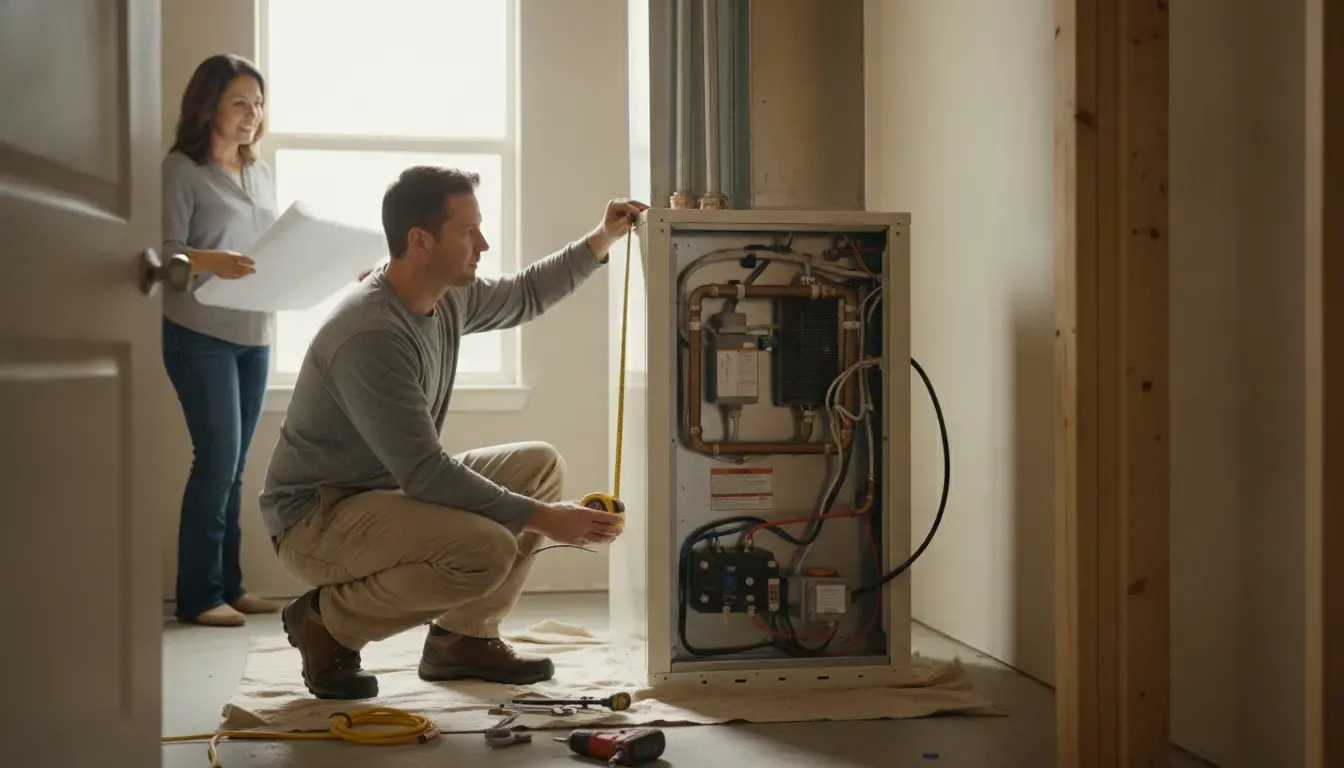
Homeowners often begin by asking how many BTUs a furnace needs for a certain square footage. That question is understandable, but square footage by itself does not describe how a home gains or loses heat. Ceiling height, insulation, window area, air leakage, orientation, additions, occupancy, and ductwork all affect the heating load.
A professional load calculation, often called a Manual J calculation, is designed to estimate the home’s heating and cooling needs using those conditions. It gives the installer a more reliable basis for equipment selection than a rule of thumb. Ask how the proposed furnace capacity was determined and whether the calculation reflects the home’s current envelope and planned improvements.
What should the installer inspect?
- The home’s floor plan, conditioned square footage, ceiling heights, and additions.
- Insulation levels, windows, doors, sun exposure, and noticeable air leaks.
- Supply registers, return grilles, duct size, duct condition, and airflow restrictions.
- The existing furnace, indoor coil, thermostat, filter location, and equipment clearances.
- Gas availability and venting for a gas furnace, or panel capacity and wiring for electric equipment.
- Comfort complaints such as cold bedrooms, short cycling, excessive noise, or rooms that never reach the set temperature.
This review is particularly useful in older Garland homes, remodeled properties, and houses with additions. The existing furnace may have been selected before the home was updated, or the ductwork may have changed over time. A new unit should be matched to the home as it exists now.
What happens during a professional furnace installation?
1. The project begins with an on-site plan
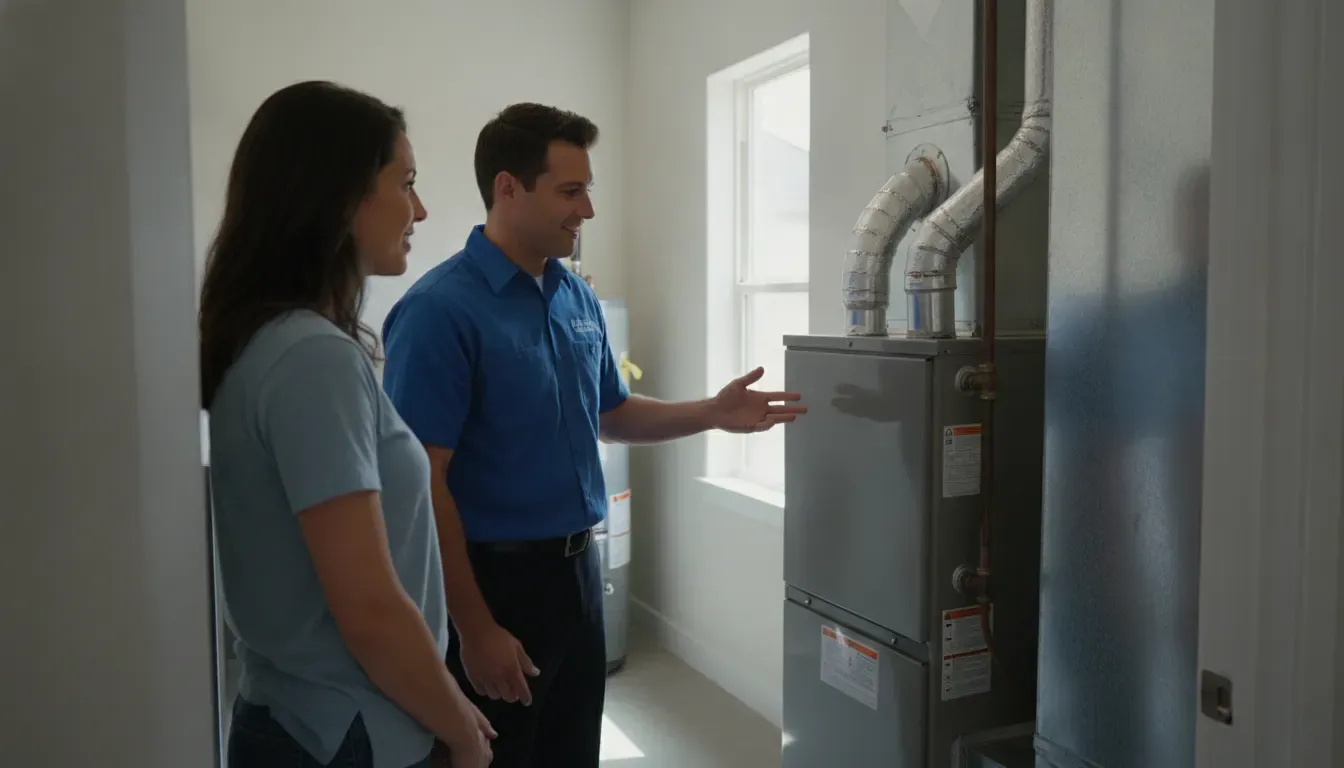
Before equipment is ordered, the installer should review the home’s heating needs, current system, fuel or electrical setup, access, ductwork, thermostat, and the homeowner’s comfort priorities. This is the time to discuss whether the project is a furnace-only replacement, a complete heating and cooling upgrade, or a new installation for a home that did not previously have the same equipment.
The written proposal should identify the equipment being considered, the work included, what happens to the old unit, and any work that may depend on conditions discovered during installation. Furnace installation pricing is quote-based because the scope varies by property. A reliable quote should be based on the home and existing system, not a generic package alone.
2. The old equipment and installation area are prepared
On installation day, the crew protects the work area, shuts down the existing equipment safely, disconnects the required services, and removes the old unit. The team may find damaged duct transitions, an undersized return, deteriorated venting, an inaccessible filter, or other conditions that need to be addressed before the new equipment can operate properly.
Good preparation also includes checking clearances, service access, the platform or pad, drain arrangements where applicable, and the path for the supply and return connections. These details may not be visible after the work is complete, but they support safe service and long-term reliability.
3. The new furnace is connected to the home
The installer positions the furnace according to the manufacturer’s requirements and connects it to the supply and return air systems. Depending on the system, the work can include gas piping, venting, electrical connections, condensate drainage, an indoor coil, a thermostat, and other matched components. Duct connections should be secure and sealed so that the system can move the intended amount of air.
For a gas furnace, the installer should verify the fuel connection, combustion air, venting path, clearances, and burner operation. For electric equipment, the installer should verify the electrical supply, disconnect, controls, and protection. Homeowners should not open the cabinet or change wiring, gas connections, or safety controls after the installation.
4. The system is commissioned and explained
Installation is not finished when the furnace turns on. The crew should test the equipment, confirm thermostat operation, check airflow, verify safe operation, and review the system with the homeowner. The walkthrough should cover the filter location, thermostat settings, normal sounds, maintenance needs, and whom to call if the system does not perform as expected.
A whole-house approach matters: insulation, air sealing, thermostat settings, ductwork, and maintenance all influence comfort and energy use alongside the furnace itself. The Department of Energy’s Building Science Education guidance on HVAC quality installation also highlights correct sizing, component matching, airflow, and duct sealing.
Request a customized furnace installation quote after your home assessment, and call (972) 278-3500 if you need help planning a heating replacement before the next DFW cold snap.
What should you compare in a furnace installation quote?
Equipment and efficiency
Ask for the exact equipment model or a clear description of the proposed system, its fuel type, efficiency rating, capacity, and matched components. For gas furnaces, AFUE, or Annual Fuel Utilization Efficiency, describes how much of the fuel’s energy becomes useful space heat under standardized testing. A higher rating is not automatically the best choice for every home, so compare it with the installation scope and your home’s actual heating needs.
ENERGY STAR explains that certified furnaces meet efficiency criteria and that performance also depends on home sealing, duct sealing, and regular maintenance. Its furnace guidance can help homeowners understand AFUE and the U.S. South label used for qualifying gas furnaces in Texas.
Installation scope
Two quotes can describe similar equipment while including different work. Compare whether each proposal covers removal and disposal, duct transitions or sealing, electrical or gas work, venting, drainage, thermostat setup, permits or inspections when required, startup testing, labor, and warranty terms. Ask what is excluded and how the company handles an unexpected condition in the installation area.
Warranty and follow-up support
Review the equipment warranty and any labor coverage in writing. Ask who handles a warranty question, what maintenance is recommended, and whether the installer will return if the system needs an airflow or control adjustment. A company with a long local history should be able to explain its service process clearly.
How much does furnace installation cost in DFW?
Why there is no responsible one-size-fits-all price
Furnace installation cost depends on the equipment, capacity, efficiency, fuel type, access, ductwork, venting, electrical work, thermostat, removal requirements, permits, and whether the project includes cooling equipment or other upgrades. A furnace replacement in a prepared utility closet is a different project from a new installation that requires substantial duct or electrical changes.
For that reason, Garland Heating and Air Conditioning provides quote-based recommendations rather than inventing a universal price. Homeowners can use a planning guide to organize questions, but an on-site evaluation is needed for a property-specific quote. The furnace replacement cost guide for Texas homeowners explains which conditions can change the scope.
What can help control the project budget?
- Schedule an evaluation before the old furnace fails during a cold snap.
- Ask whether the current ductwork, thermostat, venting, and electrical or gas connections can be reused safely.
- Compare matched equipment and the complete installation scope, not only the equipment label.
- Ask about financing options for qualified customers if a replacement is needed.
- Address airflow, insulation, or air-sealing concerns that could limit the benefit of new equipment.
A low equipment price may not be a low project price if important installation work is excluded. The clearest comparison is between complete proposals that address the same home conditions.
How can you prepare for furnace installation?
Before the crew arrives
Clear a safe path to the furnace and remove stored items near the equipment. Make sure the installer can reach the electrical panel, thermostat, attic or crawlspace access, and any exterior venting area that needs inspection. Secure pets and let the crew know about access restrictions, recent remodeling, or comfort issues that should be considered.
Keep your current equipment information available if you have it, including model details, service records, and notes about recurring repairs. Think about which rooms are uncomfortable, when the issue occurs, and whether your priorities are quieter operation, more consistent temperatures, improved efficiency, or a different heating and cooling setup.
After installation
Learn where the filter is located and how often it should be checked or replaced according to the equipment and household conditions. Keep supply registers and return grilles open and unobstructed. Pay attention to unusual odors, repeated cycling, poor airflow, or a thermostat that does not hold the selected temperature, and contact the installer instead of adjusting gas, electrical, or safety components yourself.
Routine maintenance helps protect comfort and equipment performance. The Department of Energy recommends cleaning or replacing furnace filters monthly or as recommended, while the correct interval for a specific home depends on the filter, pets, dust, occupancy, and system design.
Garland Heating and Air Conditioning has served Dallas-Fort Worth since 1952. Its family-owned team works with residential and commercial customers across the metroplex, including Garland, Richardson, Plano, and nearby communities. For heating installation or replacement, the goal is a properly planned system that fits the property and the way you use it.
Frequently Asked Questions About Furnace Installation
How long does furnace installation take?
The timeline depends on whether the project is a straightforward replacement or includes ductwork, venting, electrical, gas, thermostat, or other changes. Your installer should explain the expected schedule after evaluating the equipment location and scope. Planning ahead can make it easier to address unexpected conditions without rushing the work.
Is a furnace or heat pump better for a DFW home?
Neither system is automatically right for every property. A furnace may fit a home with existing gas service and a compatible ducted system, while a heat pump can provide heating and cooling in one system. Compare fuel availability, electrical capacity, ductwork, comfort preferences, cold-weather performance, and the complete installation scope with a qualified HVAC professional.
Can I install a furnace myself?
Furnace installation involves combustion or high-voltage electrical components, airflow, venting, controls, and local requirements. It should be performed and tested by qualified HVAC professionals. A do-it-yourself installation can create safety hazards, damage equipment, and make it difficult to confirm that the system is operating as designed.
What does AFUE mean on a furnace?
AFUE means Annual Fuel Utilization Efficiency. It is a standardized measure of how much fuel energy a gas furnace converts into usable heat. Use AFUE as one comparison point, along with equipment capacity, ductwork, home conditions, installation quality, and the full quote.
When should a DFW homeowner replace a furnace?
Consider an evaluation when the system needs frequent repairs, produces uneven heat, struggles during cold weather, cycles abnormally, or no longer fits the home’s comfort needs. Age alone does not determine the answer. A professional can compare repair, replacement, and broader heating options after inspecting the equipment and home.
Do furnace installations require permits in Texas?
Permit and inspection requirements can vary by municipality and project scope. Ask the installing company which requirements apply to your address and whether permit coordination is included in the proposal. Keeping the work documented helps protect the safety and serviceability of the installation.
When you are ready to compare options, Garland Heating and Air Conditioning can evaluate your current heating system and explain a practical path forward for your DFW home. Call (972) 278-3500 or use the contact form to get started.