
Texas heat can push an HVAC system hard, especially when a home or business stays conditioned through long stretches above 100 degrees. A thermostat that reacts only when someone changes the setting can miss opportunities to reduce unnecessary runtime and protect indoor comfort. Talk with Garland Heating and Air Conditioning about your HVAC needs today.
Smart thermostat benefits texas hvac owners can expect steadier comfort, better scheduling control, and clearer insight into how their equipment runs. Wi-Fi connectivity and learning features adjust temperatures during sleep, away periods, or peak demand to help a properly sized system operate efficiently. These controls do not replace professional service, but they help an HVAC system respond intelligently to a Texas climate.
For DFW homeowners and businesses, the right value starts with understanding which features address daily occupancy, changing weather, and the demands of the existing equipment. That makes the thermostat’s real-world impact more important than its marketing claims. When you plan the upgrade, our complete guide to HVAC installation in DFW walks through equipment, brands, and what the process involves.
Smart thermostat benefits texas hvac owners value most are steadier efficiency, consistent comfort, and clearer visibility into how their equipment runs. Connected, automatic controls adjust for occupancy and peak-demand periods, helping a properly sized system operate more deliberately through a long Texas cooling season.
Texas HVAC systems work hard through long cooling seasons, so the controls that save the most energy are connected, automatic, and easy to adjust from anywhere. The smart thermostat benefits texas hvac owners value most are steadier efficiency, consistent comfort, and visibility into how their equipment is operating.
According to ENERGY STAR, a smart thermostat is a Wi-Fi enabled device that automatically adjusts heating and cooling settings to improve performance, energy use, and comfort. Many models learn household preferences and build schedules around when people are home, asleep, or away, which reduces unnecessary runtime instead of relying on one fixed setting all day. ENERGY STAR also recommends looking for certified models, which are independently evaluated using field data related to energy savings. These benefits do not guarantee a specific reduction on every utility bill because home size, insulation, ductwork, equipment condition, and settings all affect results.
Adaptive control is especially relevant across the Dallas-Fort Worth area. During heavy demand, a smart thermostat can respond to learned usage patterns and adjust temperatures more strategically. In a Texas home or business, avoiding unnecessary cooling cycles helps the system use energy more deliberately when outdoor conditions are most demanding.
Comfort is more than reaching a setpoint once. Smart scheduling can prepare a home for the hours when people are normally present while allowing a more efficient setting during predictable sleep or away periods. Some systems also provide equipment-use and temperature data, which helps owners notice a room that consistently feels warmer or a system that runs longer than expected.

Extreme Texas heat places significant stress on air-conditioning equipment. Smart controls cannot replace professional maintenance or repair, but runtime history, temperature trends, and system alerts may give an owner an earlier reason to investigate before a comfort problem becomes a larger interruption. Compatibility matters, especially with communicating systems, heat pumps, zoning controls, and older wiring, so review equipment requirements with a qualified HVAC professional before choosing a thermostat. Garland Heating and Air Conditioning has served DFW families and businesses since 1952.
A smart thermostat helps a Texas home follow a schedule that tracks warmer afternoons, occupancy, and predictable sleep or away periods. Learning mode, occupancy settings, and predictive cooling all reduce unnecessary runtime so an air conditioner does not work at full load when no one needs it.
A Texas summer schedule has to account for more than a predictable morning and evening routine. In the Dallas Fort Worth area, triple-digit afternoons can put heavy demand on an air conditioner even when the house is empty. A smart thermostat coordinates comfort and equipment operation around how the household actually uses the home, so the system does not run at full load during times no one needs it.
Many smart thermostats learn temperature preferences and establish a schedule that automatically shifts to energy-saving settings while you are asleep or away. The thermostat may recognize when the home is typically occupied, when family members leave for work or school, and when the household settles in for the night. You can review or modify those settings rather than relying on a fixed program that no longer matches your life.
That flexibility matters in DFW homes, where summer routines change around school breaks, travel, remote work, and long evening activities. A learning schedule offers a consistent starting point while still allowing manual adjustments when the day does not go as planned. The goal is not to lock a family into one temperature pattern but to reduce unnecessary runtime without giving up control.
When no one is home, the thermostat can set the temperature back instead of maintaining the same comfort level all day. ENERGY STAR notes that setting back the HVAC system while a home is unoccupied can prevent unnecessary operation and return the home toward its preferred setting before the next occupied period.
In a North Texas heat wave, a setback should be practical. Setting the temperature too far from the normal comfort range can make the system work harder when people return. A measured schedule combined with a properly sized and maintained air conditioner is more useful than extreme temperature swings. Homeowners in Garland, Plano, Richardson, and nearby communities should also consider whether pets, indoor plants, or sensitive equipment require a narrower range while the house is empty.
Some connected controls use local weather information to anticipate extreme conditions and begin cooling before the worst heat arrives. That predictive approach helps protect indoor comfort when a Texas heat wave is expected rather than waiting until the home has already absorbed hours of heat. It does not replace professional system maintenance or guarantee a specific result, but it gives the thermostat a more informed schedule for demanding days.
Smart thermostats can reduce the energy a heating and cooling system uses. But the exact amount on a Texas bill depends on the home and how consistently the schedule is used. According to ENERGY STAR, heating and cooling account for nearly half of the average American household’s annual energy bill, more than $900 per year. A smart thermostat can reduce that consumption by around 10 to 15 percent under the right conditions.
The figure is an industry finding, not a savings promise from Garland Heating and Air Conditioning. In a Texas home, the potential value comes from reducing unnecessary runtime during long cooling seasons. A thermostat that learns preferences, adjusts during sleep or away periods and stops cooling an empty home may matter more in a DFW summer, when the air conditioner runs for extended periods.
Results depend on how the home and HVAC system operate today. A household that already uses consistent schedules may see a smaller change than one that leaves the system at one setting all day. Insulation, duct condition, window exposure, equipment efficiency, system size, indoor temperature preferences, and the number of occupants all influence energy use. The thermostat only delivers its best value when its schedule, temperature limits, and comfort settings match the household, and frequent manual overrides reduce the expected benefit. Compatibility matters too, especially for heat pumps, multistage systems, variable-speed equipment, and zoned setups.
Treat a smart thermostat as one part of an efficiency plan, not a substitute for sound HVAC design or maintenance. ENERGY STAR certified models are independently certified using actual field data to deliver energy savings, and they quickly enter a low-power standby mode when inactive. For an accurate estimate, a professional should review your equipment, wiring, comfort goals, and recent usage rather than apply a generic percentage to your bill. These five air-conditioning tips to lower your electricity bill cover other ways to cut waste alongside better thermostat control.
Nest, Ecobee, and Honeywell Home can all add app-based control and scheduling to a compatible heating and cooling system. The best choice for a DFW homeowner depends less on a universally superior brand and more on matching the thermostat’s features to the equipment. The right fit depends on wiring, household routines, and smart-home preferences.
| Attribute | Nest | Ecobee | Honeywell Home |
|---|---|---|---|
| Learning and scheduling | Known for learning household patterns and automating temperature changes. | Strong programmable scheduling with flexible comfort settings. | Offers programmable and smart scheduling options across several models. |
| Room and sensor support | Supports compatible remote temperature sensors on select models. | Known for room sensors that help prioritize comfort in selected spaces. | Sensor support varies by model and equipment setup. |
| App and ecosystem | Google Home integration and smartphone control. | Smartphone app control and broad smart-home integration. | Resideo ecosystem and app control, depending on the model. |
| Usage information | Provides system and temperature information through its app. | Provides equipment and temperature data with comfort-focused controls. | Provides monitoring and control features that vary by model. |
ENERGY STAR explains that Wi-Fi thermostats let homeowners control heating and cooling remotely from a smartphone while providing equipment-use and temperature data to track system performance. The exact app screens, reports, sensors, and automation rules depend on the model, so review the product specifications rather than assuming every thermostat in a brand family has the same features.
Start with compatibility. Nest, Ecobee, and Honeywell Home models may work with common residential air conditioners, furnaces, and heat pumps, but compatibility is determined by the specific equipment and wiring. A system with auxiliary heat, multiple stages, communicating controls, or accessories may require a particular model or professional configuration. An HVAC technician can verify the control board, available wires, system type, and manufacturer requirements before installation.
Then consider how the household actually uses the home. Nest appeals to owners who want learning automation and a streamlined Google Home experience. While Ecobee fits buyers who want room-by-room sensor input, and Honeywell Home offers a broad lineup for owners who prefer familiar controls. Each can provide remote control, but the value comes from using the feature consistently, especially during long DFW cooling seasons. Our guide to choosing the right thermostat for your home walks through the decision step by step.
Yes. A connected thermostat helps manage cooling when you leave for work, travel, or head out for a weekend away, instead of maintaining the same low temperature in an empty DFW home all day. That matters during a Texas summer, when long stretches of extreme heat place heavy demand on air-conditioning equipment.
Geofencing uses the location of a connected smartphone to recognize when household members leave or approach the property. When the system detects that you have left, the thermostat can set back the HVAC system rather than continuing to cool an unoccupied home, then adjust toward your preferred setting as you return. ENERGY STAR identifies this as a way to coordinate comfort with occupancy instead of relying on someone to remember every schedule change.
This feature suits Texas homeowners whose routines change from day to day. A geofence may respond to an unplanned errand or an early departure, while a programmed schedule alone would keep following the same pattern. Review the occupancy settings after installation, especially when multiple family members use the home or phones regularly leave the property.
Smart thermostat benefits for Texas HVAC systems also include remote visibility and control. Through a smartphone app, you can check the indoor temperature, see the current setting, and adjust the system while away, and with an internet connection the temperature can be changed from virtually anywhere.
Remote access helps you respond when plans change. If a trip lasts longer than expected, you can keep the home on an appropriate away setting, and if a family member returns early, you can begin restoring comfort before anyone arrives. The app does not replace a properly sized, maintained HVAC system, but it makes daily control more deliberate.
Use a reasonable away setting that reduces unnecessary runtime without asking the system to recover from an extreme temperature difference. Then schedule or manually begin the return adjustment before you arrive. In a large DFW home, rooms with strong afternoon sun may respond differently, so pay attention to actual comfort rather than assuming one setting works everywhere.
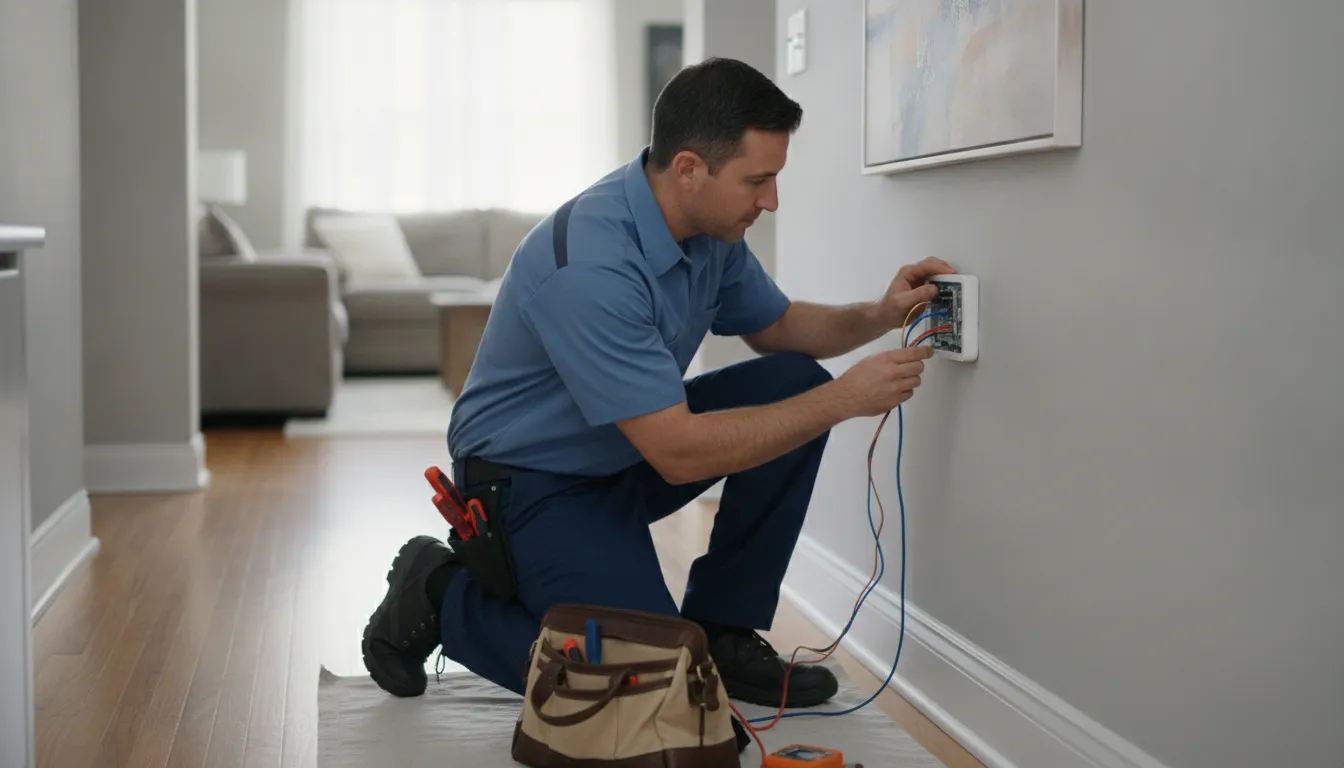
Many smart thermostats are designed for straightforward replacement, but the device still has to match the HVAC equipment, wiring, and electrical requirements in the home. Use these steps to decide whether the job is suitable for a general installer or should be handled by an experienced HVAC professional.
If your system is aging or you plan to replace equipment at the same time, review the SEER rating guide for Texas air conditioners and the full DFW installation guide. These resources help you pick systems that pair well with modern controls. Financing options can also make the upgrade easier to budget; learn more at our HVAC financing page.
The smart thermostat benefits texas hvac owners gain over time come from consistency rather than a single feature. A connected control that follows a realistic schedule, adjusts for occupancy, and reports equipment behavior helps a properly maintained system run more efficiently through successive summers and winters.
Energy savings compound when the schedule, temperature limits, and comfort settings stay close to the household’s actual routine. A thermostat that is rarely overridden avoids the wasted runtime that drives up a Texas electric bill even when the equipment is new and efficient.
Runtime history and trend alerts give owners an earlier signal when a system starts behaving differently, which supports the same preventative checks we recommend in our summer AC preparation guide. Used alongside professional maintenance, smart thermostat benefits texas hvac owners can expect a more comfortable, efficient home with fewer surprises.
Schedule service with Garland Heating and Air Conditioning for thermostat help you can trust.
A smart thermostat can automate temperature schedules, reduce unnecessary runtime while the home is empty, and give you remote control through a smartphone app. It can also track equipment use and temperature patterns, making it easier to identify comfort problems or inefficient operation, which is especially useful during long Texas cooling seasons.
Results depend on the home, equipment, settings, insulation, and how consistently the schedule is used. ENERGY STAR says smart thermostats can reduce annual heating and cooling energy consumption by around 10 to 15 percent. But that figure is not a guaranteed bill reduction for every household. A professional can help confirm whether the control is properly matched to the existing system.
They can, but compatibility matters. A variable-capacity system may require a thermostat that can communicate with its controls and support the equipment’s staging or modulation features. Before purchasing, check the HVAC manufacturer’s compatibility requirements and have an experienced technician verify the wiring, control board, and system configuration.
It may help reduce avoidable wear by limiting unnecessary operation and maintaining more consistent schedules, and diagnostic notifications can bring unusual behavior to your attention sooner. A thermostat cannot replace seasonal maintenance, airflow checks, or repairs, and it cannot prevent every equipment failure.
Prioritize reliable HVAC compatibility, adaptive scheduling, smartphone access, geofencing, equipment-use reporting, and alerts. If humidity control, zoning, or variable-speed equipment is part of your system, confirm that the thermostat supports those features before you commit.