If your HVAC system is making unusual noises, struggling to keep rooms comfortable, or switching on and off repeatedly, a few careful observations can help you choose the right next step.
Quick answer: Start with simple, safe checks such as the thermostat setting, air filter, and visible supply vents. Note when the symptom occurs and whether it affects one room or the whole building. Stop if you notice burning odors, smoke, sparking, or water near electrical components, and arrange professional help. Do not open sealed equipment or attempt electrical or refrigerant work.
“Not working right” can mean several different things. A system may run but deliver weak airflow, fail to reach the thermostat setting, make a new sound, or behave differently from room to room. The symptom is useful information, but it does not identify a cause by itself.
Notice whether the air feels weak at multiple supply vents or only in one area. If the whole home feels affected, record whether the equipment runs continuously, stops early, or does not start. If only one room is uncomfortable, check that its supply vent is open and not blocked by furniture or a curtain. Avoid changing ductwork or adjusting internal dampers unless you know how the system is designed.
Warm air during a cooling call or cool air during a heating call can have several explanations, including settings, operating mode, or an equipment issue. First confirm the thermostat is set to the intended mode and temperature. If the system still behaves unexpectedly, record what you observe rather than repeatedly changing settings.
A new rattle, buzz, squeal, or repeated click deserves attention, especially if it is getting louder or comes with poor performance. Note whether the sound starts when the system starts, continues while it runs, or occurs after it shuts off. A musty smell, visible water around the indoor equipment, or an unfamiliar burning odor also changes what to do next. Smoke, sparking, or a strong burning smell calls for stopping use and seeking prompt assistance.
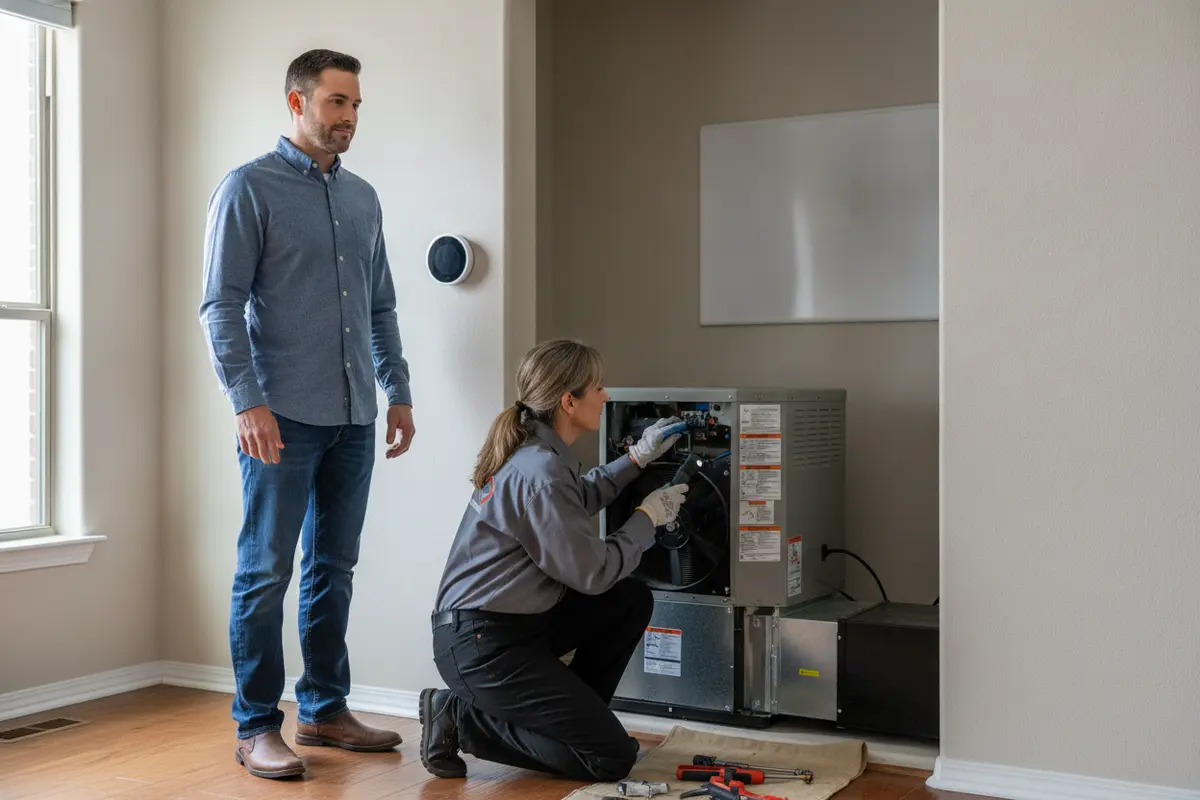
Keep checks external and simple. If a step requires removing an equipment panel, touching wiring, handling refrigerant, or reaching into a moving part, leave it to a qualified service professional. A short set of observations can make a service conversation more useful without putting you at risk.
Check that the thermostat is on and set to the correct mode: cooling, heating, or off. Compare the set temperature with the room temperature and note whether the display is blank or showing an alert. If your thermostat uses batteries, follow its user instructions for checking them. Do not repeatedly reset a breaker that trips; a repeated trip should be evaluated rather than treated as a routine fix.
If the equipment appears to have no power, look only at switches or controls you can safely identify and reach. Do not remove covers from electrical equipment. If you are unsure which switch controls the system, skip that check and tell the technician what you noticed.
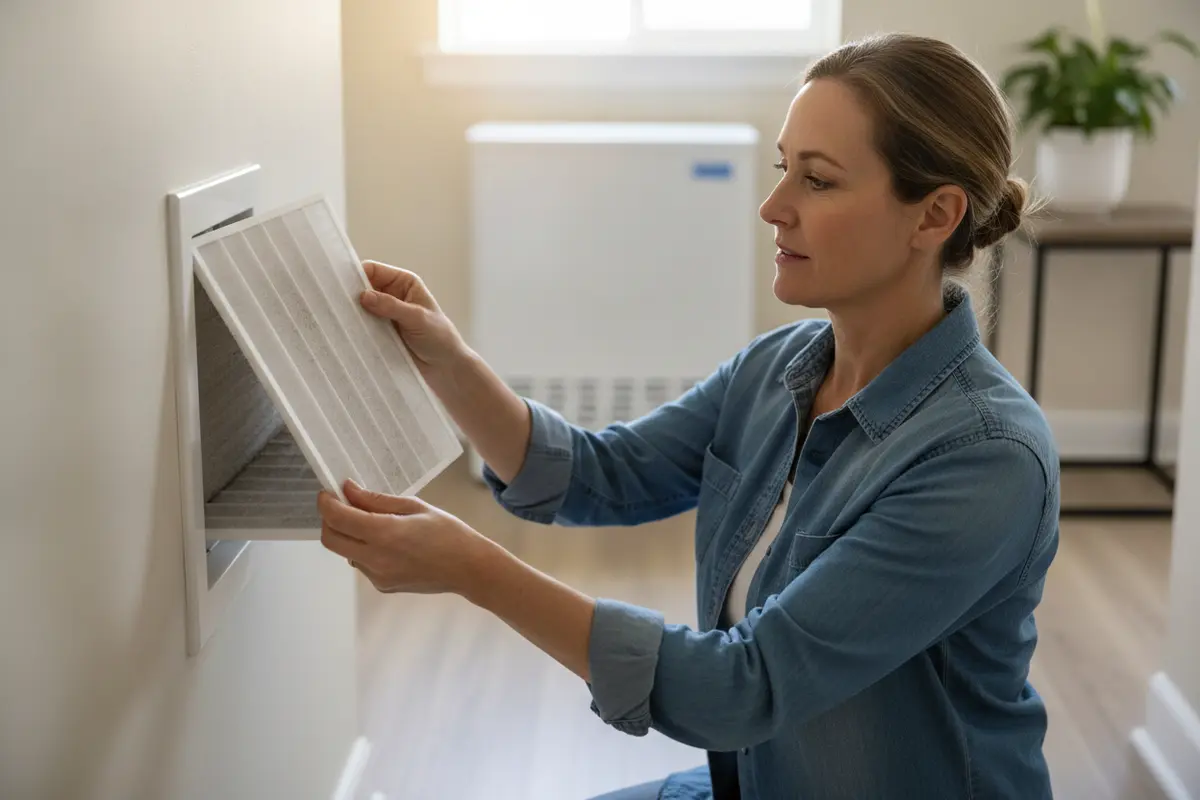
Follow the system or filter instructions to inspect an accessible air filter. If it is visibly loaded with dust, replace it only with the correct size and type specified for your equipment. A filter that does not fit can leave gaps or restrict airflow. Do not run the system without a required filter while waiting for service.
Make sure supply vents and return grilles are not covered by rugs, furniture, boxes, or curtains. Look for obvious obstructions, but do not put tools or hands inside a duct. If a filter looks clean and vents are open but airflow remains weak, record that result. Garland Heating and Air Conditioning also offers residential duct cleaning; an airflow symptom still needs evaluation before assuming cleaning is the right answer.
Basic observations are not a substitute for inspection. Stop using the equipment and seek prompt professional guidance if you see smoke or sparking, smell a strong burning odor, hear a severe new mechanical noise, or find water close to electrical components. If someone in the building feels unwell or there is another immediate safety concern, follow local emergency guidance.
For less urgent issues, arrange an evaluation when a symptom persists after the safe checks, returns repeatedly, or affects comfort throughout the home. The company provides AC repair and maintenance and heating system installation and replacement. For an equipment concern that may involve a heat pump, review the heat pump homeowner guide and request service when needed.
A reset may temporarily change what the equipment does without resolving the underlying issue. If a breaker trips again, or the same symptom returns after a restart, do not keep repeating the action. Likewise, avoid adding refrigerant, bypassing a safety control, or opening equipment compartments. Refrigerant and electrical work require specialized tools and training.
Maintenance checklists for unitary HVAC equipment include inspection items such as compressor operation and refrigerant lines, illustrating why internal system checks belong in a professional maintenance process rather than an improvised homeowner repair. See the Pacific Northwest National Laboratory unitary HVAC equipment checklist.
The table below is a triage aid, not a diagnosis. The same symptom can have more than one cause, and equipment design affects what a technician will inspect. Use the safest next step that fits what you can observe.
| What you notice | Safe observation | Practical next step |
|---|---|---|
| No response when calling for heating or cooling | Confirm thermostat mode and setpoint; note whether the display is blank or an alert appears | If the simple control check does not help, arrange service; do not repeatedly reset a tripping breaker |
| Weak airflow throughout the home | Inspect an accessible filter as instructed and check that vents and returns are unobstructed | Request an evaluation if airflow remains weak or the filter is not the clear issue |
| One room is uncomfortable | Check whether its vent is open and unobstructed; compare with other rooms | Share the room-by-room pattern with a technician rather than altering ductwork |
| New rattling, buzzing, or squealing | Record when the sound starts and whether it changes as the system runs | Arrange professional service, especially if noise worsens or comfort also declines |
| Water or unfamiliar odor near equipment | Keep clear of electrical components; note where and when you saw or smelled it | Stop use for smoke, sparking, or strong burning odor and seek prompt help |
| Frequent starts and stops | Note approximate run pattern, thermostat setting, and conditions when it occurs | Request an evaluation if the pattern repeats or the home cannot stay comfortable |
A concise description helps narrow down what to inspect first. You do not need to identify the failed part. Write down the symptom in ordinary language, when it began, and what changed around the same time, such as a thermostat adjustment or a room becoming difficult to heat or cool.
Photos of a thermostat display or visible water location may help explain what you observed, as long as taking them does not require approaching a hazard or opening equipment. Keep your notes factual: “the upstairs supply vent feels weaker than the downstairs vents” is more useful than guessing that a particular component has failed.
When you contact a service provider, lead with what the equipment is doing now. Say whether heating or cooling is unavailable, whether the symptom is limited to one zone, and whether it is getting worse. If the system still operates but comfort has declined, mention how long that has been happening and whether the issue returns every time it runs. If it has stopped completely, say that plainly. This helps distinguish a system that is operating with a performance concern from one that is not responding at all.
Be clear about anything unusual near the equipment. Report visible water, a new odor, or a repeated breaker trip, but do not touch wet electrical components or open a panel to investigate. For smoke, sparking, or a strong burning odor, prioritize safety rather than collecting more details. If you are responsible for a business location, explain which rooms or operations are affected and whether the equipment serves a special function, such as refrigeration. You can ask what information the service team needs and what to expect next; avoid guessing a repair or part based on an online symptom list.
Maintenance and repair address different needs. Maintenance is planned attention to the system; repair responds to a problem that has appeared. A recurring symptom should not be written off as a reminder to schedule routine maintenance. Describe the symptom and ask what evaluation is appropriate.
For routine care, Garland Heating and Air Conditioning offers HVAC maintenance information. A professional can check the equipment and discuss maintenance appropriate to its condition and type. Keep any service records and note if a symptom returns after a visit; that history can help guide the next conversation.
In a home, the key questions often include which rooms are affected and whether heating or cooling is needed. In a commercial building, record the spaces affected, operating schedule, and whether the issue disrupts a particular area or process. Do not assume that a commercial rooftop unit, refrigeration system, or residential split system shares the same troubleshooting steps.
Garland Heating and Air Conditioning serves residential and commercial customers across the Dallas-Fort Worth area, including light and heavy commercial AC service and commercial refrigeration. Provide the building type and system purpose when requesting help so the service conversation starts with useful context.
Explain the symptom, the checks already completed, and any safety concern. A service professional can then determine what inspection is appropriate. The exact work depends on the equipment and findings; an initial symptom alone cannot establish the cause or the scope of repair.
For a repair or replacement discussion, ask what the evaluation found, which options address the observed problem, and what is included in the proposed work. Pricing is quote-based and depends on the system and job. Contact Garland Heating and Air Conditioning for a customized quote rather than relying on a general online estimate.
Garland Heating and Air Conditioning is a family-owned company serving the Dallas-Fort Worth metroplex since 1952. Its documented services include residential and commercial heating and cooling, heat pump service, refrigeration, and specialty construction. You can check the DFW service area or contact the company to discuss the issue at your property.
A mild, brief sound may not indicate the same risk as a severe or worsening noise, but you cannot diagnose it by sound alone. Note when it occurs and arrange service if it persists, becomes louder, or accompanies poor performance. Stop using the equipment and seek prompt help if there is smoke, sparking, or a strong burning smell.
First inspect an accessible filter according to the equipment instructions. Replace it only if needed and with the correct size and type. Weak airflow can have other causes, so a clean filter does not rule out a problem. If airflow stays weak after checking the filter and vents, request an evaluation.
Room-to-room comfort differences can have several explanations, and the pattern alone does not identify a failed part. Check that the room’s vent is open and unobstructed, then note how it compares with other rooms and when the difference occurs. Share that description with a technician instead of modifying ductwork yourself.
A restart may change the system’s immediate behavior but does not prove the issue is resolved. If the symptom returns or a breaker trips again, stop repeating resets and arrange professional help. Record what happened before and after the restart.
Check only the thermostat, accessible filter, and visible vents if it is safe to do so. Record the symptom and stop when troubleshooting would involve electrical parts, refrigerant, or opening equipment. If the problem persists, affects comfort, or raises a safety concern, contact Garland Heating and Air Conditioning for guidance.
A clear symptom record and a safe, timely service request are practical ways to protect comfort while leaving equipment diagnosis to a professional.