An air duct cleaning cost calculator can help you organize the details that shape a quote, but it cannot inspect your home or set a reliable price by itself.
Request a customized duct-cleaning quote
In brief: Start with the home’s size and layout, the number of supply and return openings, access to the ductwork, and the specific cleaning scope. Use those details to ask for a tailored quote. Garland Heating and Air Conditioning uses professional equipment to clean accessible residential supply and return ductwork; a quote should clarify what is included for your home.
Think of a calculator as a planning checklist rather than a promise of what a contractor will charge. Online tools may ask for basic property information, but they cannot see the condition of your ductwork, confirm which sections are accessible, or determine the work needed on site.
Before contacting a provider, write down the home’s approximate conditioned area, number of levels, and any known details about the duct system. Note whether you have recently moved in, completed renovation work, added a pet, or noticed visible dust around vents. These details help frame the conversation, but they do not prove that the ducts need cleaning or establish the scope of service.
Published cost estimates can differ because they may assume different property sizes and service scopes. One online reference describes a broad average range for standard duct cleaning, but it is not a Garland-area quote and should not be treated as the price for a particular home (general duct work cleaning cost reference). For a useful local budget, ask for a customized quote based on the property and the work proposed.
A number without a defined scope is hard to compare. Ask whether the estimate covers accessible supply and return ductwork, what access is needed, and whether any separate work is being recommended. If an online calculator gives a result, save the inputs and use them as questions for the provider rather than assuming the result is binding.
A calculator can help you spot which information a provider may ask for. It can also help you notice when two estimates may be based on different assumptions. For instance, one tool might use floor area while another asks for vent counts. If the tool does not explain its assumptions, it cannot tell you whether its estimate includes every accessible section you expect.
It also cannot confirm the condition of hidden ductwork, determine which access points are usable, or diagnose an airflow concern. Those questions require a discussion about the property and proposed service. Think of the calculator output as a starting point for a more specific conversation, not a decision about whether cleaning is needed.
There is no single home detail that determines the quote. A provider needs to understand how much accessible ductwork is involved and what the requested service includes. The following factors are useful to gather before requesting an estimate.
A larger or multi-level home may have a different duct layout from a compact single-story home. Floor area is a starting point, not a direct measure of duct length or accessibility. If you know where the air handler, supply registers, and return grilles are located, make a simple note. You do not need to remove panels or enter unsafe spaces to collect this information.
Count the visible registers and return grilles, if practical, and tell the provider that the count is approximate. A return grille is not the same thing as a supply register, so keep the two counts separate. Photos of the openings and their locations can help explain the layout, especially if rooms are closed off or vents are behind furniture.
Let the provider know about attic or crawlspace access, obstructed vents, recent remodeling, or areas that are difficult to reach. Mention what you have actually noticed—such as debris at a register or a musty odor—without assuming the cause. If you want to learn how to assess your home’s indoor air concerns more broadly, see this guide to checking air quality at home.

Use a simple three-step process. First, enter only details you can reasonably verify. If you do not know the duct layout or exact vent count, mark it as an estimate instead of guessing with false precision. Second, save the calculator’s assumptions, including whether it asks about the home’s size, floors, or number of openings. Third, share those assumptions when you request a local quote and ask which ones need to be confirmed.
For example, two homeowners may enter the same approximate floor area but have different layouts, access conditions, or numbers of supply and return openings. The result may not account for those differences. A tool is most helpful when it shows you what it does and does not include. If it provides one number without explaining its assumptions, treat that number as a rough prompt for questions, not a service commitment.
Also check whether the calculator distinguishes duct cleaning from other HVAC work. A quote for cleaning should describe the cleaning scope. If a provider separately recommends repair, equipment maintenance, or another service, ask for those items to be explained separately so you can make an informed decision about each one.
A few minutes of preparation can make a quote request clearer. You can use the same checklist for a home in Garland, Richardson, Plano, or another part of the Dallas–Fort Worth area.
Do not dismantle ductwork or climb into an attic or crawlspace to complete the checklist. A safe, approximate description is more useful than risking injury or disturbing material you cannot identify. For a general explanation of what the service involves, read how professional duct cleaning works.
Keep the first message concise and factual. You might say: “Our home is about [approximate area] square feet, has [number] floors, and we counted about [number] supply registers and [number] return grilles. We are considering cleaning because [observation]. Could you explain what information you need to prepare a quote and which accessible duct sections it would include?” This gives a provider a useful starting point without presenting a guess as a confirmed measurement.
If you do not know an answer, say so. A blank or approximate detail is better than a precise number that you cannot verify. You can also mention whether the home has an addition or a room that does not seem to match the rest of the layout. Ask whether that affects the information needed; do not assume that a room’s comfort issue is caused by duct condition.
Compare the proposed scope, not just the amount at the bottom of the page. Two estimates may not describe the same work. If one provider offers a much lower number, ask what areas are included and whether the quote is based on an inspection or only a short online form.
| Quote detail | What to confirm | Why it matters |
|---|---|---|
| Areas included | Does the scope identify accessible supply and return ductwork? | Helps you understand which parts of the system the estimate covers. |
| Property assumptions | What home size, layout, and opening count did the provider use? | Reveals whether the estimate reflects your home or a generic example. |
| Access requirements | What areas must be accessible, and should you move furniture or clear a path? | Sets practical expectations before a visit. |
| Additional recommendations | Are any suggested repairs or other services separate from duct cleaning? | Keeps the cleaning scope distinct from other proposed work. |
| Quote process | Is the amount customized to the property, and what could change it? | Clarifies whether the figure is preliminary or based on the stated scope. |
| Scheduling | What appointment window and preparation are expected? | Helps you plan access and household routines. |
Useful questions include: “Which duct sections are included?” “Is this estimate based on the details I provided or a property assessment?” and “Will you explain any additional work separately?” Ask for the scope and quote in writing so you can review them later. If the property is outside the immediate Garland area, check the company’s Dallas–Fort Worth service area before requesting scheduling.
Put the estimates side by side and compare the same items: which duct sections are covered, what the provider assumes about your home, what access is needed, and what additional work is excluded or listed separately. Then ask each provider to clarify any blank or vague line. A lower total may reflect a narrower scope; a higher total may include items that are not part of the other proposal. The written scope lets you see whether the amounts are truly comparable.
Do not feel you must choose from a calculator number alone. Ask what might change the quote after a closer review and how that change would be discussed before work begins. If the explanation is unclear, request plain-language clarification. The goal is to understand the work you are considering, not to make every estimate look identical.
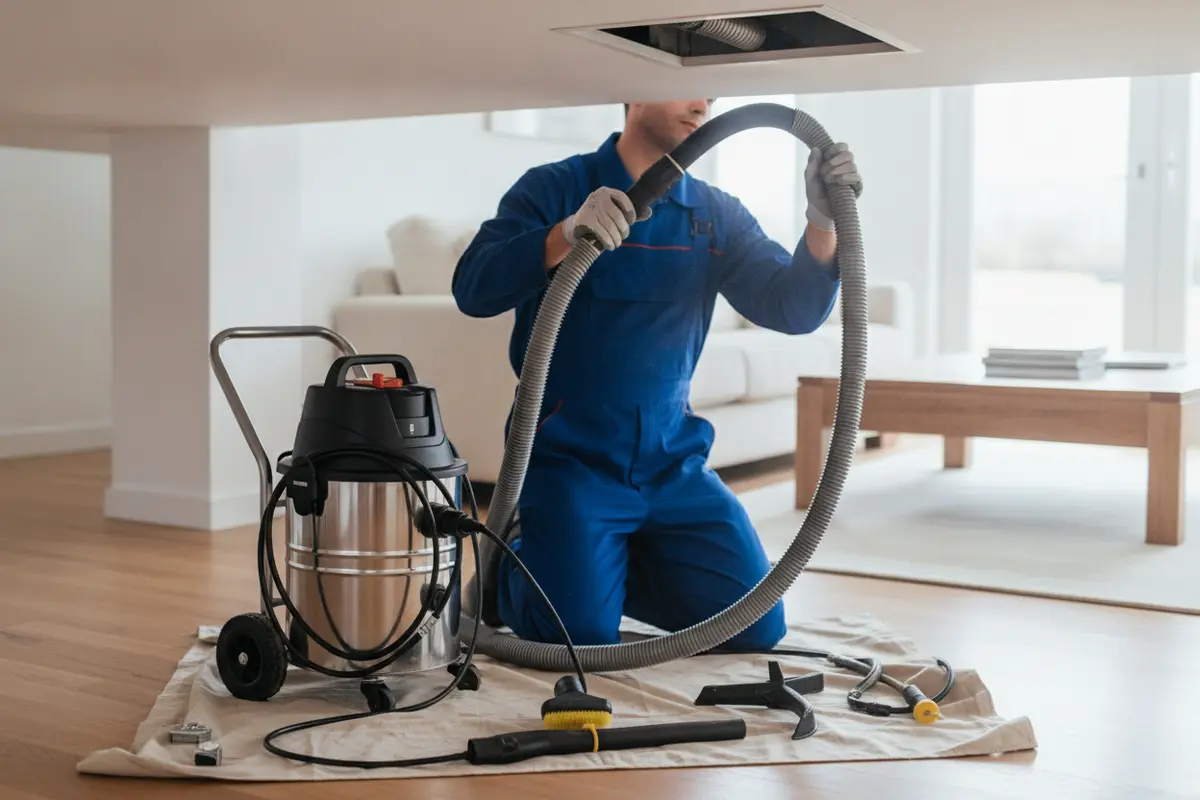
The documented residential service from Garland Heating and Air Conditioning uses professional duct-cleaning equipment to clean accessible supply and return ductwork. The word “accessible” matters: the provider should explain which areas can be reached and what the planned service covers. Ask about your specific layout rather than assuming every section of a system is included.
Duct cleaning may be considered by homeowners seeking to reduce dust circulation, remove pet hair, dander, allergens, and debris, improve indoor air quality and airflow, support more efficient heating and cooling operation, or keep a home fresher and cleaner. Results depend on the conditions in the home and the work performed. Cleaning is not a substitute for diagnosing an HVAC problem or maintaining the equipment.
Ask the provider to identify the cleaning task and any other recommendation as separate items. For example, a concern about a room that feels warmer than others can be described as an observation; it does not establish that cleaning will solve the issue. Keeping the quote organized helps you understand what is included and decide what questions to ask about other work.
If airflow is uneven or equipment is not heating or cooling as expected, the cause may not be inside the ducts. For broader context on HVAC upkeep, review this homeowner’s HVAC maintenance guide. For general background on the relationship between indoor air and comfort, see why indoor air quality matters.
An online calculator cannot verify access or inspect visible conditions. Ask the provider what information is enough for an initial quote and whether a property assessment is needed before confirming the scope. An in-person review can help clarify the accessible portions of the ductwork, the expected work, and any limitations that matter for your home.
Tell the technician what you see and when it occurs. For instance, describe where dust appears, whether a concern began after renovation, or which rooms seem to have different airflow. Avoid concluding that dirty ducts caused a particular symptom. A qualified HVAC professional can consider the system and the reported conditions before recommending a next step.
If your system also needs repair or maintenance, ask whether that is a separate service from duct cleaning. Garland Heating and Air Conditioning offers several HVAC services; use the appropriate service route rather than treating duct cleaning as a remedy for every comfort issue. If a cooling problem is the main concern, review the company’s AC repair and maintenance service information.
After confirming the quote and scope, ask what the household should do before the technician arrives. Preparation can be simple, but it depends on where the registers, returns, and equipment are located.
Do not attempt to clean hidden duct sections yourself or use household tools inside the system. Professional equipment and a clear scope are the safer way to address the service. If you are considering other home comfort work as well, you can read the company’s HVAC system guide to understand the major parts of a typical system.
Before work starts, review the agreed scope and mention any change in access since the quote was prepared. If a room is blocked, an opening is not where you expected, or a concern has changed, bring it up before the technician proceeds. Ask how any proposed change to the work will be explained. This short check helps keep the service aligned with what you understood when you requested the quote.
Gather your property details, count visible supply and return openings if convenient, and describe your reason for considering cleaning. Then ask a provider to explain the scope for accessible ductwork and give you a quote based on your home. Garland Heating and Air Conditioning is a family-owned HVAC company serving the Dallas–Fort Worth metroplex since 1952. For a service question or quote request, contact the team through its contact page; the company’s phone number is (972) 278-3500.
Learn about residential duct cleaning
Use an air duct cleaning cost calculator to organize questions, not to treat an unverified figure as a final quote. Property details and a clearly stated service scope make it easier to understand what a provider is proposing. For DFW homeowners, a customized quote is the practical next step when you are ready to discuss accessible supply and return ductwork.
No. A calculator can help collect basic details, but it cannot verify the home’s duct layout, accessibility, or service scope. Ask for a customized quote based on the property and the work proposed.
Use the information the tool requests, such as approximate home size, number of floors, or vent count. Keep the figures approximate if you are unsure, and share the same details with the provider so the assumptions can be checked.
No. Duct cleaning covers the accessible ductwork included in the agreed scope. Indoor air concerns and uneven airflow can have different causes, so describe the symptoms and ask whether another evaluation is appropriate.
Approximate home size, number of levels, separate counts of supply registers and return grilles, access notes, and the reason you are considering service are useful starting points. The provider can explain whether more information or an assessment is needed.
Contact Garland Heating and Air Conditioning with your property details and questions about the proposed scope. The team can discuss service availability and a customized quote for your home.
A clear scope and property-specific quote are more useful than a calculator result alone, so gather the details you know and ask questions before scheduling.