If your air conditioner hums but will not start, the contactor may be one part a technician needs to check.
Before choosing AC contactor replacement, Dallas-Fort Worth homeowners should know what the part does, what symptoms can point to trouble, and why diagnosis matters. A contactor is an electrical switch inside the outdoor unit; a qualified HVAC technician can test it, check related components, and explain whether replacement or another repair is appropriate. Do not open the unit or attempt the electrical work yourself.
A central air conditioner has indoor and outdoor equipment that must work together. When the thermostat calls for cooling, control signals tell the system to run. In the outdoor condenser, the contactor acts as a switch that allows electrical power to reach components such as the compressor and condenser fan motor. When the call for cooling ends, the switch should release.
Because the contactor is part of an electrical circuit, the issue cannot be confirmed from a sound or symptom alone. A unit that does not start may have a problem in the thermostat or control circuit, a safety device, wiring, a capacitor, a motor, or another component. A technician checks the system rather than treating every no-start condition as a contactor failure.
Contactor contacts can wear, pit, or become damaged over time. Dust, moisture, heat, insects, and electrical stress can also contribute to problems around outdoor equipment. These are possibilities, not proof that the contactor is the cause in a particular home. A technician evaluates the part and the circuit under safe conditions, then explains the findings.
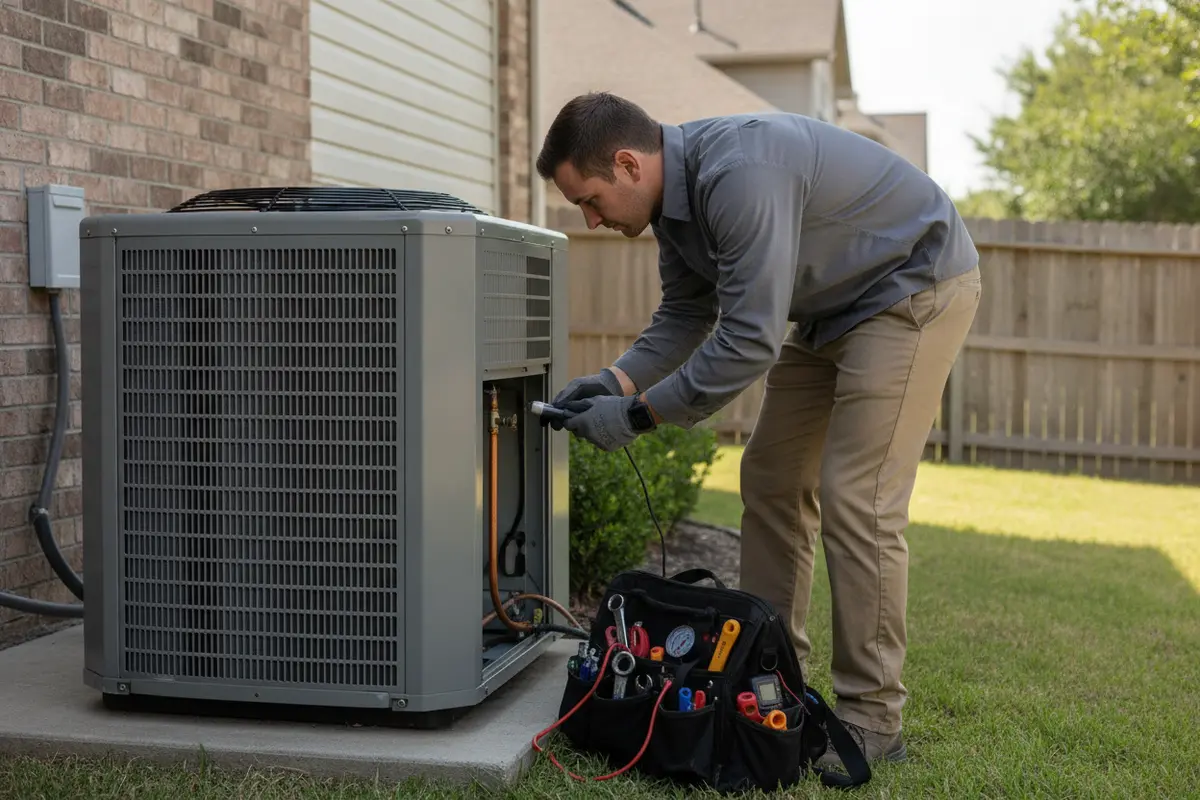
If the indoor blower runs but the outdoor unit does not, or the system makes a humming sound without normal operation, an electrical or control problem may be present. A contactor is one possible cause, but it is not the only one. Thermostat settings, a tripped breaker, a faulty capacitor, a motor issue, or a separate control fault can create similar symptoms.
First, note what is happening without removing any panels. Is the thermostat calling for cooling? Is the indoor fan running? Is the outdoor unit silent, humming, or starting and stopping? Has a breaker tripped? These observations can help you describe the situation when arranging AC unit repair, but they do not replace testing.
A contactor that does not release properly can be associated with an outdoor unit that continues running after the thermostat is no longer calling for cooling. Buzzing, chattering, or clicking near the unit can also signal an electrical issue. However, sounds may come from other components, and a running fan or compressor can create serious hazards if someone reaches into the equipment.
If the system continues running when it should be off, or you hear repeated electrical chatter, stop trying to cycle it repeatedly. If there is smoke, a burning smell, visible damage, or an electrical hazard, keep away from the equipment and seek appropriate help. For general information about electrical hazards and consumer safety, consult the U.S. Consumer Product Safety Commission. Do not touch exposed wires or internal parts.
Similar symptoms can have different causes, and more than one problem can exist at once. Replacing a contactor without finding the reason it failed can leave an underlying issue unresolved. That is why a sound, a visual guess, or an online symptom checklist should not be used to decide which electrical part to replace.
A technician may start by asking when the issue began, what the thermostat and indoor equipment are doing, and whether the system has stopped cooling entirely or behaves intermittently. They can then inspect the relevant equipment and controls, following appropriate safety practices. For background on the parts that make up a home system, see Garland Heating and Air Conditioning’s HVAC system guide.
Diagnosis may include checking the contactor’s condition and operation, the control signal, electrical connections, and other components that could produce the same symptom. The exact checks depend on what the technician finds. A homeowner should not remove electrical covers, bridge terminals, or handle wiring as a test.
It can help to give the technician a short timeline: when the cooling problem began, whether it started suddenly, and whether it happens every time or only occasionally. Mention any recent service, storm, unusual odor, or change in how the system starts, but do not assume that one event caused the failure. If the equipment runs sometimes and fails at other times, say so; intermittent symptoms can be important context. Share the model information from an exterior label only if it is easy to read without opening equipment or approaching a hazard. The technician can use those details alongside testing to narrow the possibilities and explain the recommended repair in plain language.
Before approving work, ask the technician to identify the failed part, describe what evidence supports that conclusion, and explain whether another component or circuit condition also needs attention. Ask what work is included and whether the repair restores normal operation or whether further diagnosis may be needed. A clear explanation helps you compare options without assuming the contactor is automatically the only repair required.
Garland Heating and Air Conditioning provides AC repair and maintenance service in its DFW service area. You can review the company’s AC repair and maintenance service information and discuss the specific symptoms with the service team.
If testing shows the contactor is damaged, worn, or not switching as intended, the technician may recommend replacement. The recommendation should account for the condition of the part and any related electrical findings. Ask whether the existing wiring and connections appear sound and whether the system has a separate issue that could affect the new component.
There is no dependable rule that says a contactor should be replaced after a certain number of years. Equipment use, operating conditions, and component condition vary. A system inspection is more useful than replacing parts on a calendar alone.
If the contactor tests appropriately, the technician may continue looking at other causes. A control signal problem, capacitor, motor, safety control, thermostat, wiring connection, or power supply issue can affect operation. The correct next step depends on the results of the checks, not on the first symptom noticed.
If the equipment has several age-related or recurring problems, ask the technician to explain the repair options and what they mean for the system as a whole. Garland’s HVAC repair service guide offers general context for discussing a service visit; it does not replace an on-site assessment.
Before contacting a service provider, record when the problem occurs and what the thermostat, indoor blower, and outdoor unit appear to do. Note whether the system cools at all, whether the issue is constant or intermittent, and whether you noticed an unusual sound or odor. If a breaker has tripped, mention it. Do not repeatedly reset a breaker or keep restarting equipment that appears damaged.
Clear leaves or other loose obstructions around the outside of the condenser only if they can be removed without touching the unit, wiring, or fan. Keep children and pets away from damaged equipment. Do not spray water into electrical compartments or place tools through the grille.
In the Dallas-Fort Worth area, a cooling failure can become uncomfortable quickly during hot weather. When booking, describe whether anyone in the home has a health or safety concern related to indoor temperatures, and share any access instructions. Ask about service availability and the next practical step. Garland Heating and Air Conditioning has served the DFW area since 1952 and offers residential HVAC repair; scheduling and the appropriate response depend on the situation.
If the issue is part of a larger pattern of inconsistent cooling or repeated repairs, mention that history. A technician may need to assess the broader system rather than focus on the contactor alone. For routine care ideas, see the company’s HVAC maintenance guide.
Prices and repair scope depend on the diagnosis, the equipment, and the work required. Garland Heating and Air Conditioning provides quote-based service; contact the company for a customized quote rather than relying on a generic online figure. When comparing proposals, look for a clear diagnosis and written description of the work, not just a part name.
| What to compare | Questions to ask | Why it matters |
|---|---|---|
| Diagnosis | What test or observation indicates the contactor is faulty? | Similar symptoms can come from other electrical or control issues. |
| Work scope | Does the proposal cover the contactor only, or other identified work too? | You can understand what the quoted work does and does not address. |
| Related findings | Were wiring, connections, or associated components checked? | A related issue may affect system operation or the repair plan. |
| Price and terms | What is the customized quote, and what work is included? | Quote-based details let you compare like with like without assuming a standard price. |
| Next steps | How will operation be checked after the repair, and what if the symptom remains? | A clear follow-up plan sets expectations if further diagnosis is needed. |
To prepare useful questions for a service visit, Garland’s guide to hiring an AC repair technician can help you think through communication and repair explanations. A second opinion may also be reasonable when the diagnosis or scope is unclear, especially if the proposal involves more than one repair.
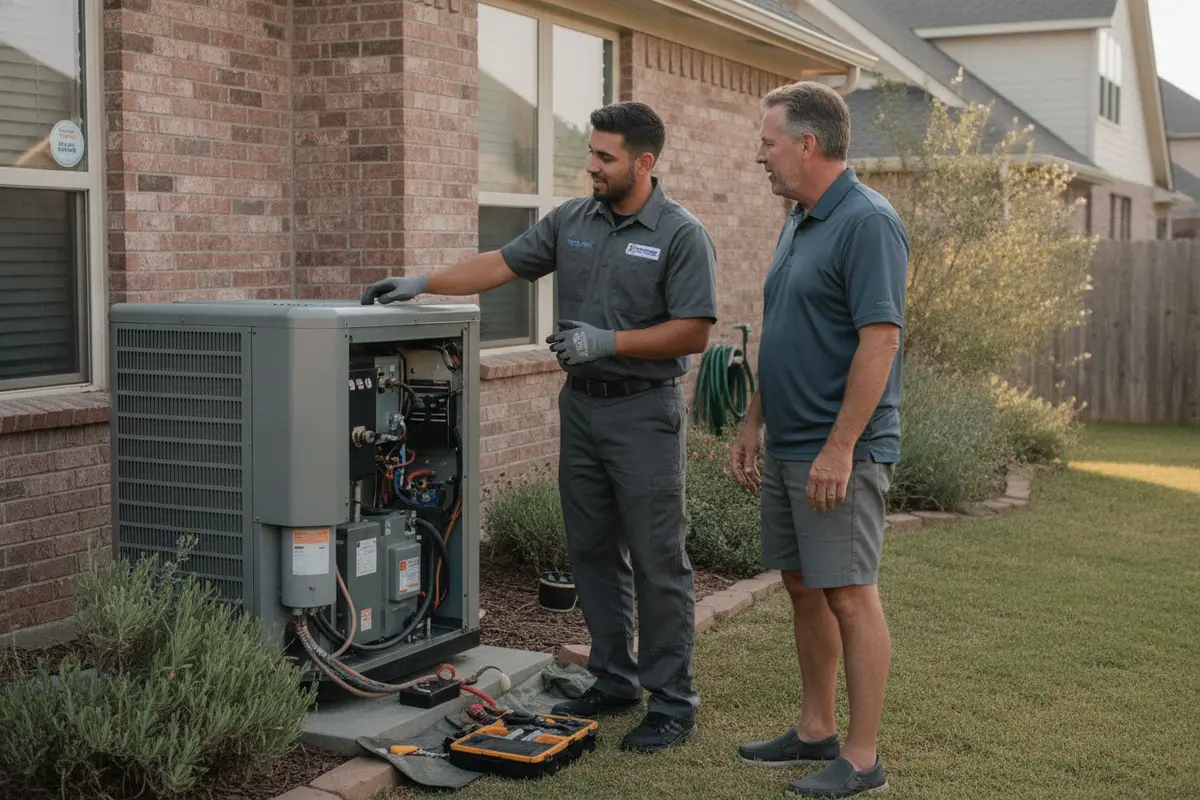
No. The contactor sits inside equipment that uses electrical power, and nearby components may remain hazardous even when the thermostat is off. Turning off a wall control is not the same as safely isolating and verifying the equipment’s electrical supply. A wrong connection or an unsafe test can injure someone or damage equipment.
Leave electrical diagnosis and component replacement to a qualified HVAC professional. Do not remove the condenser panel, touch the contactor, use a tool to press or bridge its contacts, or try to make the outdoor fan start by hand. If you are unsure whether the unit is safe, stay clear and arrange professional help.
You can check that the thermostat is set to cooling and that the set point is below the room temperature. You can look at the thermostat display and note whether the indoor fan appears to run. You can also check for obvious external damage from a safe distance. If a breaker trips again after a reset, do not keep resetting it. These observations are useful to share, but they are not a substitute for an electrical diagnosis.
Contact Garland Heating and Air Conditioning to discuss AC service
Visible wear or damage may be a clue, but appearance alone cannot confirm the cause of a system problem. A technician should test the part and relevant circuit safely.
No. Replacement helps when diagnosis confirms the contactor is the problem, but the system may have another fault as well. The technician can explain what was found and whether additional work is needed.
There is no single price that applies to every system or service visit. The diagnosis, part, and scope of work affect the quote. Contact Garland Heating and Air Conditioning for a customized quote based on your equipment and findings.
Do not reach into the outdoor unit or try to force a component to stop. If the system will not shut off or you notice smoke, a burning smell, or visible damage, keep a safe distance and seek professional assistance promptly.
Write down what the system is doing, avoid opening or touching the outdoor unit, and arrange an evaluation if the problem continues. Garland Heating and Air Conditioning is a family-owned HVAC provider serving Dallas-Fort Worth since 1952; a technician can determine whether contactor replacement is appropriate or another repair is needed. A clear diagnosis is the best starting point for choosing the right next step.