When a cooler cannot hold its temperature, the problem can affect stored products and daily operations. Understanding what commercial refrigeration is—and how its equipment works—helps a business owner choose sensible next steps.
Request commercial refrigeration service
In brief: Commercial refrigeration is the equipment and system used by businesses to keep products cold or frozen. It includes refrigerators, freezers, display cases, walk-in coolers, and the components that remove heat and control temperature. If a unit is warming, icing up, cycling unusually, or making unfamiliar sounds, protect temperature-sensitive products, check only safe basics, and arrange a qualified assessment when the issue persists.
Commercial refrigeration describes cold-storage equipment used in business settings. Restaurants, grocery stores, convenience stores, food producers, and other operations may depend on refrigeration to keep ingredients, beverages, or other temperature-sensitive goods within their required storage conditions. The exact equipment depends on what is stored, how often staff access it, and the space available.
A commercial system is more than a cold cabinet. In a typical vapor-compression setup, refrigerant circulates through components that absorb heat from the refrigerated space and release it elsewhere. The evaporator absorbs heat inside the cabinet or room; the compressor moves refrigerant through the circuit; the condenser releases heat; and an expansion device helps regulate refrigerant flow. Controls and sensors help the unit maintain its operating conditions.
Commercial systems vary in size and configuration. A compact reach-in may serve a small kitchen station, while a walk-in cooler or freezer serves a larger inventory. Larger installations may use multiple evaporators or refrigeration circuits. Businesses should follow the equipment manufacturer’s instructions and applicable food-safety requirements for their products and operation.
Commercial equipment is designed around business use: more frequent door openings, different storage capacity, and the demands of a working environment. Some equipment is built for display, some for bulk cold storage, and some for rapid access during service. These differences mean a household appliance troubleshooting routine may not apply to a commercial unit. A business may also have more at stake if cooling is lost because products, service schedules, and compliance procedures can all be affected.
Refrigeration does not create cold in the way many people picture it. It moves heat from the refrigerated area to another location. Airflow across the evaporator and condenser, clean heat-transfer surfaces, proper door closure, and functioning controls all contribute to stable operation. If a component is obstructed, a door is left open, or a control is not sensing correctly, the equipment may struggle to maintain temperature.
Choosing the right type of equipment starts with the task it must perform. A business storing bulk ingredients has different needs from a retailer displaying chilled drinks. The table below compares common categories at a high level; actual design and operating conditions vary by model and installation.
| Equipment type | Typical use | What to monitor |
|---|---|---|
| Reach-in refrigerator or freezer | Frequently accessed ingredients or packaged goods | Door seals, airflow, interior temperature, and unusual cycling |
| Walk-in cooler or freezer | Bulk storage with staff entry | Door closure, interior temperature, frost, and clear airflow |
| Display case | Chilled products visible to customers | Air curtains or vents, loading pattern, and temperature consistency |
| Under-counter unit | Cold storage close to a preparation station | Ventilation around the unit and frequent door or drawer use |
| Specialty or process refrigeration | Specific products or business processes | Manufacturer operating requirements and application-specific controls |
These are broad categories, not a sizing or selection specification. Capacity, ambient conditions, product loading, ventilation, and the manufacturer’s requirements can all influence performance. When planning new equipment or a replacement, discuss the actual use of the space with a qualified provider rather than choosing by cabinet size alone. Garland Heating and Air Conditioning provides commercial refrigeration services in its service offering.
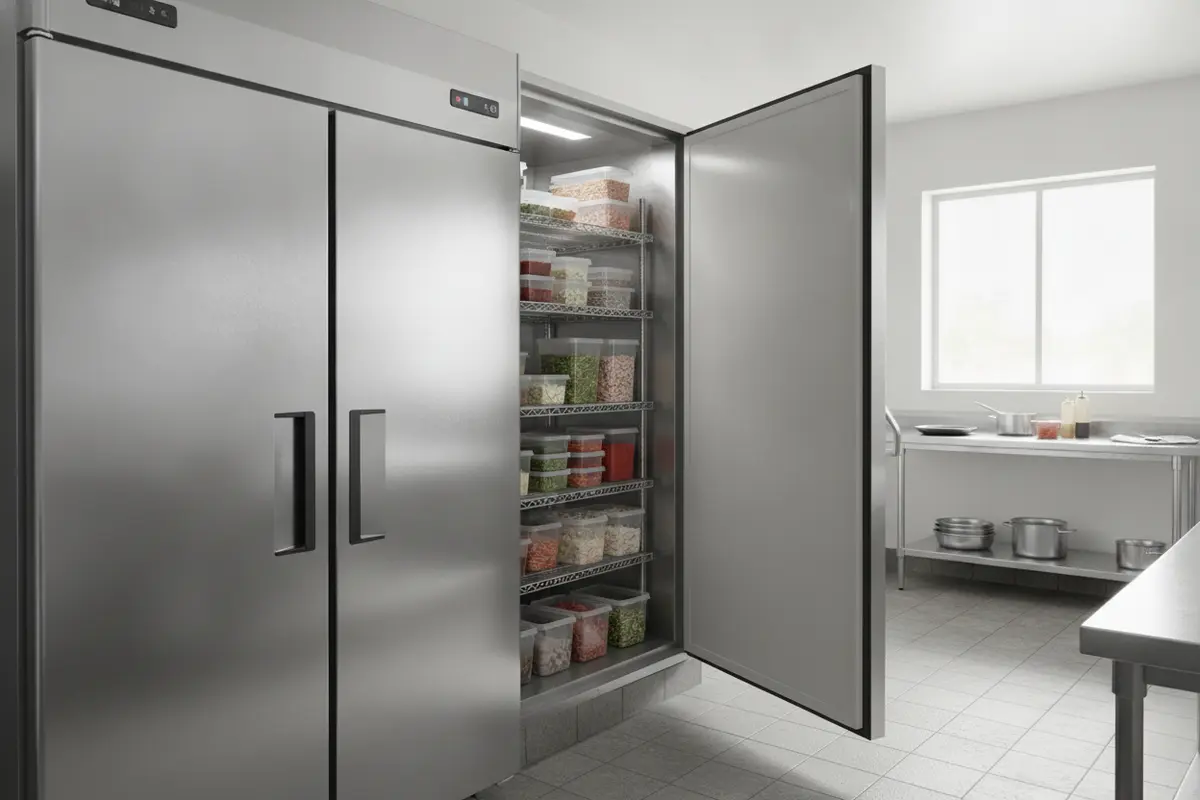
A single observation does not identify the failed part. It can, however, help you describe the issue and decide whether to act promptly. Watch for changes in the product or cabinet temperature, the way the unit runs, and visible conditions around the equipment.
If a thermometer or the unit’s display shows a sustained change, confirm the reading using the method recommended for that equipment. Check whether doors are fully closed and whether product has been loaded in a way that blocks vents. Do not assume that a display reading alone tells the whole story; record the reading, time, and any pattern you observe. If product safety may be at risk, follow your business’s food-safety plan and applicable requirements while arranging service.
Some frost can occur in normal operation, but heavy ice buildup, recurring frost, or water pooling deserves attention. Possible causes can include airflow restrictions, door leakage, drainage concerns, defrost issues, or other system faults. Avoid chipping ice with sharp tools or using heat sources that could damage the equipment. Note where the ice or water appears and whether it returns after routine, safe cleanup.
A unit that runs longer than usual may be responding to heat entering the cabinet, a heavy product load, restricted airflow, or an equipment problem. Clicking, rattling, or a new vibration can also be useful clues, but sound alone cannot establish the cause. Keep staff away from exposed electrical or mechanical components and do not remove access panels unless qualified to do so.
Odors may come from spoiled products, drainage, or another source; do not treat them as a diagnostic result. If you see damaged wiring, a leaking liquid, smoke, or another immediate hazard, keep people clear and follow your site’s emergency procedures. Refrigerant circuits and electrical components require trained handling.
Basic observations can help distinguish a simple operating condition from a persistent problem. Keep checks external and within the manufacturer’s operating instructions. If you are uncertain whether a step is safe, skip it and contact a qualified technician.
Do not handle refrigerant, bypass safety controls, work on live electrical parts, or dismantle the equipment. Commercial refrigeration troubleshooting can involve electrical, pressure, and temperature hazards. A professional can inspect the equipment and determine whether a repair or a different next step is appropriate.
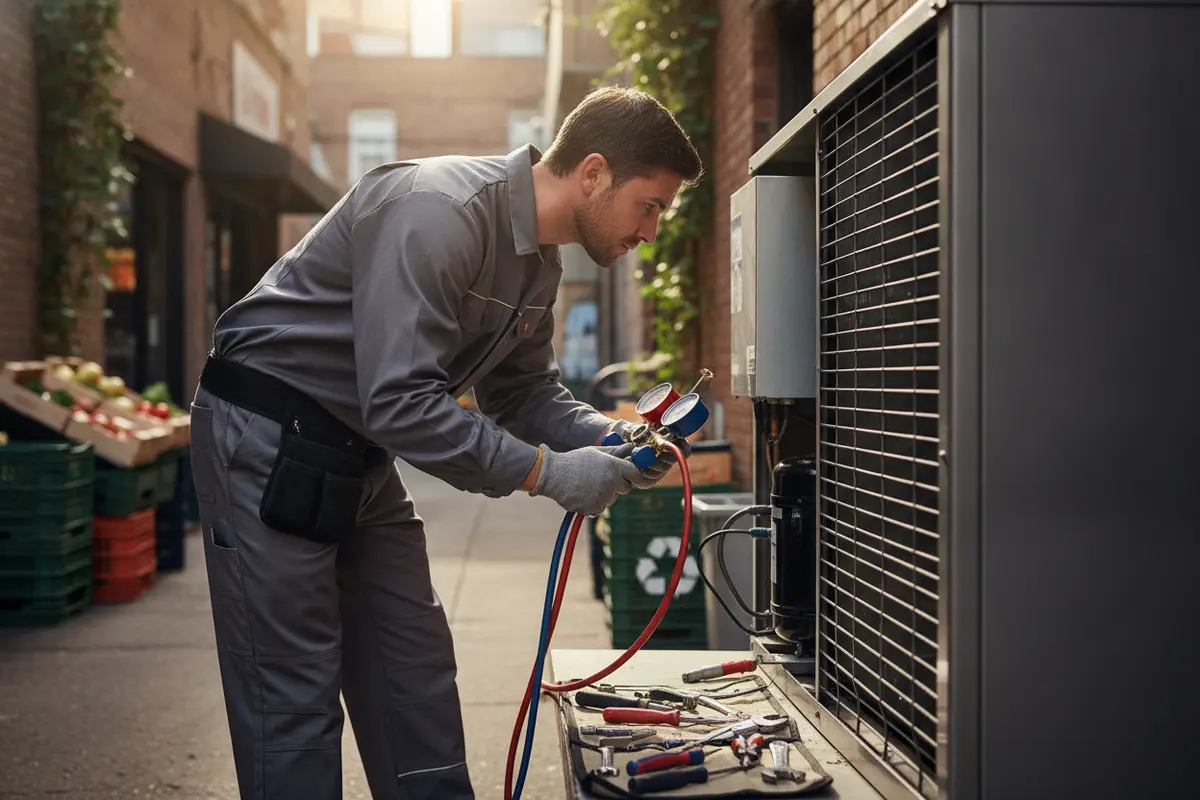
A clear description makes the service conversation more useful. You do not need to identify the failed component. Gather practical details that show what the equipment is doing and how the issue affects the business.
For product concerns, use your established procedures rather than relying on an HVAC service visit as a substitute for food-safety decisions. Keep a record of actions already taken, and tell the provider if there is an immediate operational or safety concern. Garland Heating and Air Conditioning serves the Dallas-Fort Worth area; its service-area information can help you check regional coverage.
Good operating habits do not replace maintenance or repair, but they can reduce preventable stress and make issues easier to spot. Follow the specific equipment manual because cleaning procedures, clearances, and maintenance intervals differ across models.
Limit unnecessary door-open time during busy periods and close doors promptly after loading or retrieving products. Keep vents clear and arrange stored items so air can circulate as designed. Avoid overloading shelves or blocking return openings. If a door does not close consistently, report it rather than relying on a workaround.
Use the monitoring routine established for your operation. A log can capture readings, times, and unusual events, making trends easier to recognize. A single reading is less informative than a pattern showing when a problem starts, whether it recurs, and how the equipment responds after normal operating changes.
Dust and debris around air paths can interfere with heat transfer, but the correct cleaning method depends on the design. Use only the manufacturer’s instructions and do not spray electrical parts or bend delicate fins. For service beyond routine operator cleaning, have a qualified technician assess the unit. The U.S. Department of Energy describes energy conservation standards for commercial refrigeration equipment; its commercial refrigeration equipment resource provides relevant background on the equipment category.
Keep the area around equipment orderly and avoid storing supplies where they block ventilation or access. Report a persistent change in room temperature, a damaged door, or repeated water accumulation. These observations do not prove a refrigeration fault, but they give service personnel useful context.
Arrange professional service when the unit cannot maintain the operating conditions your business requires, when the same concern returns, or when the cause is not an obvious safe operating issue. Seek prompt help for a rising temperature, persistent icing, repeated alarms, a substantial change in operation, or a suspected electrical or refrigerant concern. Follow your own emergency and product-protection procedures while waiting.
Do not delay simply because the equipment still feels cool. A system can be running while its performance is declining. Conversely, a brief fluctuation after a door has been open or after loading does not by itself prove a component failure. A technician can evaluate the full operating picture, inspect relevant components, and explain the recommended repair or other next step.
Garland Heating and Air Conditioning offers commercial refrigeration service as part of its documented capabilities. The company has served the Dallas-Fort Worth area since 1952 and handles residential, commercial, and refrigeration work. For a service discussion, use the contact page to share the equipment type and symptoms. Service pricing is quote-based; request a customized quote for the specific issue.
If you are reviewing a proposed repair, ask for a plain explanation of the observed problem, the work recommended, and any important assumptions. A useful discussion connects the symptoms to inspection findings without promising that one observation guarantees a particular outcome.
Compare the scope, not just the final number. Two quotes may describe different work, parts, or assumptions. If replacement is being considered, clarify why repair is not the preferred option and what equipment requirements matter for your operation. No single rule can determine whether repair or replacement is best without assessing the unit and the business’s needs.
Start with the immediate business impact. Follow your organization’s procedures for protecting products and documenting temperatures. Make only safe external checks: confirm doors are closed, ensure vents are not blocked, and record what the unit is doing. Avoid opening panels, handling refrigerant, or repeatedly resetting controls.
Then contact a qualified commercial refrigeration provider with the equipment type, readings, timing, and observations you gathered. Garland Heating and Air Conditioning serves DFW customers and provides commercial refrigeration service; you can also review its refrigeration service details before requesting a customized quote. For a broader look at available company capabilities, visit the company background or see the HVAC and refrigeration articles for related guidance.
Contact Garland Heating and Air Conditioning about refrigeration service
It is used to keep products cold or frozen in business settings. Common examples include food-service refrigerators, freezers, walk-in coolers, and retail display cases. The equipment type depends on the products and the operation.
A typical system includes an evaporator, compressor, condenser, expansion device, refrigerant circuit, and controls. The configuration varies by equipment. These components work together to move heat out of the refrigerated space.
Staff can make safe external observations and follow operator instructions, such as confirming that a door is closed and vents are unobstructed. They should not handle refrigerant, remove access panels, work on electrical components, or bypass controls. Persistent or hazardous problems require qualified service.
Long run time can relate to heat entering the cabinet, a heavy load, airflow restrictions, or a system fault. The sound or run pattern alone does not identify the cause. Record when it happens and arrange an assessment if it continues or temperatures are affected.
Share the equipment type, temperature readings and times, when the issue began, and any observed ice, water, alarms, or unusual sounds. Mention recent changes such as a power interruption or heavy loading. You do not need to diagnose the component.
Commercial refrigeration is a system of business equipment that removes heat to keep products cold or frozen. Know what equipment your operation uses, monitor it according to its instructions, and take persistent temperature or operating changes seriously. Safe observations and a clear service request help a qualified professional determine the right next step for your DFW business.