If you are comparing commercial heating and cooling options, you may be asking: what is RTU in HVAC? An RTU, or rooftop unit, is a packaged HVAC system installed on a building roof.
Request a customized HVAC quote
In brief: An RTU brings key heating and cooling components together in one outdoor cabinet. It can serve a building through ductwork, but whether it fits depends on the building, load, roof, access, and service needs. Compare the full installation and operating picture, not just the equipment label.
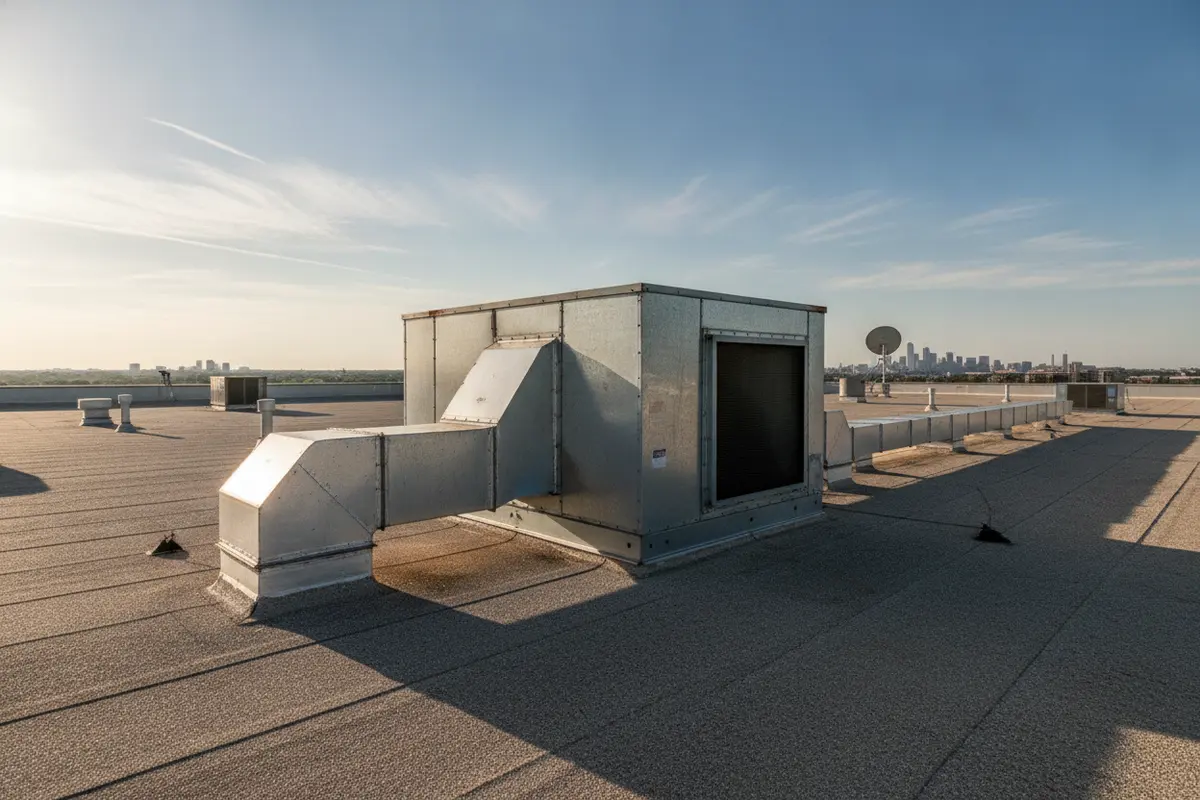
RTU stands for rooftop unit. It is a type of packaged HVAC equipment that contains the components needed to provide heating, ventilation, and air conditioning. The U.S. Department of Energy’s Lawrence Berkeley National Laboratory describes an RTU as equipment with the HVAC components needed for those functions: its RTU overview.
Unlike a split system, which places major components in separate indoor and outdoor sections, an RTU groups its primary equipment in one cabinet. The unit typically connects to the building’s duct system. Many commercial properties use rooftop placement to keep equipment outside occupied areas and make use of roof space, though site conditions matter.
Depending on the model and configuration, a packaged unit may include cooling equipment, heating equipment, fans, filters, and controls. The exact setup varies. Do not assume every RTU uses the same heating fuel, cooling method, or controls. Ask for the equipment specifications and the proposed design for your building.
An RTU moves conditioned air through ductwork to the areas it serves. A single unit may serve a defined zone or portion of a building. Larger properties can have multiple units, each assigned to different areas. Proper operation depends on the unit and the duct distribution working together.
In cooling mode, the system removes heat from return air and sends conditioned air through supply ducts. In heating mode, the unit uses its configured heating equipment to warm the air. Fans move the air through the building, while controls call for heating or cooling based on the settings and conditions.
That straightforward description leaves out important design details. Airflow, duct condition, controls, ventilation needs, and the building’s heat gain and loss all affect results. A unit that is too large, too small, or poorly matched to its ductwork may not deliver comfortable, consistent operation.
The cabinet is only one part of a working HVAC system. Supply ducts carry conditioned air to occupied spaces, while return paths bring air back to the equipment. If a space has closed doors, long duct runs, restrictive grilles, or imbalanced airflow, comfort can vary even when the rooftop equipment is operating. Controls also shape when the system runs and which areas receive conditioning. When discussing a project, describe where people notice discomfort and when it occurs; that detail helps a contractor assess the full system rather than focusing only on the cabinet.
Start with the building’s needs rather than selecting a unit by appearance or by the size of an existing cabinet. A qualified assessment should consider the spaces served, operating schedule, occupancy, existing ductwork, electrical and fuel connections, roof structure, and access for future service.
| Decision factor | What to check | Why it matters |
|---|---|---|
| Building load | Areas served, use, occupancy, windows, insulation, and heat sources | Helps determine suitable capacity and avoid a poor match |
| Duct system | Condition, layout, airflow, leakage, and accessibility | The unit must work with the air distribution system |
| Roof and placement | Structural suitability, clearances, weather exposure, and safe access | Affects installation planning and future service access |
| Equipment configuration | Heating type, cooling components, controls, and ventilation provisions | Confirms the proposed system fits the building’s requirements |
| Lifecycle and service | Maintenance access, replacement logistics, and quote scope | Clarifies what ownership and future work may involve |
Capacity should reflect the building’s actual heating and cooling needs. Square footage alone does not capture every factor. A contractor should ask about how the space is used and examine relevant building conditions before recommending equipment. For a replacement, the old unit’s size is useful information, but it is not proof that the same capacity is right for a changed or renovated building.
Share operating hours, occupant patterns, areas that stay warm or cool, and any planned changes to the space. A warehouse, retail floor, office, and restaurant can have very different schedules and internal heat sources. The more clearly you describe how the building functions, the more useful the assessment can be. If some areas have different schedules, ask whether separate zones or a different control approach should be considered.
Ask whether the quote identifies equipment, capacity, heating configuration, controls, installation scope, duct changes if applicable, and assumptions about access or electrical work. Confirm what is excluded as well as included. Garland Heating and Air Conditioning provides quote-based pricing; contact the company for a customized proposal rather than relying on an invented general price.
For a meaningful comparison, line up proposals by scope. One estimate may include curb or transition work, controls, crane coordination, or duct adjustments while another may assume existing conditions are adequate. Ask the contractor to explain differences in plain language and identify any allowances or open questions. A lower initial figure is not directly comparable if it omits work that another proposal includes.
A rooftop package may be a practical option when a commercial building has suitable roof space, compatible duct distribution, and a layout that benefits from centralized equipment. It may also be worth considering when an existing rooftop system is due for replacement and the building’s current needs remain compatible with that approach.
It may not be the best fit where roof access or structure is a concern, where the building needs a different distribution arrangement, or where the required zoning and control strategy point to another configuration. Compare alternatives with a contractor who can assess the specific property. Garland Heating and Air Conditioning’s commercial AC services are relevant for businesses evaluating commercial HVAC work.
A split system separates major components between indoor and outdoor locations. An RTU packages primary components into a rooftop cabinet. Neither arrangement is automatically better for every building. Roof access, interior space, duct design, service requirements, and the property’s configuration help determine the right direction.
When comparing them, look beyond where the cabinet sits. Consider how each option can serve the required areas, whether indoor equipment space is available, how technicians will reach components, and what changes to ducts or controls might be needed. Ask the contractor to explain the tradeoffs for this building rather than treating one format as universally superior.
Some buildings need more than one system to serve separate areas or different loads. A property assessment can clarify whether the existing layout should be retained or changed. For facilities with specialized cooling needs, discuss the equipment and operating conditions directly; commercial refrigeration is a distinct service need from comfort HVAC. See Garland Heating and Air Conditioning’s commercial refrigeration services for that separate application.
North Texas weather puts outdoor equipment through heat, storms, and seasonal temperature swings. Rooftop placement also means technicians need safe access and enough working clearance. Before installation or replacement, confirm how equipment will be lifted into place, how service access will be maintained, and whether the roof and supporting structure are suitable. These are site-specific questions, not assumptions to settle from a product description.
Consider the practical route to the roof: Is there a fixed ladder, roof hatch, or another safe access point? Is there room to move equipment and tools without blocking other building operations? Are there roof protections or pathways the project must respect? The building owner or manager can identify site constraints early, while a qualified contractor can assess the equipment work and access requirements. Do not arrange an installation based only on a photo or a description of the existing unit.
For property owners in Garland, Richardson, Plano, and the wider Dallas-Fort Worth area, the service plan matters too. Ask how the unit will be maintained, how filters and other routine items will be accessed, and what symptoms should prompt a service call. Garland Heating and Air Conditioning has served the DFW area since 1952 and works across residential and commercial HVAC needs.
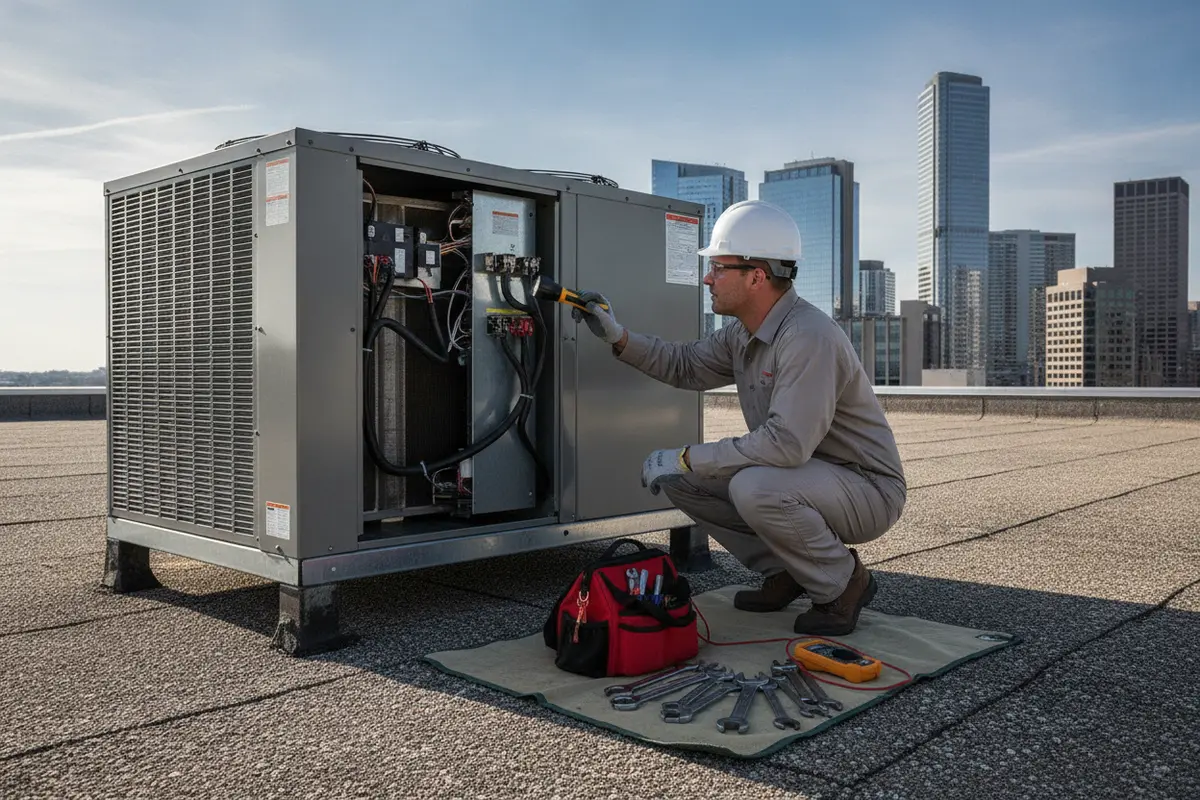
Before requesting a quote, collect the building address, areas served, operating hours, known comfort problems, and available details about the current equipment. Photos of the unit label, duct connections, thermostat, and access route can help start a conversation, but do not climb onto a roof or open equipment yourself.
It can also help to note the model and serial information from any safely accessible records, the age of the equipment if known, and whether the building has undergone renovations. Include any constraints on work hours or access. These notes are starting information, not a substitute for a site review, but they make the first discussion more focused.
Note uneven temperatures, unusual cycling, airflow concerns, or operational changes. Be clear about when the problems occur and which parts of the building are affected. This helps distinguish an equipment issue from a duct, controls, or building-use issue that may need evaluation.
Review equipment configuration, capacity basis, installation approach, controls, ductwork assumptions, and service access. If you are considering a replacement, ask what changes from the existing setup and why. Garland Heating and Air Conditioning’s AC installation and replacement information can help residential customers explore a related installation route, while commercial projects should be discussed with the company based on their building’s requirements.
For broader context about planning a system project, read the Texas homeowner guide to installing a new HVAC system and the HVAC replacement planning guide. These resources can help you prepare questions, but a project-specific quote depends on the site and scope.
Maintenance needs vary by equipment, operating conditions, and manufacturer guidance. Keep the area around access points clear and make sure responsible building staff know how to report comfort or operating concerns. Do not attempt rooftop electrical, refrigerant, or mechanical work without appropriate training.
Ask your HVAC provider what routine inspection and service should cover for the actual unit. A maintenance visit can evaluate system condition and identify issues requiring attention; it cannot guarantee that a component will never fail. Garland Heating and Air Conditioning’s AC repair and maintenance service page explains a relevant service route, and its DFW service area page helps confirm geographic coverage.
Staff can record thermostat settings, note when comfort changes occur, and report unusual sounds, odors, visible water, or repeated interruptions. They can also follow the equipment documentation for routine user-level tasks, such as checking whether filters need attention, if those tasks are designated for building personnel. Keep a simple log of dates and affected areas. Patterns may help a technician understand whether an issue is intermittent, tied to occupancy, or associated with a particular operating period.
Clear answers make it easier to compare options and understand the project before authorizing work. If you need commercial HVAC evaluation or installation planning in DFW, contact Garland Heating and Air Conditioning to discuss the building and request a customized quote.
Yes. In HVAC, RTU commonly means rooftop unit: packaged equipment installed on a roof to provide heating, ventilation, and air conditioning.
RTUs are commonly associated with commercial buildings, but whether a particular packaged system suits a property depends on its design and requirements. Have a contractor evaluate the site rather than assuming the label determines suitability.
The rooftop cabinet is equipment; the ducts are the air distribution system it connects to. Ductwork condition and design should be considered as part of the full system assessment.
There is no single useful price for every project. Equipment configuration, capacity, access, installation scope, and building conditions affect the quote. Request a customized, quote-based proposal for the property.
Discuss your HVAC project with our team
An RTU can be a sound solution when the building, roof, duct system, and service plan all align, so compare the complete project before deciding.