When the Texas heat returns, the signs you need a new air conditioner can be hard to ignore—but one uncomfortable afternoon does not automatically mean it is time to replace the system.
Request an AC replacement consultation
Quick answer: Replacement deserves a closer look when an older AC needs frequent or costly repairs, cannot keep the home comfortable despite normal operation, or shows a pattern of rising energy use and declining performance. A technician should inspect the equipment and compare repair needs with replacement options before you decide. A single symptom, by itself, may have a simpler cause.
Use the checklist below to spot a pattern, not to diagnose a system from one clue. Many AC problems can be repaired. The age and condition of the equipment, how often it fails, how well it cools the home, and the likely repair all matter together.
Age is a reason to investigate, not an automatic replacement deadline. ENERGY STAR says homeowners should consider replacement when a heat pump or air conditioner is more than 10 years old, and also flags frequent repairs as a reason to weigh the decision. The same guidance notes a 15-year benchmark for furnaces and boilers, which is not an AC age rule. You can review its heating and cooling replacement guidance.
Write down the dates and nature of recent AC calls. One isolated repair on a well-performing system may be reasonable. Repeated visits for different failures, or another major repair soon after the last one, create a different picture. Ask what failed, whether the underlying cause has been addressed, and what condition the remaining components are in.
Notice where and when comfort drops. Rooms that stay warm, weak airflow from several vents, long cooling cycles, or an AC that cannot reach the thermostat setting can point to a system problem. They can also result from airflow restrictions, duct issues, thermostat settings, or another repairable fault. Record which rooms are affected and whether the problem happens at a particular time of day.
Grinding, repeated buzzing, rattling, or a loud change from the system’s usual operating sound is worth checking. A sound does not prove that replacement is needed, but it can indicate a part needs attention. Turn the system off if you notice smoke, a burning odor, or an electrical concern, and seek professional help rather than opening equipment or reaching inside it.
Ice on the indoor coil or refrigerant lines, water collecting where it normally does not, and frequent starts and stops can all signal trouble. These symptoms can have more than one cause and do not establish that the whole system has failed. Avoid scraping ice or attempting refrigerant or electrical work. Note what you see and arrange an assessment, particularly if the AC stops cooling.
The symptoms are clues; inspection helps identify the cause. Before deciding, look at the equipment’s age and service history alongside the condition of the whole system. A repair can be sensible when the problem is isolated and the unit otherwise meets the household’s needs. Replacement becomes more compelling when repairs keep returning or the system no longer provides dependable comfort.
| What you notice | What it may mean | Useful next step |
|---|---|---|
| One recent, isolated failure | A repairable component issue may be involved; the symptom alone does not say how much useful life remains. | Ask for a diagnosis and a clear explanation of the repair. |
| Frequent repairs on an older unit | The combined cost and reliability of repeated work may make replacement worth comparing. | Review the repair history and request repair and replacement options. |
| Uneven cooling or weak airflow | Could involve the AC, ductwork, airflow, or controls. | Have the system and affected areas evaluated before choosing equipment. |
| Higher bills with no clear explanation | Changing use, weather, settings, maintenance, or equipment performance may contribute. | Compare similar billing periods and ask for a system check. |
| Major failure and an aging system | A substantial repair may not resolve broader wear or recurring reliability concerns. | Compare the repair proposal with a replacement assessment before authorizing work. |
For a closer look at the decision, see this guide to AC unit repair options and the overview of HVAC replacement cost factors. Neither a table nor an online checklist can inspect your equipment; use them to prepare questions for a professional.
Ask what the proposed repair is expected to address, whether other worn components could affect reliability, and what symptoms should prompt a follow-up. Then ask what replacement would involve for your home, including equipment choices, installation scope, and any work needed to make the system fit the space. The right comparison is based on the actual system and quote—not a generic price range or a promise that one option is always cheaper.
To keep the comparison practical, ask for the same basic information for each option:
This is not a demand for a guaranteed lifespan or a prediction that a new unit will eliminate every comfort issue. It is a way to make sure you understand what you are comparing. If a proposal is unclear, ask the contractor to explain unfamiliar terms before you approve the work. You can also ask whether the recommendation changes if the diagnosed problem is repaired now and other equipment is left in place.
Replacement pricing is quote-based. The work and equipment depend on the home and the system selected, so contact Garland Heating and Air Conditioning for a customized quote rather than relying on an assumed price. You can learn about factors that affect AC installation costs in DFW before discussing options.
A few safe observations can make a service visit more useful. They will not replace a diagnosis, but they can help describe the issue and rule out simple operating problems.
If the problem continues after these basic checks, avoid repeatedly changing settings or attempting repairs. For a fuller understanding of routine upkeep, see the HVAC maintenance guide and the information on thermostat operation.
Do not remove equipment panels, handle wiring, or try to release refrigerant. If you see smoke, smell something burning, or suspect an electrical hazard, turn the system off if you can do so safely and request professional help.
A useful assessment should consider the home as well as the old unit. Tell the technician what the system has been doing, which rooms are uncomfortable, and what you want to improve. Ask how the recommendation addresses those specific conditions.
Replacing an AC is not simply a matter of matching the old equipment label. Ask how the proposed system is selected for the home and whether the existing ducts and controls are suitable. Oversizing or undersizing can affect comfort and operation, so ask the contractor to explain the sizing recommendation in plain language. This AC sizing guide for Texas homes can help you prepare questions.
Review which equipment is included, what installation work is planned, what happens to the existing system, and which items are outside the quote. Ask how the new controls will be set up and what to expect on installation day. If efficiency ratings are part of your comparison, ask what the rating means for the specific equipment being proposed; the SEER rating guide explains the basic terminology.
For homes in Garland, Richardson, Plano, or elsewhere in the metroplex, the proposed system should suit the property and the household’s comfort needs—not just a broad regional rule. Garland Heating and Air Conditioning has served the Dallas Fort Worth area since 1952 and handles residential AC installation and replacement. The company also provides AC repair and maintenance, so homeowners can discuss whether the issue appears repairable or whether replacement merits a closer comparison.
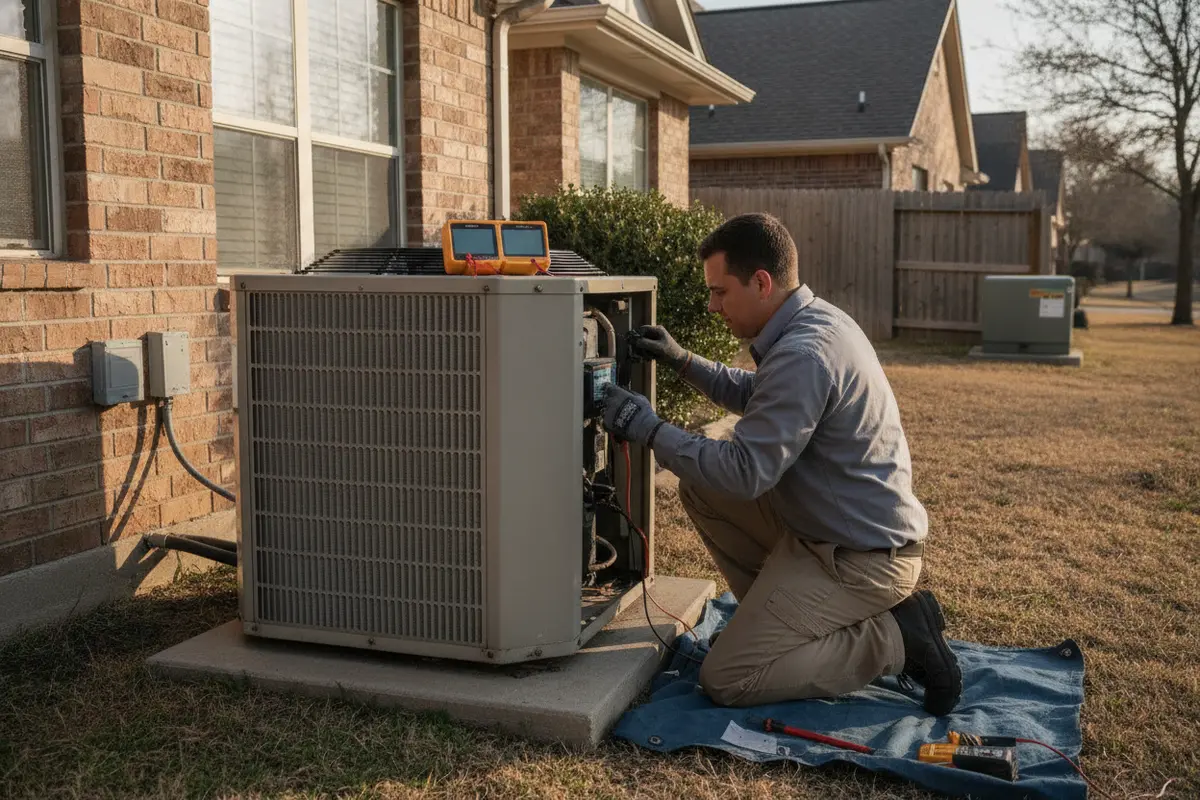
Sometimes a symptom has a fix that does not require replacing the whole AC. A dirty filter, blocked return, or control issue can affect operation, while an inspection may reveal a repairable fault. Basic checks are useful, but they cannot establish the condition of internal components or determine whether an older system is a good candidate for continued repair.
Routine service gives a technician a chance to check how the system is operating and identify concerns that may need attention. It does not make worn equipment new, guarantee that a breakdown will not happen, or mean that every problem can be solved with a tune-up. If performance has declined, repairs are recurring, or the equipment is older, consider the maintenance findings alongside your service records and a replacement assessment.
Ask what was observed, what action is recommended, and whether it is urgent. If a repair is suggested, understand what it addresses and whether it changes the outlook for the system. If replacement is suggested, ask how age, condition, comfort, and your repair history support that recommendation. Garland Heating and Air Conditioning provides AC maintenance and repair service for homeowners who need an evaluation.
A sudden utility bill increase or a room that feels warmer can be a useful clue, but neither one identifies the cause by itself. Weather, thermostat schedules, the number of people at home, and other changes in household use can affect cooling demand. Compare similar months when possible and write down what changed instead of treating one bill as proof that the AC has failed.
Notice whether longer cooling cycles happen alongside uneven temperatures, repeated repairs, unusual sounds, or a growing inability to reach the thermostat setting. Several problems appearing together provide more context than a single observation. Also note when the system was last serviced and whether the filter and vents are clear. These details help a technician distinguish an equipment concern from an airflow or operating issue.
If the equipment still cools and the concern is gradual, you may have time to collect repair records and compare options calmly. If it has stopped cooling, is repeatedly shutting down, or there is smoke or a burning odor, treat the immediate safety or comfort issue first. Do not delay necessary service just to finish a replacement comparison, and do not assume a replacement is the only response before the system is assessed.
For a homeowner considering a new system, the goal is a reliable decision, not simply to replace equipment at the first warning sign. A repair may restore normal operation; a replacement assessment may help when age and repeat problems are accumulating. Ask for the reasoning behind the recommendation and keep the written quote with your service notes so you can review the options without relying on memory.
Start with the most urgent need. If the AC has stopped cooling during hot weather, request service rather than waiting for a long-term replacement decision to become clearer on its own. Garland Heating and Air Conditioning documents same-day service availability and 24/7 emergency service. For a planned replacement, gather the repair history, note comfort issues, and ask for a customized assessment and quote.
Before speaking with a contractor, decide what you most want to solve: recurring breakdowns, comfort differences between rooms, equipment noise, or a system that is nearing the end of its useful service life. Share any changes you expect in how the home is used. Clear priorities help keep a discussion focused on equipment and work that address your situation.
Consider the duct system as part of the conversation if airflow or dust concerns are among your reasons for considering replacement. Garland Heating and Air Conditioning offers professional duct cleaning for accessible residential supply and return ductwork. Learn about its duct cleaning service; duct cleaning is a separate service and does not substitute for diagnosing an AC fault.

For service availability and the communities covered, consult the Dallas Fort Worth service area. Garland Heating and Air Conditioning is family-owned and has served North Texas since 1952. Contact the company when you are ready to discuss repair or replacement options for your home.
Contact Garland Heating and Air Conditioning about your AC
Age alone does not determine the right choice. ENERGY STAR advises considering replacement for an air conditioner or heat pump that is more than 10 years old, especially when repairs are frequent or performance is declining. Have the equipment assessed and compare its condition and repair needs with replacement options.
Not necessarily. Long run times can relate to hot weather, thermostat settings, airflow, system condition, or the home’s cooling load. If the system runs continuously and cannot maintain comfort, note the conditions and arrange an evaluation instead of assuming replacement is the only answer.
Possibly. If the problem is isolated and the rest of the system is in good condition, a repair may be worth considering. Ask what caused the failure, what the proposed work addresses, and whether the service history suggests other concerns.
Replacement is quote-based because the equipment and installation scope depend on the home and the selected system. Request a customized assessment and quote from Garland Heating and Air Conditioning; do not assume a price based only on the age or size of the existing unit.
A pattern of age, repeated repairs, and declining comfort is a good reason to compare repair and replacement with a professional, while a single symptom may have a simpler fix.