A failed HVAC system in a home-based business, mixed-use property, or shared building can be difficult to describe. Start with the spaces and equipment affected, then use that information to request the right commercial HVAC repair conversation.
Request HVAC service for your property
Short answer: Commercial HVAC repair may be the right service route when a property uses commercial-grade equipment, serves a business or multiple occupants, or has a shared system with access and operating requirements that differ from a typical detached home. A business operating from a house does not automatically make every repair commercial. The equipment, the affected spaces, and the way the system is managed should guide the request.
Describe what the system serves before trying to name the failure. Is the affected area a living space, office, customer area, workshop, storage room, apartment, or common area? A property can have several uses under one roof, and one system may serve only one part of it.
Be specific about what is not working. For example, say that the office and customer area are warm while the living area remains comfortable, or that several units lost cooling at the same time. This tells the service team whether the problem appears limited to one zone, one system, or a shared piece of equipment.
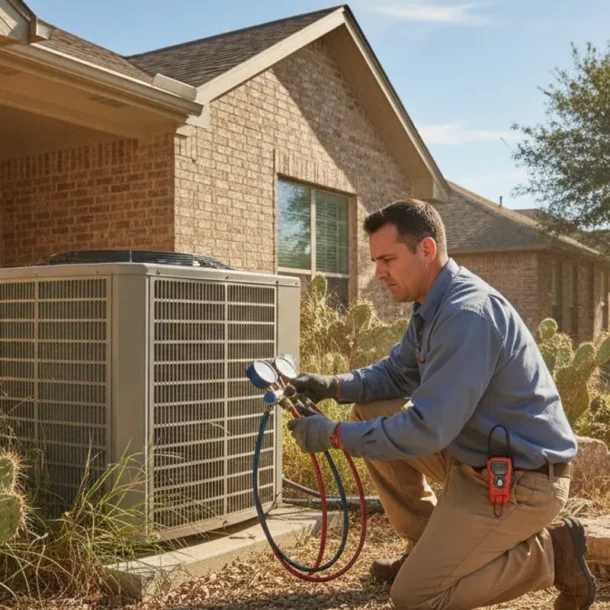
Note whether the equipment is outside, in an attic, in a mechanical room, above a ceiling, or on a roof. Do not climb onto a roof or remove panels to collect details. Instead, tell the provider whether a key, escort, property manager, or business-hours appointment is required.
Access information matters because the first visit may involve more than entering a house. A technician may need permission to reach a controlled area, coordinate a shutdown, or work around tenants, staff, customers, inventory, or other building operations.
A temperature complaint does not always involve building HVAC. A warming walk-in cooler, reach-in refrigerator, or other temperature-controlled storage unit is a refrigeration concern. Tell the provider which equipment is affected and what it stores or serves.
Garland Heating and Air Conditioning provides light and heavy commercial AC services and commercial refrigeration service across Dallas-Fort Worth. Clear terminology helps the team understand whether the request involves building climate control, refrigeration, or both. The residential versus commercial HVAC overview from Interactive College of Technology also explains why equipment and application matter when choosing a service route.
Multiple thermostats do not automatically make a system commercial, but they are useful information when a repair request is being routed. Explain whether one zone is failing, several zones are affected, or the controls are connected to a central building system.
Shared systems deserve extra care. In a duplex, condominium, apartment building, or mixed-use property, the person experiencing the symptom may not control the equipment. Confirm who owns or manages the system before authorizing work. A property manager or building association may need to arrange access and approve repairs.
Equipment location and configuration can change the service requirements. A packaged rooftop unit, large air handler, building automation control, or specialized mechanical setup may need a contractor familiar with commercial applications. The label alone does not diagnose the problem, but it helps the provider decide what information and equipment may be needed for the visit.
If a model label is safely visible from the ground or another accessible location, record the manufacturer and model number. Do not remove a cover, handle wiring, or enter a restricted area to find it. A photo taken from a safe location may also help, provided it does not reveal sensitive business information.
Explain the operational effect of the failure. A home-based office, salon, retail area, clinic, workshop, restaurant, or temperature-controlled storage space may have different scheduling and response needs than a private living area. Tell the service team whether the property can remain open, whether a certain room must stay usable, and whether a shutdown needs to happen outside business hours.
Do not assume that every business-related call has the same urgency. The useful detail is what the failure is affecting and what access or scheduling limits apply.
A service request does not need a technical diagnosis. Note when the problem began, what changed, and whether the system works intermittently. Include observations such as weak airflow, a blank thermostat, unusual noise, water near the equipment, repeated shutdowns, or rooms that remain warm while others cool normally.
A clear description is more useful than naming a part you have not tested. “The west-side office and customer area stopped cooling yesterday afternoon” gives the team a starting point. “The compressor is bad” may send the conversation in the wrong direction if the symptom has another cause.
For a home-based business, make a simple room list that separates living areas, offices, customer areas, storage, and shared spaces. Note the thermostat or indoor unit you believe serves each area. For a multi-unit property, identify affected unit numbers and whether hallways or other common areas are also affected.
This does not replace diagnosis. It gives the provider a practical map of the problem and can reveal whether one system, one zone, or several pieces of equipment are involved.
If they are readily available, gather prior service notes, installation records, equipment documentation, and information about recent changes to the building. Mention additions, converted rooms, new equipment, or a change in how the property is used.
If there is smoke, a burning smell, exposed wiring, an electrical hazard, or another immediate safety concern, keep people away from the equipment and contact the appropriate emergency service. Do not open panels, handle wiring, repeatedly reset a breaker, or attempt a repair that requires tools or electrical work.
Share your system details and request a repair assessment
Have these details ready when you contact a commercial HVAC contractor:
These details help the provider route the request and prepare for the property. They do not require you to classify the equipment with certainty. If you are unsure, say what you know and ask whether the team handles that type of system.
| What to report | Useful example | Why it helps |
|---|---|---|
| Affected spaces | Office and customer area are warm; living area is comfortable | Shows whether the issue may be limited to a zone or shared system |
| Equipment setting | Packaged unit on a roof above the attached workspace | Signals access, safety, and equipment-planning needs |
| Operating impact | Business can open only if the customer area is cooled | Helps coordinate timing and explain the practical urgency |
| Access limits | Property manager must unlock the mechanical room | Prevents an avoidable delay at the appointment |
| Observed symptom | System starts, stops, and leaves two rooms warm | Gives the technician a useful starting point without a guessed diagnosis |
Do not climb on a roof, enter a locked mechanical area, remove panels, touch electrical components, or open refrigeration equipment to inspect internal parts. Do not delay a service request because you cannot find a model number. Safe observations and a clear description are enough to start the conversation.
You can check thermostat settings from a safe location and note visible conditions such as a blank display, blocked return grille, water near the unit, or a system that starts and stops. Leave technical testing to a qualified technician.
Say which rooms are used for the business and whether the same system serves the rest of the home. Note if customers, employees, tenants, inventory, or specialized equipment are affected. A conventional residential system serving a home and office may still need residential service. A separate commercial-grade unit, rooftop system, or shared building system may call for a commercial HVAC repair assessment.
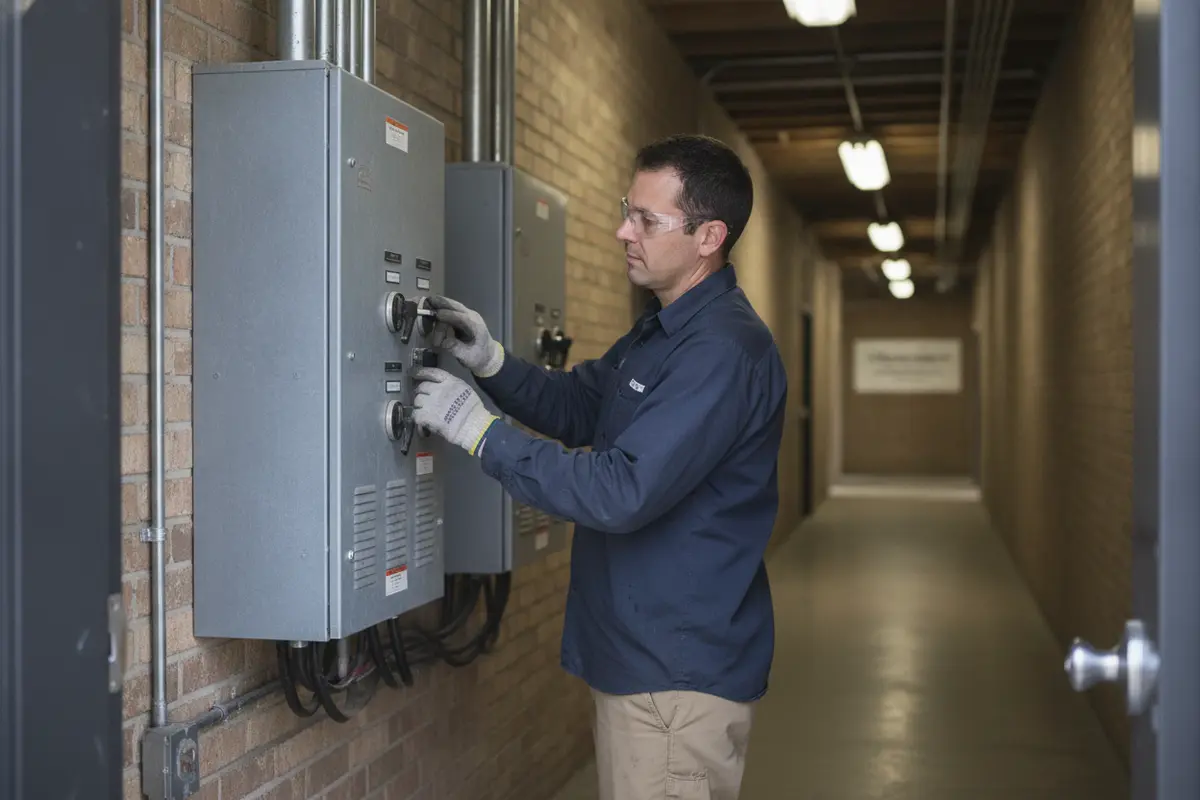
A contractor may need to coordinate access to a roof, mechanical room, tenant space, or controlled business area. Before the appointment, identify the person who can unlock the area or approve work. If the system serves more than one occupant, confirm who can authorize a repair and who needs to be notified about a shutdown.
Tell the provider when a system can be turned off and whether certain rooms must remain available. A business may need service before opening, after closing, or during a planned maintenance window. A residence with an attached workspace may need the technician to avoid a customer appointment or protect a private area.
These are planning details, not proof that a property requires a particular service category. They help the provider understand the work environment before the visit begins.
A mixed-use property can have separate equipment for the home and business, or one system that serves both. Ask the provider to document which equipment is being evaluated and which spaces it serves. If comfort cooling and refrigeration are both affected, describe each problem separately.
Garland Heating and Air Conditioning has served Dallas-Fort Worth customers since 1952 and works with residential and commercial HVAC needs. Its completed project examples show the range of commercial work it undertakes, while its DFW AC repair guide is a relevant starting point for a standard residential system.
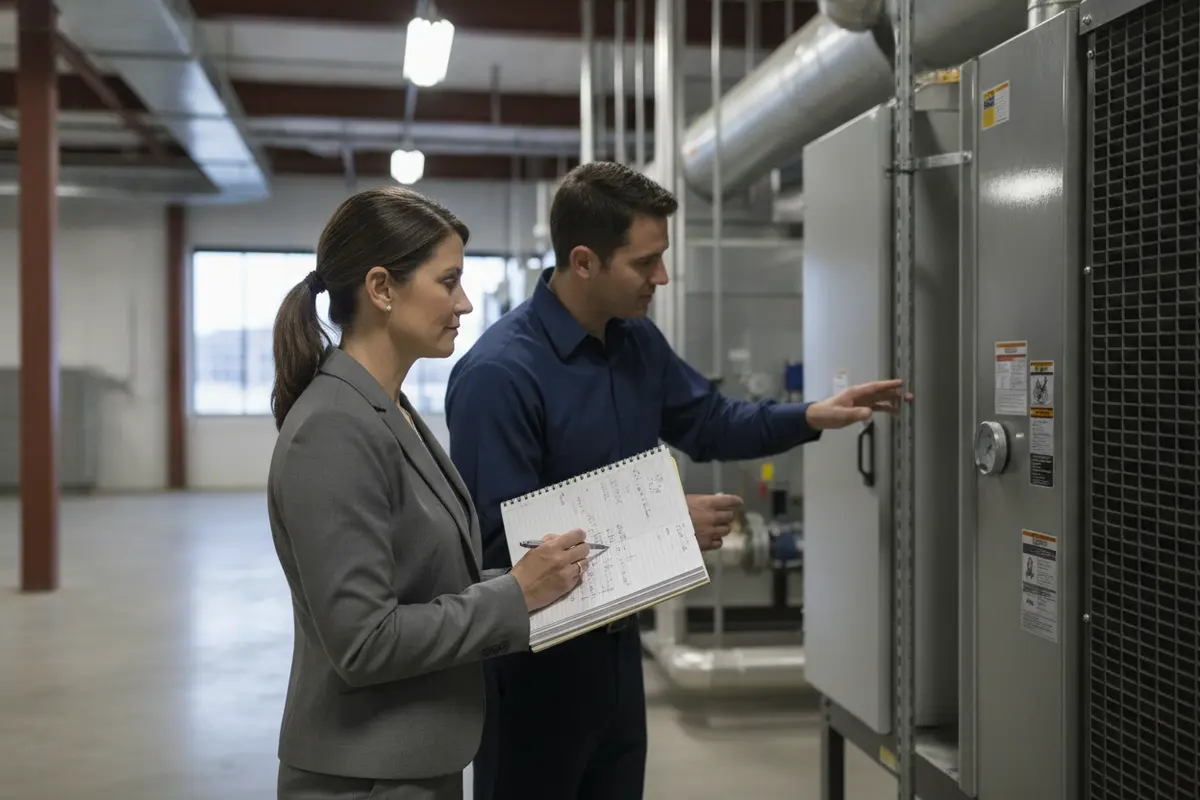
Contact a contractor for clarification when the equipment serves a business, several units, or a shared property; when a prior service record identifies it as commercial; or when the unit is a commercial-grade or specialized system. Give the provider the property use, equipment location, affected areas, and symptoms.
If the system is a conventional home comfort system, a residential repair route may be the sensible starting point. If the equipment is unfamiliar or the property has multiple uses, ask whether the team handles that system before assuming which appointment category applies.
Do not wait for a perfect diagnosis when heating or cooling has stopped in a space that must remain usable, a shared system is affecting several occupants, or a business operation is being disrupted. Explain the practical impact and any access limits when you call.
Garland Heating and Air Conditioning offers 24/7 emergency service availability through a dedicated call center and same-day service availability. Response timing depends on the situation and service logistics. The company also provides commercial refrigeration service for refrigeration equipment, separate from building climate-control repairs.
For a standard home system, review the company’s HVAC repair service guide. For a commercial or mixed-use property, describe the equipment and operating requirements when you request an assessment. Garland Heating and Air Conditioning uses quote-based pricing, so the customized quote follows an evaluation of the equipment and requested work.
To ask which service route fits your property, contact Garland Heating and Air Conditioning with the system details and symptoms. For urgent service, call (972) 278-3500.
Explore light and heavy commercial AC service
No. The service route depends on the equipment and the spaces it serves. A conventional residential system may still need residential repair even when one room is used as an office. Mention the business use if it affects access, scheduling, or the areas experiencing symptoms.
Explain which units or spaces are affected and confirm who controls the equipment. A property manager, owner, or building association may need to arrange access and approve work on shared equipment.
Do not guess based on the building size or the unit’s appearance. Share the equipment location, model information if safely visible, affected areas, and symptoms. The provider can help determine whether its commercial HVAC repair team is the right route.
Yes, but describe each system separately. Building air conditioning and commercial refrigeration use different equipment. Identify which unit is affected, what it serves, and how the problem affects the property or stored products.
For a mixed-use home, home-based business, or shared property, gather safe observations instead of attempting a technical diagnosis. Identify the affected spaces, equipment location, access requirements, and operating impact. Then ask Garland Heating and Air Conditioning which commercial HVAC repair or residential service route fits the system. That information helps the team begin with the right context without forcing you to classify unfamiliar equipment on your own.