A broken HVAC system can turn a normal Dallas-Fort Worth day into an uncomfortable one, but the repair itself may take less time than the wait for a specialized part or a clear diagnosis.
Schedule HVAC service with Garland Heating and Air Conditioning to discuss the symptoms, equipment, and urgency with the team.
How long an HVAC repair service visit takes depends on the diagnosis, system and site conditions, and parts availability. A straightforward issue may be addressed during the first visit, while a complex problem, difficult equipment access, or a needed part can require additional time or a follow-up appointment. An appointment window is not the same as repair-completion time.
Garland Heating and Air Conditioning serves residential and commercial customers across DFW, and the right expectation starts with understanding what happens during diagnosis and which details can change the timeline.
Short answer: There is no reliable single duration for every repair. The visit may include arrival, diagnosis, the repair itself, and a follow-up if the needed part is not available. The time depends on the problem, the system and site conditions, and parts availability.
First, separate the appointment window from the work time. Garland Heating and Air Conditioning describes typical arrival windows of two to four hours. That window tells you when a technician may arrive, not how long the repair will take after the inspection begins. Emergency availability and same-day capability also describe scheduling options, not a guaranteed arrival or completion time.
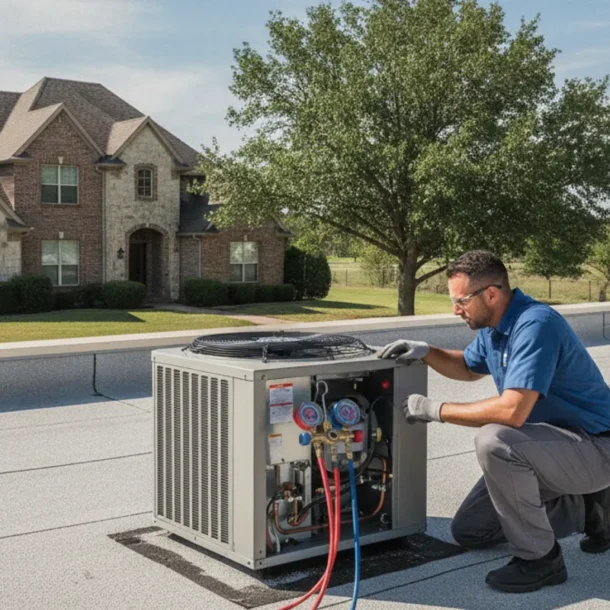
Diagnosis is the first working stage. The technician needs to identify what failed and determine whether the issue can be addressed during the visit. A straightforward fault may lead quickly to a repair plan. A less obvious problem, difficult access, or more than one contributing issue can require additional investigation before work starts.
If the problem is clear and the necessary part, tools, and materials are available, the repair may be completed during the same appointment. However, the reviewed service information does not state an average HVAC repair completion time, so an exact promise would be misleading. The technician should explain the findings, available options, and expected next step before proceeding.
If a required part must be sourced, the repair may need a second appointment. That follow-up is different from the original arrival window. Asking whether the repair can be completed today, what remains to be ordered, and when the next step can be scheduled will give you a more useful timeline than relying on a generic estimate.
For AC-specific concerns, review Garland Heating and Air Conditioning’s AC repair and maintenance service information before scheduling. A clear description of the symptoms can help the team understand the request and plan the visit.
Short answer: A professional diagnosis moves from your reported symptoms to visible inspection, targeted tests, and a clear explanation of the findings. The goal is to identify the actual fault, not simply replace the first component that appears suspicious.
The visit usually begins with questions about what changed, when the problem started, and whether the system is producing unusual sounds, odors, cycling, or airflow. The technician then reviews the equipment and its general condition, including obvious maintenance concerns. These first observations help narrow the possible causes while keeping the evaluation focused on your specific symptoms.
Depending on the complaint, testing may include checking airflow and looking for restrictions. A temperature-split test, which compares supply and return air temperatures, can provide information about system capacity, efficiency, and overall condition. The U.S. Department of Energy diagnostic guide describes these preliminary checks as part of a broader process that can lead to more comprehensive testing by a qualified HVAC technician. Read the DOE diagnostic guide for additional technical context.
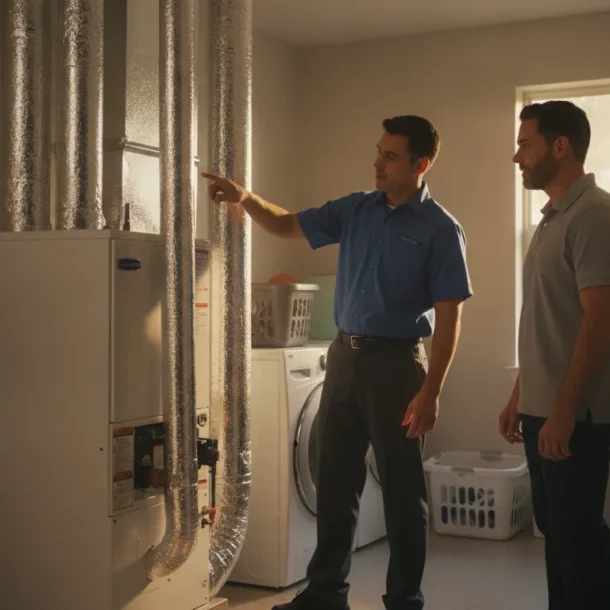
After testing, the technician should connect the findings to the recommended next step. If the issue is within the available tools and repair scope, the work may be completed during the visit. If testing points to a deeper equipment, duct, electrical, or access issue, you may receive a recommendation for further diagnostics, maintenance, a part, or a return visit.
That is why diagnosis and repair completion are separate questions. Parts availability, system condition, and site access can affect what happens next. A professional should explain what was found, what can be repaired, and whether the proposed work addresses the underlying problem. For local homeowners and businesses, Dallas Fort Worth HVAC service from Garland Heating and Air Conditioning can provide a structured path from symptoms to next steps.
For safety, leave refrigerant handling, electrical testing, and sealed-system work to qualified professionals. The EPA notes that refrigerants must be handled responsibly and that unapproved substitutes can create hazards in equipment not designed for them.
Even when a technician arrives within the expected appointment window, repair completion can vary. Diagnosis, system and site conditions, available parts, and the repair scope all influence how much work can be completed during one visit. Garland Heating and Air Conditioning does not promise an exact repair duration because the right answer depends on what the technician finds.
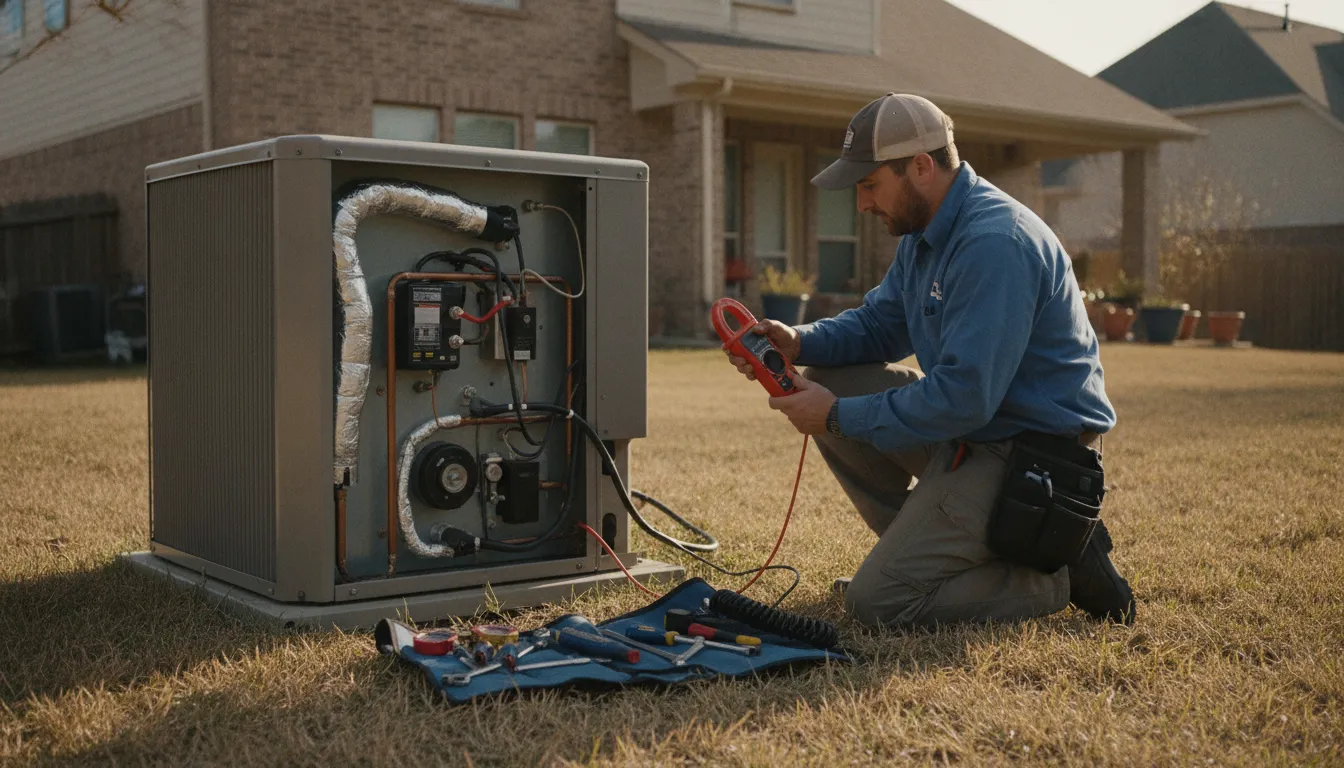
The first step is identifying the actual cause instead of replacing a part based only on a symptom. A technician may need to inspect the system’s general condition, check airflow, and test performance before recommending a repair. The diagnostic process may also show that the problem requires additional tools, specialized work, or a follow-up visit. A repair can take longer when equipment is difficult to reach, when more than one component is affected, or when the condition of the ductwork, electrical system, or surrounding area complicates safe access.
| Factor | Why it can add time | What the customer can do |
|---|---|---|
| Diagnosis | The visible symptom may not identify the underlying fault. Testing and inspection may be needed before the repair scope is clear. | Describe when the issue began, what changed, and which rooms or zones are affected. |
| Access and site conditions | Blocked equipment, tight work areas, poor airflow, or difficult service access can make inspection and repair more involved. | Clear a safe path to the indoor unit, outdoor unit, thermostat, and electrical panel when possible. |
| Parts and tools | The needed component may not be available for the first visit, or the repair may require equipment that is not part of routine service work. | Provide the equipment model and serial information if it is easy to locate, without opening panels or handling wiring. |
| System condition and scope | Multiple faults, neglected maintenance, or a repair that affects several parts of the system can expand the work beyond the original symptom. | Share any recent repairs, recurring symptoms, unusual sounds, odors, or maintenance history. |
| Safety and refrigerant work | Refrigerant handling and leak-related work require responsible procedures. The EPA notes that refrigerants should be handled to avoid atmospheric releases and that leaks can harm the environment. | Do not attempt to add refrigerant or use an unapproved substitute. Let a qualified technician evaluate the system. |
These factors explain why an appointment window is not the same as a completion time. A technician may complete a straightforward correction during the visit, while a more involved issue may require a documented recommendation and additional work after the diagnosis.
For diagnostic guidance and the EPA’s refrigerant handling information, see the EPA guidance on purchasing and repairing home air conditioners and heat pumps.
The work involved in an HVAC repair service visit changes with the setting. A home may have one central system serving a family, while a commercial property may depend on several rooftop units, zones, or operating areas. In either case, the repair timeline depends on the diagnosis, site conditions, equipment, access, and parts availability. There is no reliable universal completion time for every repair.
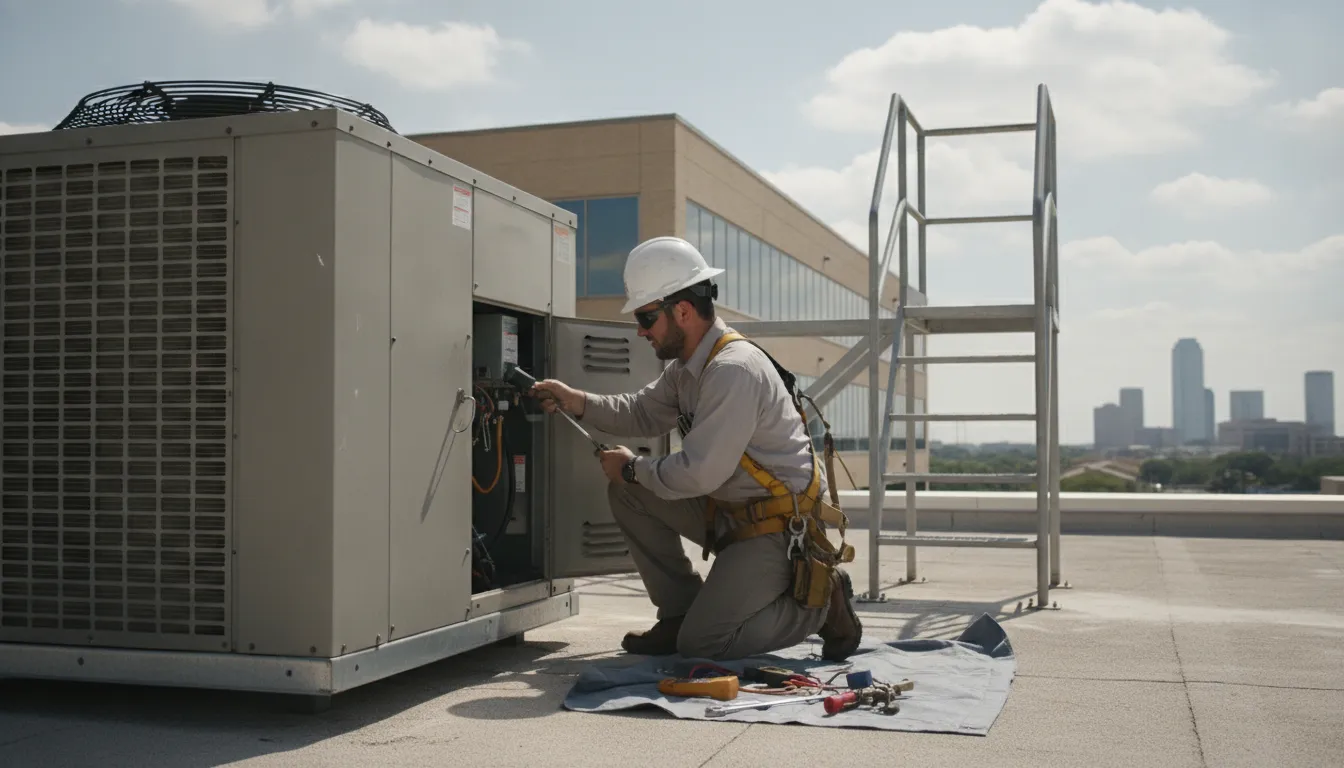
Residential service commonly focuses on one system and the comfort needs of the household. The technician may inspect the equipment, test controls and components, identify the cause of the problem, and explain repair options. Garland Heating and Air Conditioning provides residential diagnostics, repair for all makes and models, preventive maintenance, tune-ups, and emergency breakdown service.
A straightforward issue may be addressed during the initial visit when the cause is clear and the needed part or material is available. More involved problems can require additional troubleshooting or a return visit. A heat pump may also require system-specific diagnosis, so homeowners can review the company’s heat pump repair and maintenance service for relevant context.
Commercial HVAC work may involve rooftop units, multi-zone systems, multiple occupants, roof access, controls, or equipment serving separate parts of a building. The technician must consider not only the failed component, but also how the affected equipment interacts with the property’s operating needs. Access arrangements, safety procedures, tenant schedules, and the availability of replacement parts can all influence what can be completed during one visit.
Commercial emergency repairs are intended to support business continuity, but that purpose does not create a guaranteed repair SLA. A property manager should share which areas are affected, whether other zones are operating, and any access requirements when scheduling. Preventive maintenance contracts may help identify developing issues earlier, although they do not eliminate the need for diagnosis when equipment fails. If the system’s condition points beyond repair, review the company’s heating installation and replacement options rather than assuming a repair is the best path.
For either setting, separate the appointment or arrival window from the time needed to complete the repair. Clear information about the equipment, symptoms, building access, and business or household priorities helps the technician plan the visit without promising an unsupported completion time.
The main difference is usually dispatch priority, not a guaranteed repair-completion time. An emergency call may be prioritized when a system has stopped working, creates a safety concern, or threatens essential comfort or business operations. A routine appointment is generally planned around availability and the customer’s schedule. In either case, the technician still needs to diagnose the equipment, confirm the repair scope, and determine whether the needed parts and conditions are available.
Garland Heating and Air Conditioning advertises 24/7 emergency availability, a live call center, and same-day service capability. Operational notes also describe a target emergency response within two hours. These are service descriptions, not universal arrival or repair-completion guarantees. Traffic, call volume, weather, equipment access, the problem’s complexity, and parts availability can affect what happens next. A typical two-to-four-hour appointment window describes time around the visit, not how long the repair will take.
When you call, explain what failed, when it happened, whether anyone is uncomfortable or at risk, and whether water, smoke, burning odors, electrical issues, or unusual noises are present. If there is an immediate safety hazard, shut the system off and follow appropriate emergency guidance rather than waiting for an HVAC visit.
Routine scheduling fits issues such as inconsistent temperatures, reduced airflow, unusual cycling, or a system that still operates but needs attention. The customer knowledge base describes same-day service for urgent non-emergency requests and next-day scheduling as an operational pattern for routine appointments. Neither description promises a particular slot. Scheduling before a complete breakdown may give the technician more flexibility and can help a property owner plan around occupants, tenants, or staff.
For a business, dispatch decisions may also account for continuity. Commercial systems can include rooftop units and multi-zone equipment, so the affected area and operational impact matter. Garland’s commercial HVAC services include emergency repairs intended to support business continuity, but the time needed to complete the work still depends on diagnosis, system conditions, and parts.
A well-prepared visit gives the technician useful information sooner and makes it easier to evaluate the equipment safely. Preparation cannot guarantee a faster repair, but it can reduce avoidable delays once your residential AC and heating services appointment begins.
Bring your notes and questions to the appointment. Clear information helps the technician understand the complaint and determine the appropriate next step without turning the visit into a guess-and-check exercise.
If your HVAC system is no longer maintaining comfortable conditions, operating unusually, or leaving part of the property without dependable heating or cooling, do not keep postponing a professional evaluation. Delaying a diagnosis can make it harder to plan around the problem, especially when outdoor conditions are demanding.
Contact a qualified HVAC professional when a basic, safe check does not resolve the issue or when the system’s performance continues to decline. The goal is to identify whether the system needs a repair, additional maintenance, or a larger replacement conversation. Repair timing depends on the diagnosis, the system and site conditions, and parts availability. Garland Heating and Air Conditioning does not publish an average completion time or promise an exact repair duration, so a technician’s findings should guide the next decision.
Service-area location can affect scheduling context, but it does not determine an individual arrival time. Garland’s primary zone includes Garland, Richardson, and Plano. Dallas, Fort Worth, and Arlington are identified as a secondary zone, while outer suburbs are handled as scheduled service. Garland serves more than 100 DFW cities, so share the complete service address when you request help and ask about the available appointment options for your location.
Garland Heating and Air Conditioning is family-owned and has served the Dallas-Fort Worth metroplex since 1952. For a residential or commercial concern, contact Garland Heating and Air Conditioning to schedule HVAC repair service or call (972) 278-3500. The team can review the symptoms, property location, and urgency before confirming the appropriate next step.
There is no reliable one-size-fits-all duration. The visit may include diagnosis, testing, explaining repair options, completing the work, or arranging a follow-up if a part is needed. System condition, site access, repair scope, and parts availability all affect completion time. An appointment arrival window is separate from the time required to finish the repair.
Garland Heating and Air Conditioning uses quote-based pricing rather than publishing a single standard service-call price. The final quote depends on what the technician finds, the equipment involved, and the work required. Ask for the repair findings and recommended options before authorizing work, especially when the problem may involve multiple components.
There is no single problem across every home or business. An HVAC system that will not turn on may involve the thermostat, circuit breaker, or condenser. Other calls can involve airflow, controls, electrical components, refrigerant, or equipment wear. A qualified technician should test the system instead of assuming the cause from one symptom.
It can, depending on the equipment and the work area. Commercial repairs may involve rooftop units, multi-zone systems, access coordination, or business-continuity concerns. A technician may need to evaluate more than one zone or coordinate with a property manager, so the repair plan should be based on the site and system rather than a promised completion time.
Clear details about your system and symptoms can help the repair visit begin with useful context. Schedule HVAC repair service through our contact form with Garland Heating and Air Conditioning. You can also reach the team at (972) 278-3500 during your next step.