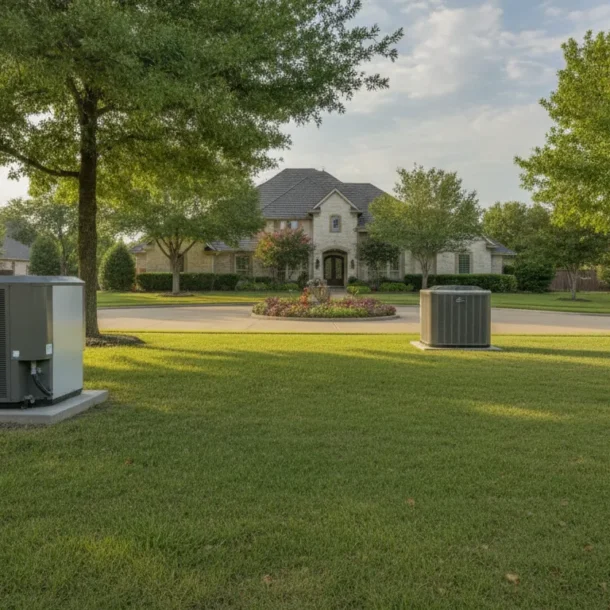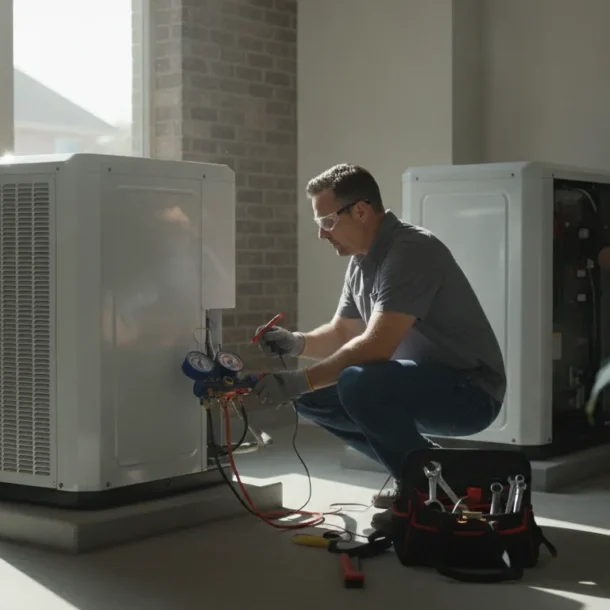

Replacing a furnace in North Texas is rarely a simple equipment purchase. The right budget depends on the heating capacity, efficiency, fuel type, existing ductwork, and the conditions technicians find at your property.
Request a customized quote from Garland Heating and Air Conditioning before you commit to a replacement plan.
A furnace replacement cost calculator texas homeowners use can organize the major cost factors and create a planning estimate. But it cannot replace a load assessment or site-specific quote. Treat the result as a budgeting starting point, not a guaranteed installed price.
That distinction matters in the Dallas-Fort Worth area. A residential replacement and a commercial project may involve very different equipment, access, controls, and installation requirements.
Garland Heating and Air Conditioning has served DFW since 1952. Its quote-based process accounts for the actual system and property. For broader planning context, review this DFW HVAC budgeting guide. Then use the factors below to make your calculator estimate more useful.
Answer: A calculator can help a Texas homeowner organize the major variables behind a furnace replacement, compare equipment options, and decide when to request a professional assessment. It can support planning, but it cannot guarantee the final installed price for a specific home.
A useful estimate starts with more than square footage. Enter or review the details that affect equipment selection and installation scope, including:
The result may suggest a heating capacity in BTUs or organize costs into broad planning categories. Treat those outputs as questions to bring to an HVAC professional, not as a final equipment order. Home size is an input, not a complete sizing method. A load calculation and an inspection of the existing system can reveal needs that a basic online form cannot see.
Online tools often use generalized assumptions. A local quote must account for the actual equipment, venting, electrical connections, thermostat, duct modifications, removal and disposal, access, code requirements, and site conditions.
The scope can also change if the furnace is part of a combined heating and cooling replacement.
Commercial properties require a separate evaluation. Rooftop equipment, controls, curb work, crane access, multiple zones, and engineering requirements can make a residential calculator unsuitable for a business or facility.
For Dallas-Fort Worth homeowners, the DFW HVAC budgeting guide can help you think through related planning factors. Garland Heating and Air Conditioning uses quote-based pricing because system requirements and property conditions vary. When you are ready to move beyond a ballpark, request a customized assessment and compare the proposed equipment, installation scope, and included work line by line.
Answer capsule: Square footage is useful context, but it is not a furnace sizing formula. The right BTU rating comes from a heating load calculation. That calculation considers the home, its construction, its duct system, and the DFW climate. A furnace replacement cost calculator in Texas can organize planning factors, but it cannot replace a property-specific assessment.
BTU, or British thermal unit, describes heating capacity. A larger home may need more capacity, but two homes with the same floor area can lose heat at very different rates. Ceiling height, insulation, windows and doors, sun exposure, number of floors, and the condition and availability of ductwork all affect the heating load.
A load calculation estimates how much heat the building loses under design conditions. That result helps a technician evaluate equipment capacity. It is better than simply matching a new furnace to the old model or applying a square-foot rule.
Oversizing can create short cycles and uneven comfort. Undersizing may leave the system struggling during a cold snap. The goal is a properly matched system that works with the home and its air distribution.
Ducts deserve particular attention. ENERGY STAR explains that sealing and insulating ducts can help address rooms that are too hot or too cold and can improve comfort and efficiency. A replacement assessment should therefore look beyond the furnace cabinet. Existing duct restrictions, leaks, insulation, return-air capacity, and register performance may influence the recommended equipment and the work included in the quote.
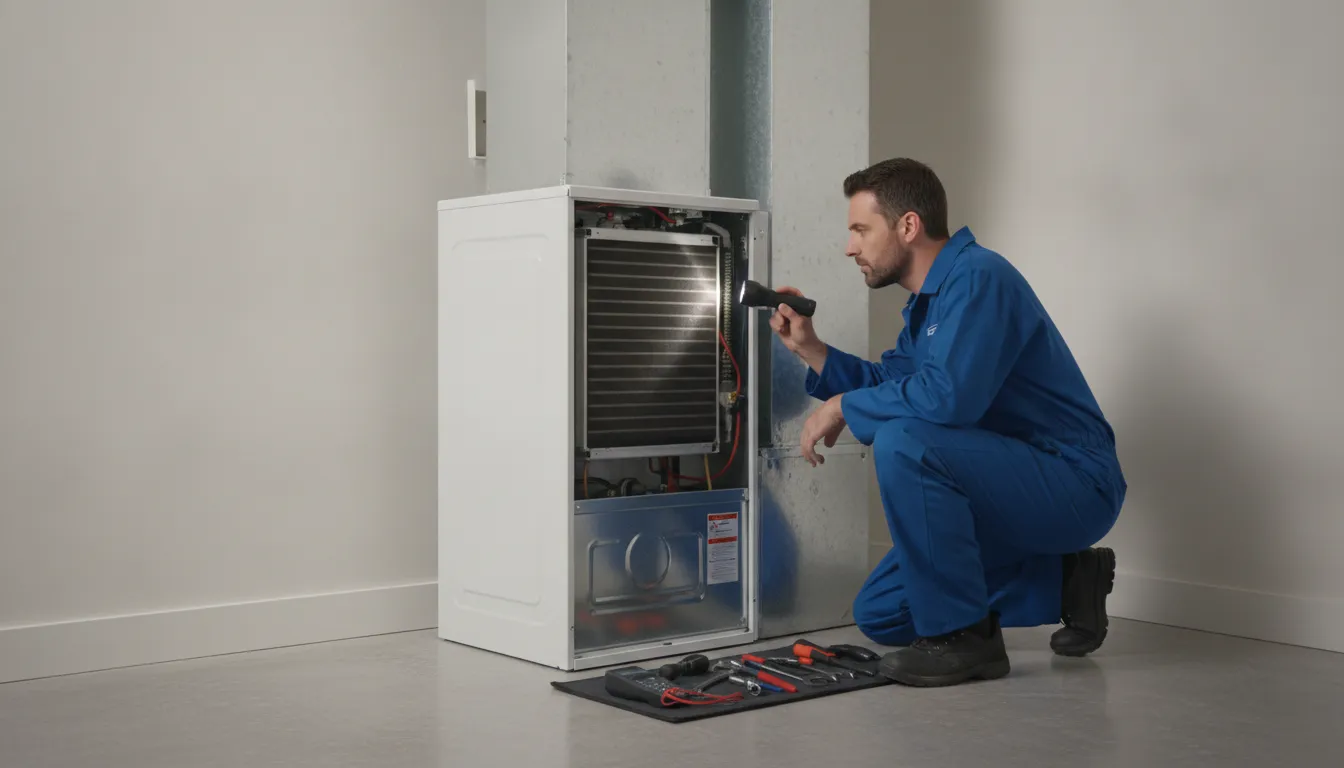
Residential furnace planning usually centers on the building envelope, household comfort, fuel type, existing ductwork, and the needs of one home. DFW winters are generally mild, but occasional freezes and cold snaps still make dependable capacity important. Local conditions should inform the assessment without turning climate into a shortcut.
Commercial properties require a separate scope. Their heating needs may involve multiple zones, rooftop equipment, building controls, curb work, crane access, and engineering requirements. A square-foot estimate that might start a residential conversation is not an adequate commercial replacement proposal. Garland Heating and Air Conditioning documents both residential and commercial heating capabilities, so the assessment should be matched to the property type. Learn more about heating installation and replacement.
Answer: A furnace replacement installation can include the new equipment, labor, removal, and disposal of the old unit. It may also include connections, ductwork adjustments, code-related work, and permits or inspections required for the property.
The exact scope depends on the existing system, the selected furnace, access to the work area, and site conditions.
A calculator can help organize these categories, but it cannot see whether an older Texas home needs a venting change. It cannot confirm whether the furnace fits the existing cabinet space or whether ductwork is restricting airflow.
Those details are why a furnace replacement cost calculator texas should be treated as a planning tool, not a guaranteed installed price.
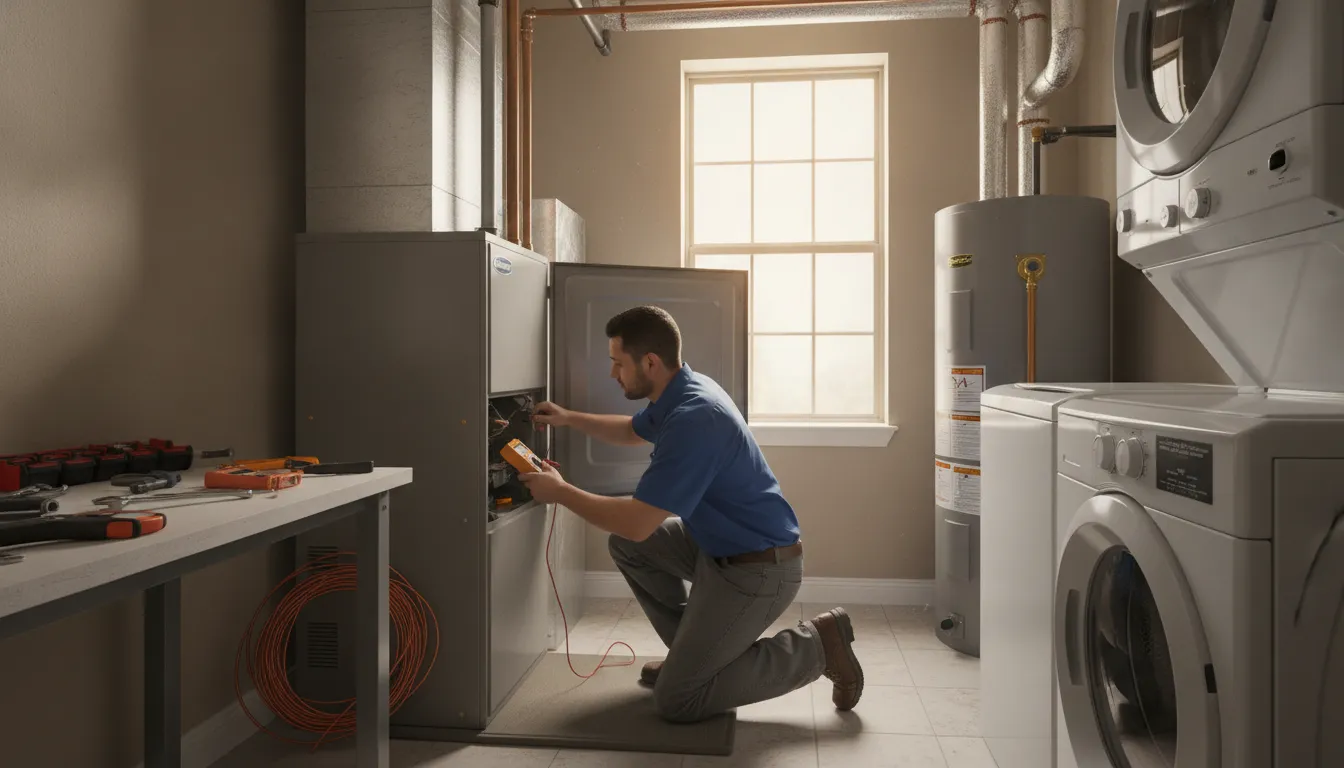
The equipment portion may include the furnace, controls, thermostat compatibility, fittings, fasteners, mounting hardware, and connections needed for the selected system. For a gas furnace, the installation may also require attention to the gas connection, shutoff, venting, and combustion-air requirements. Electrical connections and condensate handling can matter as well, particularly when replacing an older system with a different model or efficiency level.
Labor covers safely disconnecting the existing equipment, positioning and securing the replacement, making the required connections, testing operation, and reviewing the system after startup. Removal typically involves disconnecting power and other connections. Ask whether hauling away the old furnace and installation debris is included, rather than assuming disposal is part of every proposal.
Existing ductwork may only need a connection adjustment, or it may require repair, sealing, resizing, or a larger modification to support the new equipment. ENERGY STAR notes that well-designed and properly sealed ducts can improve comfort, efficiency, and safety, so duct condition should be evaluated instead of hidden inside a generic allowance.
Permits and inspections vary by jurisdiction and project. Tight access, attic or crawl-space work, code updates, difficult venting, electrical changes, and commercial requirements can add planning steps. Commercial replacements may also involve rooftop equipment, controls, curb work, crane access, or engineering. For a clearer explanation of the stages, review the DFW HVAC installation process. Garland Heating and Air Conditioning uses a quote-based approach, with final scope determined by the system and property.
Answer: It can be, but the right choice depends on your home’s heating needs, existing venting, duct condition, equipment design, and how long you expect to use the system. A furnace replacement cost calculator texas can help organize these questions, but it cannot determine the best equipment or final quote by itself.
AFUE stands for annual fuel utilization efficiency. In plain language, it describes how much of the furnace’s fuel energy becomes usable heat. For example, an 82% AFUE furnace converts about 82% of its fuel energy into heat, while the remaining portion leaves through the exhaust. A 96% AFUE furnace converts about 96% into heat, with approximately 4% leaving as exhaust. These figures describe equipment efficiency, not the performance of the entire HVAC system.
Standard-efficiency furnaces are commonly described in the 80% to 84% AFUE range. They generally use one heat exchanger.
High-efficiency models use a second condensing heat exchanger to recover additional heat from exhaust gases. That design can affect venting, drainage, installation requirements, and the equipment options that fit your home.
The U.S. Department of Energy also distinguishes furnace efficiency requirements by climate region. Texas conditions should be part of the evaluation rather than an afterthought.
Efficiency is only one part of the decision. Furnaces may operate at one stage, two stages, or variable output. A single-stage unit operates at one heating level. Two-stage and variable-output equipment can adjust output more closely to the heating demand, which may affect cycling, airflow, sound, and comfort. The equipment must still be correctly sized and installed for the property. A higher rating or more advanced control does not automatically make it the best fit.
| Option | What it means | What to evaluate in Texas |
|---|---|---|
| Standard efficiency | Often about 80% to 84% AFUE with one heat exchanger | Existing venting, equipment compatibility, and project requirements |
| High efficiency | Uses a condensing heat exchanger to recover more heat from exhaust | Venting, condensate drainage, installation layout, and equipment fit |
| Two-stage or variable output | Adjusts heating output instead of always running at one level | System sizing, controls, airflow, comfort goals, and installation quality |
In some DFW homes, the broader choice is not simply one furnace efficiency rating versus another. A heat pump, dual-fuel arrangement, or other heating configuration may deserve consideration based on the existing system, electrical service, comfort goals, and property conditions. Review the furnace and heat pump costs before treating a calculator result as a recommendation.
For a closer look at staged and variable-output equipment, see these furnace efficiency options. Garland Heating and Air Conditioning can assess the application and explain which choices belong in a customized quote.
Answer: Use a calculator as a planning starting point, then replace its assumptions with verified equipment requirements, property conditions, installation scope, and written answers from a qualified HVAC professional. A Texas estimate becomes useful when you can see exactly what is included, what remains uncertain, and why the recommended system fits the property.
Prepare the information that helps an estimator evaluate the existing system and the building, rather than relying on square footage alone. If the project is a repair rather than a replacement, review these heater repair cost factors first. Then assemble:
Ask the estimator to explain every major assumption in plain language. A calculator may suggest a capacity or broad planning figure, but it cannot inspect airflow, combustion venting, duct condition, access, or electrical compatibility. Those details can change the recommended equipment and the work required.
For the replacement service itself, review Garland Heating and Air Conditioning’s heating installation and replacement information. The family-owned company has served the Dallas-Fort Worth area since 1952, with documented furnace installation and replacement capabilities. A written, property-specific scope gives you a sounder decision than treating any online calculator as a final price.
No. A calculator can help organize planning factors such as fuel type, efficiency, heating capacity, ductwork, and installation complexity. It cannot inspect your property, verify the existing connections, or account for site conditions. Use the result as a budgeting starting point, then request an itemized assessment and customized quote.
Home size is only one input, not a reliable shortcut for choosing equipment or predicting the installed cost. Insulation, windows, ceiling height, number of floors, duct condition, climate, and the home’s heating load also matter. A qualified HVAC professional should confirm the required capacity rather than selecting a furnace from square footage alone.
Not necessarily. The right decision depends on the condition, age, compatibility, efficiency, and repair outlook of each system. A replacement evaluation can compare furnace-only work with a coordinated HVAC upgrade, including equipment, controls, duct changes, removal, and electrical or venting needs. Do not assume a calculator’s combined-system figure applies to your property.
Garland Heating and Air Conditioning uses quote-based pricing because system requirements and site conditions vary. The company provides furnace installation and replacement for residential and commercial customers, with commercial projects requiring a separate review of equipment scale and project scope. Garland is family owned and has served the Dallas-Fort Worth area since 1952. Request a customized quote for your property.
A tailored review can help you compare equipment, installation scope, and site considerations for your DFW property instead of relying on a generic calculator. Request a customized furnace replacement quote from Garland Heating and Air Conditioning. You can also call (972) 278-3500 to discuss your project with the team.