In DFW, an HVAC system can move from routine operation to heavy seasonal demand quickly, especially before extreme summer heat. Knowing what you are paying for helps you compare a one-time tune-up with an ongoing service plan.
Schedule Service with Garland Heating and Air Conditioning to discuss your system and request a customized quote.
There is no single hvac maintenance cost dfw price that fits every home or business. Garland uses quote-based pricing because system type, equipment condition, access, number of units, and requested service all affect the work involved. This guide explains those variables, what maintenance may include, and how to plan your decision without relying on unsupported price ranges.
Garland Heating and Air Conditioning has served the Dallas Fort Worth area since 1952, helping residential and commercial customers understand the difference between preventive maintenance, repair, and replacement. For broader budgeting context, review this HVAC cost guide for Dallas Fort Worth homeowners. Start by looking at the practical details that shape a maintenance quote in this region.
There is no single maintenance price that fits every home or business in the Dallas-Fort Worth area. Garland Heating and Air Conditioning uses quote-based pricing customized to the system requirements and site conditions found at each property. That approach helps separate routine preventive work from repairs or additional service that a particular system may need. The company does not publish a verified standard maintenance price, so an accurate quote requires understanding the equipment, the property, and the requested scope.
Equipment type is one of the first considerations. A central air conditioner, furnace, and heat pump have different components, operating patterns, and inspection needs. A property with one accessible system may require a different service plan than a home with multiple HVAC systems serving separate floors or additions. The number of units, zones, thermostats, and outdoor components can all affect how much equipment a technician needs to evaluate.
Access also matters. Equipment in an open garage or a clearly accessible mechanical area is not the same as equipment in a crowded attic. Tight crawl space, rooftop location, or restricted commercial area. Site conditions can influence the time, preparation, and safety considerations involved in completing the requested work. The system’s current condition matters as well. A routine tune-up may involve inspection, cleaning, and performance checks, while visible wear, airflow concerns, unusual sounds, or other findings may require a separate diagnostic or repair discussion.
The requested scope is another important variable. Some customers need a one-time seasonal tune-up. Others are evaluating recurring maintenance, service for several systems, or a broader review that includes heating and cooling equipment. Clarifying what should be inspected, cleaned, tested, documented, or discussed helps Garland prepare a quote that matches the actual need.
DFW’s extreme summer heat creates strong seasonal demand for reliable air conditioning and preventive maintenance. Scheduling before demanding cooling or heating periods may make planning easier, but the right timing still depends on the equipment and the property’s operating needs. Maintenance should be treated as planned service, not a promise that a system can never require repair.
Residential and commercial work also have different planning requirements. A residence may involve an AC system, furnace, or heat pump serving one household. Commercial properties can involve rooftop units, multi-zone systems, operating-hour restrictions, tenant comfort requirements, and documentation needs. Garland provides preventive maintenance contracts for commercial rooftop and multi-zone systems, with scope shaped around the facility rather than copied from a residential visit. Whether you manage a home in Garland or a facility elsewhere in DFW, a site-specific conversation gives you a clearer basis for comparing service options. Schedule HVAC service to discuss the equipment and conditions that should be included in your customized quote.
A residential maintenance plan is designed to keep existing equipment inspected and adjusted before a seasonal demand spike. The exact scope should be confirmed with the HVAC company. But a thorough visit generally addresses the home’s air conditioner, furnace, or heat pump rather than treating every system as interchangeable. Garland Heating and Air Conditioning offers routine maintenance, tune-ups, seasonal maintenance programs, diagnostics, and emergency breakdown service for DFW homeowners.
For an air conditioner, a seasonal tune-up commonly includes inspection, cleaning, and performance checks. A technician may examine accessible electrical and mechanical components, look for visible wear, assess operation, and observe whether the system is delivering expected airflow and temperature change. Cleaning may address components that affect performance, subject to the equipment’s condition and safe access.
The same practical approach applies to furnaces and heat pumps, with checks tailored to how each system heats or cools the home. The visit may include observing the filter and airflow, checking for unusual sounds or operating behavior, and documenting conditions that deserve attention. A filter observation is not a substitute for choosing the right filter or correcting a duct or blower problem. It is one part of understanding how the system is working.
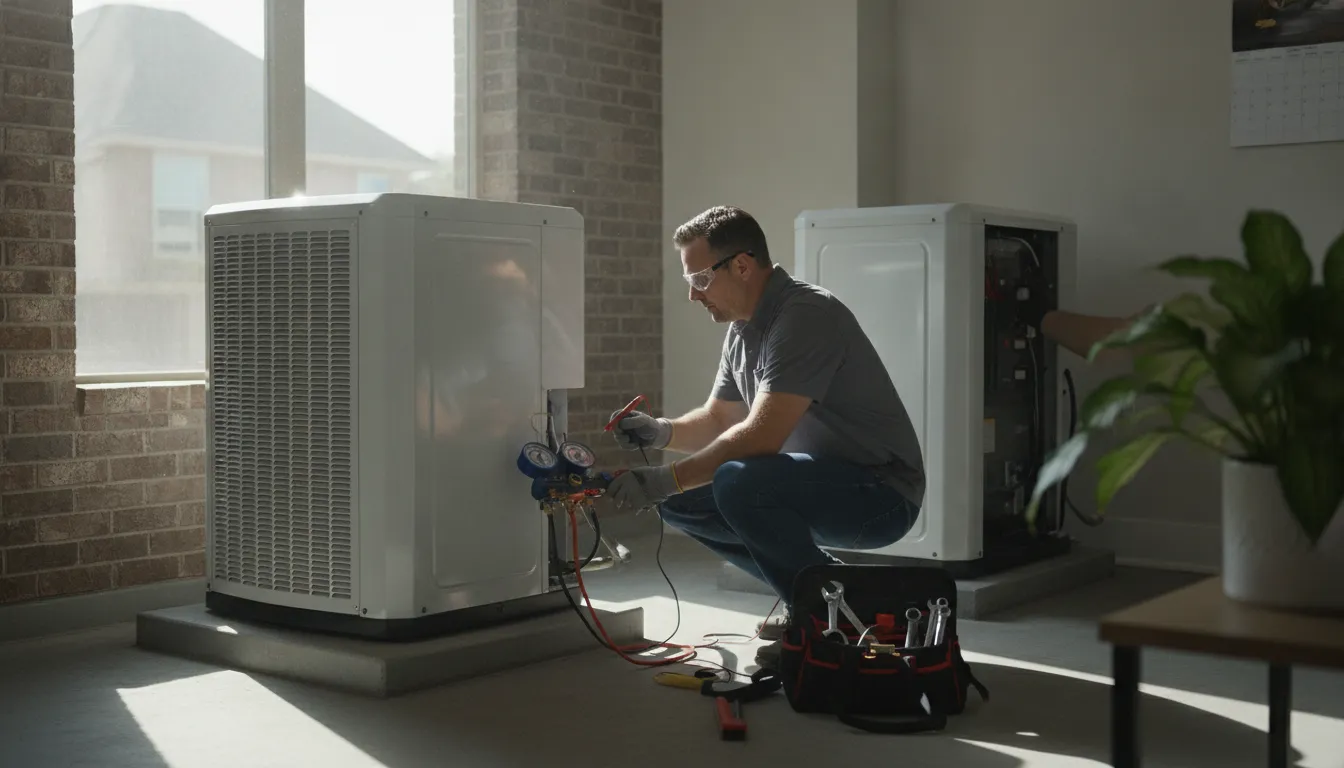
Maintenance is scheduled when the system is operating, or when the homeowner wants a preventive evaluation. Its purpose is to identify cleaning needs, performance concerns, and developing issues before they become an urgent call. It does not guarantee that a component will never fail, especially in older or heavily used equipment.
A repair visit starts with a reported symptom, such as poor cooling, a strange noise, or a system that will not run. The technician must diagnose that problem and explain the repair options. A maintenance visit can uncover a repair need, but the repair itself is usually separate work and should be described clearly before it begins. That distinction helps homeowners compare an HVAC maintenance cost in DFW with the scope of an unplanned diagnostic or repair visit.
For a closer look at the inspection and cleaning process, review what an AC tune-up includes. When your home needs planned upkeep, Garland’s DFW AC maintenance service can help clarify the appropriate scope for the equipment in place.
The better choice depends on why you are scheduling service, how consistently the equipment runs, and how much planning your household or facility needs. A one-time tune-up can be a practical starting point when you want a current assessment before deciding on a maintenance routine. A recurring arrangement may be easier to manage when several systems, seasonal demands, or a busy property schedule make follow-through difficult.
A one-time visit fits a homeowner who has recently moved, missed a service season, or wants to understand the condition of an existing AC, furnace, or heat pump. Preventive maintenance and repair are different services. A tune-up is not a substitute for diagnosing unusual noise, weak airflow, leaks, or inconsistent temperatures. For that distinction, see this guide to AC tune-up versus repair.
A seasonal tune-up commonly includes inspection, cleaning, and performance checks. That makes a single visit useful for establishing a baseline and identifying whether follow-up work deserves a separate conversation. It keeps the decision grounded in the actual system rather than an assumed answer. The question is simple: “What is HVAC maintenance cost DFW?” Garland Heating and Air Conditioning uses quote-based pricing customized to system requirements and site conditions. Confirm the scope for the equipment and property involved.
Recurring service can suit customers who prefer planned scheduling and continuity across changing seasons. Texas homeowners may need annual or twice-yearly service depending on system needs, equipment type, operating conditions, and how the home is used. ENERGY STAR recommends a professional cooling checkup in spring and a heating checkup in fall, which provides a useful seasonal framework without making every property identical. Read the guidance at ENERGY STAR.
For DFW properties, timing matters because extreme summer heat creates strong seasonal demand for reliable air conditioning and preventive maintenance. A recurring arrangement may help a homeowner or facility manager plan service before peak use, but it should not be treated as a guarantee against every breakdown. The right schedule still depends on the system’s condition and needs.
| Attribute | One-Time Visit | Recurring Arrangement |
|---|---|---|
| Best use | Baseline or missed service. | Planned ongoing upkeep. |
| Scheduling | Choose one appointment. | Plan around seasons. |
| Budgeting | Assess one defined scope. | Plan recurring service needs. |
| Continuity | Limited to the visit. | Supports repeat follow-through. |
| Equipment needs | One system or property concern. | Systems needing regular review. |
Use the HVAC cost guide for Dallas Fort Worth homeowners to frame the broader planning decision, then request a scope-specific recommendation for your equipment.
Commercial maintenance pricing is shaped by the equipment and the building, not by a one-size-fits-all unit count. Garland Heating and Air Conditioning provides commercial HVAC maintenance, repair, installation, replacement, and emergency services, with preventive maintenance contracts available for rooftop units and multi-zone systems. That means a facility manager can request a scope that reflects how the property actually operates.
Rooftop units may require different inspection and access planning than equipment located in a mechanical room. A building with several rooftop units, packaged systems, or separate zones also requires a clear inventory so the contractor can account for each piece of equipment. The number of units matters, but so does the condition, age, configuration, and accessibility of those units.
Access can include roof entry procedures, locked mechanical areas, tenant coordination, lift requirements, and safety rules. If equipment is spread across multiple buildings or floors, travel between systems can affect the time needed for a complete visit. Sharing an equipment list, site map, recent service records, and known comfort issues helps Garland evaluate the property before preparing a customized quote.
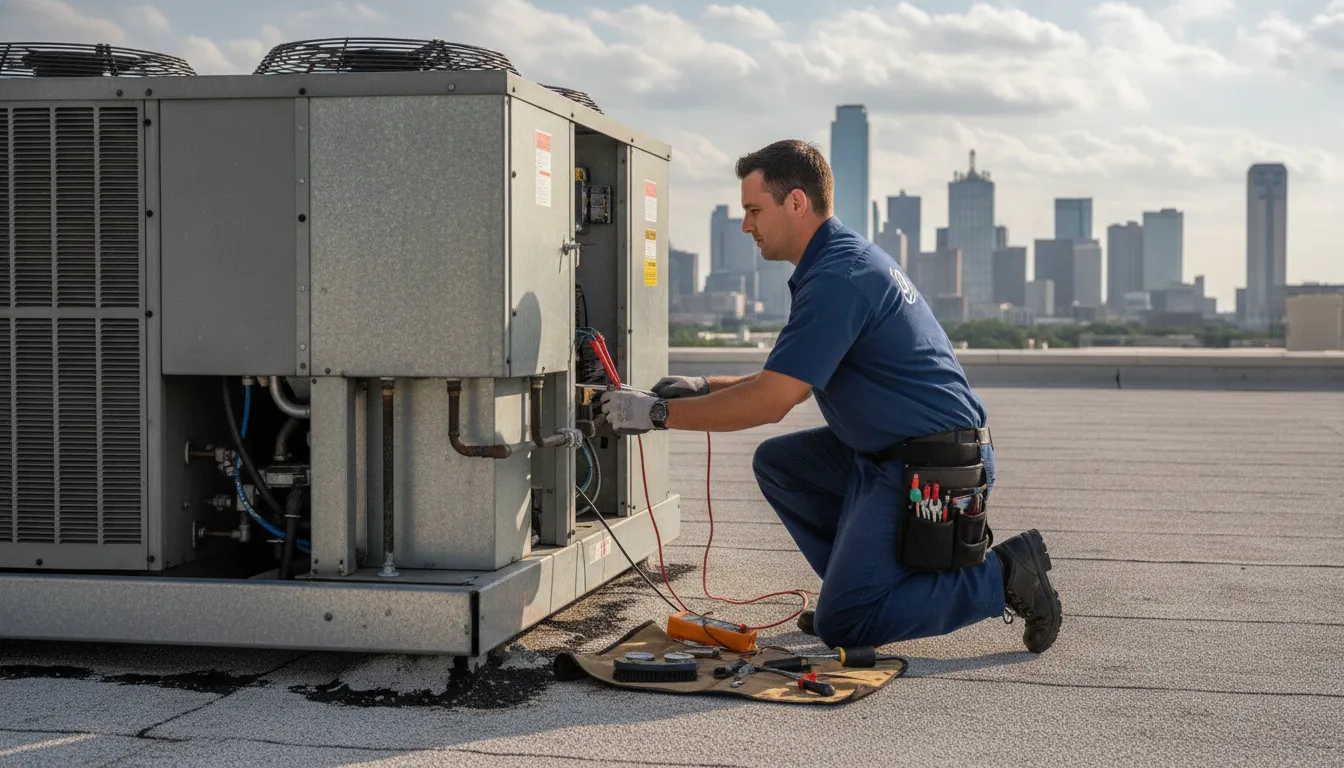
Operating hours and occupancy patterns influence when maintenance can take place. A retail location, office, medical facility, or production space may need service scheduled around opening hours, tenant activity, or controlled access. The quote should make those scheduling expectations clear without assuming that every facility has the same priorities.
Documentation needs also vary. Some facility teams need inspection notes for each unit, condition findings, recommended repairs. Filter or airflow observations, and records that can be shared with an owner or property manager. Others may want a broader preventive scope that separates routine maintenance from repairs requiring approval. Confirming what is included, how findings will be reported, and which work requires authorization prevents confusion later. It also gives the facility team a practical record for comparing conditions across units and planning future conversations with ownership.
When reviewing commercial HVAC maintenance and service, ask for a scope that identifies the equipment covered, access assumptions, preferred service windows, documentation, and the difference between preventive work and repair. Garland uses quote-based pricing customized to system requirements and site conditions. A direct site conversation is the most useful way to evaluate HVAC maintenance cost in DFW for a multi-unit property.
An older HVAC system should not be judged by age alone. Its condition, maintenance history, comfort performance, and repair pattern tell you more about whether planned service is a sensible next step. A service plan may help organize inspections and catch developing problems, but it does not replace a repair or replacement evaluation when the equipment is already failing.
Start with the basics. Ask whether the system has received consistent professional maintenance, whether it has needed repeated repairs, and whether it still heats and cools each area evenly. A history of skipped maintenance matters because ENERGY STAR identifies dirt and neglect as major causes of heating and cooling system failure and inefficiency. Regular maintenance helps equipment operate at peak performance and may prevent unwanted problems and costs, but it cannot reverse every form of wear.
Look beyond the outdoor unit and thermostat. Filters deserve monthly attention in central air conditioners, furnaces, and heat pumps, according to ENERGY STAR guidance. A dirty filter makes equipment work harder, which can increase energy costs and damage components. Uneven temperatures, weak registers, or rooms that never feel comfortable may also point to duct leakage. ENERGY STAR reports that about 20 to 30 percent of air moving through ducts in a typical forced-air house can be lost through leaks, holes, and poor connections. Those losses can contribute to higher utility bills and comfort problems.
Ask the technician to distinguish a maintenance finding from a condition that requires corrective work. High static pressure, for example, can reduce airflow or increase fan power draw. Reduced airflow can also increase compressor energy use and decrease cooling capacity, as documented in the U.S. Department of Energy’s air-conditioning diagnostics guide. A plan does not make those airflow problems disappear. Filters, duct leakage, blower performance, and system pressures may need separate diagnosis and correction.
Frequent breakdowns, worsening comfort, or a system that needs significant corrective work should prompt a broader conversation before enrolling in recurring service. A professional visit can clarify what is happening and what service the equipment needs. Review what happens during HVAC service so you know what questions to ask. For routine upkeep or an evaluation, Garland Heating and Air Conditioning provides DFW AC maintenance service. To plan the larger decision, use the HVAC cost guide for Dallas Fort Worth homeowners as context, then request a quote based on the system and site conditions.
The quote depends on the equipment type, number of systems, accessibility, current condition, and the scope of service requested. Residential AC, furnace, and heat pump maintenance may require different checks. Commercial rooftop and multi-zone equipment can also require a broader plan. Garland Heating and Air Conditioning uses quote-based pricing based on system requirements and site conditions, rather than one public maintenance price.
A residential plan may cover routine maintenance or seasonal tune-ups for air conditioners, furnaces, and heat pumps. A seasonal AC tune-up commonly includes inspection, cleaning, and performance checks. Ask whether the proposed scope includes documentation, filter and airflow observations, and how repairs or replacement recommendations are handled separately from preventive service.
Many Texas homeowners schedule service annually, while some systems need attention twice a year based on equipment condition and household needs. ENERGY STAR recommends a cooling checkup in spring and a heating checkup in fall: ENERGY STAR seasonal guidance. Scheduling before DFW’s heavy cooling or heating demand can help identify issues before the system is working hardest.
No. Preventive service can identify dirt, airflow concerns, and developing issues, but it cannot guarantee that equipment will not fail. A tune-up and a repair visit serve different needs. If the system is already noisy, leaking, failing to cool, or not starting, describe those symptoms when requesting service so the visit can address the active problem.
Commercial plans are typically scoped around the property’s equipment, operating requirements, access conditions, and documentation needs. They may include preventive contracts for rooftop units, multi-zone systems, and other commercial HVAC equipment. A facility manager should provide the unit count and equipment details so the contractor can confirm coverage and build an appropriate quote.
Garland Heating and Air Conditioning can help you plan maintenance around your system, site, and service needs. Recommendations are quote-based, so the next step is a clear conversation about the equipment and work involved. Schedule HVAC service through the contact page, or call (972) 278-3500 if you prefer to speak with the team. Garland Heating and Air Conditioning has served Dallas-Fort Worth since 1952.