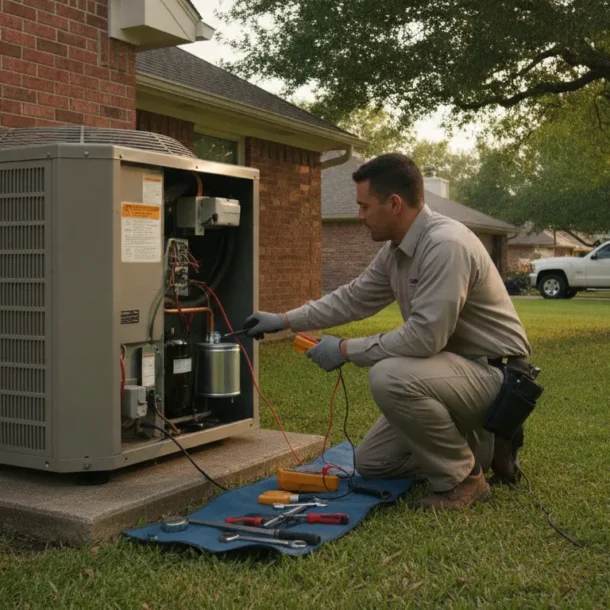

When a North Texas AC system starts struggling through long, hot summers, replacement planning should begin before a breakdown forces a rushed decision.
Schedule a customized AC installation quote so your home, existing equipment, and cooling goals can be evaluated together.
New AC unit cost for Texas homeowners is project-specific. That is the practical answer behind the search for new AC unit cost Texas homeowners. And the total depends on system capacity, efficiency rating, ductwork, home layout, installation requirements, and other site-specific details.
DFW homeowners also need equipment that can handle a demanding climate, including 40 to 60 days each year above 100 degrees Fahrenheit. A thoughtful quote should therefore cover more than the equipment label. It should explain sizing, installation scope, and the factors that affect long-term performance. For broader planning context, review this HVAC cost guide for Dallas-Fort Worth homeowners, then look more closely at how local project requirements shape the investment.
There is no reliable universal price for a new AC unit in Texas. A replacement quote depends on the home, the equipment, and the work required to install and commission the system. In DFW, where temperatures exceed 100 degrees on 40 to 60 days annually, the right system must also handle intense cooling demand and indoor humidity. Learn how to choose the correct AC unit size for Texas before comparing quotes.
Answer-ready guidance: Budget for a project-specific quote, not a package price. Ask the contractor to document the load calculation, system type, efficiency, ductwork condition, site requirements, included labor, warranty coverage, and final testing.
A professional should perform a load calculation, often called Manual J, to determine the cooling capacity your home actually needs. Square footage alone is not enough. Insulation, windows, orientation, ceiling height, air leakage, and the home’s layout all affect the result. Oversized equipment can cycle improperly, while undersized equipment may struggle during North Texas heat.
Next, confirm the system type and efficiency target. A standard split system, heat pump, or other configuration can involve different equipment and installation requirements. Efficiency ratings such as SEER2 matter, but the highest rating is not automatically the best fit for every home. The equipment must be properly matched and installed to perform as expected.
Existing ductwork is a major consideration. Damaged, poorly sealed, or inaccessible ducts may need repair or modification so conditioned air reaches the rooms effectively. Electrical updates, equipment access, attic or closet conditions, condensate drainage, permits, removal of the old system, and startup testing can also affect the scope.
Because these details vary from one property to another, Garland Heating and Air Conditioning provides quote-based recommendations rather than publishing a one-size-fits-all number. A written quote should make each included item clear, allowing you to compare the total scope and expected fit instead of choosing based on an unexplained figure.
A replacement quote should describe more than the equipment sitting outside your home. The total reflects the work required to select, install, connect, test, and support a system that fits your property. Equipment capacity, efficiency rating, ductwork needs, and home structure can all change the project scope. For a deeper breakdown of local variables, review these AC installation cost factors in DFW.
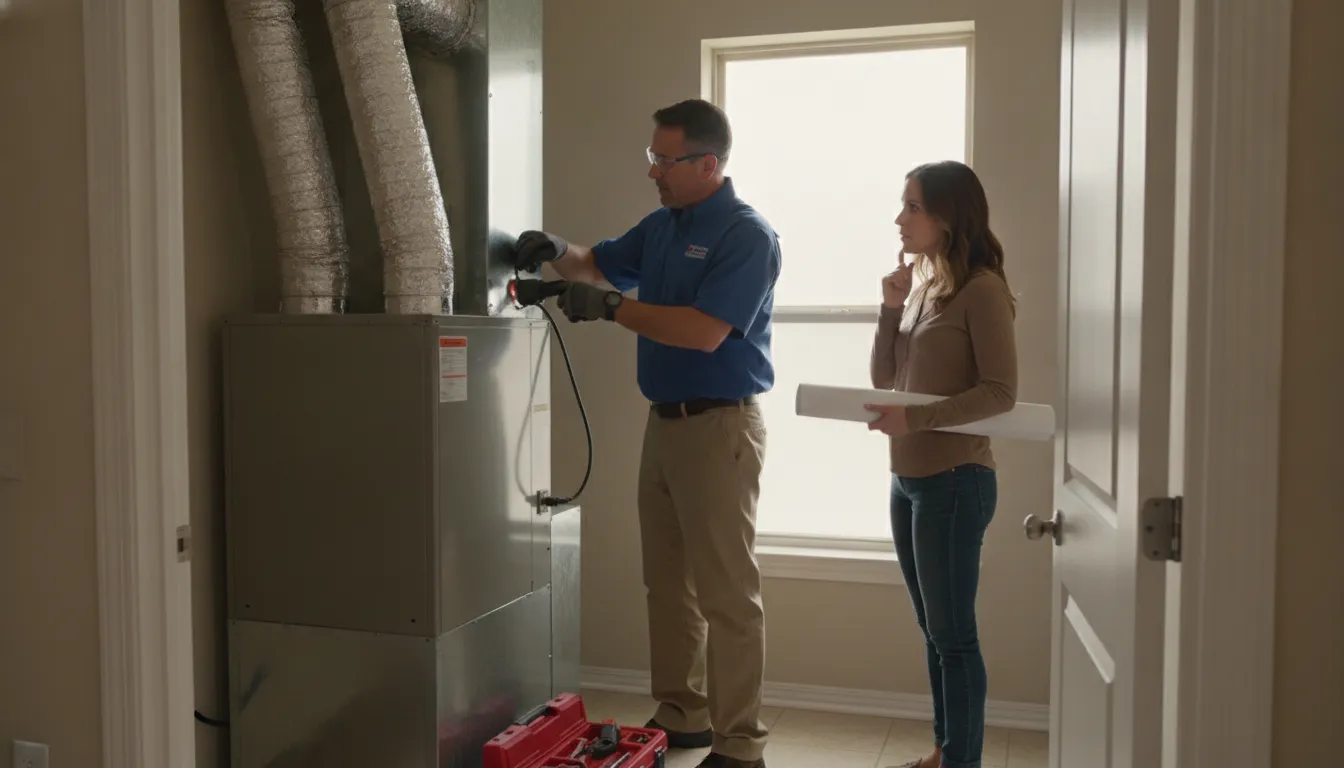
The equipment line should identify the proposed indoor and outdoor components, their capacity, efficiency rating, and included controls. Ask whether the system is properly matched and sized for your home rather than choosing by label alone. A professional load calculation helps determine the right capacity, which supports comfort and efficient operation in the demanding Texas climate. A larger unit is not automatically a better fit.
Labor can include disconnecting the old system, removing it from the property, positioning the new equipment, connecting refrigerant and electrical components, and completing startup checks. The quote should also make clear whether it includes:
Ductwork deserves particular attention in older DFW homes. A qualified contractor can identify problems in existing ducts and determine whether sealing or other work is needed during installation. The quality of installation matters as much as the equipment efficiency rating, so a quote that leaves these details vague is difficult to compare fairly.
Ask which manufacturer warranty applies to each major component and what workmanship coverage the installing contractor provides. Confirm any registration requirements, exclusions, service responsibilities, and the process for requesting warranty support. The quote should also explain what happens after startup if airflow, controls, or performance need adjustment.
Because AC replacement pricing is project-dependent, Garland Heating and Air Conditioning prepares customized quotes based on the home and installation requirements. Comparing the scope line by line can help you evaluate the actual fit instead of selecting an offer based only on a single total.
Answer capsule: SEER2 can affect the upfront scope of a replacement because higher-efficiency equipment may use different components, controls, or matched indoor and outdoor units. However, the highest rating is not automatically the best choice. The right system balances efficiency, comfort, home design, equipment size, installation quality, and the way your DFW household uses air conditioning.
SEER2 is the seasonal energy efficiency ratio used to rate modern air conditioning systems. In general, a higher rating indicates that the equipment can use less energy to provide cooling under its test conditions. The U.S. Department of Energy recommends considering efficiency ratings when planning a new installation, but the rating is only one part of the decision. You can read this SEER rating guide for Texas homes for more background.
That distinction matters when researching new ac unit cost texas homeowners may encounter in quotes. A quote for a higher-efficiency system may include matched equipment and controls that differ from a basic replacement. It may also require a review of the electrical setup, refrigerant lines, thermostat, and other installation details. The total should reflect the complete system, not just the label on the outdoor cabinet.
DFW homes face long cooling seasons, intense heat, and indoor humidity. A properly selected system should manage those conditions without excessive cycling or uneven comfort. High-efficiency equipment can support quieter operation, more consistent air distribution, and improved dehumidification, but those benefits depend on correct sizing and installation.
A professional contractor should perform a load calculation, often called Manual J, before selecting capacity. Oversizing or undersizing can undermine comfort and efficiency. The indoor coil, outdoor unit, blower, ductwork, and controls must also be compatible. Equipment that is not properly sized or matched to the home may perform poorly and have a shorter service life.
For that reason, compare the complete design and installation plan rather than choosing a rating in isolation. Ask which SEER2 options fit your home’s load, ductwork, humidity needs, and long-term priorities. A properly matched system with quality installation can be a sounder choice than a higher-rated system that does not fit the house.
Answer: Compare an AC tier by how well its efficiency options, controls, warranty coverage, serviceability, and system fit match your home, not by the badge on the cabinet. A properly sized and installed system can matter more than choosing the most expensive product category.
Budget, mid-range, and premium are useful decision categories, but they are not universal technical standards. The exact equipment available can vary by manufacturer, distributor, and contractor. Use the comparison below to organize questions during a replacement consultation rather than to assume one tier is right for every DFW home.
| Attribute/Factor | Budget | Mid-range | Premium |
|---|---|---|---|
| Efficiency choices | May focus on standard efficiency options that meet current requirements. | Often offers more efficiency choices for balancing operating goals and project fit. | May include higher-efficiency configurations, subject to proper sizing and installation. |
| Controls | Basic thermostat and straightforward operation. | More programming or comfort-control features may be available. | Advanced controls and communicating components may support finer system management. |
| Warranty questions | Ask what manufacturer and workmanship coverage applies. | Compare registration requirements, parts coverage, and labor terms. | Confirm every component, labor condition, and service requirement in writing. |
| Serviceability | Prioritize parts availability and technicians familiar with the equipment. | Ask whether local technicians can diagnose and maintain the selected model. | Confirm the contractor can support specialized controls and matched components. |
| Fit for the home | Can be appropriate when capacity and features meet the home’s needs. | May provide a practical balance of comfort features and system options. | Is worthwhile only when the design, ductwork, controls, and installation support it. |
Higher efficiency is not automatically better if the equipment is oversized, mismatched, or installed poorly. The U.S. Department of Energy notes that correct sizing supports efficiency and comfort, while improper installation can reduce performance. Ask the contractor to explain the load calculation, equipment match, ductwork condition, and commissioning steps.
For a closer look at feature differences, use this guide to compare major AC brands in Texas. Then evaluate the recommended system against your home’s layout, humidity concerns, maintenance expectations, and long-term service plan. That process gives the question of new ac unit cost texas homeowners a more useful answer than a brand label alone.
Answer: A complete replacement quote should identify the equipment, explain how it fits your home, and list every installation task that can affect the final result. It should leave no uncertainty about what is included, what is excluded, and how the system will be tested before the crew leaves.

Before installation day, clear a path to the indoor and outdoor equipment. Protect nearby belongings and confirm where the crew will park and stage materials. Use this guide for preparing your home for new installation.
Garland Heating and Air Conditioning can explain the written scope. The team helps DFW homeowners compare a project quote on fit, service, and long-term practicality. That is more useful than a headline search result for new ac unit cost texas homeowners.
Answer: Start by confirming the full replacement scope, asking which financing options may be available, and planning the work before an emergency leaves you with fewer choices. Because AC pricing is quote-based, the amount and payment arrangements depend on your home’s requirements and the selected installation plan.
Ask the contractor to explain what the quote includes before discussing how to manage the cost. The proposal should identify the equipment, installation labor, system size, efficiency rating, ductwork needs. Removal of the existing unit, and any electrical or site work that may be required. A clear scope gives you a more useful basis for comparing offers than a headline figure alone.
Then ask whether financing options are available for the proposed installation and request the complete terms in writing from the provider. Confirm the total project amount, payment schedule, application requirements, and any conditions that could affect the arrangement. Garland Heating and Air Conditioning can explain available options as part of its quote-based process. But homeowners should review all financing documents carefully and choose only an arrangement that fits their household budget.
Planning before peak summer heat gives you time to compare equipment, review the scope, and schedule the work without making a rushed decision. Garland Heating and Air Conditioning recommends checking HVAC efficiency before the peak cooling season. If your system is already unreliable, schedule an evaluation early. Same-day and 24/7 emergency service may help when cooling fails, but advance planning generally allows more time for questions and preparation.
For background on the factors that shape a replacement budget, review this HVAC cost guide for Dallas-Fort Worth homeowners. Garland Heating and Air Conditioning has served the DFW metroplex since 1952 and can explain the written scope during a quote review.
Request your customized AC installation quote or call (972) 278-3500 before a failing system turns replacement into an emergency.
There is no reliable one-size-fits-all price. A replacement quote depends on equipment capacity, SEER2 efficiency, ductwork, home layout, electrical needs, permits, removal, and installation labor. In DFW, a contractor should evaluate the home rather than quote from square footage alone. Garland Heating and Air Conditioning provides project-specific, customized quotes for Texas homeowners.
Square footage is only a starting point, not a sizing formula. Insulation, windows, ceiling height, sun exposure, duct condition, and the home’s layout also affect the required capacity. Ask the contractor to complete a professional Manual J load calculation before selecting equipment. The U.S. Department of Energy explains why correct sizing supports efficiency and comfort.
Not automatically. A higher SEER2 rating can reduce operating costs and may support quieter, more consistent cooling. But the best choice depends on expected usage, home comfort needs, equipment compatibility, and the installation quote. Compare the complete system and projected fit, not the efficiency label alone. Proper installation is also necessary for equipment to perform near its rated efficiency.
Sometimes a repair is reasonable, but a 20-year-old system deserves a replacement comparison. Ask about repair availability, recurring failures, efficiency, comfort, and the condition of connected components. Older equipment may also be difficult to match with current systems. A qualified contractor can compare the repair scope with a properly sized replacement and help you choose based on the home’s needs.
A project-specific review can help you compare equipment, installation scope, and comfort priorities for your DFW home. To schedule a customized AC installation or replacement quote, contact Garland Heating and Air Conditioning. You can also reach the team at (972) 278-3500 to discuss your home’s needs and the next practical step.