

When an old AC unit is replaced, it should leave the property through a planned removal process, not become an afterthought on installation day.
Schedule AC replacement service with Garland Heating and Air Conditioning.
What happens to old AC unit when replaced is usually a coordinated process. A qualified technician disconnects the equipment, recovers refrigerant, removes the components included in the project scope, and sends usable materials toward recycling or proper disposal. Garland Heating and Air Conditioning can explain what will be removed, what the quote includes, and how the work fits your Dallas-Fort Worth property.
For a homeowner or property manager, replacement is about more than installing the new condenser or air handler. The old outdoor unit, indoor coil, furnace, line set, thermostat, pad, and related materials may also need to be handled. Ask about removal before you approve the work so the written scope matches your expectations.
Short answer: The crew shuts down and disconnects the existing system, recovers any refrigerant, removes the components covered by the project, and transports the equipment for appropriate handling. Garland Heating and Air Conditioning serves residential and commercial customers across the Dallas-Fort Worth area and can outline removal responsibilities before installation begins.
A central AC replacement may involve more than the outdoor condenser. Depending on the design, the crew may remove the evaporator coil, furnace or air handler, refrigerant lines, electrical disconnects, drain components, thermostat, pad, brackets, and other replaced materials. Some projects replace a complete matched system, while others keep a compatible component in service. The contractor should identify that distinction in advance.
Ask for the removal scope in plain language. The estimate should state whether the crew will disconnect and haul away the outdoor equipment, indoor equipment, coil, line set, thermostat, and other replaced materials. It should also identify anything that will remain. This simple step prevents a disagreement about whether an old component was supposed to be removed.
Removal affects access, labor, scheduling, and disposal. An attic air handler may require a different route than a ground-level condenser. A commercial rooftop unit may require access coordination, lifting equipment, tenant notices, or a plan for multiple systems. Early planning helps protect walls, flooring, landscaping, roofs, and business operations.
Garland Heating and Air Conditioning has served the DFW area since 1952. Its new AC installation and replacement service is the right place to discuss equipment selection, removal responsibilities, and the installation sequence.
Refrigerant recovery is an important safety and environmental step when equipment is dismantled on-site. The U.S. Environmental Protection Agency explains that refrigerant must be recovered from covered appliances before final disposal. The final person in the disposal chain is responsible for ensuring recovery. See the EPA stationary refrigeration safe disposal requirements for the applicable guidance.
The technician identifies the equipment and refrigerant, connects approved recovery equipment, and transfers the charge into a designated recovery cylinder. The process is controlled rather than releasing refrigerant into the air. The exact procedure depends on the system design, refrigerant type, equipment condition, and available service connections.
Recovery normally occurs before the system is cut apart or sent to a recycler. A technician may account for refrigerant in the compressor, condenser, evaporator, and connecting lines. If a property owner needs documentation, ask the contractor what records are available and who is responsible for each step.
An AC unit that no longer cools can still contain a refrigerant charge. Do not cut, puncture, or open the refrigerant lines as a shortcut to scrap disposal. Doing so can release refrigerant and expose the person handling the equipment to pressure, oil, and sharp metal. It can also make it harder to document that the system was prepared correctly.
The EPA explains that older appliances may contain ozone-depleting refrigerants, oils, mercury-containing components, or other substances that require care. Its recovery, recycling, and reclamation guidance explains why refrigerant should be managed through the proper process.
After refrigerant is recovered, an old AC unit may be dismantled and sorted. Recycling outcomes depend on the equipment’s age, condition, construction, and the receiving facility. The unit is not simply treated as one undifferentiated piece of household trash.
Copper may be present in refrigerant tubing, wiring, and heat-transfer components. Aluminum is common in coil fins and cabinet parts. Steel is used in cabinets, supports, fasteners, and structural pieces. A recycler may separate these metals before sending them to a processor. The facility’s process determines what is recovered and whether any scrap value is credited.
Scrap value is not the same as a guaranteed payment. The amount can vary with metal markets, weight, contamination, transportation, and processing charges. Contractor removal may be the simplest option when the crew is already disconnecting and hauling the system. Ask whether recycling is part of the project scope instead of assuming every component will be resold.
Refrigerant recovery comes before final disposal for covered central residential AC equipment dismantled on-site. Other materials may need separate handling based on the unit and local facility requirements. Do not pour oil onto the ground, place loose electrical components in a regular bin, or leave a cabinet at the curb without checking collection rules.
EPA appliance disposal guidance recommends consulting an HVAC provider or local waste-management facility when arranging disposal. That is especially important for older equipment, window units, and systems removed outside a contractor-led replacement.
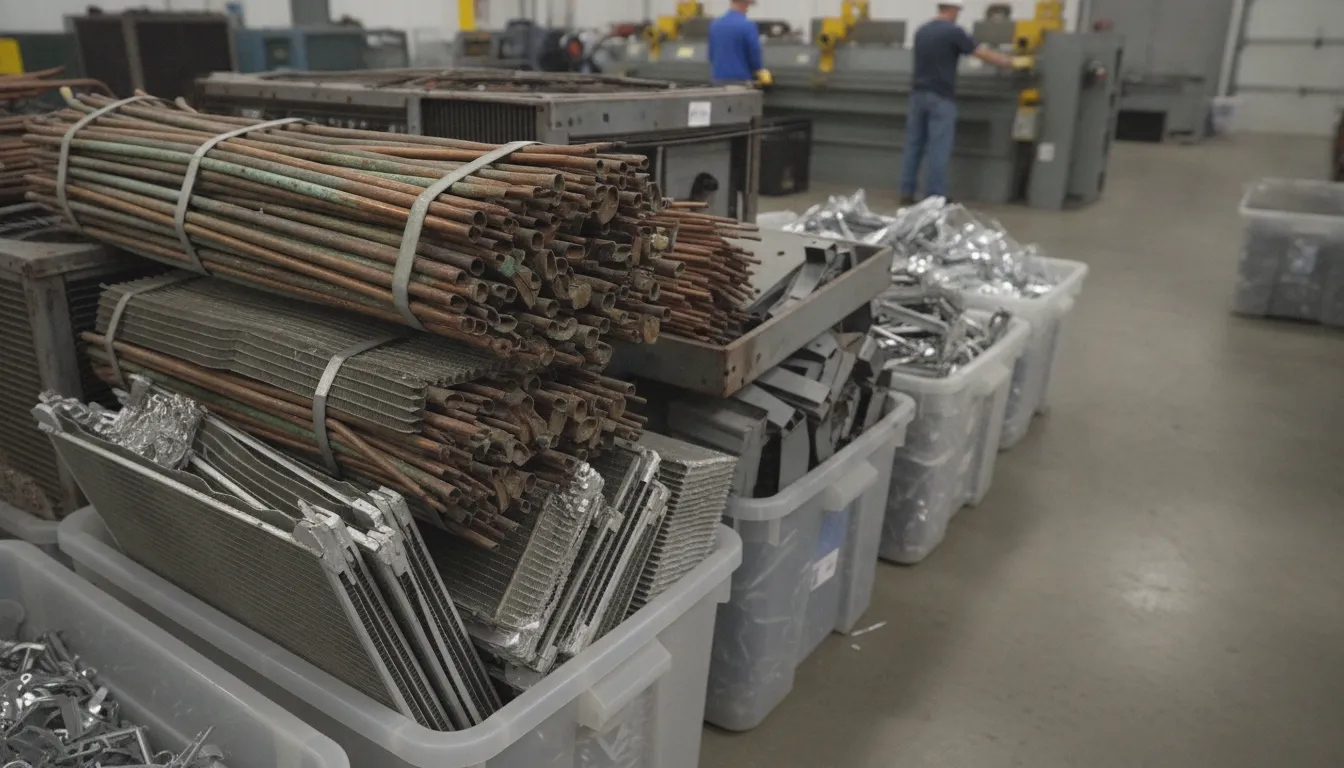
Possibly, but neither outcome should be treated as automatic. An old AC unit may contain recoverable copper, aluminum, and steel. A recycler may accept it after refrigerant recovery, but any payment depends on local conditions and the material received. The contractor’s removal or disposal charge may also be separate from scrap value.
Ask who owns the equipment after removal and whether the contractor applies any scrap credit to the project. If you want to arrange disposal yourself, confirm the receiving facility’s rules before transporting the unit. Some facilities require proof of refrigerant recovery or will not accept equipment that has not been prepared. Do not assume a scrap yard can accept a charged system.
A rebate or utility incentive is a program benefit, not payment for the old unit’s metal. Eligibility may depend on the new system’s efficiency, approved equipment, application timing, contractor documentation, proof of purchase, and proper removal. Programs can change, so verify current requirements with the utility or program administrator before authorizing work.
Garland Heating and Air Conditioning uses quote-based pricing. Ask for removal, hauling, recovery, and disposal responsibilities to be written into the customized project scope. Do not rely on a general promise that the old equipment will be handled later.
| Factor | Contractor removal | Owner-arranged disposal | Rebate or incentive |
|---|---|---|---|
| Primary purpose | Coordinates removal with replacement installation. | Lets the owner arrange a recycler or waste facility. | May reduce the cost of qualifying new equipment. |
| Refrigerant | A qualified technician handles recovery before disposal. | The owner must confirm facility requirements and recovery duties. | The program may request recovery or disposal documentation. |
| Payment | Pricing follows the written project scope. | Scrap value varies and may be offset by transport or processing. | Eligibility, deadlines, and amounts vary by program. |
Ask Garland Heating and Air Conditioning what removal is included in your replacement quote. A clear scope helps you compare options without guessing about the old equipment.
Commercial replacement projects follow the same basic principles, but logistics can be more involved. A property manager may be dealing with rooftop units, multiple condensers, refrigeration equipment, tenant schedules, loading restrictions, or records that need to be retained. The removal plan should identify each unit and the access route for getting it off the property.
Confirm whether the scope covers refrigerant recovery, crane or lift coordination, rigging, hauling, recycling, disposal records, and protection of occupied areas. Ask how the crew will schedule shutdowns so the work does not create avoidable disruption for tenants, employees, customers, or temperature-sensitive inventory.
For a business with larger cooling needs, Garland Heating and Air Conditioning provides light and heavy commercial AC services. The right removal plan depends on the equipment and property, so a site-specific discussion is more useful than a one-size-fits-all timeline.
Start with the written estimate, proposal, and final invoice. Look for terms such as equipment removal, hauling, refrigerant recovery, recycling, or disposal. If removal was included and the unit remains at the property, contact the contractor promptly, take photos, and ask when collection will occur. Keep the equipment accessible, but do not move or dismantle it yourself if doing so could damage the property or release refrigerant.
Ask the installing contractor whether a separate removal service is available. If it is not, contact your local waste-management department or a facility that accepts air-conditioning equipment. Describe the type of unit and ask whether the facility requires refrigerant recovery, an appointment, proof of preparation, or a particular delivery method. Local rules and fees vary, so get instructions before loading the equipment.
For a homeowner in Garland, Richardson, Plano, or another DFW community, making the disposal path part of the replacement agreement is the safest approach. For a property manager, keep a record of which equipment was removed, when it left the site, and who received it. Those records make follow-up easier if a rebate administrator or building owner later requests documentation.
There is no single removal time for every DFW property. In many replacement projects, removal is coordinated with the installation visit. The schedule depends on equipment access, the number of components, refrigerant recovery, delivery timing, attic or rooftop conditions, and the route from the equipment to the vehicle.
A narrow attic opening, steep roof, locked gate, long path through a home, restricted loading area, or occupied commercial facility can change the work sequence. Summer demand in North Texas can also affect appointment availability. A contractor should explain the expected sequence for the actual property rather than promise that every removal will take the same amount of time.
Confirm the delivery date and removal scope. Clear the path to the indoor equipment, unlock gates, secure pets, and tell the crew about attic, roof, parking, or access restrictions. Businesses should coordinate with building management and identify rooms or inventory that need special protection.
If the existing system is still operating while you wait, AC repairs and maintenance service may help address an immediate comfort problem. When you are ready to replace the system, keep those questions with the rest of your AC replacement planning discussion.
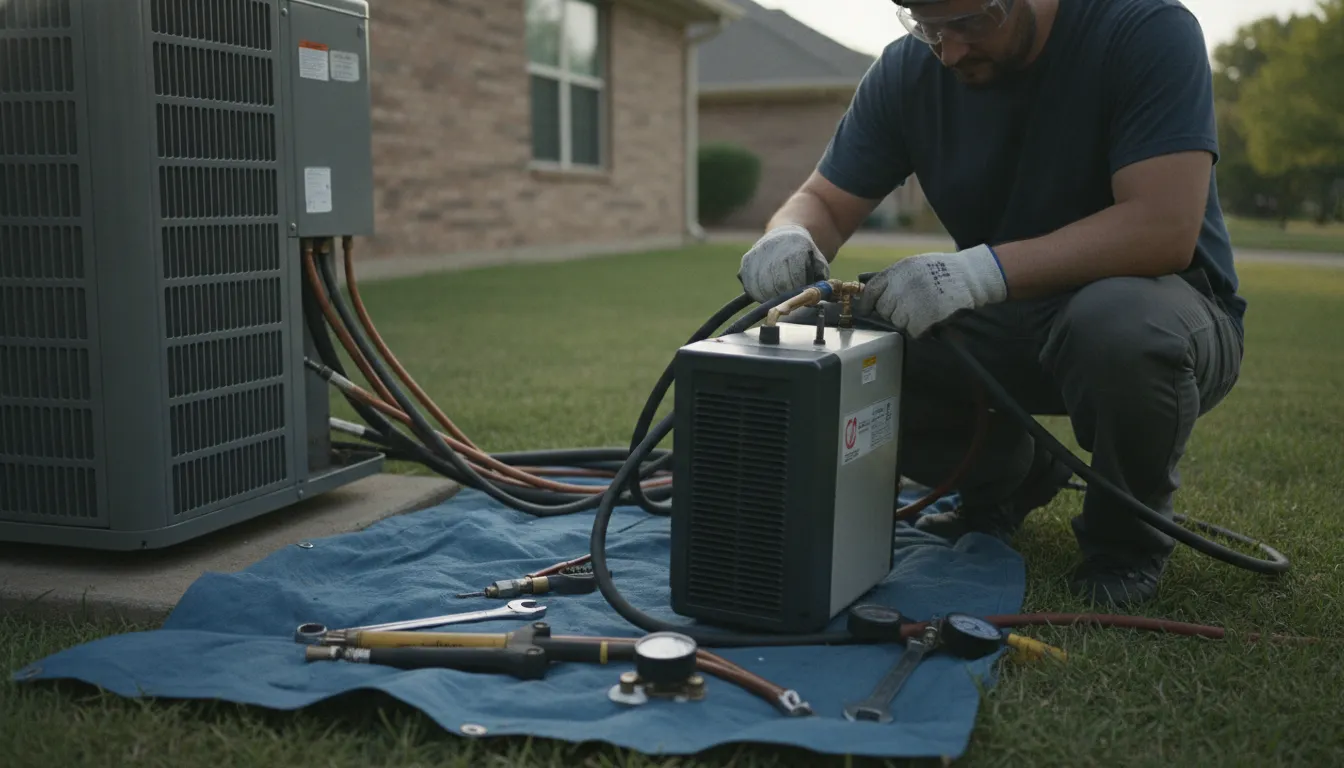
The goal is a complete handoff: the new system is installed, the replaced equipment is gone, and refrigerant and recyclable materials have been directed through the appropriate process.
Request a customized AC replacement quote from Garland Heating and Air Conditioning. Ask for removal, refrigerant recovery, hauling, and disposal details in writing.
Often, removal is coordinated with replacement installation, but the written project scope controls. Confirm whether the outdoor condenser, indoor coil, air handler or furnace, line set, thermostat, hauling, and disposal are included. If a component remains in service, ask the contractor to identify it clearly.
Do not place a central AC unit in ordinary disposal while it may contain refrigerant. The EPA requires appropriate refrigerant recovery before covered equipment is disposed of. Contact an HVAC professional or local waste facility for instructions, especially if the unit is handled outside a contractor-led replacement.
It may have scrap value because it can contain copper, aluminum, and steel. The amount is not guaranteed and can be affected by metal markets, weight, processing, transportation, and recovery requirements. Ask who owns the removed equipment and whether any scrap credit applies to the written project quote.
Some utility or energy-efficiency programs offer incentives, but requirements vary. Check the current rules before installation. The program may require approved equipment, efficiency documentation, an application before work, proof of purchase, and evidence that the old system was properly removed.
No. Leave the system intact and let a qualified technician recover the refrigerant before dismantling. Cutting lines can release refrigerant, create a safety risk, and complicate responsible disposal. Include recovery and removal questions in the replacement scope before installation day.
Contact Garland Heating and Air Conditioning to plan your DFW AC replacement.