
R22 is an older refrigerant that depletes the ozone layer, while R410A does not deplete ozone but is a high-global-warming-potential HFC. The two refrigerants use different equipment, operating pressures, and lubricants. They are not interchangeable, and R410A must never be added to a system designed for R22.
A working R22 air conditioner does not have to be replaced solely because it uses R22. However, the end of new R22 production and imports means owners should weigh the system’s condition and repair history before investing in a major repair. R410A also is no longer the automatic choice for every new system because lower-GWP refrigerants and equipment standards continue to evolve.
| Comparison | R22 | R410A |
|---|---|---|
| Refrigerant type | HCFC | HFC |
| Common equipment | Older air conditioners, especially systems installed before the transition to R410A | Many systems installed after the R22 transition |
| Ozone impact | Depletes the ozone layer | Does not deplete the ozone layer |
| Climate impact | Has significant climate impact | High-GWP refrigerant subject to an evolving transition |
| Availability and service | New U.S. production and import ended January 1, 2020; recovered and reclaimed R22 may be used | Still serviceable, but no longer the universal default for new equipment |
| Equipment compatibility | Designed for R22 pressures and components | Designed for different pressures and components |
| Lubricant | Typically uses mineral oil | Typically uses POE oil |
| Homeowner takeaway | A reliable system may continue operating, but plan ahead if major repairs or leaks develop | Maintain existing equipment and compare current code-compliant choices when replacement is needed |
Not sure what refrigerant your system uses? Schedule Service with Garland Heating and Air Conditioning for a professional assessment.
R22, also known as HCFC-22, was widely used in residential air conditioners for decades. Because it contains chlorine that can damage the ozone layer, the United States phased out its production and import under federal environmental requirements.
U.S. production and import of R22 ended on January 1, 2020. That date did not make existing R22 air conditioners illegal, nor did it create an automatic requirement to replace a working unit. Existing equipment can continue operating, and qualified technicians may service it using recovered or reclaimed R22 when an appropriate supply is available.
The practical issue for homeowners is that an aging R22 system may become less attractive to repair after repeated leaks or a major component failure. A technician can assess the entire system and help you compare a safe repair with replacement planning.
R410A became common as the HVAC industry moved away from R22. It does not contain chlorine and does not deplete the ozone layer. It also operates at different pressures and relies on equipment and lubricants designed specifically for it.
R410A is a high-GWP HFC, so it should not be described as the permanent answer for every new air conditioner. Federal requirements and manufacturer product lines continue to move toward lower-GWP options. Homeowners comparing replacements should focus on a complete, currently available, code-compliant matched system rather than choosing equipment based on a refrigerant name alone.
Cooling performance and energy use depend on the whole system, including correct sizing, matched components, installation quality, ductwork, controls, and maintenance. Refrigerant alone does not guarantee lower utility bills, fewer repairs, or longer equipment life.
No. R410A cannot be added to an R22 system. The refrigerants are not drop-in substitutes and must never be mixed. R22 and R410A systems are engineered for different operating pressures, components, and lubricants. Attempting to charge or convert equipment without an approved, professionally evaluated solution can damage the system and create safety and environmental risks.
A qualified HVAC technician should identify the refrigerant, diagnose leaks, and explain approved repair or replacement choices. Do not attempt to recover, add, mix, or vent refrigerant yourself.
The right decision depends on more than the refrigerant. Consider the age and condition of the system, how often it has needed service, comfort throughout the home, energy performance, and the scope of the current problem. A professional diagnosis gives you the information needed to compare the options without assuming every R22 system must be replaced immediately.
If replacement appears practical, compare new AC installation and replacement options with Garland Heating and Air Conditioning. Get Free Quote information based on your home and comfort needs.
The refrigerant landscape continues to change as manufacturers introduce lower-GWP equipment and regulations evolve. That does not mean every existing R410A system needs immediate replacement. Properly operating equipment can continue to be maintained by qualified professionals.
When purchasing a new air conditioner, compare complete systems that are currently available and code-compliant in your area. Ask about equipment compatibility, technician training, service support, efficiency, comfort features, and long-term ownership considerations. No single refrigerant is universally best for every home or application.
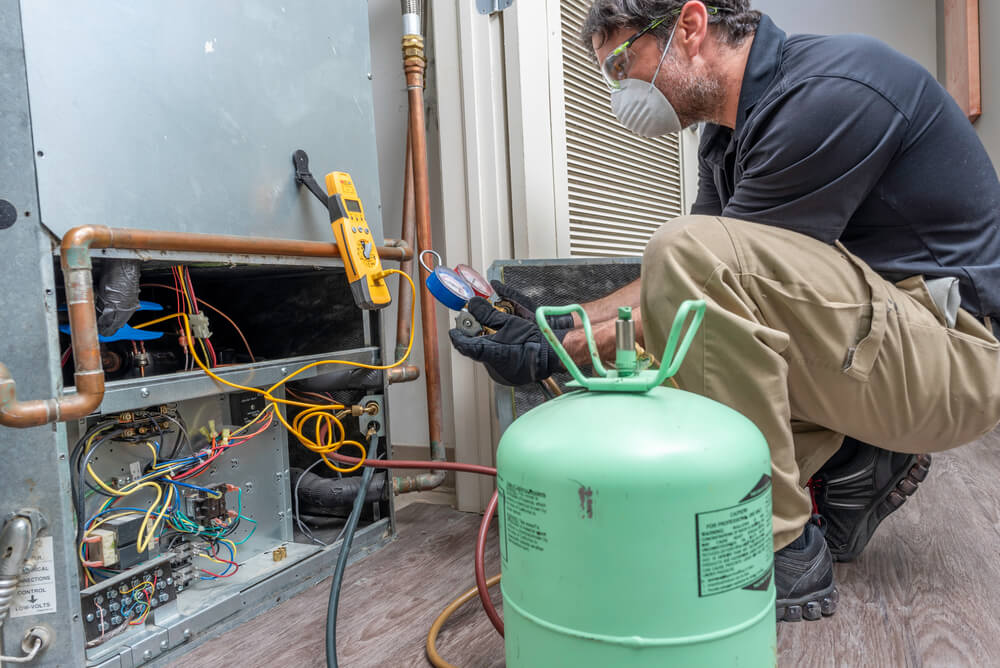
Refrigerant work is not a DIY project. Federal rules prohibit knowingly venting refrigerants while servicing, repairing, maintaining, or disposing of air-conditioning equipment. Diagnosis, leak repair, recovery, charging, and any approved retrofit decision require appropriate tools, training, and procedures.
If your air conditioner is not cooling properly, has ice on the coil or lines, or appears to need frequent refrigerant service, turn to a professional rather than attempting to add refrigerant. Garland Heating and Air Conditioning can schedule AC repair and maintenance service and explain the safest next step.
R22 is an HCFC refrigerant that contains chlorine and depletes the ozone layer. U.S. production and import of new R22 ended January 1, 2020, although existing systems can continue operating and may be serviced with recovered or reclaimed R22.
Yes, when a qualified technician determines that a safe repair is practical and an appropriate reclaimed or recovered supply is available. Homeowners should compare the repair with replacement when leaks recur or a major component fails.
No. R410A and R22 are not interchangeable and must never be mixed. Their equipment, operating pressures, and lubricants differ.
Refrigerant alone does not determine comfort or efficiency. Performance depends on a correctly sized, matched, installed, and maintained system.
R410A is a high-GWP HFC, and the transition toward lower-GWP refrigerants and equipment continues to evolve. Existing R410A systems do not automatically require replacement, but new-system buyers should compare currently available code-compliant options.
The equipment nameplate or service documentation may identify the refrigerant. Because labels can be hard to interpret and refrigerant work has safety requirements, ask a qualified technician to confirm it before making a repair or replacement decision.
Garland Heating and Air Conditioning is a family-owned DFW HVAC provider serving the area since 1952. Whether you have an older R22 system, an R410A unit, or questions about a newer replacement option, our team can assess the complete system and explain practical next steps.
Schedule Service for a professional diagnosis, or Get Free Quote information to compare replacement options.
Sources: U.S. Environmental Protection Agency homeowner guidance on the HCFC-22 phaseout, Section 608 refrigerant requirements, and Technology Transitions resources.