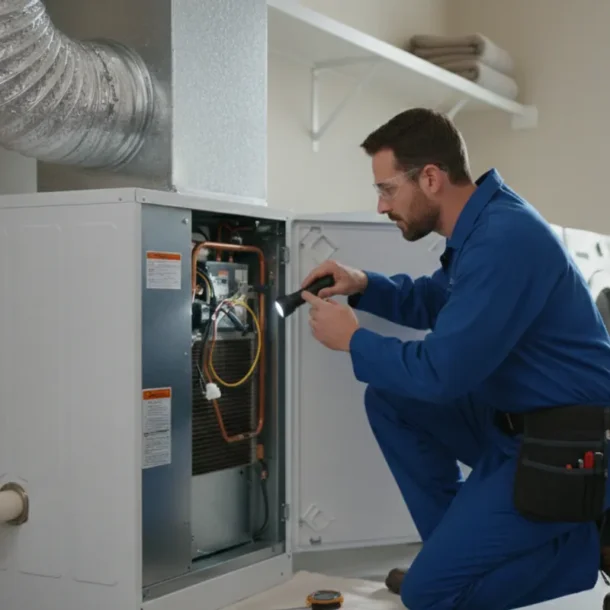

Commercial HVAC commissioning can help a facility team understand whether a system operates as intended.
Discuss your commercial HVAC needs
Before choosing or scheduling commercial HVAC commissioning in Dallas-Fort Worth, define the decision the review should support, gather available system records, and agree on what testing and reporting the scope includes. Commissioning is a structured review, not simply a repair visit or a promise that every issue will be resolved immediately. The work depends on the building, project stage, equipment, access, and owner’s requirements. Use this guide to prepare a useful conversation and compare proposals on equal terms.
A commissioning effort examines how systems operate against documented intent. Depending on the agreed scope, this may include equipment startup, control sequences, sensors, ventilation, schedules, and interaction among components. An existing building and newly installed system do not necessarily need the same review. Ask the provider to describe exactly what will be checked, in plain language, and to identify the documents or criteria used to decide whether operation is as intended.
For example, the objective might be to confirm that new rooftop equipment follows an approved sequence when a zone calls for cooling. That question is narrower than reviewing how the entire building’s heating, ventilation, and controls function together. A useful scope states which units, zones, controls, and modes are included, as well as any related equipment that is outside the review.
Functional checks may establish whether equipment responds to commands, sensors report plausible conditions, and operating modes change as expected. A useful record identifies the system, test condition, observation, and outcome. It also notes what could not be tested and why. A broad “passed” label alone may not tell the owner what was observed or what to do next.
Clarify whether the reviewer will examine normal occupied operation, unoccupied schedules, heating and cooling modes, ventilation, alarms, or sequences that require another trade. Some checks depend on weather, building occupancy, or access to controls. List such limitations before scheduling so nobody mistakes an unobserved mode for a verified one. A documented limitation is more useful than an assumption that the test happened.

A journal case study describes HVAC commissioning in a newly built office building in South Korea. It provides research context, not a local code or project specification; see the published office-building commissioning case study with that distinction in mind.
A new building, major renovation, equipment replacement, control upgrade, or change in building use can be a sensible point for a structured review. Decide whether the goal is to check newly installed equipment only or also connected controls, air distribution, ventilation, and operating schedules. A narrow scope can be appropriate, but it should be named as narrow. For a project team, the timing matters: write down whether the review is intended before occupancy, after startup, or after staff have operated the system for a while.
If commissioning is considered during a project, agree how it relates to installation and startup. Identify who will provide approved sequences, who can make control changes, and who needs to witness or approve a test. If equipment is not yet accessible or a control sequence is still changing, the schedule may need to account for a later verification. Do not assume that the installation, commissioning, programming, and corrective work are bundled; confirm each responsibility in the written scope.
Uneven temperatures, repeated comfort complaints, unexpected cycling, or controls that staff cannot explain may justify a closer look. These signs have multiple possible causes, including schedules, settings, airflow, maintenance needs, or equipment faults. Commissioning does not replace diagnosis of an urgent breakdown. Arrange repair service when equipment is not operating safely or reliably, then determine whether a broader review would address recurring or connected concerns.
Garland Heating and Air Conditioning provides light and heavy commercial AC services. Ask which service conversation fits the facility’s need; do not assume commissioning, design, repairs, and upgrades are automatically bundled together. If the issue is a malfunction that needs attention, describe its symptoms and timing rather than presenting it as a commissioning task alone.
A complete archive is helpful, but it is not a prerequisite for an initial conversation. Start with an equipment list and documents that describe expected operation. Make clear what is missing; a site discussion can establish whether a gap affects the scope, testing, or schedule. A concise set of records with clear labels is often easier to use than a large folder with no explanation.
A short symptom log is more useful than a general statement that a building “runs poorly.” For example, record that a conference room becomes uncomfortable after lunch on weekdays, while nearby offices do not. Note the date, operating schedule, whether the room was occupied, and any thermostat reading available. Avoid changing control settings repeatedly before the review; those changes can make the original condition harder to understand.
State the desired outcome in one or two sentences. For example: “Confirm that the new rooftop equipment and its controls follow the approved operating sequence before tenant occupancy.” Another objective might be to document recurring comfort complaints across specified zones. The first objective points toward checking a defined new installation; the second calls for a plan to observe and record conditions across the affected spaces and operating times.
Clear objectives help distinguish commissioning from routine maintenance, troubleshooting, a design review, or a broad energy assessment. If you are not certain which description fits, explain the operational question and ask the provider to identify what kind of work can answer it. Garland’s commercial HVAC design information is a relevant starting point when the question concerns design coordination; clarify whether design review or commissioning is actually needed.
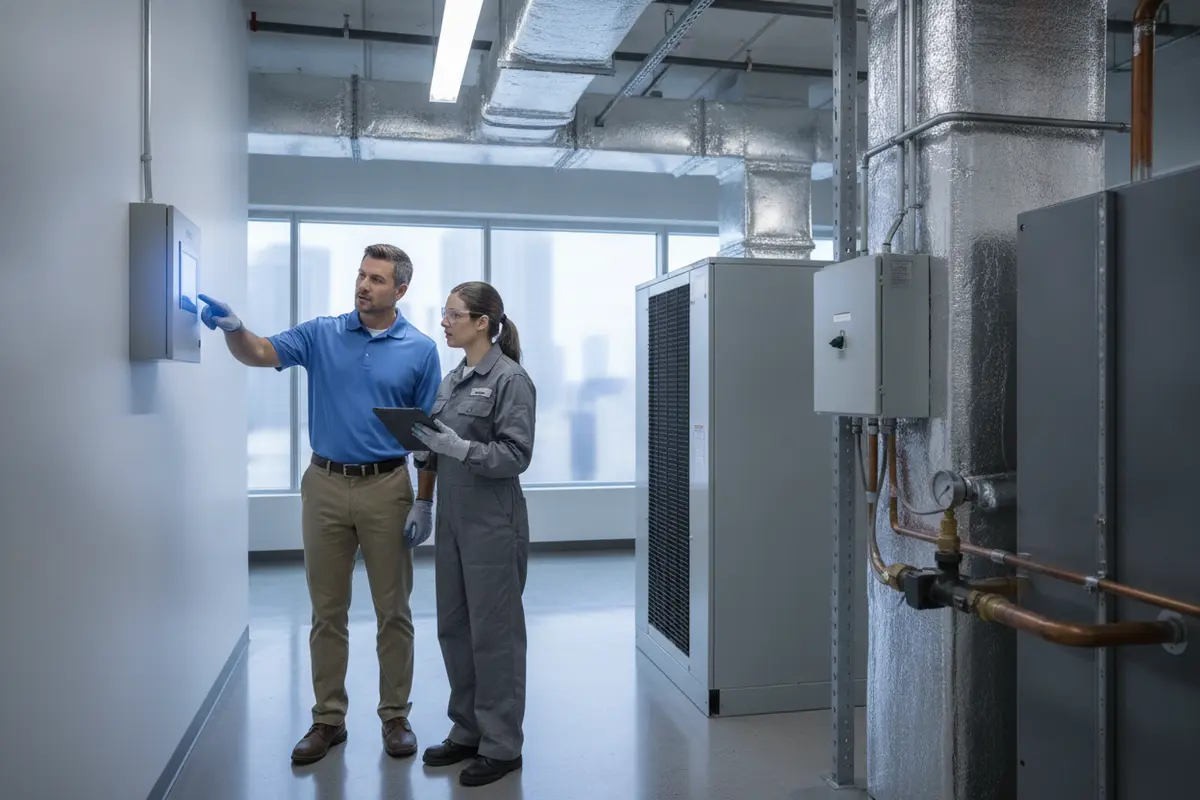
Ask each provider to respond to the same list of systems, operating modes, tests, access needs, and deliverables. Costs are quote-based and depend on the requested work and facility conditions. Comparing a brief equipment check with a broad building review as if they were identical can lead to a misleading decision. Request a customized quote that reflects the actual equipment, testing conditions, access windows, and reporting expected.
| Proposal item | Questions to ask | Why it matters |
|---|---|---|
| Scope and boundaries | Which equipment, controls, zones, and modes are included? | Shows whether the review matches the stated objective. |
| Testing method | What observations or functional tests will be performed, and under what conditions? | Helps distinguish verified operation from assumptions. |
| Access and timing | Are shutdowns, off-hours visits, escorts, or staff coordination needed? | Lets the facility plan around occupants and operations. |
| Deliverables | Will findings identify systems, conditions, priorities, and retest status? | Creates a record staff and follow-up trades can use. |
| Exclusions | Are repairs, parts, balancing, programming, or extra tests separate? | Prevents unexpected assumptions about included work. |
| Follow-up | Who receives deficiencies, and is verification after correction included? | Clarifies how findings move toward resolution. |
Read the assumptions as carefully as the scope. If a proposal excludes control programming, repairs, or access to a tenant area, determine whether that gap prevents the intended outcome. Ask for exclusions to be stated specifically rather than relying on an informal conversation. If a proposal says “test controls,” ask which sequences, commands, or responses that phrase covers.
Where design coordination is part of the question, review the commercial HVAC design page and ask whether the concern belongs in a design review or in commissioning. A proposal should not imply that design services or corrective work are included unless it expressly says so. For examples of the company’s commercial work, see its commercial HVAC and chiller project information; project examples do not by themselves define the scope for a new facility.
Before approving a proposal, ask how a finding will be written. A useful sample should identify the equipment or zone, the test condition, what was expected, what was observed, and whether the result passed, failed, or could not be verified. It should also make clear whether the item needs a correction, more investigation, or a repeat test. This helps a facilities manager judge whether the resulting report will be actionable rather than a collection of vague notes.
For instance, “controls issue” does not tell a follow-up technician what to inspect. “During the occupied cooling test in Zone 2, the command changed but the recorded response did not match the documented sequence” gives the team a place to begin. The reviewer should distinguish an observation from a confirmed cause; the report should not turn a single test result into an unsupported repair diagnosis.
Some tests require equipment to run in a particular mode or at a particular time. Coordinate with property management, occupants, security, and other contractors before confirming the schedule. Share production hours, sensitive areas, tenant access procedures, and safety briefings. Identify who can authorize a temporary change to a schedule or setpoint and who will restore it afterward.
For a multi-tenant building, make a simple access plan: list areas, a site contact for each, approved time windows, and any notice occupants need. For an operating facility, identify processes that cannot be interrupted and equipment that must remain available. If testing cannot safely occur under normal conditions, ask what alternative observation is possible and how the limitation will appear in the report. Confirm in advance whether the team can return when suitable conditions are available.
Choose one person to coordinate questions and approvals. Record changes to access, test conditions, or system settings, including who authorized them and when they should be restored. This prevents a temporary adjustment made during testing from becoming an unexplained permanent setting. After each visit, compare the actual work completed with the planned tests and note anything deferred.
Garland Heating and Air Conditioning serves the Dallas-Fort Worth area. Its service-area information can help start a conversation about a facility’s location and service needs. The company has served the region since 1952. Facilities with commercial refrigeration needs can also review Garland’s commercial refrigeration services and clarify whether those systems belong in the commissioning scope or require separate consideration.
Ask that each finding identify the equipment or zone, observed condition, expected operation, and practical next step. A useful deficiency log might include an owner, priority agreed by the project team, responsible trade, target date, and status. Avoid treating every note as equally urgent; distinguish an operational concern from missing documentation or a test that could not be completed.
For example, a report could state that a sensor reading did not match the expected response during a specified test. The next step might be to verify the sensor, wiring, or control configuration. The report should not leap to a repair conclusion without evidence. The responsible professional can determine whether correction, further diagnosis, or a repeat test is appropriate.
Agree on how completed work will be verified. Some issues may need a repair, controls adjustment, updated documentation, or a retest under the original conditions. Confirm whether the commissioning scope includes that verification or whether it requires separate authorization and a separate quote. Keep the original finding linked to the follow-up record so the team can see what changed.
When an item cannot be closed promptly, record why, who owns the next action, and what condition must be met before retesting. This is especially useful when several parties are involved. A status such as “awaiting access to tenant suite” tells the owner more than leaving the item open without explanation. Keep unresolved items visible during turnover so that a deferred test does not disappear from view.
Ask for the answers in the work description. When several contractors are involved, name who owns each decision and how schedule changes will be communicated. This matters when building operations, equipment installation, and controls are managed by different parties. A brief kickoff call can resolve unclear boundaries before anyone arrives on site. After the call, circulate a short written summary so the facility contact, provider, and other trades share the same understanding.
Garland Heating and Air Conditioning’s commercial AC service page outlines a relevant service area for business customers. Use the inquiry to explain the goal and ask whether the requested work fits the company’s commercial service offering; do not assume a particular commissioning scope until it has been discussed and confirmed.
Contact Garland Heating and Air Conditioning about your facility
No. Maintenance focuses on planned care and service tasks. Commissioning evaluates whether systems and controls operate as intended within an agreed scope. A project may include both, but one does not automatically replace the other. A maintenance visit may identify a concern that should be discussed separately as a commissioning question.
No specific savings should be assumed. A review can identify operational discrepancies, but actual energy use depends on equipment condition, building use, weather, controls, and any corrective work. Ask for evidence and clearly stated assumptions before relying on a projected result.
No. Begin with the information available and describe what is missing. The provider can explain whether the gap limits testing, changes the proposed scope, or affects timing. Keep adding records as they become available.
It may be considered when equipment or controls have changed, recurring concerns need a structured review, or building operation is unclear. First establish whether the immediate need is repair, maintenance, or a broader commissioning process, and specify which systems the review should cover.
Before contacting a provider, write down the building’s objective, affected systems or zones, symptoms and timing, available records, access limits, and the decision you need the review to support. Request a proposal that explains scope, test conditions, reporting, exclusions, and follow-up. Family-owned Garland Heating and Air Conditioning has served the Dallas-Fort Worth area since 1952 and can discuss commercial HVAC needs; use the conversation to confirm which service is appropriate for the facility and what work is included.
A clear scope and a realistic operating plan give your facility team a better basis for scheduling commissioning and acting on what the review finds.