
Replacing an air conditioner in North Texas is more than choosing a new outdoor unit; the permit question can depend on your city and the work included.
Contact Garland Heating and Air Conditioning for project guidance and a customized quote.
Do you need permit to replace ac in texas? Often, yes, when the project involves a complete equipment replacement, but Texas does not use one identical process in every municipality. Local rules control. For example, Garland’s published guidance says air-conditioning repairs require a permit, including coil replacement and replacement of the condensing unit or heating equipment: see the city’s guidance.
A same-part repair may be treated differently from a full changeout, while equipment relocation, electrical changes, or other alterations can add permit questions. Before work begins, identify the authority handling your property, ask who will pull the permit, and confirm whether an inspection is required. Garland Heating and Air Conditioning has served Dallas Fort Worth since 1952, helping homeowners understand the practical steps behind code-compliant replacement work. For the broader equipment-budget and financing picture, see Garland Heating and Air Conditioning’s HVAC cost guides for Dallas-Fort Worth homeowners. The distinction between repair and replacement is the right place to start.
Short answer: A complete AC equipment replacement is more likely to require a mechanical permit than a same-part repair, but Texas requirements are set and administered locally. The city or other authority having jurisdiction should confirm the rule for your address and project scope.
If you are searching for “do you need permit to replace ac in texas,” start by separating a repair from a replacement. Replacing a failed capacitor, contactor, or blower motor with the same type of part is generally treated as repair work in industry guidance. Replacing the condenser, air handler, furnace, or coil is a different project, even when the new equipment is similar in size and stays in the same location. Do not assume that a like-for-like changeout is automatically exempt.
A replacement removes and installs major HVAC equipment. It may involve equipment specifications, refrigerant connections, drainage, supporting platforms, clearances, and system sizing. Garland Heating and Air Conditioning provides residential AC installation and replacement, including system design and sizing. You can review its AC installation and replacement service to understand what a larger project may include.
The permitting office may classify this work as mechanical installation or replacement. For example, Irving’s official residential heating and air conditioning guidance states that a permit is required for all HVAC installations and that completed work requires inspection. That is an Irving rule, not a universal rule for every Texas city, so confirm requirements with your local office.
Even a project that begins as a replacement can require additional review if the installation changes the home or system infrastructure. Ask the contractor and local permitting office about the scope if the work includes:
These examples do not establish a statewide legal rule. They identify project details that can affect code review, inspection, or separate permit requirements. For a smaller component repair, see Garland Heating and Air Conditioning’s AC repair and maintenance service information. Before work begins, identify the permitting authority, ask who will pull any required permit, and confirm how inspection and final documentation will be handled.
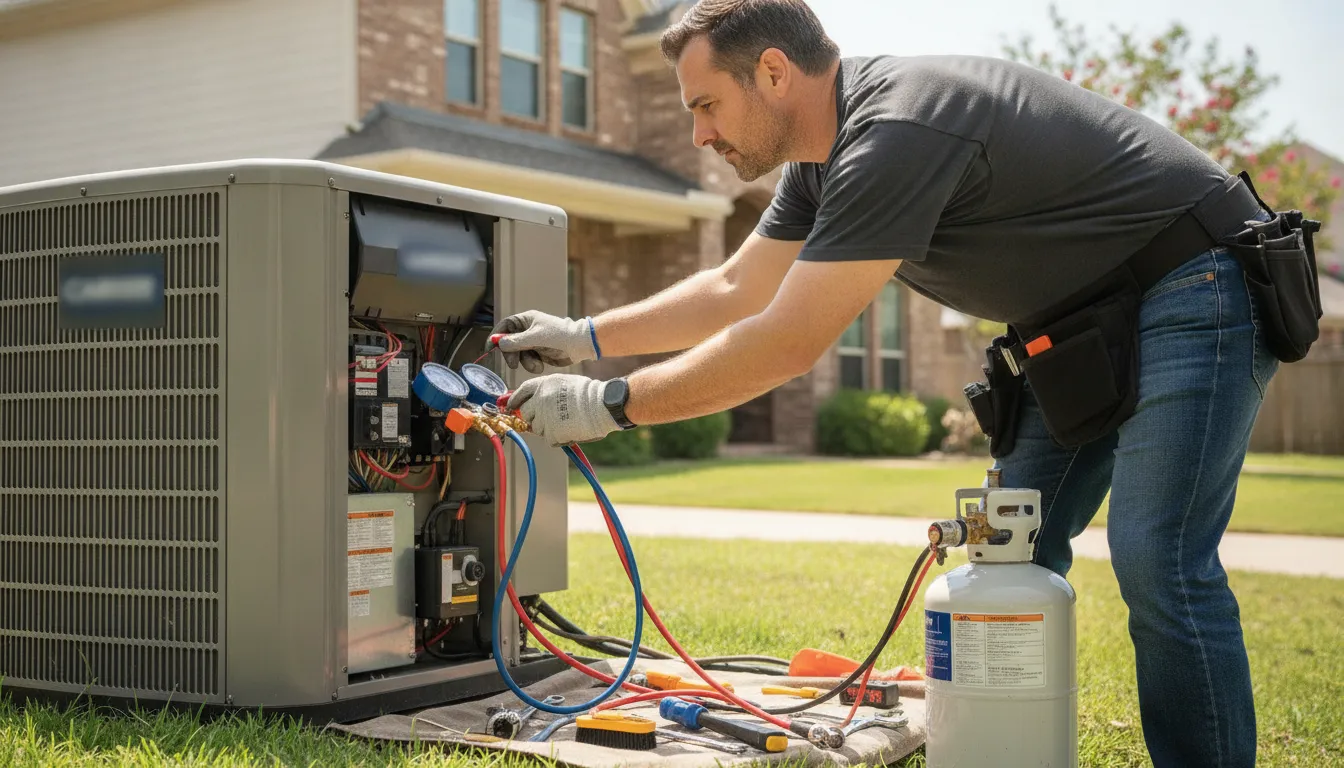
The answer to “do you need permit to replace ac in texas” depends on the city or other authority having jurisdiction. DFW municipalities do not necessarily use identical permit pages, classifications, or inspection procedures, so confirm the requirement for the property address before work begins.
Garland provides a specific air-conditioning repair and permit resource. Its guidance identifies permits for air-conditioning repairs, including coil replacement and replacement of the condensing unit and/or heating equipment. That makes Garland a useful local example, but it should not be treated as a rule for every city in North Texas.
A complete replacement is also different from replacing a small component during a repair. If the project involves new equipment, a changed location, altered ductwork, wiring, or other related work, ask the contractor which permits and inspections apply. Garland Heating and Air Conditioning performs residential AC installation and replacement, including system design and sizing, with attention to local building and safety requirements. You can also review its AC installation and replacement service for project context.
Use the city’s building or development-services department rather than relying on a general Texas answer. Dallas publishes building-inspection forms and resources. Plano maintains a residential-permits page, and Richardson provides residential permit-type information. Fort Worth homeowners should confirm the current mechanical-permit requirement directly with the city.
These official starting points can help you confirm the current process.
| DFW location. | Starting point. | Confirm locally. |
|---|---|---|
| Garland. | City AC repair guidance. | Permit needs for the replacement scope. |
| Dallas. | Building inspection resources. | Residential mechanical permit category. |
| Plano. | Residential permits page. | Application and inspection steps. |
| Richardson. | Residential permit types. | Replacement and electrical classifications. |
| Fort Worth. | Development Services portal. | Current mechanical permit requirements. |
Irving’s published guidelines specifically state that a permit is required for all HVAC installations and that completed work requires an inspection. That is an Irving rule, not a blanket requirement for every DFW municipality.
Once you know which city or authority handles the project, the permit process is usually a straightforward sequence. The exact requirements can differ across DFW municipalities, so treat the following as a practical framework rather than a universal Texas rule. Your contractor should confirm the applicable requirements before work begins.
Start by identifying the authority having jurisdiction for the property. That may be a city building or inspections department, depending on the location. Ask the contractor whether the project is considered a full equipment replacement, what permits apply, and who will submit the application. A useful local reference is Garland Heating and Air Conditioning’s DFW HVAC installation guide, but the permitting office for your address remains the controlling source.
For a planned replacement, ask these questions before signing: Who pulls the permit? Which authority reviews it? What inspection is required? When will final documentation be provided? Clear answers help you understand whether you need a permit to replace AC in Texas for your specific property and project.
If a permit was required for an AC replacement and the project skipped that step. The main concern is that the work may not have a clear path to official review and final documentation. The exact consequences depend on the city or other authority having jurisdiction, the equipment installed, and whether the work involved electrical, structural, ductwork, or other changes. There is no single penalty that applies to every Texas homeowner.
A local building department may tell you what corrective process applies. That could involve applying for a permit after the fact, providing equipment information, arranging an inspection, or correcting work that does not meet current requirements. Do not assume that a like-for-like replacement is automatically exempt. For example, Irving states that all HVAC installations require a permit and that completed work requires an inspection. But that city’s rules should not be applied automatically to every DFW municipality. Review Irving’s published HVAC guidance and confirm the applicable process with your own city.
When there is no permit or final inspection record, a homeowner may have less documentation showing what equipment was installed. Who performed the work, and whether the local review process was completed. That does not automatically mean an insurance claim will be denied, a sale will be delayed, or a fine will be imposed. Those outcomes depend on facts and the policies or rules involved. The responsible next step is to find out what your authority requires rather than relying on a general online answer.
If you believe a replacement may have skipped a required permit, use this checklist:
For a planned replacement, Garland Heating and Air Conditioning can discuss the equipment scope and local process with you. The company has served Dallas Fort Worth since 1952 and works across more than 100 DFW cities. So confirm the specific permitting requirements for your address before work begins.
When the HVAC contractor handles the permit, the process can give you a clearer record of what is being installed and which checkpoints apply. It does not eliminate your responsibility to ask questions, and it does not mean every DFW city follows the same procedure. Permit requirements come from the local permitting authority, so confirm the details for the property where the work will occur.
A complete replacement involves more than delivering a new outdoor unit. The project may include the condenser, indoor equipment, coil, connections, sizing, and other work needed for the system to operate safely. A permit application and related project documents can help establish the intended scope before installation begins. Ask the contractor whether the permit covers the full replacement and whether any electrical, ductwork, relocation, or other related work requires separate review.
That distinction matters because replacing a failed component is not the same project as replacing the complete system. If you only need a repair, AC repair and maintenance may be the appropriate service path. For a full system changeout, review the proposed equipment and installation details with the contractor. Garland Heating and Air Conditioning provides AC installation and replacement, including system design and sizing.
An inspection creates a defined checkpoint after the work is completed. For example, Irving’s residential heating and air conditioning guidance states that HVAC installations require a permit and that completed work requires an inspection. It also directs the contractor to request the final inspection through the city’s permit portal. Those requirements apply to Irving, not automatically to Garland, Dallas, Plano, Richardson, or another municipality, but they illustrate why the local authority matters. You can read the City of Irving HVAC guidelines for that jurisdiction’s process.
Before work starts, ask who will pull the permit, what permit number or application record you will receive. Who schedules the inspection, and what happens if corrections are requested. Afterward, retain the permit record, inspection result, equipment information, and final invoice with your home documents. A contractor-led process can make those questions easier to answer, while your records preserve a useful trail if you later service, sell, or modify the system.
Permit planning and equipment planning are related, but they are not the same line item. Permit fees vary by the local jurisdiction and its fee schedule. The replacement itself should be quoted from the home’s requirements and site conditions, not from a generic price range. For a broader framework, review these DFW HVAC cost guide resources and the specific AC installation cost factors that can affect project scope.
A useful quote should make it clear what equipment is being replaced, how the system will be sized, and which installation tasks are included. Site conditions can change the scope. Examples may include equipment access, the condition of existing connections, required code updates, drainage, ductwork, electrical work, or a change in equipment location. Not every project involves all of these items, so ask the contractor to separate included work from possible additional work.
Garland Heating and Air Conditioning performs residential AC installation and replacement, including system design and sizing. Ask for a written explanation of the proposed system, the work needed to install it, and whether the contractor will handle the applicable permit process. The company’s stated technical standards include compliance with local building and safety regulations.
Ask which authority has jurisdiction over the property, who will submit the permit, and whether approval is needed before installation begins. A city review or inspection can affect scheduling, so do not assume that the equipment delivery date is the installation date. Confirm when the permit application will be submitted, when the work can start, and who will request any required inspection. This is especially important when the project includes electrical changes, relocation, or other work beyond a straightforward replacement. See the AC installation timeline for additional planning considerations.
Serving Dallas Fort Worth since 1952, Garland Heating and Air Conditioning can help homeowners organize replacement questions before scheduling the work.
Request guidance for your AC replacement project and get a customized quote from Garland Heating and Air Conditioning.
Often, but Texas permit requirements are set by the local city or permitting authority. A complete equipment replacement may be treated differently from a repair, so confirm the rule for the property before work begins. Garland, for example, identifies replacement of a condensing unit and related heating equipment as permitted air-conditioning work: Garland’s official guidance.
There is not one universal permit process that applies identically across Texas. The city or other authority having jurisdiction determines which applications, inspections, and code requirements apply. If your project is in Dallas, Fort Worth, Plano, Richardson, Garland, or another DFW community. Check that jurisdiction’s current building department guidance rather than relying on a neighboring city’s rule.
Confirm the current requirement with Fort Worth’s permitting authority before scheduling the installation. A local HVAC permit may apply to a central AC replacement, even when the replacement appears similar to the existing system. Ask the contractor who will pull the permit and how the final inspection will be documented.
Possibly. If the project adds or changes wiring, a circuit, or panel equipment, the electrical portion may raise a separate permit question. The answer depends on the scope and local rules, so have the contractor identify any electrical changes in the written proposal and confirm them with the city.
The contractor completes the installation according to the approved scope, then schedules any required inspection. Irving’s official residential HVAC guidance states that completed HVAC work requires an inspection and that the contractor must request the final inspection through the city’s permit portal: Irving’s HVAC guidelines. Keep the permit and final approval records with your home documents.
Permit requirements can depend on the city, equipment, and work involved. Contact Garland Heating and Air Conditioning for replacement guidance, help confirming the local process, and a customized quote for your property. Contact us through our online form to get started, or call (972) 278-3500.