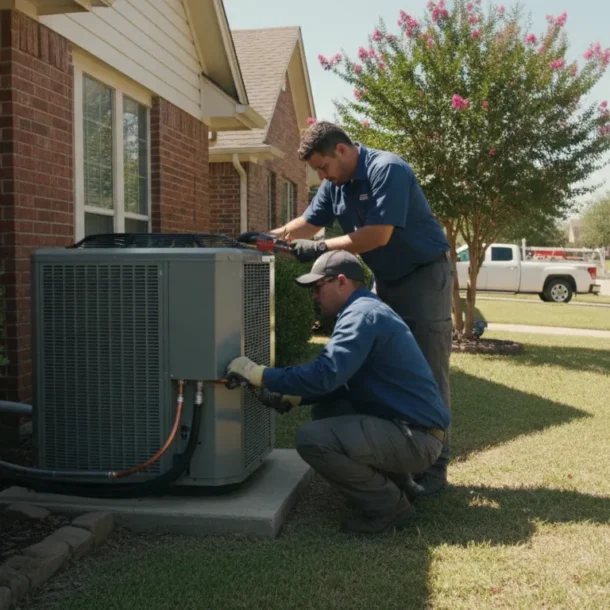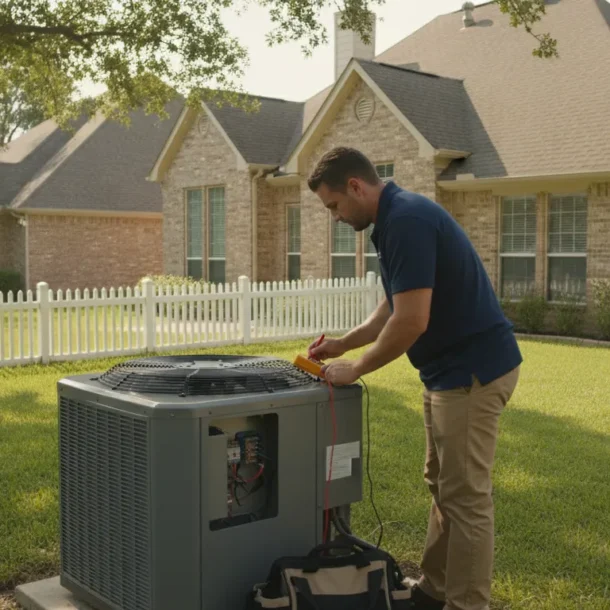

Texas heat can expose an improperly sized air conditioner quickly, especially during a long DFW summer. Before replacing equipment, have your home’s actual cooling load evaluated so you know what you are buying.
Get a professional AC sizing assessment for your DFW home before you buy a new unit.
To determine what size ac unit do i need texas homeowners should choose, start with a professional Manual J load calculation rather than square footage alone. The result accounts for the home’s insulation, windows, ceiling height, ductwork, occupancy, and local climate, then matches the cooling load to an appropriately sized system.
Square-footage charts can provide a rough starting point, but DFW homes vary widely in how much heat they gain and how well they hold conditioned air. Understanding why capacity matters is the first step toward dependable comfort, humidity control, and efficient operation.
DFW summers put long, demanding hours on an air conditioner. The right capacity is not simply the largest unit that fits the budget or the one suggested by a square-footage shortcut. An undersized system may run nearly nonstop and still leave rooms warm. An oversized system can cool the air quickly, shut off before removing enough moisture, and restart repeatedly. Both situations create comfort problems and can shorten equipment life.
Oversizing also has a direct cost. Government guidance warns that rules of thumb often produce excessively large systems, increasing upfront costs and wasting energy, according to the U.S. Department of Energy. In a large, high-load Texas home, capacity matters, but more capacity is not automatically better. The system needs to match the home’s actual cooling load.
An undersized air conditioner may struggle during the hottest part of a DFW afternoon. It can run for extended periods without reaching the thermostat setting, especially when heat enters through windows, insulation is weak, or ductwork loses conditioned air. Longer run times can increase electricity use while still producing uneven temperatures. Persistent operation also leaves less room for the system to recover when outdoor temperatures rise sharply.
An oversized unit reaches the thermostat setting too quickly and turns off before completing a longer, steady cooling cycle. Those frequent starts and stops, known as short-cycling, compromise comfort and humidity control, notes the U.S. Department of Energy. The result may be a home that feels cool but clammy, temperature swings between cycles, and additional mechanical wear. Accurate sizing is also associated with better energy efficiency, indoor air quality, comfort, and building durability, per Building America guidance on HVAC load calculations.
If moisture remains a concern, review these practical recommendations for humidity control through regular AC maintenance. If an older system is struggling, use the information when deciding whether to repair or replace.
These symptoms do not prove a sizing problem by themselves. Airflow restrictions, refrigerant issues, duct leaks, insulation, and thermostat faults can look similar. A qualified assessment can separate those causes from a capacity mismatch before you replace equipment.
A Manual J load calculation is a room-by-room analysis used to determine how much heating and cooling a home actually needs. The calculation follows Manual J, Eighth Edition, published by the Air Conditioning Contractors of America (ACCA), which the U.S. Department of Energy identifies as the industry standard for residential HVAC load calculations. ACCA’s Manual J standard gives an installer a documented basis for selecting equipment rather than relying on a quick estimate.
Manual J treats each house as unique. It evaluates the specific conditions that shape every room’s cooling load, including:

That detail is why Manual J is more useful than sizing an air conditioner by square footage alone. The Department of Energy warns that rules of thumb often produce oversized systems, increasing equipment costs and wasting energy. Oversized units can also cycle on and off too frequently, which may compromise comfort, efficiency, and humidity control.
In many parts of the United States, the cooling load is larger than the heating load. That distinction is especially important in the Dallas-Fort Worth area, where long, intensely hot summers place substantial demand on an air conditioner. A calculation that considers both loads helps the contractor choose equipment that can handle summer conditions without ignoring winter performance.
Correct sizing affects more than the thermostat reading. The U.S. Department of Energy’s Building America guidance says accurate load calculations directly influence energy efficiency, occupant comfort, indoor air quality, and building durability. For a Texas homeowner, Manual J turns that question into a documented assessment of the home rather than a guess based on total square footage.
Square footage can provide a useful first estimate, but it cannot determine the correct equipment by itself. The table below translates common home sizes into a rough range of AC capacity. Use it to frame a conversation with an HVAC professional, not as a final purchase specification.
| Home size | Rough AC capacity |
|---|---|
| Up to 1,000 square feet | 1.5 to 2 tons. |
| 1,000 to 1,500 square feet | 2 to 2.5 tons. |
| 1,500 to 2,000 square feet | 2.5 to 3 tons. |
| 2,000 to 2,500 square feet | 3 to 3.5 tons. |
| 2,500 to 3,500 square feet | 3.5 to 4 tons. |
| More than 3,500 square feet | 4 to 5 tons. |
In air conditioning, one ton represents 12,000 BTU per hour of cooling capacity. A 3-ton system, for example, provides approximately 36,000 BTU per hour under rated conditions. The ranges are intentionally broad because two homes with the same floor area can have very different cooling loads.
A professional sizing assessment uses a Manual J load calculation, the industry standard for accurate residential HVAC load calculations. Manual J considers the home’s construction and local conditions instead of relying on floor area alone. The U.S. Department of Energy notes that rules of thumb can result in oversized systems, wasted energy, and higher costs. Oversized equipment may also cycle on and off too frequently, which can hurt comfort and humidity control. See the Department of Energy’s guidance on proper HVAC sizing.
Before comparing equipment, also consider the SEER rating and efficiency. Efficiency matters, but selecting a high-efficiency system with the wrong capacity will not solve a sizing problem. Garland Heating and Air Conditioning can evaluate the home’s load, ductwork, insulation, windows, and comfort needs before recommending an AC unit for a Texas home.
Two homes with the same square footage can need different air conditioner capacities. The difference comes from how much heat enters the home, how much conditioned air escapes, and how hard the system must work to remove heat and moisture. In Dallas-Fort Worth, cooling demand generally outweighs heating demand, so the cooling load deserves particular attention during sizing.
Insulation quality affects how quickly outdoor heat moves into the living space. A well-insulated attic and exterior envelope can reduce the load, while thin or damaged insulation allows the home to gain heat throughout a hot afternoon. Attic temperature, air sealing, and radiant heat from the roof also matter.
Windows are another major variable. A large number of windows, expansive west-facing glass, older single-pane construction, and limited exterior shade can raise the cooling requirement. Trees, covered patios, and window shading may reduce that gain. Ceiling height changes the volume of air the system must condition, especially in rooms with vaulted or open ceilings.
The load also changes with daily use. More occupants add body heat, and ovens, ranges, dryers, lighting, computers, and other appliances release heat indoors. A Manual J calculation considers these conditions instead of applying a single size to every house.
The equipment capacity is only part of the result. Duct leaks, crushed flex duct, poor insulation around ducts, restrictive returns, and unbalanced registers can reduce the amount of cooled air reaching each room. Increasing equipment size will not correct an airflow problem, and a larger unit may cool the thermostat area quickly while leaving other rooms uncomfortable.
DFW’s hot, humid weather adds another concern: the system must remove moisture while cooling the home. An oversized unit may satisfy the thermostat too quickly and cycle off before it runs long enough for consistent humidity control. Research from the U.S. Department of Energy notes that oversized equipment can cycle too frequently, compromising comfort and efficiency. Accurate load calculations also account for the home’s specific climate and environment rather than relying on a shortcut.
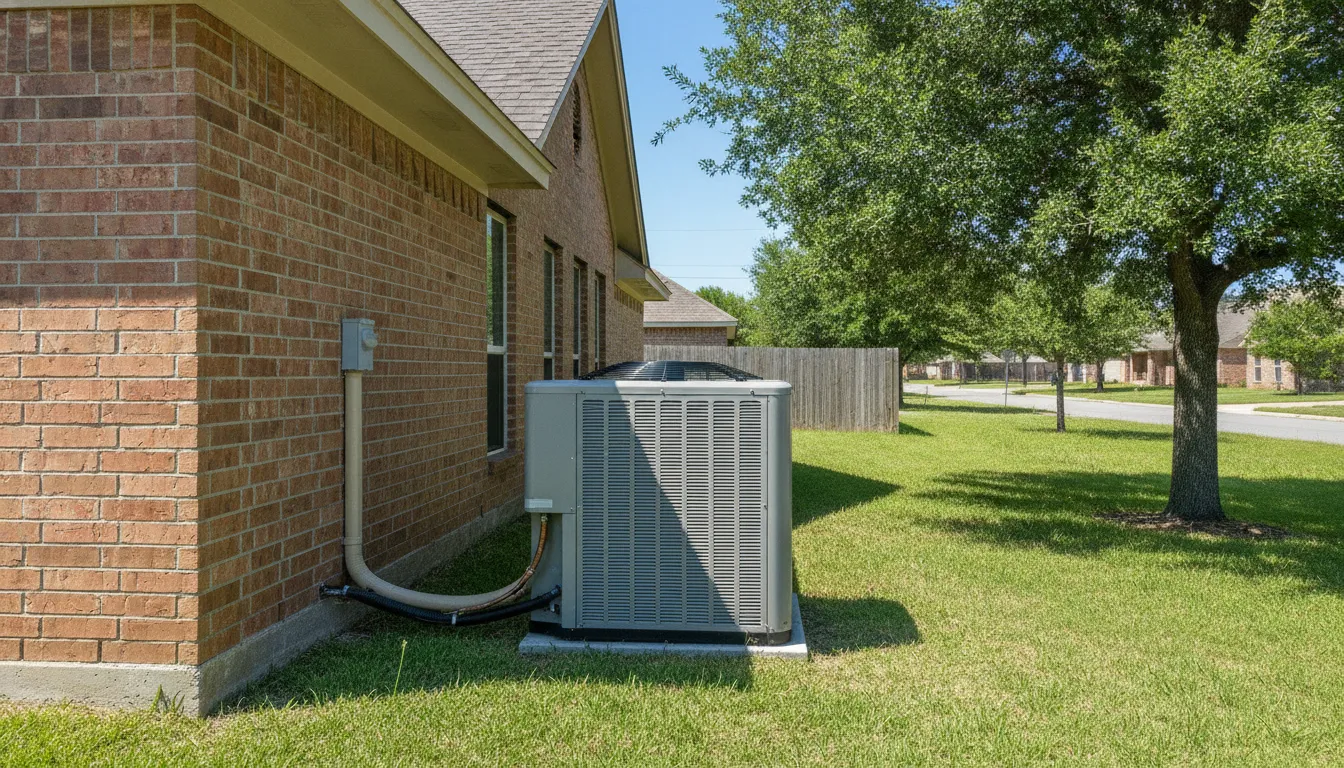
When replacing equipment, these factors should be considered alongside the condition of the existing system. Reviewing how long your AC unit lasts can help you plan the timing, but the home’s current load and airflow still determine the appropriate replacement size.
A professional sizing visit is more detailed than measuring the home’s square footage. The goal is to understand how each space gains and loses heat, then match the equipment to the home’s actual cooling demand. In the Dallas-Fort Worth area, that assessment matters because intense summer heat, large temperature swings, and local construction details can all affect comfort.
A careful assessment gives the installation a defensible starting point and helps connect the equipment choice to the way the home actually operates.
Schedule a sizing consultation with Garland Heating and Air Conditioning to get an accurate load calculation for your home.
It can be a reasonable starting point for a home around 2,000 square feet, but square footage alone cannot confirm the right size. A Manual J calculation should account for insulation, windows, ductwork, ceiling height, and the home’s heat gain before equipment is selected.
It may, but the answer depends on the home’s construction and exposure. Efficient insulation, shaded windows, and sound ductwork may reduce the load, while poor insulation, large sunny windows, or air leaks may increase it. A professional load calculation is more reliable than choosing by floor area.
Not necessarily. A 5-ton system can be appropriate for a large home or a home with a high cooling load. But it can be oversized for a smaller or efficient house. Oversized equipment may cycle on and off too often, compromising comfort and humidity control, per the Building America guidance on HVAC load calculations.
It is likely too large as a starting estimate for many 1,200-square-foot homes, although local conditions can change the result. Rules of thumb can lead to oversized equipment and wasted energy. ACCA Manual J is the industry standard for determining the home’s actual cooling load, per the Air Conditioning Contractors of America.
The right equipment starts with a sizing assessment that accounts for your home’s layout, insulation, windows, and DFW climate. Garland Heating and Air Conditioning can help you move from a rough square-footage estimate to a better-informed installation decision.
Schedule service online or call (972) 278-3500 to talk with a local expert.