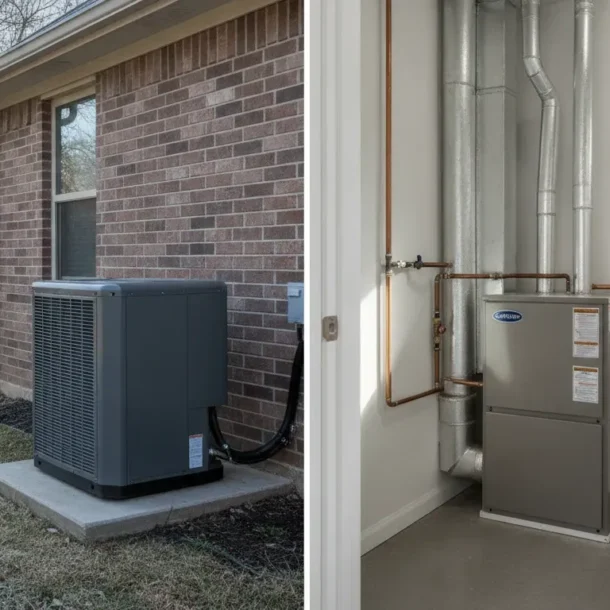

An outdoor temperature of 105 degrees makes a Texas summer afternoon the ultimate test for your home. Keeping your living room cool under this intense heat load can drive your electric bills to record highs.
Knowing what is SEER rating AC performance is the single most important step toward lowering your high monthly utility bills during our hot Texas summers. This seasonal ratio measures the total cooling output of an air conditioner divided by the total electrical energy the cooling equipment consumes. According to the U.S. Department of Energy, higher ratings mean the system uses less electricity to cool your living space. In the Dallas-Fort Worth area, choosing a unit with a strong rating helps local homeowners stay comfortable during long summer heatwaves without overspending. When choosing a high SEER AC unit, balancing the upfront equipment cost and your monthly energy savings protects your household budget.
Call (972) 278-3500 today to speak with our HVAC experts about finding the right SEER-rated system for your DFW home. Get a free quote on installation and start saving on your energy bills this summer.
But how do these seasonal ratings actually work, and how can you use them to protect your hard-earned money? To find out, we need to look closely at the exact definitions in What Is SEER and SEER2? The path to a smarter purchase begins with understanding these numbers.
When you buy a new AC, you will see a label with a SEER rating. The Seasonal Energy Efficiency Ratio, or SEER, is the standard metric used to grade AC efficiency. It measures the total heat removed from a home during the annual cooling season. This sum is divided by the total electrical power the system uses during that time.
A system with a low rating uses more power to cool your home. In a hot climate like north Texas, a low rating leads to high power bills. When you buy a new unit, looking at this score is the best way to compare models.
If you want to know what is seer rating ac systems use, think of it like gas mileage for a car. A higher rating means the system is more efficient. Homeowners who are choosing a high SEER AC unit get more cooling for less power. This helps lower monthly bills when the Texas heat gets intense.
To calculate the rating, labs test systems under strict conditions. The math divides the total cooling output in British Thermal Units by the total energy input in Watt-Hours. This test simulates a full cooling season. It uses a steady indoor temperature but varies the outdoor heat.
During these lab tests, the AC runs through different simulated days. This process tracks how the unit performs when it is mild outside, as well as during extreme peak heat. The result represents the average performance you can expect over the entire cooling season in a year.
The testing process uses a range of outdoor temperatures. These temperatures go from 65 degrees to 104 degrees Fahrenheit. This range matches the typical weather changes that happen during a standard spring and summer. The final number tells you how well the unit handles heat over many months.
In 2023, the Department of Energy set up a new rating system called SEER2. The goal was to make the tests match real homes more closely. Old testing did not account for the high static pressure inside home ductwork. The new M1 testing procedure fixes this gap by testing under real-world loads.
The M1 test increases the external static pressure by a factor of five. This change mimics the resistance of real ducts. Because the new test is much harder, SEER2 ratings are about 4.7 percent lower than old SEER scores. If you read our ac repair dallas-fort worth guide, you will see how proper air flow keeps your system running well.
If you are shopping for a new system, you may wonder what is seer rating ac efficiency and why it is key. This number tells you how much power a system uses to cool your home. It also affects the price of new units. Texas homeowners often ask how SEER ratings affect AC costs when planning an upgrade.
The Department of Energy sets strict efficiency standards for home cooling systems to help you save money. These rules ensure that all new AC units meet basic green standards. Lowering your power bills starts with these national rules.
National standards divide the country into three regions based on local climate. Because some areas have hotter weather, the southern states have higher cooling rules than the north. These local laws make sure that hot states use systems built for extreme summer heat.
Texas falls into the southeast region for national energy rules. Under these rules, split-system AC units under 45,000 Btu per hour must meet a minimum rating of 14.3 SEER2. If a system is larger than that, the rules may change slightly, but most local homes fall into this main group.
This newer SEER2 standard uses a fresh way of testing equipment under real-world conditions. The test uses much higher air pressure. This change helps match real home duct systems, which gives you a more accurate rating before you buy.
You do not have to replace a working unit just because it fails to meet the new 14.3 SEER2 rule. Older systems are grand-fathered in, so you can keep using them. But when your old unit breaks, any new system you buy must meet the current Texas laws.
To see why these rules exist, we can look at how they changed over time. Standards have gone up over time to save power. Before modern rules, older home cooling systems often had very low efficiency ratings.
Many homeowners ask what is seer rating ac to see how much they can save on their energy bills. A higher rating means your system is more efficient. This means that higher SEER ratings lead to lower power use for cooling, as shown by energy.gov. Your air conditioner will use less power to do the same job.
Using a more efficient system can result in lower monthly electric bills for the same cooling. When your AC does not have to work as hard, it draws less current from the grid. Over a hot summer, these small daily savings add up to real money in your pocket. You get the same level of home comfort but you pay less for it.
In the Dallas-Fort Worth area, we face extreme summer heat each year. We often get 40 to 60 days with outdoor heat above 100 degrees. During these hot weeks, your cooling system runs day and night. An old unit will draw a huge amount of power just to keep your home cool.
When you look at how SEER ratings affect AC costs, you will see that upgrading pays off over time. A unit with a high rating may cost more at first, but it lowers your bills month after month. Homeowners in our local towns can save hundreds of dollars each year on power. This money back can quickly cover the higher upfront cost of your new system.
Our local summer air is also very humid, which makes the heat feel worse. A high-efficiency system does a better job of removing moisture from your indoor air. This means your home feels cooler without running the AC at a very low setting. You can set your thermostat a few degrees higher and still feel very comfortable.
You do not have to guess how much a new system will save you. These online savings calculators help you estimate how much your bills will drop when you upgrade. You just enter your current system rating and the rating of the new model you want to buy. The tool then compares the two to show your estimated monthly drop in power use.
For example, swapping an old 10 SEER unit for a new 16 SEER system can cut your cooling costs by over 35 percent. If you usually pay 300 dollars a month to cool your home, you could save over 100 dollars each month. Our team of local HVAC experts can help you do these math steps. We will check your current unit and find the most cost-effective option for your home.
Before buying a new cooling system, many local homeowners ask what is seer rating ac performance. It measures how much energy your unit uses over a full cooling season. In the hot Dallas-Fort Worth area, this choice has a big impact on your monthly power bills.
You should think about a few key facts before you pick a rating:
Since 1952, Garland Heating and Air Conditioning has helped DFW families check their homes to find the right match. We can check your ductwork and help you understand how SEER ratings affect AC costs.
Choosing the right system means balancing upfront equipment costs with your long-term energy savings. You do not always need the very highest rating to get great results. Standard baseline systems start at 13.4 to 15 SEER2, which are the lowest cost options to install. But the sweet spot for a balance of cost and efficiency is the 16 to 18 SEER2 range. This tier works best for most homes in our region. Premium systems of 19 SEER2 or higher offer the best efficiency but have a higher upfront price.
You can learn more about energy efficiency and SEER ratings to see how they impact your home. To make your choice easier, you can compare the three main tiers in the table below.
| SEER Tier | Upfront Cost | Energy Savings | Best Suited For |
|---|---|---|---|
| Baseline (13.4 – 15 SEER2) | Lowest upfront cost | Standard efficiency | Mild use or short-term stay |
| Sweet Spot (16 – 18 SEER2) | Moderate upfront cost | High energy savings | Most DFW residential homes |
| Premium (19+ SEER2) | Highest upfront cost | Maximum energy savings | Large homes and long-term owners |
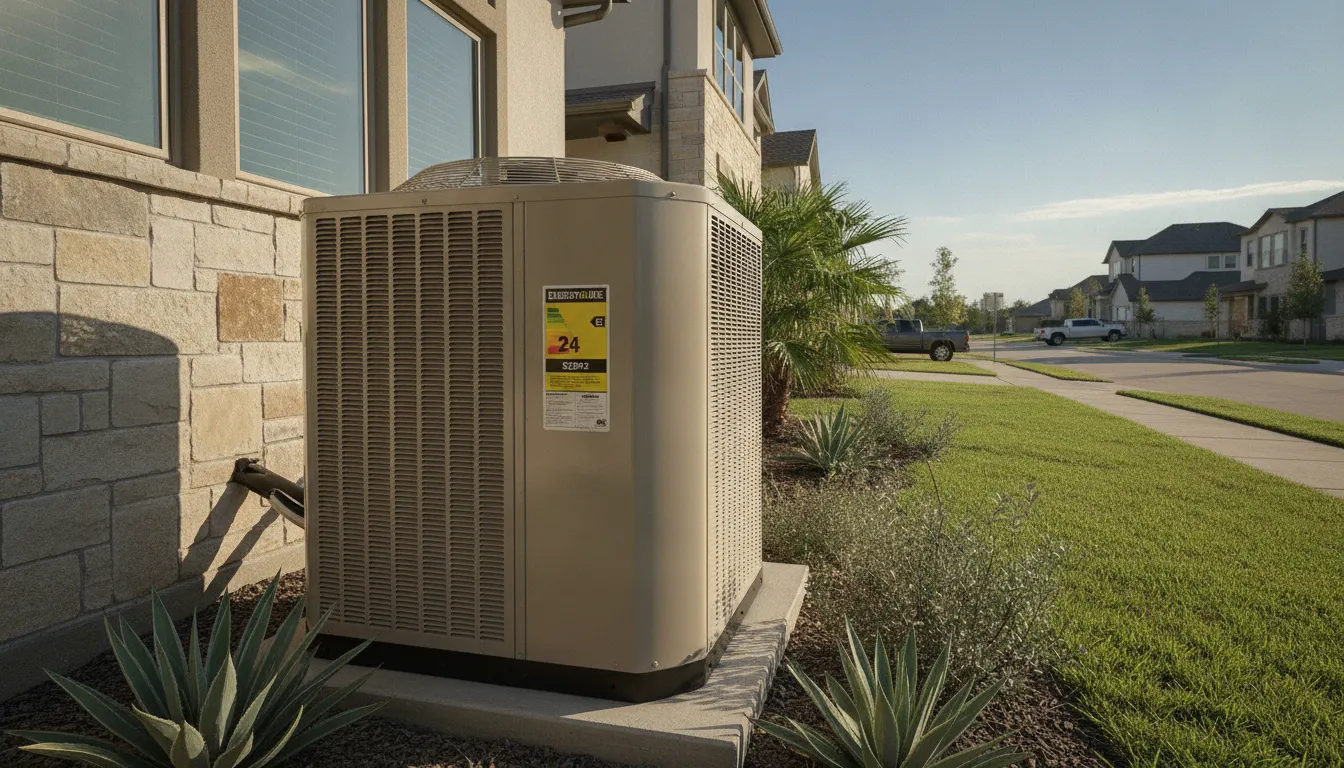
We can help you estimate your savings and pick the perfect match for your budget. Contact our team today to find the best setup for your DFW home.
When you need a new air conditioner, the price tags can be shocking. Many Texas homeowners ask what is seer rating ac and if a high number is worth the extra cost. While buying a premium unit with a high rating can cut your power use, it may not be the best move for your budget.
To protect your wallet, the Department of Energy sets energy standards. These rules save people billions of dollars each year in lower utility bills. But a high-efficiency system has a much higher upfront cost than a standard unit. Choosing the right system depends on balancing these upfront equipment costs with potential long-term energy savings in your local climate. If you spend too much on a luxury model, you may never win back that extra cost in power savings.
If you choose a system with a 19+ rating, your unit will be highly efficient. But the actual payback period depends on several factors:
Look at energy efficiency and SEER ratings before you buy. You must calculate your real return on investment to make a smart choice.
For some property owners, a mid-range system with a 16 to 18 rating is the perfect sweet spot. It offers a great balance of comfort, lower bills, and a lower upfront price.
An air conditioner cannot save you money if the setup is poor. This is true no matter how high the rating on the box is. If your system is too big or has leaky air ducts, it will waste power and break down more often. In fact, expert setup by a trained team matters far more than the rating on the unit.
Garland Heating and Air Conditioning has served the Dallas-Fort Worth metroplex with HVAC services since 1952. Our family-owned business uses background-checked and Google Guaranteed technicians to make sure your system is installed for the best performance. We help you find the best balance for your home so you can stay cool and keep your bills low.
Call (972) 278-3500 now to schedule a consultation. Our certified technicians will help you choose the perfect SEER-rated system for your home and budget.
A SEER rating measures how well an air conditioner cools your home over a full season. You find this ratio by dividing the total cooling output of the system by the power it uses in watt-hours. According to the Department of Energy, a higher rating means the unit uses less electricity to cool your space. This directly helps you lower your monthly power bills.
SEER2 is the new standard for measuring air conditioner efficiency. This updated scale uses new testing rules to better match real-world home ductwork. Stricter testing means SEER2 ratings are usually about 4.7 percent lower than old SEER ratings for the same unit. This change was explained in a guide by Trane. The new ratings give you a much more accurate look at how your system will perform.
A good rating depends on your budget and cooling needs. The baseline rating for new units is 14.3 SEER2 in Texas. A rating of 16 to 18 SEER2 is the sweet spot for most homes because it balances unit costs with energy savings. According to the brand Trane, ratings of 19 SEER2 and above are high-efficiency options that offer maximum savings but cost more upfront.
You can estimate your potential monthly savings by comparing your current AC rating to a new unit. To get a quick estimate, you can use online energy tools. Many homeowners check how SEER ratings affect AC costs to find out how much they can save. Upgrading from an old, low-rated system to a modern unit can help lower your power bills by a large amount.
If you keep running a poor, old AC during the hot Texas summer, you will waste lots of power and pay very high energy bills each month. Buying a new, power saving AC system today will quickly lower your monthly power bills and make your home feel cool and cozy right away. Do not wait until your old AC unit breaks down in the middle of a hot heat wave when our local repair crews are very busy.
Ready to schedule service? Call (972) 278-3500 today to request a free quote for your new AC system. Our friendly, local team is ready to help you find the best unit for your budget today.