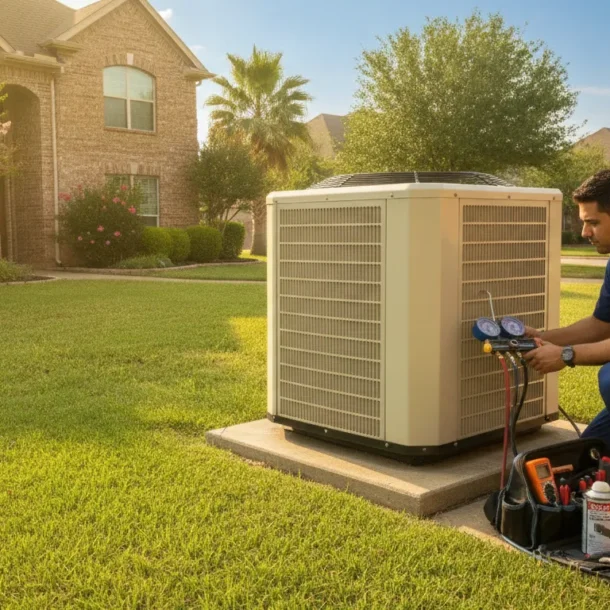

A broken air conditioner on a hot summer day in Dallas-Fort Worth quickly turns your home into an oven. Knowing how much time a technician needs to get your cooling back online helps you plan your day with confidence.
For most homeowners in the Dallas-Fort Worth area, finding out how long does ac repair take is the first step toward getting comfortable. Most professional air conditioner repairs typically take between 30 minutes and 8 hours to complete depending on the complexity of the issue. Simple tasks like replacing a thermostat or a basic electrical part are fast and usually require less than 2 hours. More difficult jobs like finding and sealing a refrigerant leak or replacing a broken fan motor can take 2 to 4 hours. The most complex projects, such as replacing a compressor or a cooling pump, will often need 4 to 8 hours of focused work.
If you are waiting for a technician to arrive, you are likely wondering what kind of service your system needs today. We will help you understand what to expect during an HVAC repair by looking at specific repair types. To help you plan your schedule, we will start with Minor AC Repairs: What Can Be Fixed in Under 2 Hours.
When your cooling system stops working on a hot day, you want to know how long professional AC repair takes to get things running again. The good news is that most small service calls are quick. Certified technicians can fix several common cooling issues in under two hours. Knowing which parts can be replaced fast helps you plan your day and reduces your stress during a sudden system breakdown.
A bad thermostat can make your system shut down or run without stopping. Replacing a faulty wall unit is a very simple task that typically takes between 30 and 60 minutes, according to Alamo Heating and Cooling. Modern smart thermostats do not take much longer to set up than manual dials. The technician will wire the new device, mount it, and test the connection to your system to ensure it reads the indoor air temperature correctly.
Electrical parts like capacitors and contactors carry high voltage to power your compressor and outdoor fan. These parts wear out over time due to high heat and heavy use. Swapping out these power-related parts usually takes one to 2 hours, as documented by Alamo Heating and Cooling. Technicians carry these parts on their trucks, which makes the repair fast and keeps your wait time low.
Other minor fixes often take between 30 and 60 minutes, according to Alamo Heating and Cooling. These quick tasks include clearing a clogged drain line, replacing a bad safety switch, or putting in a new fan belt. When a professional technician arrives with the right tools, they can find and fix these minor issues right away to restore your home comfort without a long delay.
Most mid-range cooling issues take about two to four hours to resolve. These jobs need more labor and testing than simple part swaps, but they do not require a full system replacement. When you face these issues, knowing how long professional AC repair takes helps you plan your day around the service call.
The outdoor fan motor is vital because it blows hot air out of your system. If this motor burns out, your system cannot shed heat and will stop cooling. A professional fan motor replacement takes about two to three hours to finish. The technician must turn off the power, remove the fan blade, mount the new motor, and test the system to ensure it runs safely.
Over time, dust and dirt build up on your indoor evaporator coil, which blocks airflow. Dirty coils force your cooling system to work harder, which raises your energy bills and increases the risk of early parts failure. Cleaning a dirty coil takes about two to three hours because the technician must access the indoor unit and use special sprays to dissolve the grime. This process helps restore your airflow and improves cooling efficiency.
If your system is low on refrigerant, you have a leak that needs attention. Technicians do not just add more gas; they must find the leak, seal it, and recharge the system. A refrigerant leak repair takes about two to four hours of hands-on labor. Finding the exact leak site takes time, and the system must hold a vacuum before new refrigerant can be added.
To help you understand these mid-range service visits, here is a quick look at the typical repair times and difficulty levels for each common job:
| Repair Type | Typical Time | Difficulty Level |
|---|---|---|
| Fan Motor Replacement | 2 to 3 Hours | Medium |
| Evaporator Coil Cleaning | 2 to 3 Hours | Medium |
| Refrigerant Leak Repair | 2 to 4 Hours | Medium-Hard |
When key parts in your air conditioning system break, the work becomes much more complex. These large tasks often take anywhere from four to eight hours or more of intensive labor. Understanding these timelines helps you plan your day and know how long professional AC repair takes when major parts fail.
The compressor is the heart of your cooling system because it pumps refrigerant through the unit. If this part fails, a technician must recover the old gas, cut out the broken pump, weld the new part in place, and pull a vacuum. This heavy task is classified as hard and usually takes four to eight hours of precise work to finish according to industry service guides hosted on Alamo Heating and Cooling. It is a complex job that requires careful handling of high-pressure lines and electrical connections.
The evaporator coil is where your system absorbs heat from your indoor air. Over time, these coils can leak or corrode, requiring a full replacement. Much like a compressor swap, replacing this coil takes about four to eight hours of work because it requires opening the indoor air handler. Recovering refrigerant, soldering new copper joints, and testing the system for leaks. Technicians must also seal the cabinet to prevent air leaks and ensure efficient cooling once the system restarts.
A full system overhaul involves rebuilding or replacing multiple key parts of your heating and cooling setup at once. This is a very hard job that can easily take eight or more hours to complete. Because these overhauls take a full day or more. They require careful planning and a crew of certified technicians to handle the heavy lifting, electrical wiring, and duct connections. You should expect your home to be without cooling for the entire day while this extensive rebuild is done.
Because major repairs are highly complex and carry high labor costs, you must weigh the repair cost against the price of a brand-new unit. If your system is over ten years old and needs a new compressor or a full overhaul, investing in AC installation and replacement is often the smarter financial move. Newer systems are much more efficient and will save you money on your monthly bills while eliminating the risk of another major breakdown.
When your system breaks down, you want to know how long to repair common cooling failures. While many standard fixes take only a few hours, several unexpected roadblocks can stretch your timeline. Understanding these factors can help you prepare and get your system running again fast.
The age of your cooling system plays a major role in how long a technician spends at your home. Modern air conditioning units have standardized parts that are easy to find. In contrast, older systems that are fifteen years old or older often require specialized or obsolete parts. Finding these rare components can easily add one to two hours of labor to a service call. Or even force a delay of several days if the parts must be shipped from an off-site warehouse.
Where your air conditioner is located affects the repair speed. If your unit is in a tight crawl space, a high attic, or behind dense bushes, the job becomes more complex. Certified technicians can complete repairs up to 30% faster when they have easy, clear access to the HVAC equipment. When a technician has to spend time squeezing into tight spots or carrying heavy tools up steep ladders, the overall job time increases.
Dirty systems are much harder to diagnose and repair. A buildup of dirt creates extra steps for the technician and can mask underlying mechanical issues. Homeowners should maintain clean HVAC filters and coils to prevent these issues. According to the U.S. Energy Star program, dirty air filters force heating and cooling systems to work much harder to distribute air. This extra strain raises energy costs and increases the risk of early equipment failure. Additionally, clogged coils and dirty filters create high resistance in the system, forcing it to work harder and increasing the risk of mechanical breakdown, as detailed by Florida PACE.
You can take simple, proactive steps to ensure your service call goes as quickly as possible. Use this checklist before your technician arrives to help them get straight to work.
When the summer heat hits the Dallas-Fort Worth area, a broken air conditioner is a major emergency. Texas heat can make indoor spaces unsafe in just a few hours. Because of this high risk, you must know what to expect when you schedule a repair call, including how fast a team can get to your home.
Some cooling issues can wait for a next-day visit, but others need fast action. You should call for urgent, same-day help if you have no cold air blowing at all or see ice on your outdoor coils. Frozen coils, strange loud noises, and active fluid leaks are major warnings that your system is in danger of a complete breakdown. If your system keeps tripping your electrical breaker, shut the unit off and seek immediate service to protect your home. Learning the timeline for urgent AC repair needs helps you decide when to seek immediate help versus when you can wait for a standard appointment.
A true urgent call should bring fast, local help. Garland Heating and Air Conditioning provides emergency HVAC repair services 24/7 to support local families. The company offers same-day service availability for urgent repairs, with a target response time of within two hours for priority calls. When a certified technician arrives, they will diagnose the system and explain AC repair in Dallas-Fort Worth options. Most urgent repairs like replacing a bad start capacitor or a faulty fan motor can be finished on that first visit. So you can get your cool air back quickly.
In a major cooling emergency, trust and speed are equally vital. For Dallas-Fort Worth homeowners, Garland Heating and Air Conditioning emphasizes 72 years of heritage and local experience as a cornerstone of their reliable HVAC services. Since 1952, this family-owned team has helped local residents keep their homes safe and comfortable. All technicians are background-checked and certified, which ensures your repair is done safely and correctly on the first visit. Choosing an experienced local team guarantees you get honest, quality service when you need it most.
Deciding whether to fix your old cooling system or buy a new one can be a tough choice. For most homeowners, the decision comes down to three main factors: unit age, the frequency of breakdowns, and the time it takes to complete major repairs. When a critical part fails. You must weigh the upfront fix costs and the time you will spend without cool air against the long-term value of a complete system upgrade.
If your cooling system is more than 10 to 15 years old, a major breakdown is a clear warning sign. According to industry data on AC repair times, older systems can add 1 to 2 hours of extra labor for even simple fixes because of worn parts or hard-to-find components. If your unit is in this age bracket and needs frequent service, investing in AC installation and replacement is often the smarter financial move.
The time a technician spends on a job directly impacts your comfort and your wallet. Simple tasks like replacing a capacitor take under 2 hours, but major component failures are much more demanding. For example, replacing a cooling pump or compressor can take 4 to 8 hours to finish. If your unit requires a complete system overhaul, you can expect the work to last 8 or more hours. In the hot Texas summer, spending a full day or more without air conditioning can be a major disruption.
When you face a major repair, use the age-times-cost rule of thumb. Multiply the age of your system by the repair quote. If the result is more than the cost of a new unit, replacement is the better option. For older units, the high time cost of complex work rarely pays off. Choosing a new, energy-efficient system will save you from future breakdown delays and provide reliable, immediate comfort for your home.
Most air conditioning repairs take between 30 minutes and 8 hours to complete. Simple tasks like swapping out a thermostat or a small power part often take less than 2 hours. More complex jobs such as fixing cooling fluid leaks or replacing a major pump can take up to 8 hours. According to Garland Heating and Air Conditioning, same-day service is available for urgent repairs to get your system running fast.
The 3-minute rule is a safety feature that prevents your cooling system from starting up too quickly after shutting down. When your air conditioner turns off, the pressure inside the system needs time to balance. If the system turns back on right away, it can strain the compressor and cause motor damage. Most modern thermostats have a built-in delay to protect your equipment from early failure.
Yes, a dirty air filter can delay your repair. Clogged filters restrict airflow and force the cooling system to work much harder. This extra strain can cause other parts to wear out or even lead to frozen coils. According to Energy Star, regular maintenance like changing your filter once a month is key to preventing system damage and keeping energy costs down.
Delaying a broken air conditioner can lead to major damage and higher repair bills. Getting your cooling system fixed quickly restores safety and comfort to your home on hot days. Garland Heating and Air Conditioning provides prompt, reliable service to resolve your HVAC issues right away.
Ready to get your home cool again? Call (972) 278-3500 to schedule your AC repair with our certified technicians.