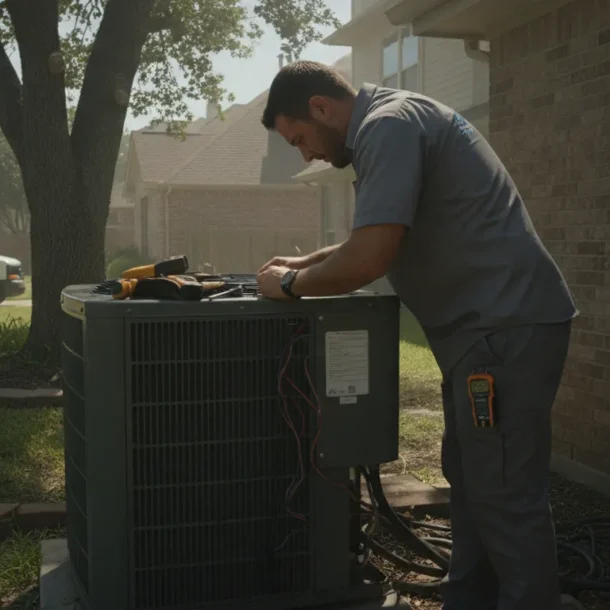

Dallas-Fort Worth summers often test the limits of home cooling systems with forty days of triple-digit heat. Replacing an old unit before it fails in July is the best way to keep your home safe and cool. Garland Heating and Air Conditioning has installed thousands of systems across the metroplex since 1952.
Call (972) 530-1149 or get your free quote today for a professional HVAC installation Dallas-Fort Worth homeowners have trusted for more than 70 years.
HVAC installation in Dallas-Fort Worth requires proper system sizing through a Manual J load calculation. Selecting a brand matched to your home and budget, securing city permits, and professional installation by certified technicians. A correctly sized and installed system lowers energy bills, extends equipment life, and keeps your home comfortable through North Texas summers.
Choosing the right unit is only the first step in creating a steady home cooling system. You also need to know how HVAC contractors determine the right system size for your DFW home. This focused check prevents high energy bills and ensures your new equipment runs well.
When you start a new HVAC installation in Dallas-Fort Worth, the size of the unit is key. Many people think that a big system is always better, but that is not true. A unit that is too large will turn on and off too fast. This can lead to high energy bills and parts that wear out soon. A unit that is too small will run nonstop and struggle to cool your home on the hottest days. To keep your home cool, your contractor must find the best match for your house.
A professional does not guess based on the size of your house alone. Instead, they use a tool called a Manual J load calculation. This is the industry standard for finding the right size for a home. It examines your square footage, window count and orientation, insulation levels, air leakage, and even the number of occupants. This step ensures your system has the right capacity to handle the DFW heat without wasting energy.
This calculation also prevents the old rules of thumb that often lead to systems that are too big for the space. An oversized unit short-cycles, which means it runs in short bursts instead of steady cooling cycles. Short-cycling drives up humidity levels, wears out the compressor faster, and raises your monthly electric bill. By taking the time to check efficiency ratings for new HVAC installation, a professional finds a unit that saves money over its lifetime. This check is a key part of every job at Garland Heating and Air Conditioning.
Many things change how much cooling your home needs. The size of your house is a starting point, but it is not the only factor. Your contractor will evaluate your attic insulation depth, window type and glazing, ductwork condition, and even the direction your home faces. A west-facing wall absorbs more afternoon sun, which increases the cooling load on that side of the house.
Your ducts also play a major role in the final equipment selection. If your ducts are undersized or have leaks, even a correctly sized unit will not cool evenly. The blower must move the right volume of air to each room to maintain comfort. Leaky ducts in an unconditioned attic can lose 20-30% of conditioned air before it reaches your living space. By inspecting all these factors, experts can design a system that runs efficiently and lasts for years.
Choosing a new system is a significant decision for your home comfort. In the Dallas-Fort Worth area, three brands dominate the market: Carrier, Trane, and Goodman. Each offers different advantages for local conditions. At Garland Heating and Air Conditioning, we help you weigh these options based on your budget, home size, and comfort priorities. Making an informed choice is essential when choosing equipment for HVAC installation in North Texas.
Carrier is a leader in HVAC innovation. Their Infinity and Performance series deliver high energy savings ideal for larger Texas homes. Select models reach up to 26 SEER2. This high efficiency significantly lowers your power bills during the grueling DFW summer months. According to the U.S. Department of Energy, upgrading from a SEER 9 to a SEER 14 unit can cut energy use by over 35%. Carrier systems are engineered for quiet operation and precise temperature control, making them a strong choice for homeowners who want premium comfort and the latest technology features.
Trane is known for components that withstand extreme weather. They test their units for 16 weeks in conditions simulating scorching heat, freezing cold, and wind. Their XV and XB lines offer a good balance of performance and value. Most Trane units reach up to 22 SEER2, beyond the federal minimum. The brand also offers strong compressor warranties. Many DFW homeowners choose Trane for its proven reliability in the Texas climate.
Goodman is a popular choice for homeowners who want a dependable system at a more accessible price point. Their GSX and GSZC models deliver solid performance up to 20 SEER2 without the premium upfront cost. While they may lack some of the advanced features of Carrier or Trane models, they provide reliable cooling when you need it most. This brand is often the best fit for rental properties, vacation homes, or budget-conscious replacement projects. Regardless of brand, following proper HVAC sizing practices is essential to keep your new unit running efficiently for its full service life.
| Brand | Efficiency Range | Warranty | Price Tier | Best For |
|---|---|---|---|---|
| Carrier | Up to 26 SEER2 | 10-Year Parts | Premium | Advanced technology and quiet operation |
| Trane | Up to 22 SEER2 | 10-Year Parts | Mid-to-High | Durability and long-term reliability |
| Goodman | Up to 20 SEER2 | 10-Year Parts | Budget | Best value for cost-conscious buyers |
Our team works with all major brands to give you the best fit for your specific situation. We evaluate your home layout, load requirements, and budget before making any recommendations. This process ensures you get the right equipment at the right price point for your DFW home.
Buying a new HVAC system is one of the largest home investments you will make. Understanding the step-by-step process helps you feel confident that the job is done right. The work begins with a thorough evaluation of your home. Our team at Garland Heating and Air Conditioning visits your property to inspect your current setup, measure room sizes, evaluate insulation, and check your ductwork. This comprehensive assessment allows us to provide a clear, accurate quote with no surprises.
Next, we determine the exact system capacity your home needs. Proper HVAC sizing is critical to keeping energy costs low and maintaining comfort through a Texas summer. We use the industry-standard Manual J methodology to get this right. An incorrectly sized system whether too large or too small will cost you more in energy and repairs over its lifetime. Then we help you select a brand such as Carrier, Trane, or Goodman that matches your budget and performance goals.
After you select your new system, the physical work begins. We start by removing your old equipment with care, protecting your floors, walls, and landscaping throughout the process. Our team inspects your ductwork to verify it can handle the airflow requirements of the new system. Clean, properly sealed ducts help your new unit perform at peak efficiency. If your ductwork needs repairs or replacement, we discuss those findings with you before proceeding.
Next, we install the new indoor unit typically the air handler or furnace and the outdoor condensing unit. Every connection, from refrigerant lines to electrical circuits to condensate drains, is installed according to manufacturer specifications and local code. Our NATE-certified technicians follow strict safety protocols to protect your home and ensure the manufacturer warranty remains valid. We take pride in leaving every job site clean and organized.
Installation is not complete once the units are in place. We dedicate time to testing every aspect of the new system. We measure airflow in each room, verify refrigerant pressures, check electrical draw, calibrate the thermostat, and listen for any abnormal noises. This exhaustive checkout ensures you receive the full performance and efficiency your new system was designed to deliver.
The final step is the official municipal sign-off. We handle all permit applications for your city in the DFW metroplex. A city inspector reviews the installation against local codes and safety standards. This certification gives you complete confidence that your system is safe, legal, and ready for years of reliable service. We manage the paperwork so you can focus on enjoying your improved home comfort.
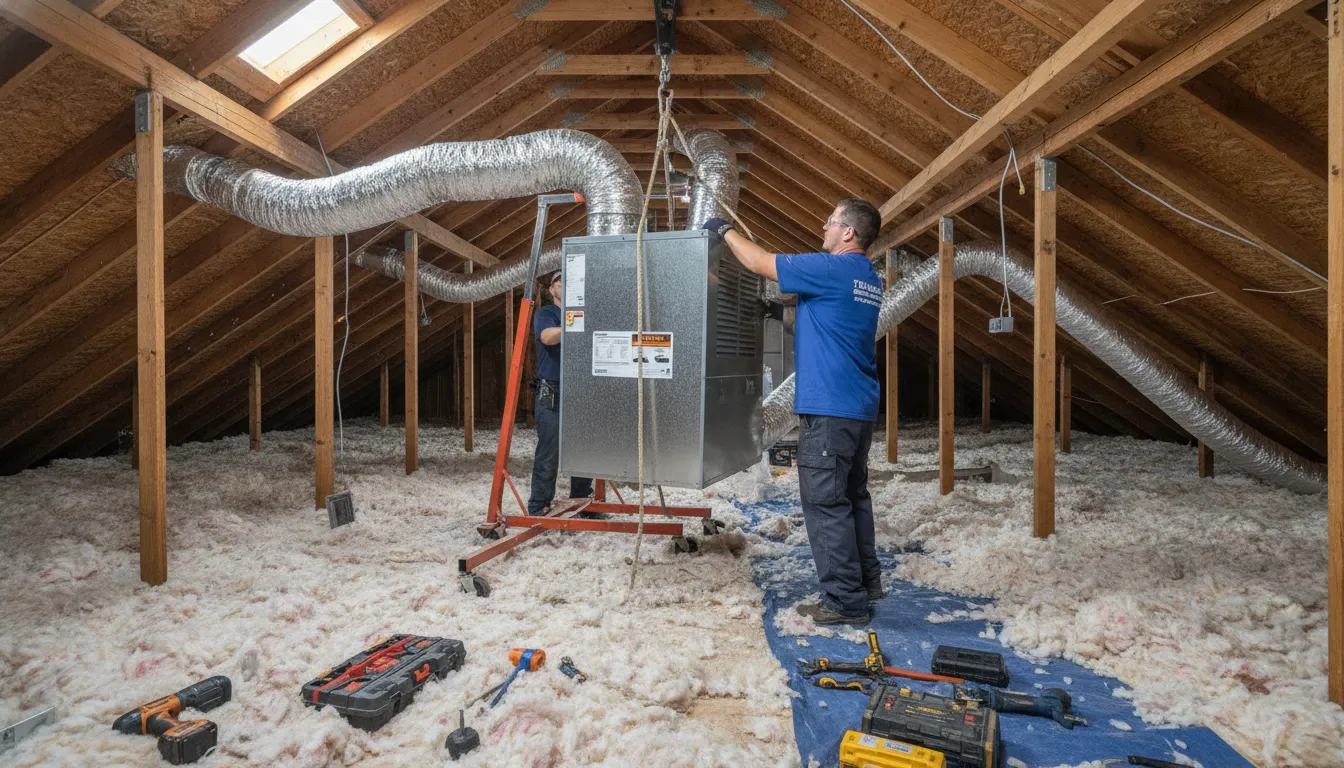
Most cities in the Dallas-Fort Worth area require a building permit for any significant new AC installation. These regulations exist to protect your safety and preserve your home value. Local building codes mandate specific standards for electrical connections, gas lines, refrigerant handling, venting, and structural support. A permit also provides documentation that your insurance company may require when processing claims related to the system.
When you obtain a permit, a city inspector examines the installation to confirm it complies with applicable codes. These codes typically reference standards from organizations such as the National Institute of Standards and Technology and the International Mechanical Code. The inspector verifies proper electrical connections, secure duct sealing, correct refrigerant line insulation, and appropriate condensate drainage. This third-party validation adds an important layer of protection for your investment. Code-compliant work also protects you if you ever sell your home, since permit records show the system was installed to professional standards.
Each city in the DFW metroplex has its own permitting process, fee schedule, and inspection requirements. Dallas may have one set of requirements while Garland, Richardson, Plano, Frisco, or Allen have different rules regarding noise ordinances, equipment screening requirements, or setback distances. Since 1952, Garland Heating and Air Conditioning has worked with municipal offices throughout North Texas. We know the specific requirements for each jurisdiction and handle the paperwork so your project stays on schedule. This local experience is one of the reasons homeowners trust us for HVAC installation Dallas-Fort Worth and the surrounding communities.
A qualified contractor manages the entire permit process on your behalf. This includes submitting applications, paying fees, scheduling inspections, and correcting any issues the inspector identifies. Be cautious of any company that asks you to pull your own permit or suggests skipping the process. Unpermitted work can result in fines, complications when selling your home, and denied insurance claims if the system causes damage. Our team oversees every detail to ensure your installation is fully permitted, inspected, and legally compliant.
A new HVAC installation Dallas-Fort Worth represents a significant financial investment. You want assurance that your system is protected if something goes wrong. Most new installations come with two distinct types of coverage: the manufacturer warranty and the labor warranty. Understanding both helps you avoid unexpected expenses down the road.
The company that built your system provides a parts warranty. Major brands such as Carrier, Trane, and Goodman typically offer 10-year parts coverage when the unit is registered within 90 days of installation. This means the manufacturer supplies a replacement component at no cost if a covered part fails. However, the warranty only covers the hardware, not the labor charged to install the replacement. You must register your unit promptly after selecting heating for HVAC installation to qualify for the full 10-year term. Without registration, coverage may drop to five years.
While the manufacturer covers parts, your installation contractor covers the labor. A labor warranty pays for the technician time needed to diagnose and replace a failed component. Terms vary significantly between contractors. Some offer one year of labor coverage, while reputable companies may offer five or even ten years. Garland Heating and Air Conditioning backs our work with a labor warranty that reflects our commitment to quality. We also provide understanding HVAC installation resources and flexible financing options to make your project more manageable.
Your coverage can be voided if you fail to meet certain conditions. Most manufacturers require installation by a licensed, certified professional. You must also perform regular preventive maintenance, typically an annual tune-up, to keep the warranty active. If you skip scheduled maintenance and a component fails, the manufacturer may deny the claim based on neglect. Proper care is emphasized in the U.S. Department of Energy home comfort guidelines. Always retain your maintenance records to demonstrate you have taken proper care of the system.
No two homes in Dallas-Fort Worth are identical, and the price for a new system depends on your specific situation. Garland Heating and Air Conditioning has served this area since 1952, and we know that every home requires a unique approach. Rather than using standardized rates, we provide a custom quote for each project so you pay for exactly what your home needs and nothing more.
The size of your home is the primary factor that affects the overall cost. That is why we do not estimate when selecting a unit for your space. Our team uses precise load calculations to determine the correct capacity by evaluating your home layout, insulation quality, window efficiency, and sun exposure. An oversized unit wastes energy and wears out prematurely, while an undersized unit runs nonstop and still leaves you uncomfortable in July.
The efficiency rating of the equipment directly impacts the price. SEER2 ratings indicate how efficiently the system converts electricity into cooling. Higher-efficiency units typically cost more upfront but deliver measurable savings on monthly energy bills over their service life. A jump from a baseline 14 SEER2 unit to a 20+ SEER2 model can reduce your annual cooling costs by hundreds of dollars. You can learn more about efficiency ratings for new HVAC installation to determine which tier best fits your budget and long-term savings goals.
The brand you select also influences the final cost. Premium brands like Carrier incorporate advanced technology and often carry higher price tags. Value-oriented brands like Goodman offer dependable performance at a lower entry price. Our team works with all major manufacturers so you have genuine options. We help you weigh the pros and cons of each brand relative to your home size, efficiency goals, and budget constraints.
You will also need to choose between system types. Some homes perform better with a heat pump that handles both heating and cooling, while others benefit from a gas furnace paired with an air conditioner. This decision is critical for heating installation in North Texas, and each configuration carries a different price point. We walk you through the technology that works best for your specific home and comfort preferences.
The condition of your existing ductwork can significantly affect your project scope. If your ducts are undersized, leaky, or constructed with outdated materials, they may need replacement to support the new system properly. Duct modifications or full replacements add time and materials to the project, especially when upgrading to a system that moves more air volume. We also recommend our duct cleaning service to keep your new system operating at peak efficiency. You can take advantage of our $300 coupon for duct cleaning to prepare your home for the new installation.
The timing of your project also matters for both cost and convenience. In DFW, spring and fall are the optimal seasons for HVAC installation. Crews are less busy with emergency repairs during these shoulder seasons, which means more scheduling flexibility and often faster completion. Planning ahead also helps you avoid the peak summer rush when wait times can extend. Complex installations that require relocating equipment or upgrading electrical panels will naturally require more labor, but our team provides transparent pricing before any work begins.
To help manage the investment, we offer financing options for qualified homeowners. This makes it easier to get the comfort and efficiency your home needs without a large upfront payment. Contact us today to schedule a consultation and receive a free, no-obligation quote for your new system.
Deciding between a repair and a full replacement can be challenging for homeowners. In the Dallas-Fort Worth area, extreme heat and high humidity place exceptional stress on cooling equipment. If your system requires frequent repairs, it may be more cost-effective to invest in a replacement. Knowing when to consider HVAC installation helps you plan financially before an emergency replacement becomes necessary.
Most central air conditioning units last 12 to 15 years with proper maintenance. As a system ages, components begin to degrade and efficiency declines. You may notice that some rooms feel warm while others are comfortable. This uneven cooling often indicates that the system has lost capacity and is approaching the end of its useful life. If your current unit uses R-22 refrigerant, be aware that this refrigerant is being phased out under federal regulations. As supplies dwindle, R-22 service costs have risen dramatically, making repairs on older systems increasingly expensive.
If your monthly utility bills are climbing but your usage has not changed, your system is likely losing efficiency. Older equipment must run longer and work harder to achieve the same indoor temperature as a modern high-efficiency unit. Upgrading from a 15-year-old system to a modern 16+ SEER2 unit can reduce your cooling energy consumption by 30-50%. The U.S. Department of Energy confirms that even modest efficiency upgrades deliver meaningful savings over time.
A practical rule of thumb is the 50% rule. If a single repair costs more than half the price of a new system, replacement is the smarter financial choice. Frequent service calls for recurring issues also add up quickly. Garland Heating and Air Conditioning can evaluate your current system and provide an honest assessment of whether repair or replacement makes more sense for your situation. A new HVAC installation in Dallas-Fort Worth delivers peace of mind, lower operating costs, and improved comfort for years to come.
The quality of your installation matters as much as the equipment you select. Even the best-rated air conditioner will underperform if it is installed incorrectly. A poor installation can reduce efficiency by 30% or more, shorten equipment lifespan, and void the manufacturer warranty. Choosing the right contractor is one of the most important decisions you will make during your HVAC installation Dallas-Fort Worth project.
A qualified contractor employs NATE-certified technicians. NATE certification is the industry standard for HVAC expertise. It proves the technician has passed testing on installation best practices, refrigerant handling, and electrical safety. Verify the contractor is licensed, bonded, and insured. In Texas, HVAC contractors must hold a license from the Texas Department of Licensing and Regulation. Ask for proof of liability insurance and workers compensation coverage. Garland Heating and Air Conditioning meets all of these requirements. Our Google Guaranteed status adds accountability to every installation.
DFW has unique climate and municipal requirements. Extreme temperatures, high humidity, and severe weather demand equipment built for North Texas conditions. Look for a company with experience serving the metroplex. Garland Heating and Air Conditioning has served the area since 1952. We know the permitting processes, inspection standards, and city-specific rules in Dallas, Garland, Richardson, and dozens of other communities.
Be cautious of contractors who quote over the phone without visiting your home. Avoid companies that pressure you with “limited-time” offers that expire within hours. Never work with a contractor who asks you to pull your own permits. Be wary of pricing well below other quotes as it often reflects shortcuts in materials or labor. Reputable companies perform a load calculation, explain your options, and provide a written estimate. Our team never cuts corners because your comfort and safety depend on getting the installation right.
The cost varies based on the brand, efficiency rating, and any ductwork modifications required. Because every home has unique needs, the most reliable way to get an accurate price is to request a custom quote. Garland Heating and Air Conditioning provides free, no-obligation estimates for homeowners across DFW. Contact us to discuss your specific home and receive a personalized quote.
A straightforward replacement of an existing system usually takes one to two days. The first day involves removing the old equipment and installing the new indoor and outdoor units. The second day covers testing, thermostat setup, and the municipal inspection. More complex projects such as those requiring ductwork modifications, electrical panel upgrades, or new refrigerant line sets may take three to four days. Your project manager will give you a precise timeline after the initial home evaluation.
The federal minimum for the Southern region is 15 SEER2 for split systems. Most DFW homeowners choose units in the 16 to 20 SEER2 range to balance upfront cost with long-term energy savings. Higher SEER2 ratings deliver greater efficiency and lower monthly bills. But the premium cost is not always justified for smaller homes or homes where the owners plan to move within a few years. Your Garland Heating and Air Conditioning technician can help you calculate the payback period for different efficiency levels.
While you do not need to be present for the entire installation, we recommend being home at the start and end of each day. The technicians will need access to the indoor equipment location, typically the attic, closet, or basement, and the outdoor unit location. They will also need access to the thermostat and electrical panel. Being available at the start allows you to review the scope of work. And being available at the end allows you to see the finished installation and ask any questions.
Yes. Upgrading from an older system with a SEER rating of 9-10 to a modern 16+ SEER2 unit can reduce your cooling energy consumption by 35% or more. The exact savings depend on your current system efficiency, the new system efficiency, your home insulation, and your usage patterns. Over the 12-15 year lifespan of a new system, these monthly savings often exceed the initial investment in the upgrade.
A professional HVAC installation is one of the best investments you can make in your home comfort, energy efficiency, and property value. Garland Heating and Air Conditioning has been the trusted name for North Texas homeowners since 1952. Our NATE-certified technicians, commitment to quality workmanship, and deep knowledge of DFW building codes ensure your installation is done right the first time.
Call (972) 530-1149 or schedule your free quote online today. We offer free estimates, flexible financing, and same-day service availability for urgent needs. Experience the Garland Heating and Air Conditioning difference and enjoy reliable comfort for years to come.